Self-guided audio tour in Florence
Start Free on iPhone
Start free on iPhone to unlock this self-guided walking tour in Florence. Hear all the stories that make it amazing, walk at your own pace, and begin whenever you want.
Your Private Tour Guide
As the Tuscan sun begins its slow descent, the city of Florence transforms. The golden hour casts a warm, honey-colored glow over the Renaissance facades, but nowhere is this magic more palpable than along the banks of the Arno. This self-guided walk invites you to experience the river not just as a body of water, but as the lifeblood of Florentine history and the ultimate canvas for photography. Moving along the Lungarni—the elegant streets that frame the river—you will discover the architectural evolution of the city's famous bridges and the stories of the people who built them. This neighborhood stroll offers a different perspective than the crowded piazze of the city center. It is a route designed for those who appreciate fine views and the interplay of light and shadow. You will encounter the legendary Ponte Vecchio, known for its shimmering jewelry shops, but you will also explore lesser-known spans like the Ponte Santa Trinita, often cited by architects as the most elegant bridge in the world. Along the way, the narration reveals the secrets of the Vasari Corridor, the devastating impact of the 1966 flood, and the artistic rivalries that shaped the riverfront. Whether you are a photography enthusiast looking for the perfect shot of the reflection-filled water or a couple seeking a romantic evening activity, this walking route provides the perfect pace. There is no need for a fixed schedule; you can pause for a gelato or a glass of Chianti at a riverside bar whenever the mood strikes. By the time you reach the final stop, you will have seen Florence at its most atmospheric, capturing memories of a skyline that has inspired artists for centuries. This is more than just a walking tour Florence offers; it is a chance to step into a living painting at the most beautiful time of day.
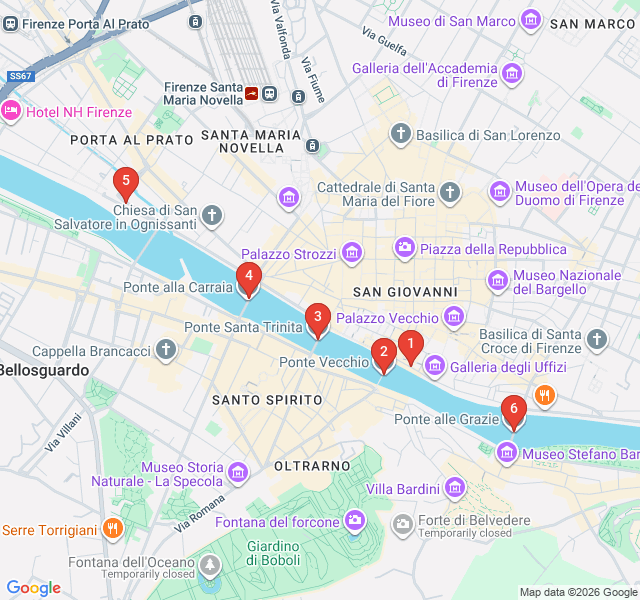
Numbers indicate the order of stops on the tour.
Start your self-guided adventure here, under the shadow of the Uffizi Gallery. This stretch of the riverbank is famous for its arched portico, which supports a section of the Vasari Corridor. Built in 1565 by Giorgio Vasari for Duke Cosimo I de' Medici, this secret passage allowed the ruling family to move between the Palazzo Vecchio and the Pitti Palace without mingling with the public. As you look out toward the water, notice how the arches frame the Ponte Vecchio perfectly. This is one of the premier spots for photography in the city, especially as the setting sun hits the yellow and orange plaster of the buildings across the water. Imagine the Medici family peering down from the windows above as they crossed the city in total privacy.
The Ponte Vecchio is the only bridge in Florence that survived the retreating German army in 1944. Originally, this bridge was home to butchers and tanners who could easily dispose of waste into the river. However, in 1593, Ferdinand I decreed that only goldsmiths and jewelers were allowed to trade here to improve the bridge's prestige and smell. As you walk across, look for the bust of Benvenuto Cellini, the most famous Florentine goldsmith. Notice the 'back-shops' or retrobotteghe that hang over the water, supported by wooden brackets called 'beccatellis.' This bridge has survived countless floods, most notably in 1966, when the water rose nearly to the level of the shops, yet it remains the most iconic symbol of Florence.
Often described as the most beautiful bridge in the world, the Ponte Santa Trinita was designed by Bartolomeo Ammannati with input from Michelangelo. Its three elliptical arches are unique, mimicking the curve of a catenary—the shape a chain takes when hanging between two points. At each corner of the bridge stand statues representing the Four Seasons, installed in 1608 to celebrate the wedding of Cosimo II de' Medici. During WWII, the bridge was destroyed, but it was rebuilt using stones recovered from the riverbed and original plans. Look closely at the statue of 'Spring'—her head was missing for decades after the war until it was finally recovered by divers in 1961. This bridge offers the absolute best view of the Ponte Vecchio at sunset.
This is the second oldest bridge in Florence, though it has been rebuilt many times. Its name comes from the 'carri' or carts that used it to transport goods into the city. In 1304, the bridge famously collapsed during a theatrical performance on the river, leading to a local saying that those who wanted to see 'news of the other world' got exactly what they asked for. Today, it provides a wider, more open view of the Arno weir, where the water cascades down. This is a favorite spot for locals to gather in the evening. The light here is particularly soft, making it an excellent place to capture the silhouettes of the other bridges lined up toward the east.
Named after the famous Florentine explorer who gave his name to America, this wide embankment represents the 19th-century expansion of Florence. While the city center is cramped and medieval, this area feels grand and airy, lined with stately hotels and embassies. It is the perfect place for a long, quiet stroll away from the dense tourist crowds. As you walk, you can see the distant hills of Tuscany to the west. The architecture here reflects the 'Risanamento' period when Florence briefly became the capital of Italy. It’s a wonderful spot to observe the rowing clubs, or 'Canottieri,' practicing on the river below, their oars cutting through the golden reflections of the water.
To conclude your journey, we head east to the Ponte alle Grazie. The current bridge is a modern reconstruction from 1953, but the original structure built in 1227 was the longest and oldest bridge in the city. Historically, it was unique because it housed small chapels, hermitages, and shops where nuns lived in seclusion. Today, it serves as a fantastic vantage point looking back toward the city center. From here, you can see the Uffizi, the Ponte Vecchio, and the tower of the Palazzo Vecchio all aligned. It is the perfect place to watch the final colors of dusk fade into the night as the city lights begin to twinkle on the water's surface.
Start Free on iPhone
Explore “Arno River Sunset Stroll” with your very own Private Tour Guide with Zigway. Start free on iPhone, skip the large group and the fixed routes, and hear the city come alive as you go.
Your Private Tour Guide
Don't miss the good stuff
Explore Freely
 Easy
EasyFlorence, Italy
Discover the intersection of Renaissance architecture and modern luxury on this self-guided walk through Florence’s high-fashion districts.
 Easy
EasyFlorence, Italy
Explore the medieval streets of Florence through the eyes of Dante Alighieri on this self-guided literary and historical walking route.
 Easy
EasyFlorence, Italy
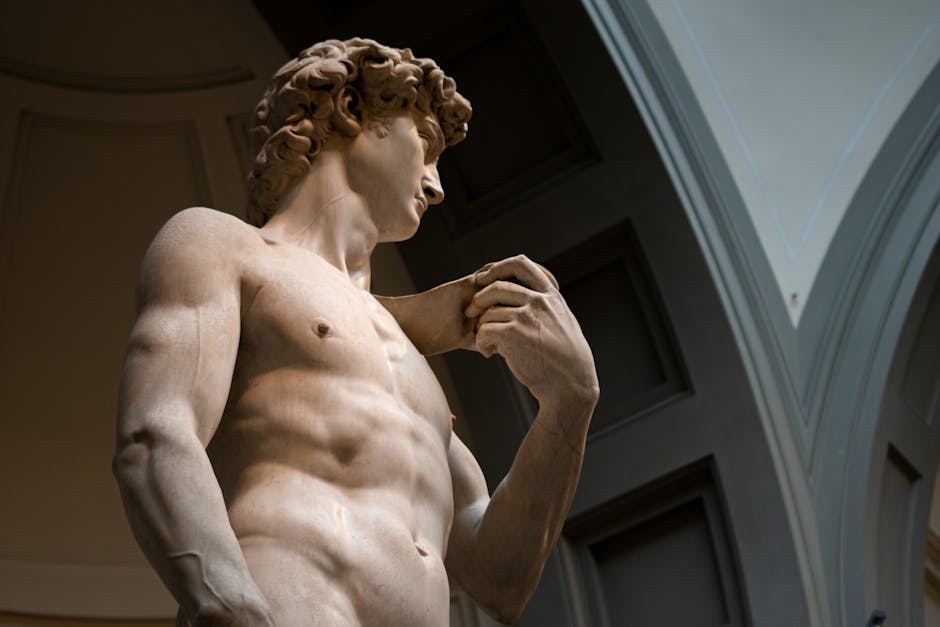
Discover the 'buchette del vino'—Florence's unique Renaissance wine windows—on this self-guided walk through the city's historic streets.
 Easy
EasyFlorence, Italy
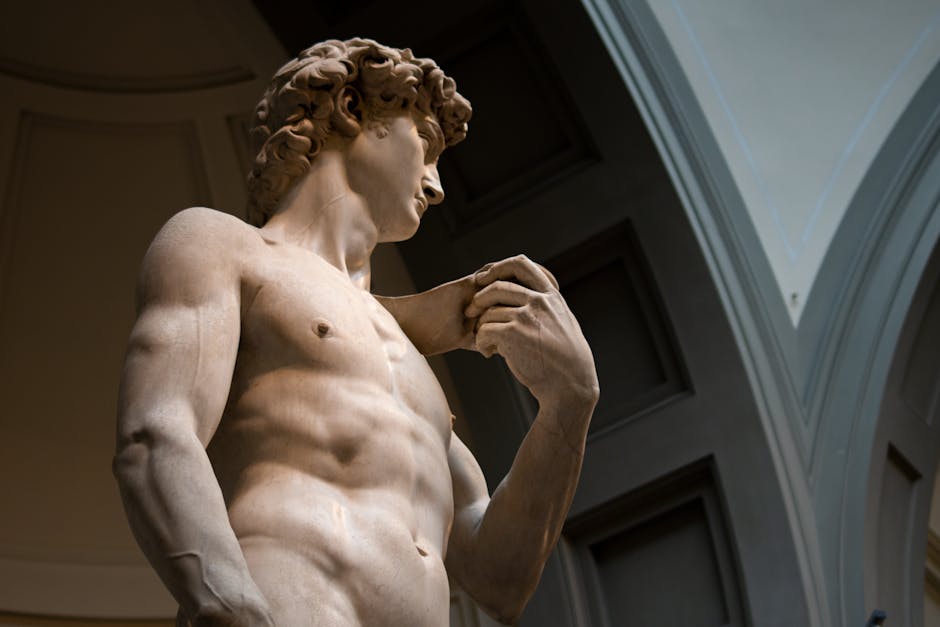
Explore the 'Other Side' of Florence. Discover traditional workshops, marbled paper, and stone mosaics on this self-guided Oltrarno neighborhood stroll.
 Easy
EasyNairobi, Kenya
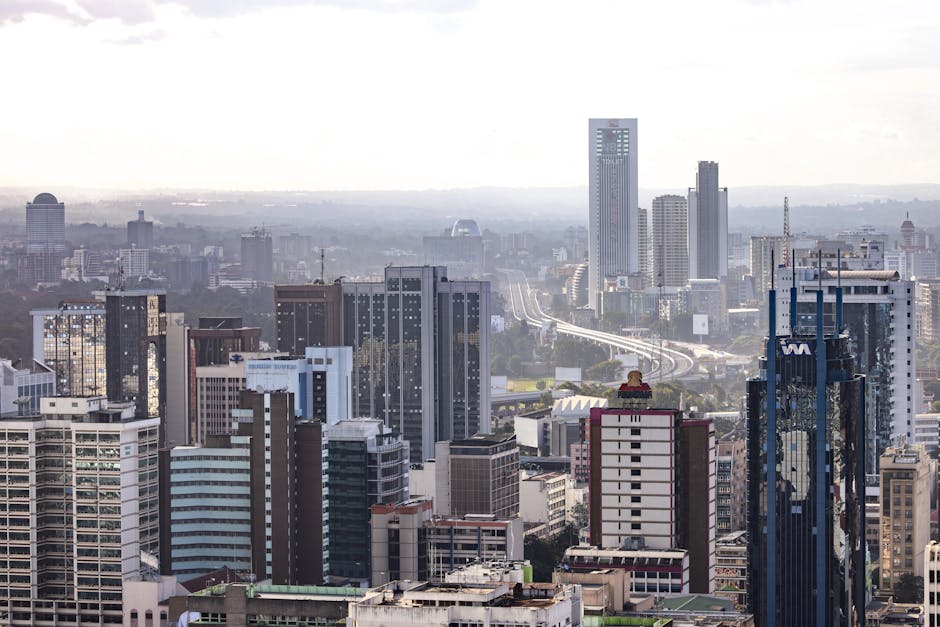
Discover Nairobi's iconic skyline on this self-guided architecture walk through the CBD’s most famous modernist and Brutalist landmarks.
 Easy
EasyNairobi, Kenya
Explore Nairobi's architectural evolution from colonial-era landmarks to iconic Brutalist skyscrapers on this historic self-guided walking route.
 Easy
EasyKrakow, Poland
Explore the historic heart of Kazimierz on this self-guided walk through synagogues, ancient cemeteries, and vibrant squares.
 Moderate
Krakow, Poland
Discover Krakow’s stunning skyline and riverside charm on this self-guided audio walk through scenic viewpoints and historic mounds.
 Easy
EasyRome, Italy
Explore Rome’s industrial heart on this self-guided walk featuring massive murals, the 'Iron Colosseum,' and unique industrial archaeology.
 Easy
EasyRome, Italy
Explore Rome’s whimsical Fairytale District. A self-guided walk through Art Nouveau palaces, mythical fountains, and the magical Coppedè architecture.
 Moderate
Rome, Italy
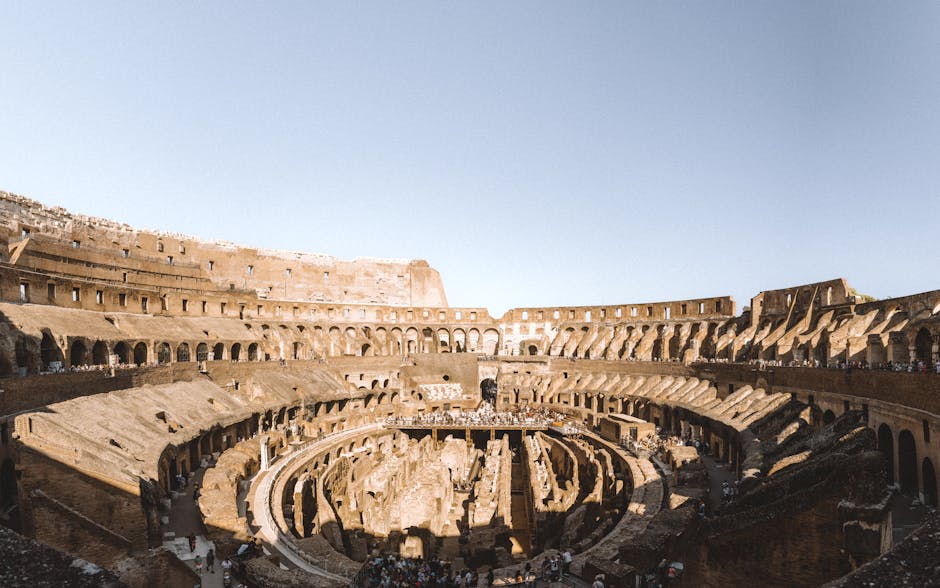
Uncover Rome's hidden history on this self-guided walk through ancient gladiator pits, subterranean temples, and buried Roman houses.
 Challenging
Rome, Italy
Walk the 'Queen of Roads.' Explore ancient catacombs, imperial villas, and historic basalt stones on this scenic self-guided Roman adventure.