Self-guided audio tour in Bologna
Now a Guided Walk in the Zigway app
Open a shutter, whisper to a wall and hunt for arrows: Bologna's Seven Secrets on foot.
1.9 km · 28 min walking · 32 min of stories · 2 languages
The introduction and the first minute at the first stop.
Basilica di San Petronio
Notice the sharp line across the facade. Below, pink and white marble.
Finestrella di Via Piella (Little Venice)
The wooden shutter is in the wall right beside you.
Mercato di Mezzo & Il Quadrilatero
The covered market hall is a little way ahead along this street.
Palazzo dell'Archiginnasio
Yes, the same pope whose election Neptune celebrates. Its real job was serious.
The Two Towers: Asinelli & Garisenda
The Two Towers rise right in front of you. Tilt your head back.
Guided Walk · in the Zigway app
Buy it once in the app and walk it whenever you're in Bologna. GPS plays each story as you arrive, it works offline, and the introduction and first stop are free to try.
Start Free on iPhone
Hear the stories behind the streets and sights around you as you walk Bologna. Try it free on iPhone.
Your Private Tour Guide
Bologna is a city of hidden layers, often overshadowed by the grandiosity of Rome or the art of Florence, but those who wander its portico-lined streets discover a medieval core rich with mystery and legend. This self-guided walking route takes you through the heart of the Centro Storico to uncover the famous Seven Secrets that locals have whispered about for centuries. From architectural optical illusions to hidden waterways reminiscent of Venice, this neighborhood stroll reveals a side of the city that most travelers miss when just passing through. You will start at a bustling intersection where an ancient inscription hints at the city's medieval trade history, then move toward the grand Piazza Maggiore. Here, Renaissance sculpture hides a cheeky secret, and a medieval palace serves as a primitive telephone system. As you explore independently, you will witness the leaning towers that define the skyline and search for arrows embedded in 15th-century wood. This walk isn't just about seeing landmarks; it's about looking closer at the details of the red-brick facades. Whether you are a history buff or a curious photographer, this audio walk provides the context needed to appreciate Bologna’s reputation as the learned, the fat, and the red. It is an easy walking tour Bologna visitors can enjoy at any pace, perfect for a morning or late afternoon when the light hits the terracotta walls just right. By the end of this self-guided adventure, you will understand why Bologna is considered Italy’s best-kept secret and how its medieval spirit survives in the modern day.
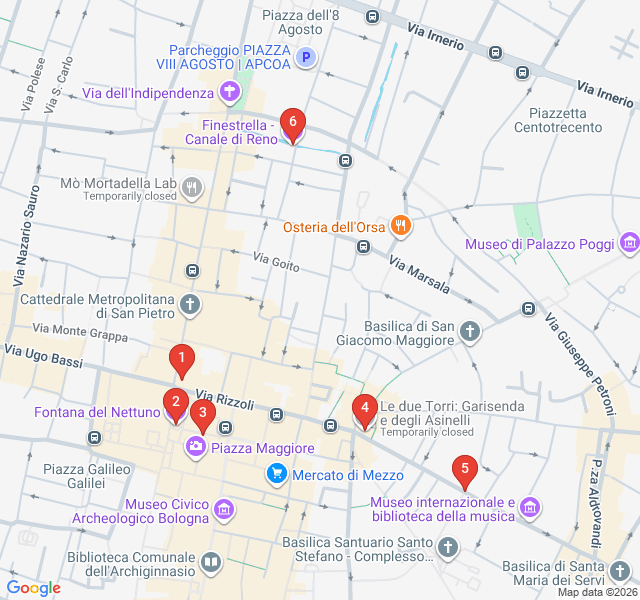
Numbers indicate the order of stops on the tour.
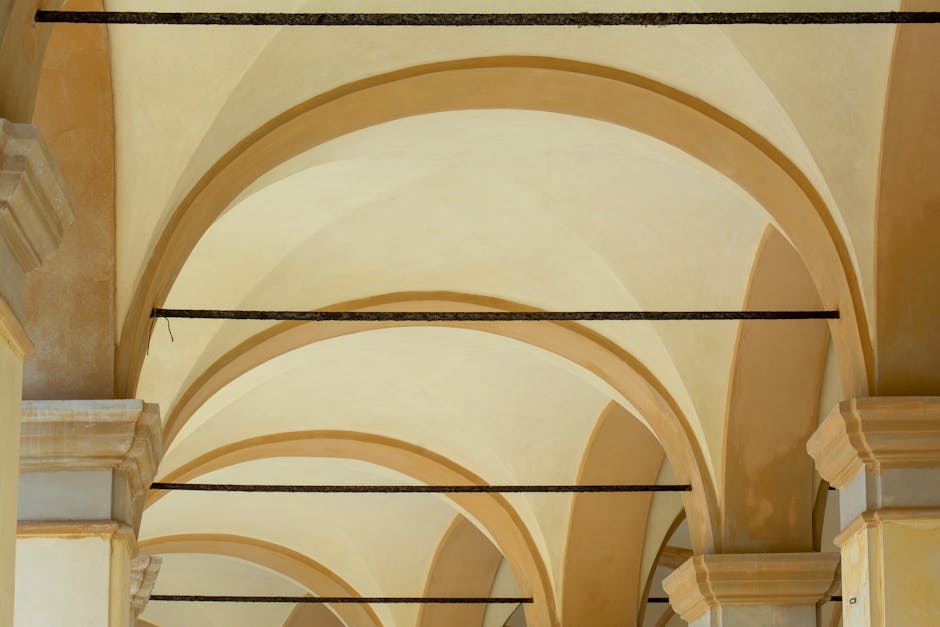
Start your self-guided walk at this historic corner where Via Indipendenza meets Via Ugo Bassi. Look up at the vaulting of the portico to find a curious Latin inscription: 'Panis vita, canabis protectio, vinum laetitia.' This translates to 'Bread is life, cannabis is protection, wine is joy.' This refers to the era when hemp production was a cornerstone of Bologna's wealth, used for making rope and textiles. It represents the first of the city's 'secrets.' In the medieval era, this spot was a hub of commerce, and this secular blessing over the essentials of life still greets pedestrians today, reminding us of the city's practical and mercantile roots.
Standing proudly in the square is the Fountain of Neptune, a masterpiece by the Flemish sculptor Giambologna. While it appears to be a standard symbol of papal power, look for a specific black stone near the entrance of the Salaborsa library. From this exact spot, the perspective of Neptune's outstretched hand creates a surprising optical illusion that the sculptor designed to bypass the modesty requirements of the Church. It is a classic example of the Bolognese sense of humor. The fountain was completed in 1566 and remains one of the most iconic landmarks in the city, symbolizing the rule of the Pope over the seas as he ruled over Bologna.
Step under the crossroads of the vaults beneath the Palazzo del Podestà. This architectural marvel contains a 'wireless telephone' effect. If you stand in one corner of the square pillars and a companion stands in the diagonal corner, you can whisper into the wall and hear each other perfectly over the city noise. Legend says this was designed in the Middle Ages so that lepers could confess their sins to priests without the risk of contagion. The stone acts as a perfect acoustic conductor. It is a favorite local trick and a testament to the sophisticated engineering of the 13th-century Bolognese architects who built this seat of local government.
No walking route in Bologna is complete without the Two Towers: Asinelli and Garisenda. These leaning structures are the survivors of over 100 towers that once pierced the medieval skyline like a Manhattan of the Middle Ages. The Asinelli is the taller one, while the Garisenda leans so precariously it was shortened for safety. Dante even mentioned the Garisenda in his Divine Comedy. One of the city's 'secrets' is said to be a broken vase atop the Asinelli tower, symbolizing Bologna's ability to resolve internal conflicts. While you can't see the vase from the ground, the sheer scale of these brick giants conveys the immense power of the families who built them.
Walk down Strada Maggiore to the high wooden portico of Corte Isolani. Look up into the dark timber ceiling—if you look closely, you might spot three arrows embedded in the wood. The legend tells of three brigands who were sent to kill a local nobleman. However, a beautiful woman appeared at a window, distracting them so much that they fired their arrows wildly into the ceiling. Though historians suggest the arrows might have been placed there later to commemorate the legend, searching for them is a rite of passage for any visitor. This area perfectly preserves the 13th-century atmosphere with its rare wooden porticos.
For the final secret, walk toward Via Piella. Here you will find a small, unremarkable wooden shutter in a wall. Open it to reveal a hidden view of the Canale di Reno. This 'Little Venice' is a reminder that Bologna was once a city of water, with a vast network of canals used for transport and powering silk mills. Most of these canals were covered up in the 20th century, but this window offers a glimpse into the hydraulic past that made Bologna an industrial powerhouse in the Middle Ages. It is the perfect, quiet spot to conclude your independent exploration of the city's mysteries.
Start Free on iPhone
Open Zigway as you walk and your private tour guide tells the stories behind what you pass.
Your Private Tour Guide
Don't miss the good stuff
Explore Freely
 Moderate
Bologna, Italy
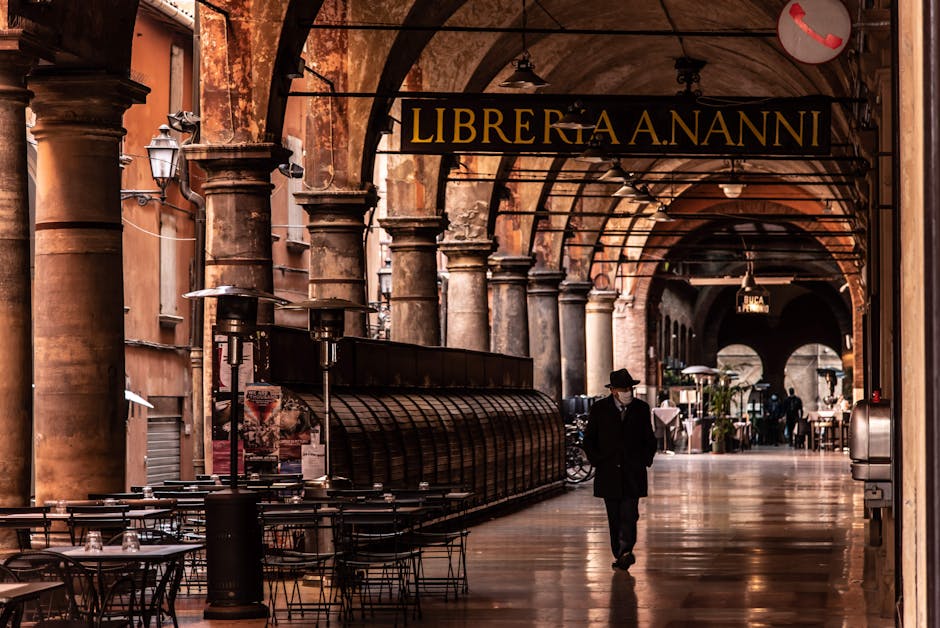
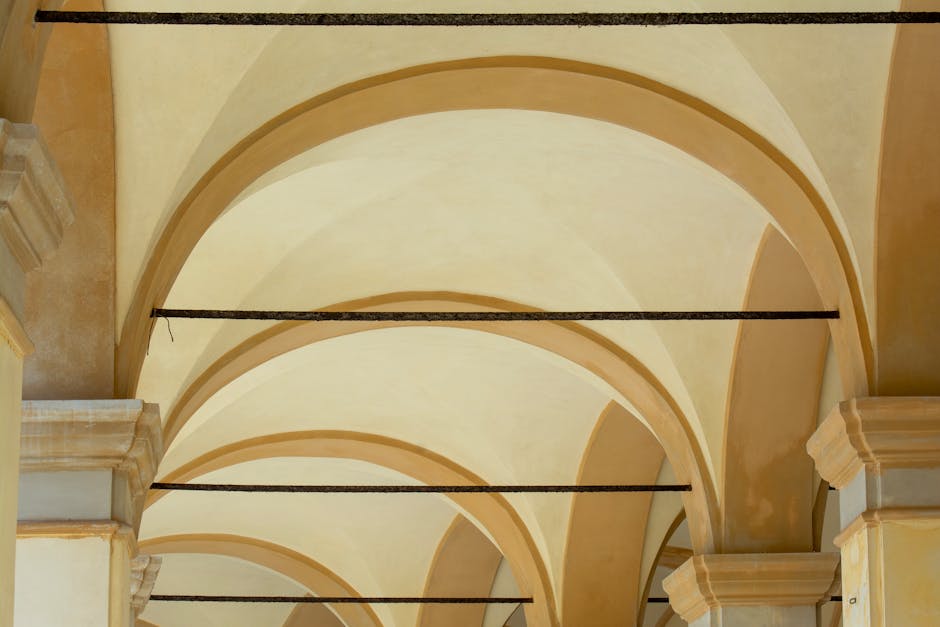
Explore Bologna's UNESCO-listed porticoes on this self-guided architectural stroll through historic streets and grand, frescoed arches.
 Easy
Bologna, Italy
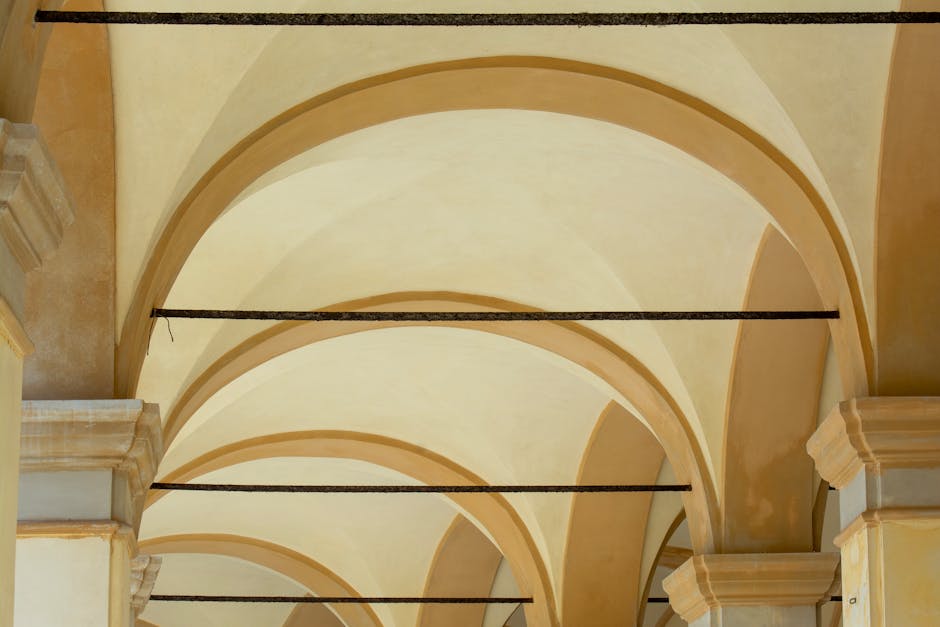
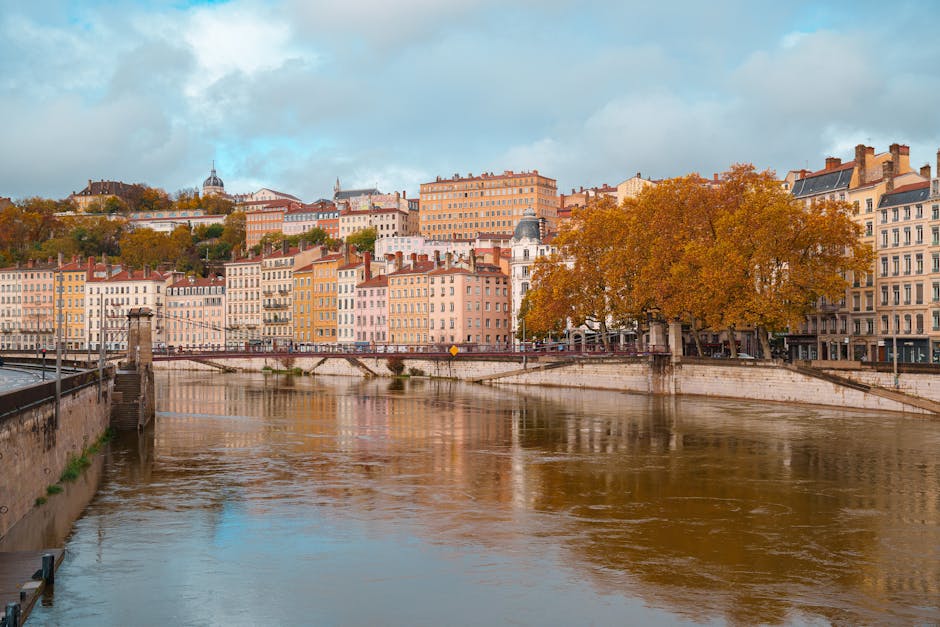
Uncover Bologna's secret 'Little Venice' on this self-guided walk through hidden canals, ancient mills, and the city's industrial past.
 Easy
Bologna, Italy
Discover the rebellious soul of Bologna with a self-guided stroll through the bars, street art, and bohemian history of the iconic Pratello district.
 Easy
Bologna, Italy
Discover the 'Manhattan of the Middle Ages' on this self-guided walk through Bologna’s skyline of historic stone towers.
 Easy
Nairobi, Kenya
Discover Nairobi's iconic skyline on this self-guided architecture walk through the CBD’s most famous modernist and Brutalist landmarks.
 Easy
Nairobi, Kenya
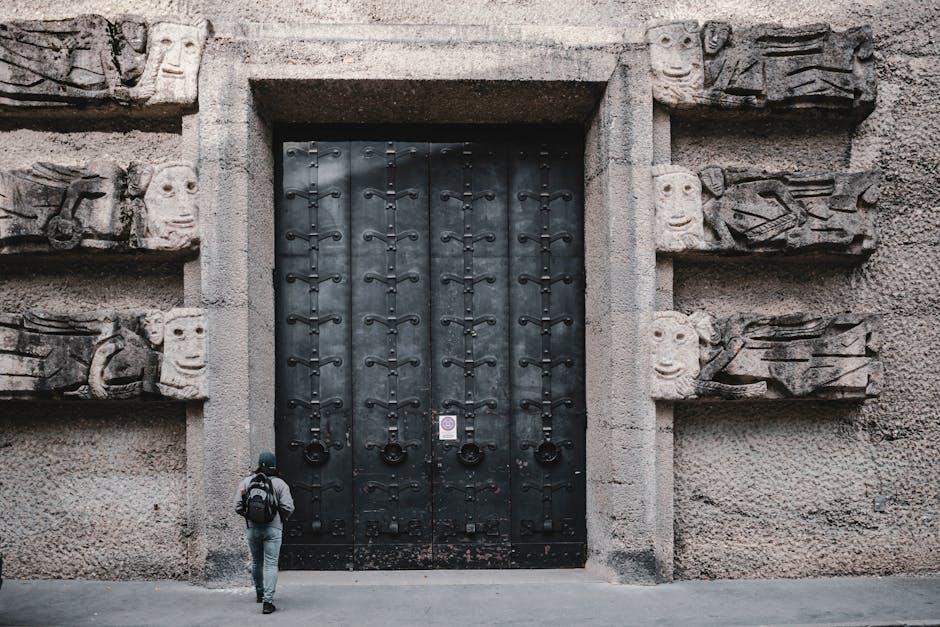
Explore Nairobi's architectural evolution from colonial-era landmarks to iconic Brutalist skyscrapers on this historic self-guided walking route.
 Easy
Salzburg, Austria
Discover Salzburg's oldest medieval alley, the birthplace of the 'Silent Night' author, and breathtaking views on this quiet self-guided walk.
 Easy
Gdansk, Poland
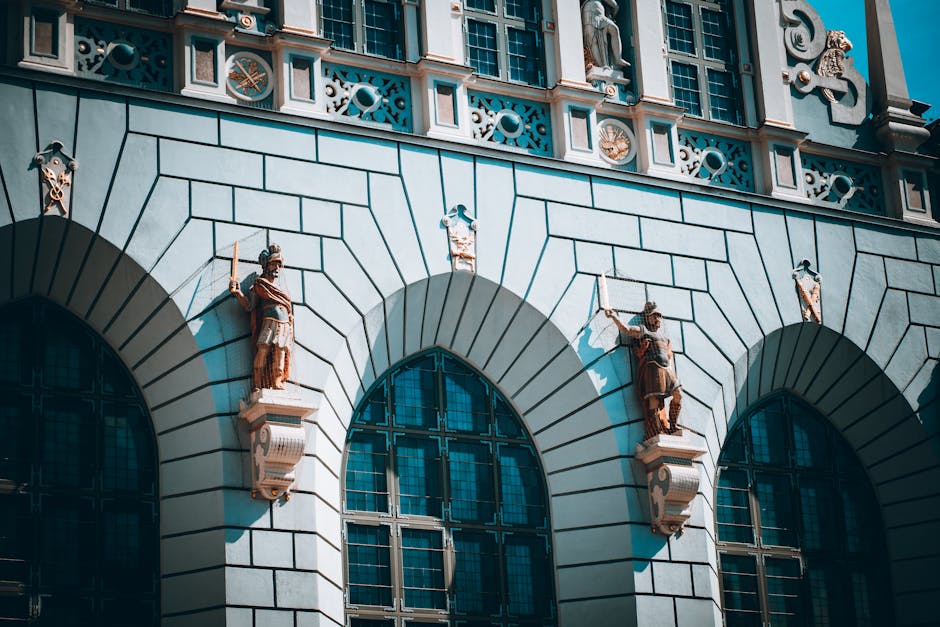
Discover the opulent Royal Way of Gdansk at your own pace. Explore Hanseatic history, gilded architecture, and the iconic Neptune's Fountain.
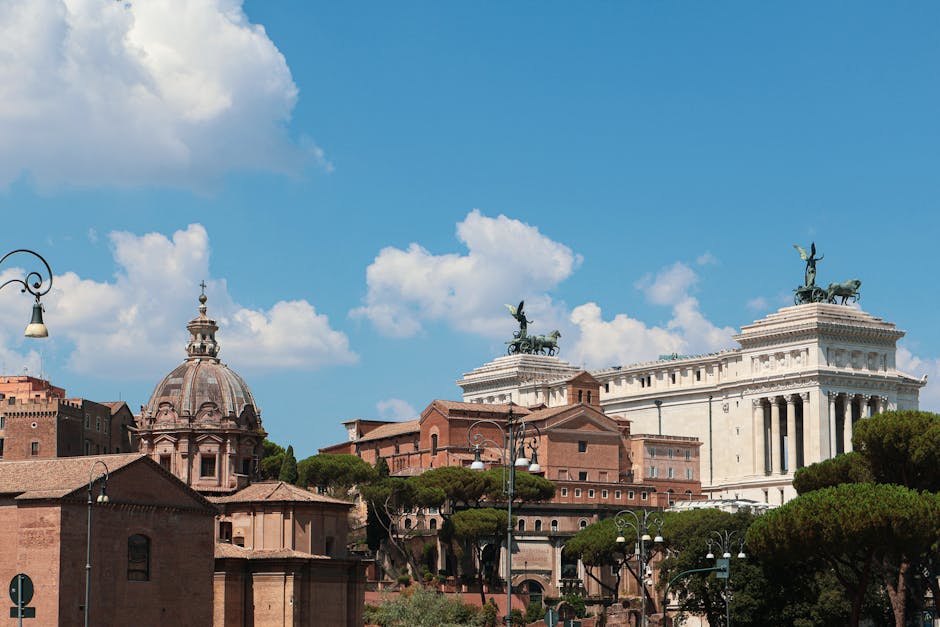 Easy
Rome, Italy
Explore Rome’s industrial heart on this self-guided walk featuring massive murals, the 'Iron Colosseum,' and unique industrial archaeology.
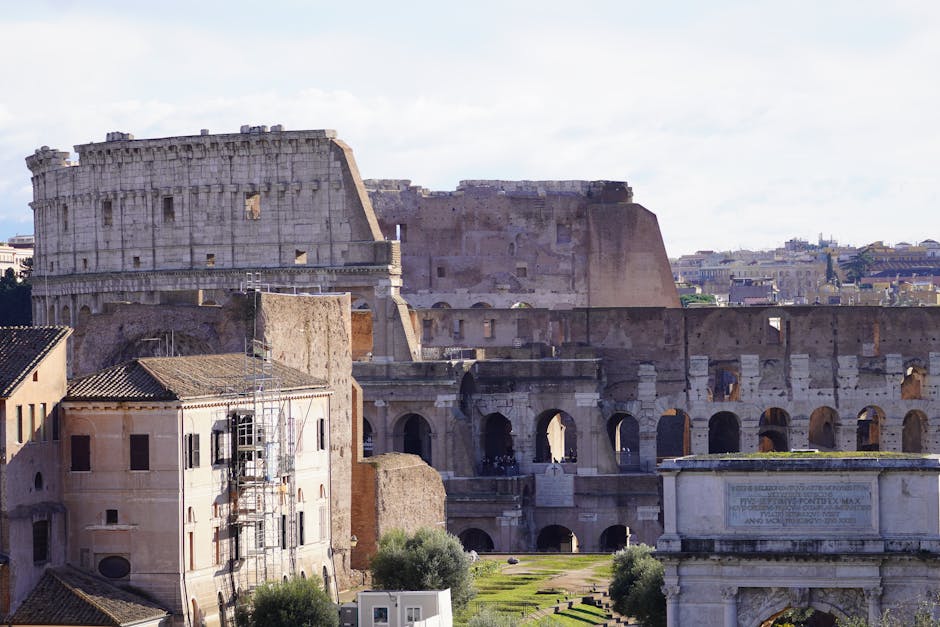 Easy
Rome, Italy
Explore Rome’s whimsical Fairytale District. A self-guided walk through Art Nouveau palaces, mythical fountains, and the magical Coppedè architecture.
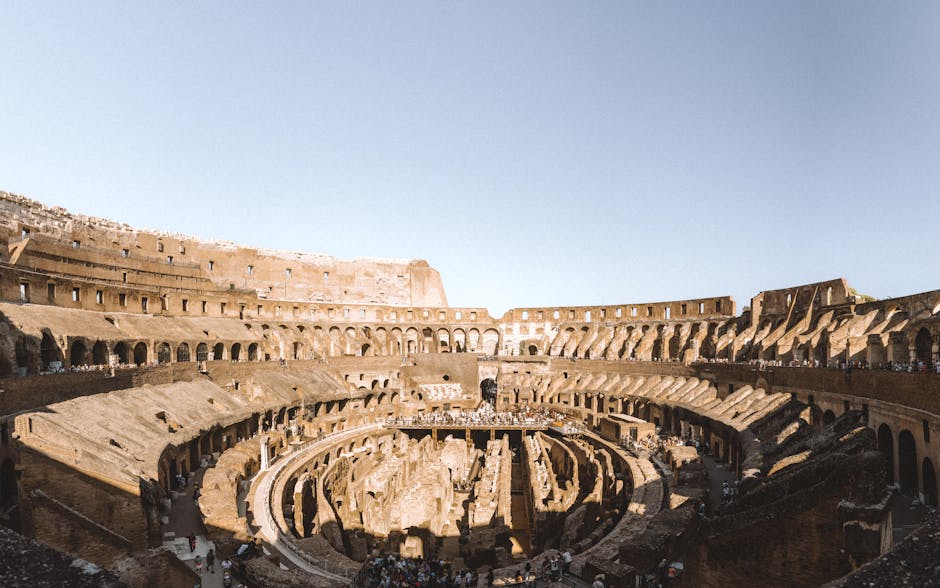 Moderate
Rome, Italy
Uncover Rome's hidden history on this self-guided walk through ancient gladiator pits, subterranean temples, and buried Roman houses.
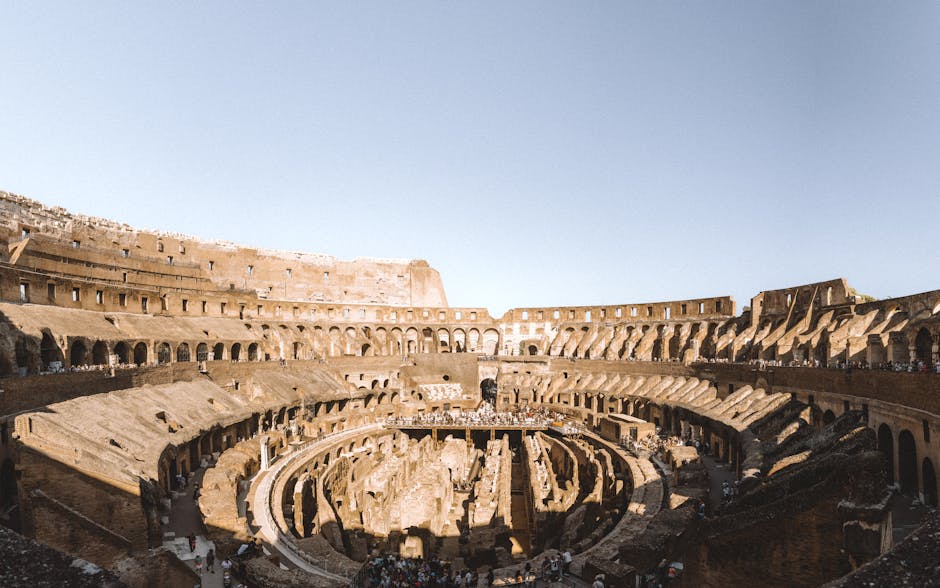 Challenging
Rome, Italy
Walk the 'Queen of Roads.' Explore ancient catacombs, imperial villas, and historic basalt stones on this scenic self-guided Roman adventure.