Self-guided audio tour in Delhi
Start Free on iPhone
Start free on iPhone to unlock this self-guided walking tour in Delhi. Hear all the stories that make it amazing, walk at your own pace, and begin whenever you want.
Your Private Tour Guide
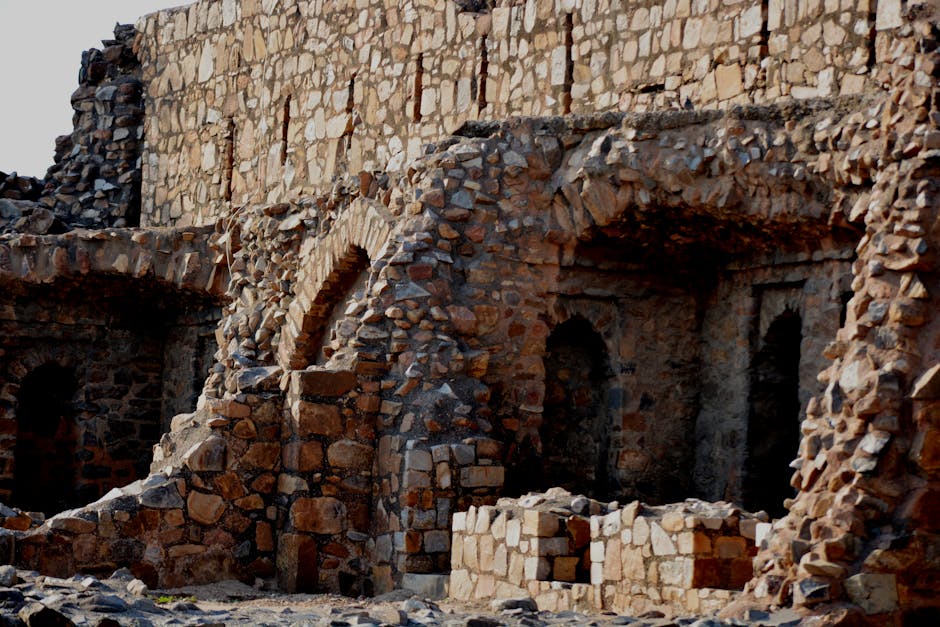
Step away from the modern chaos of the metropolis and journey into the heart of the first city of Delhi. This self-guided walk explores Mehrauli, a neighborhood where history is not found in textbooks but in the towering minarets and crumbling sandstone ruins that have stood for nearly a millennium. This neighborhood stroll takes you through the transition of power from the Rajput kings to the Delhi Sultanate, beginning with the world-famous Qutb complex and ending in the overgrown, atmospheric Mehrauli Archaeological Park. While most visitors only see the iconic minaret, this walking route invites you to discover the hidden-gems scattered among the trees, where the whispers of djinns and the legacies of forgotten sultans linger. You will encounter architectural marvels like the rust-free Iron Pillar and the hauntingly beautiful Rajon Ki Baoli stepwell. This journey is more than just a history lesson; it is an immersion into the nature and legends of ancient Delhi. By exploring independently, you can linger in the shadow of the Alai Minar or sit quietly in the Jamali Kamali mosque, soaking in the spiritual and eerie atmosphere that defines this historic enclave. This walking tour Delhi experience provides a deep dive into the layers of the city's past, from the first true arches in India to the unfinished dreams of ambitious conquerors. Whether you are a history buff or a fan of local legends, this self-guided adventure offers a unique perspective on the capital's origins, far removed from the typical tourist trails.
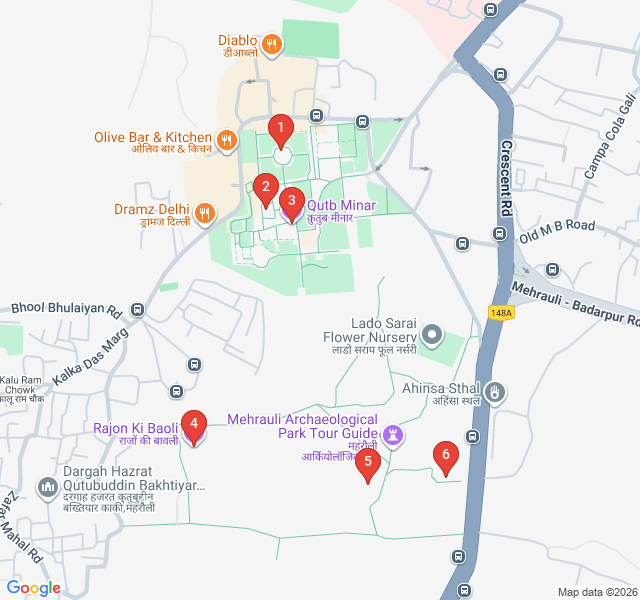
Numbers indicate the order of stops on the tour.
Your self-guided walk begins at the Alai Minar, a massive rubble core that stands as a testament to unfulfilled ambition. Alauddin Khalji, one of the most powerful sultans of the Delhi Sultanate, envisioned a tower twice the height of the Qutb Minar to commemorate his victories. Construction began in 1311, but after his death in 1316, the project was abandoned. Today, the 24-meter-high base sits like a giant, rugged crown on the landscape. Imagine the sheer scale of the intended tower, which would have dominated the horizon for miles. Its unfinished state offers a rare glimpse into the internal masonry techniques of the 14th century, revealing the raw strength required to build these monumental structures before they were clad in decorative stone.
Standing in the courtyard of the Quwwat-ul-Islam Mosque is the Iron Pillar, a metallurgical wonder that has baffled scientists for centuries. Dating back to the 4th century during the Gupta Empire, this seven-meter-high pillar is made of 98% wrought iron yet has resisted rust for over 1,600 years. It was likely brought here from Central India as a trophy of war. Look closely at the Sanskrit inscriptions in Brahmi script, which dedicate the pillar to Lord Vishnu. Legend once said that if you could wrap your arms around the pillar with your back to it, your wish would come true. Today, a fence protects the pillar, but its presence remains a powerful symbol of ancient Indian scientific prowess.
The Qutb Minar is the crown jewel of this neighborhood stroll. Rising 73 meters into the sky, it is the tallest brick minaret in the world and a masterpiece of Indo-Islamic architecture. Construction was started by Qutb-ud-din Aibak in 1192 and completed over several generations. As you look up, notice the distinct architectural styles of the five stories: the first three are red sandstone, while the top two incorporate white marble. The intricate carvings of Quranic verses and floral patterns show the fusion of local Hindu craftsmanship with Islamic design. This tower wasn't just for the call to prayer; it was a 'Tower of Victory,' signaling the start of Muslim rule in Northern India.
Leaving the main Qutb complex, follow the path into the Mehrauli Archaeological Park to find Rajon Ki Baoli. This stunning three-story stepwell was built in 1506 during the Lodi dynasty. The name 'Rajon' refers to the masons (raj) who used the well. Unlike the bustling monuments nearby, this area is incredibly peaceful. Stepwells were more than just water sources; they were social hubs and cool retreats during the scorching Delhi summers. Notice the symmetrical arches and the small mosque adjacent to the well. The way the light hits the deep stone galleries creates a hauntingly beautiful scene, perfect for photography and quiet reflection on the engineering skills of the medieval era.
Continue your walking route to the Jamali Kamali Mosque and Tomb, a site wrapped in both beauty and mystery. Built in 1528, it is the resting place of the Sufi saint Shaikh Jamali and his companion, Kamali. The mosque is a precursor to the grand Mughal style you see elsewhere in Delhi, featuring a large central arch and beautiful blue tile work. However, the site is equally famous for its local legends. Many locals believe the ruins are haunted by djinns—supernatural beings from Islamic mythology. Whether or not you believe the ghost stories, the heavy silence and the intricate 'incised plaster' work inside the tomb make this one of the most evocative stops on your journey.
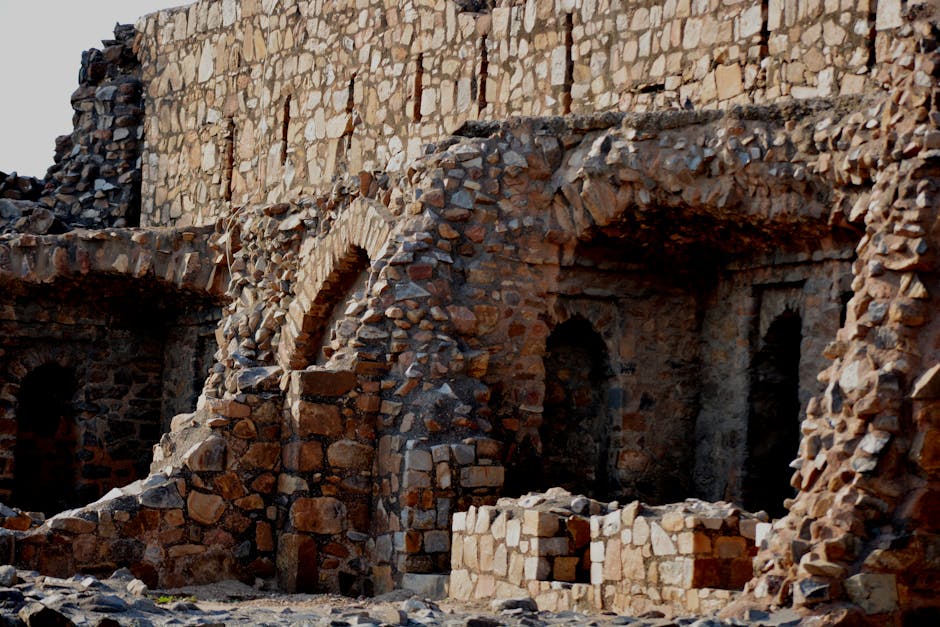
Your self-guided adventure concludes at the Tomb of Ghiyas ud din Balban. While it may look like a simple ruin today, this structure is a landmark in the history of world architecture. It is widely considered to contain the first 'true' arch ever built in India. Prior to this, Indian builders used corbelling (stacking stones) to create openings. Balban, a powerful sultan of the Slave Dynasty who died in 1287, was known for his iron-fisted rule. The tomb's location in the heart of the first city of Delhi (Lal Kot) emphasizes the continuity of power in this ancient landscape. Standing here, surrounded by the wild greenery of the park, you are at the very foundation of Delhi's imperial history.
Start Free on iPhone
Explore “Haunted Ruins of the First City” with your very own Private Tour Guide with Zigway. Start free on iPhone, skip the large group and the fixed routes, and hear the city come alive as you go.
Your Private Tour Guide
Don't miss the good stuff
Explore Freely
 Challenging
Delhi, India
Explore the legendary flavors of Old Delhi on this self-guided audio walk through the historic markets and hidden food stalls of the Walled City.
 Easy
EasyDelhi, India
Explore where 14th-century ruins meet high-end fashion in Delhi's most creative urban village on this self-guided neighborhood stroll.
 Moderate
Delhi, India
Explore Delhi's soul from the markets of Janpath to the hidden alleys of Little Tibet on this culture-rich, self-guided food and neighborhood stroll.
 Challenging
Delhi, India
Experience the sensory magic of Old Delhi on this self-guided walk through historic spice markets, silver lanes, and grand Mughal monuments.
 Easy
EasySalzburg, Austria
Discover Salzburg's oldest medieval alley, the birthplace of the 'Silent Night' author, and breathtaking views on this quiet self-guided walk.
 Easy
EasyNairobi, Kenya
Explore Nairobi's architectural evolution from colonial-era landmarks to iconic Brutalist skyscrapers on this historic self-guided walking route.
 Easy
EasyNairobi, Kenya
Discover Nairobi's iconic skyline on this self-guided architecture walk through the CBD’s most famous modernist and Brutalist landmarks.
 Moderate
Nairobi, Kenya
Discover Nairobi's lush side on this self-guided walk through botanical gardens, historic memorials, and vibrant local markets.
 Easy
EasyMumbai, India
Explore Mumbai's stunning UNESCO Art Deco heritage on this self-guided walking route along the iconic Marine Drive promenade.
 Challenging
Mumbai, India
Experience the sensory explosion of Mumbai's historic markets on this challenging self-guided walk through Kalbadevi and Crawford Market.
 Easy
EasyMumbai, India
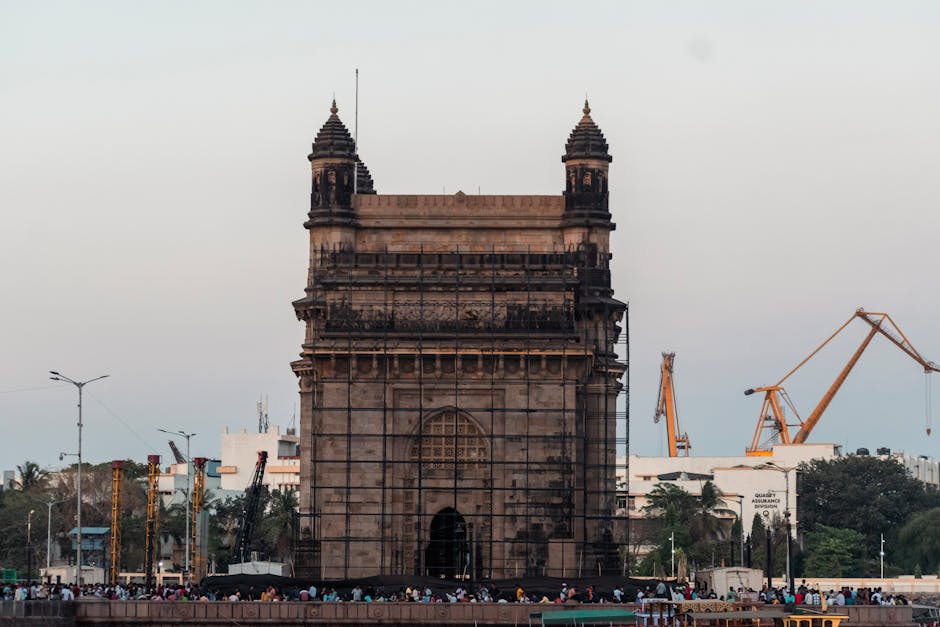
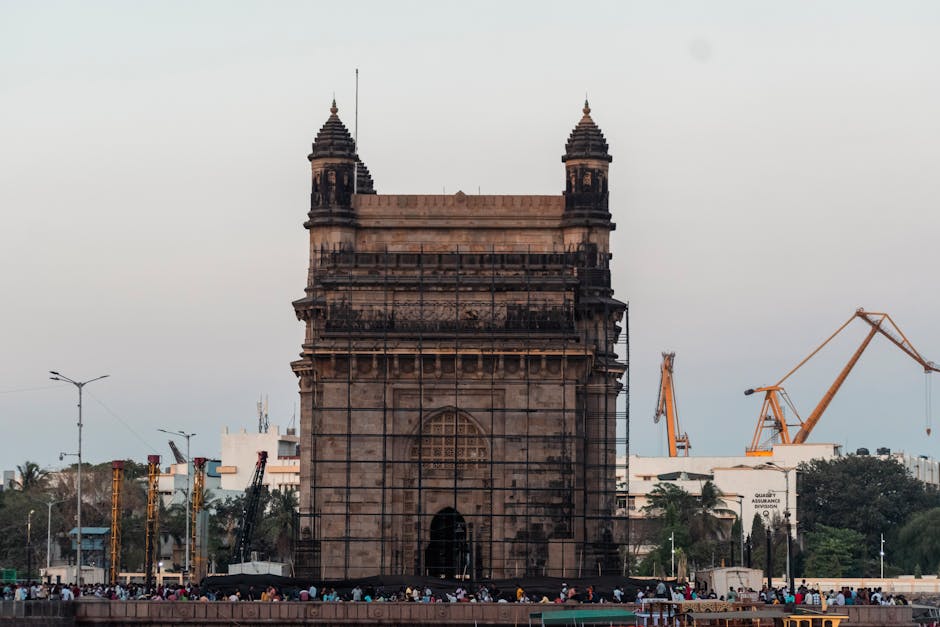
Explore Mumbai's colonial legacy on this self-guided walk through Colaba's iconic landmarks, from the Gateway of India to grand Art Deco palaces.
 Moderate
Mumbai, India
Explore the ancient fishing village of Worli Koliwada, historic forts, and stunning sea views on this self-guided cultural walking route.