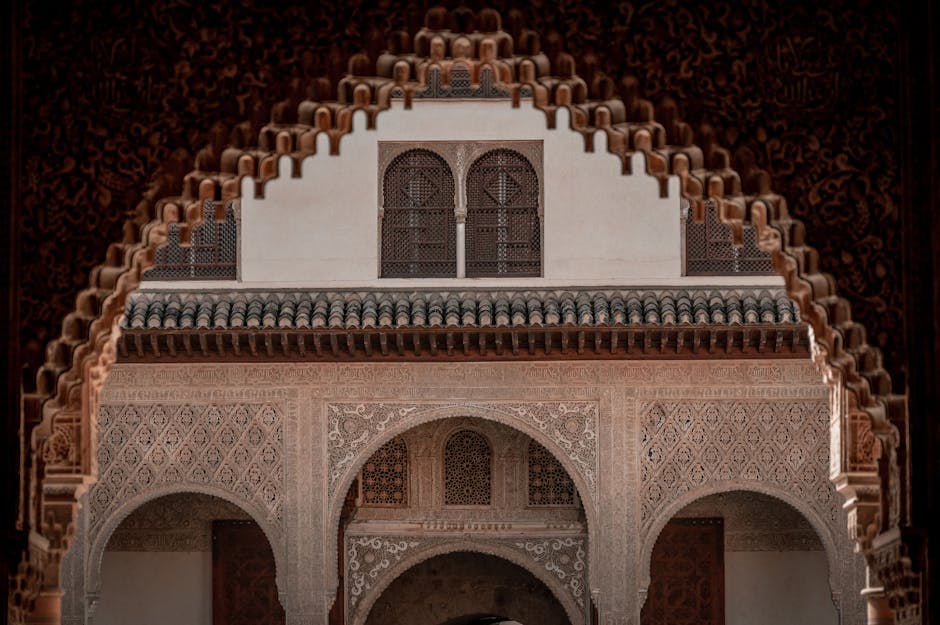
Self-guided audio tour in Granada
Start Free on iPhone
Start free on iPhone to unlock this self-guided walking tour in Granada. Hear all the stories that make it amazing, walk at your own pace, and begin whenever you want.
Your Private Tour Guide
Step into a world where time seems to have paused within the labyrinthine alleyways of Granada's oldest district. This self-guided walk through the Albaicín offers an immersive journey into the heart of Moorish Spain, where whitewashed houses and hidden gardens tell stories of a vanished sultanate. As you navigate the steep, cobblestone streets of this UNESCO World Heritage site, you will encounter the architectural legacy of the Zirid and Nasrid dynasties, preserved through centuries of change. This neighborhood stroll is designed for those who want to discover at their own pace, allowing for spontaneous detours into secret plazas or extended pauses to capture the perfect photograph of the Alhambra across the valley. The route begins in the bustling Plaza Nueva, the transition point between the modern city and the historic quarter. From here, the walking route follows the gentle curve of the River Darro before ascending into the hills. You will explore remarkable landmarks such as El Bañuelo, one of the best-preserved 11th-century Arab baths in Europe, and the Palacio de Dar al-Horra, the former residence of the mother of the last Moorish king. The experience culminates at the iconic Mirador de San Nicolás, widely considered to offer one of the most breathtaking vistas in the world. Whether you are interested in the intricate geometry of Islamic architecture, the romantic legends of the Reconquista, or simply seeking the most Instagram-worthy spots in Andalusia, this independent exploration provides the historical context and navigational ease to make the most of your time in Granada. Unlike a standard walking tour Granada, this audio walk gives you the freedom to linger at a viewpoint or stop for a tapas break whenever the mood strikes, ensuring a personal connection with the 'Legends of the Albaicín.'
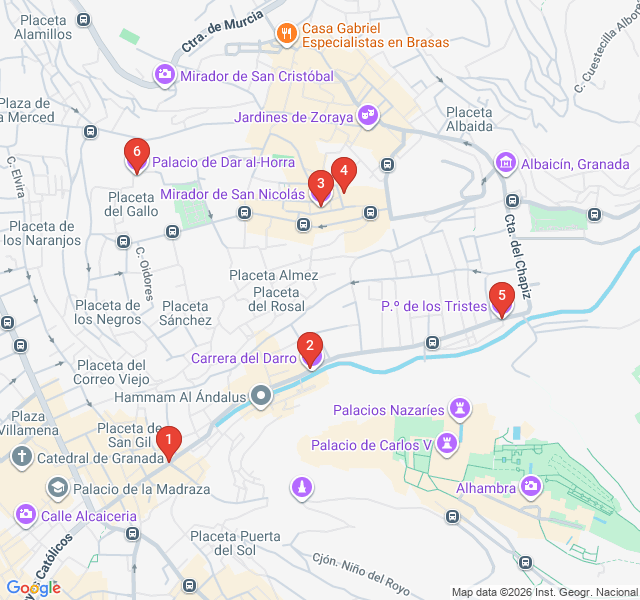
Numbers indicate the order of stops on the tour.
Start exploring with Zigway at Plaza Nueva, the symbolic heart of Granada where the modern city meets the medieval past. Despite its name, this is actually the city's oldest square, built in the 16th century to cover the River Darro. Look around and you will see the imposing Real Chancillería, the former High Court of the Catholic Monarchs, which represents the transition to Christian rule. This plaza serves as the gateway to the Albaicín. As you look up toward the hills, you can imagine the centuries of merchants, soldiers, and poets who have passed through this space. The sound of the river still flows beneath your feet, hidden but ever-present, much like the layers of history you are about to uncover.
Continuing along the Carrera del Darro, you arrive at El Bañuelo. These 11th-century Arab baths are a rare survivor of the Reconquista, as most public baths were destroyed by Christian forces who associated them with religious rituals. Step inside to see the incredible star-shaped skylights carved into the vaulted ceilings; these were designed both for ventilation and to create a celestial light effect for bathers. The site follows the classic Roman bath layout—cold, warm, and hot rooms—but adapted for Islamic social and spiritual life. It is one of the oldest and most complete examples of its kind in Spain, offering a silent testimony to the sophisticated urban life of the Zirid dynasty.
Prepare for the highlight of your neighborhood stroll. The Mirador de San Nicolás is perhaps the most famous viewpoint in Spain. From this stone terrace, the Alhambra palace complex is laid out before you in all its terracotta glory, framed by the snow-capped peaks of the Sierra Nevada mountains. It is a scene that has inspired countless artists and travelers; famously, Bill Clinton once described the sunset here as the most beautiful in the world. While the atmosphere is often lively with flamenco buskers and local artisans, take a moment to look beyond the view and notice the Church of San Nicolás behind you, which was built atop a former mosque, a common architectural theme in this district.
Just steps from the crowded viewpoint is the Mezquita Mayor de Granada, the Great Mosque. Opened in 2003, it was the first mosque built in the city since 1492. Its architecture is a beautiful homage to the past, featuring marble floors and mosaic tiles that echo the Great Mosque of Córdoba and the Alhambra. The gardens here are a haven of tranquility, designed with traditional Andalusian water features and cypress trees. It represents a bridge between the historical Islamic legacy of the Albaicín and the modern Muslim community of Granada. The view of the Alhambra from their garden is equally stunning but often far more peaceful than the main mirador.
Descend back toward the river to find the Paseo de los Tristes. Officially named Paseo del Padre Manjón, it earned its melancholy nickname—the 'Walk of the Sad Ones'—because it was the route funeral processions took on their way to the cemetery behind the Alhambra. Despite the name, it is one of the most romantic spots in the city. To your right, the Darro river babbling over stones; to your left, the sheer cliffs of the Alhambra hill topped with the Comares Tower. This area was once the site of festivals and bullfights in the 17th century. Today, it is the perfect place to appreciate the scale of the fortress above while enjoying the shade of the trees.
Finalize your self-guided adventure at the Palacio de Dar al-Horra. This 15th-century palace was the residence of Aixa al-Horra, the mother of Boabdil, the last Sultan of Granada. Its name means 'House of the Honest Lady.' This site is a masterclass in Nasrid residential architecture, featuring a central courtyard with a pool, intricate plasterwork, and wooden ceilings. Because it is slightly tucked away from the main tourist drag, it offers a more intimate look at how Moorish royalty lived. The upper floors provide a 360-degree view of the Albaicín's rooftops, a sea of white tiles and narrow chimneys that illustrates why this neighborhood remains so unique in the Mediterranean world.
Start Free on iPhone
Explore “Legends of the Albaicín” with your very own Private Tour Guide with Zigway. Start free on iPhone, skip the large group and the fixed routes, and hear the city come alive as you go.
Your Private Tour Guide
Don't miss the good stuff
Explore Freely
 Moderate
Granada, Spain
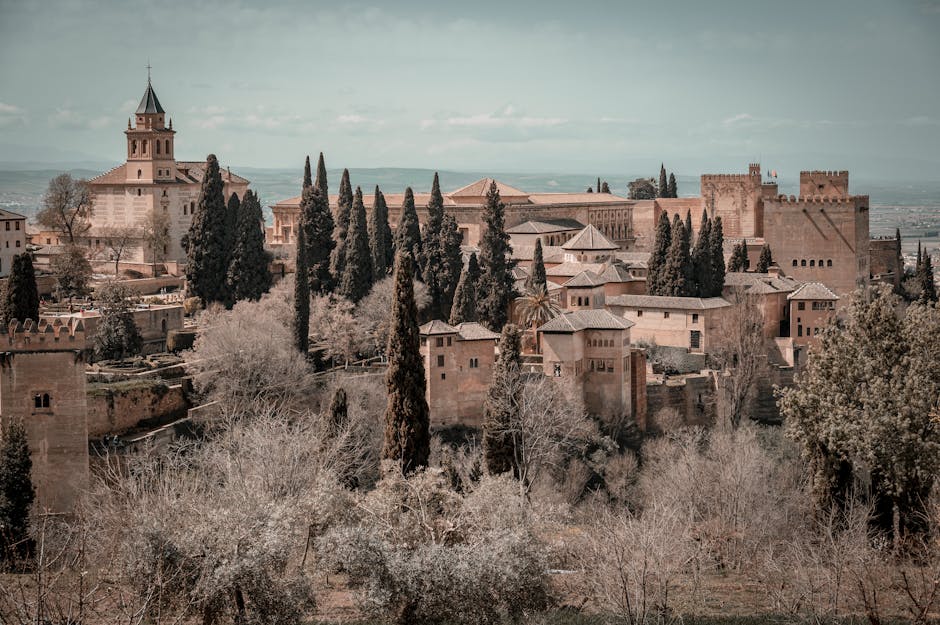
Explore the bohemian heart of Granada's oldest district on this self-guided walking route through the hidden gems of the Upper Albaicín.
 Easy
EasyGranada, Spain
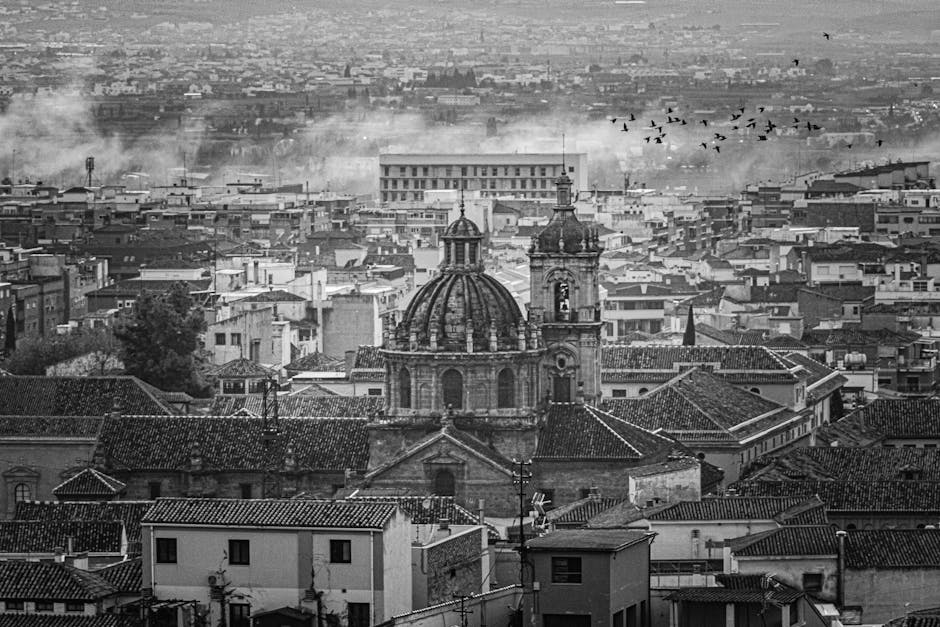
Discover the legacy of the Nasrid silk trade and the vibrant evolution of Granada's historic center on this atmospheric self-guided walk.
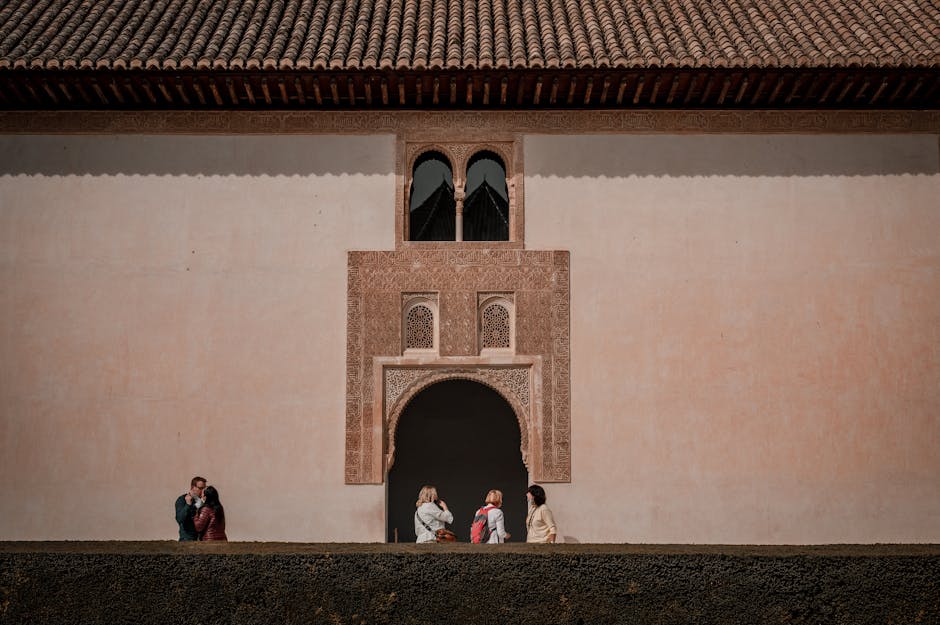 Moderate
Granada, Spain
Explore Granada's historic Jewish Quarter and discover world-class street art on this self-guided walk through the vibrant Realejo neighborhood.
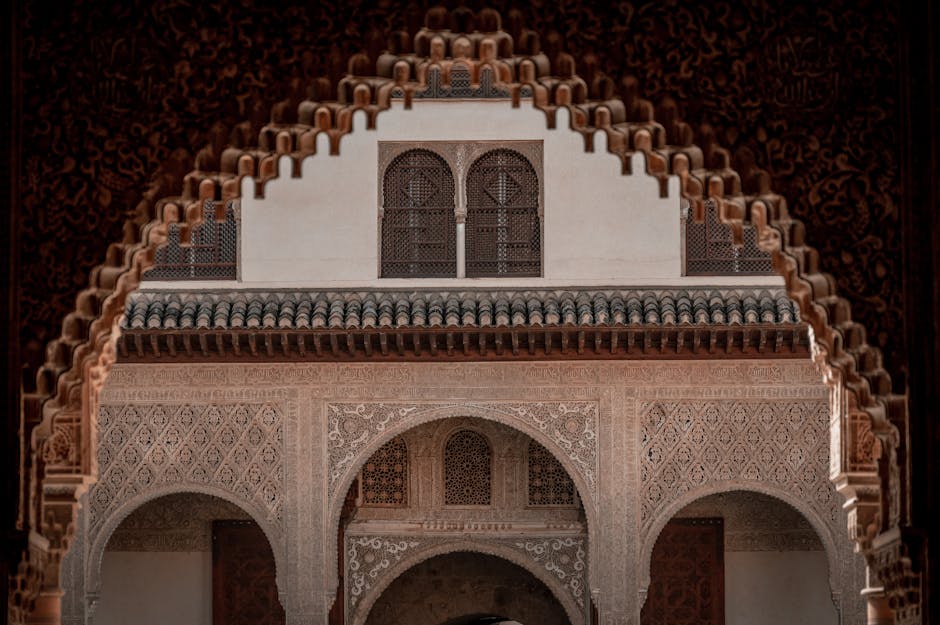 Easy
EasyGranada, Spain
Discover the legacy of the Catholic Monarchs on a self-guided walk through Granada’s grandest Renaissance and Gothic monuments.
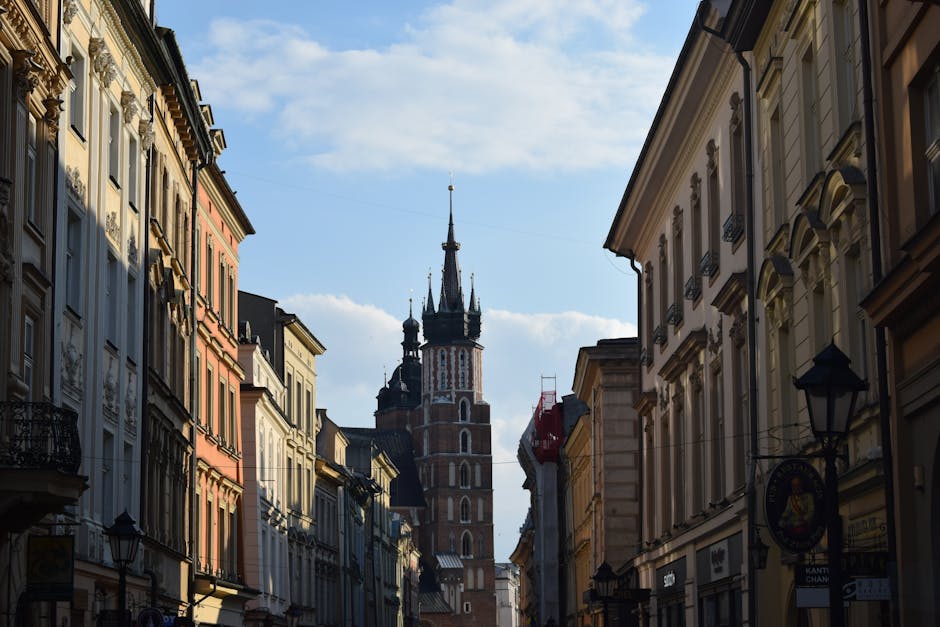 Moderate
Krakow, Poland
Discover Krakow’s stunning skyline and riverside charm on this self-guided audio walk through scenic viewpoints and historic mounds.
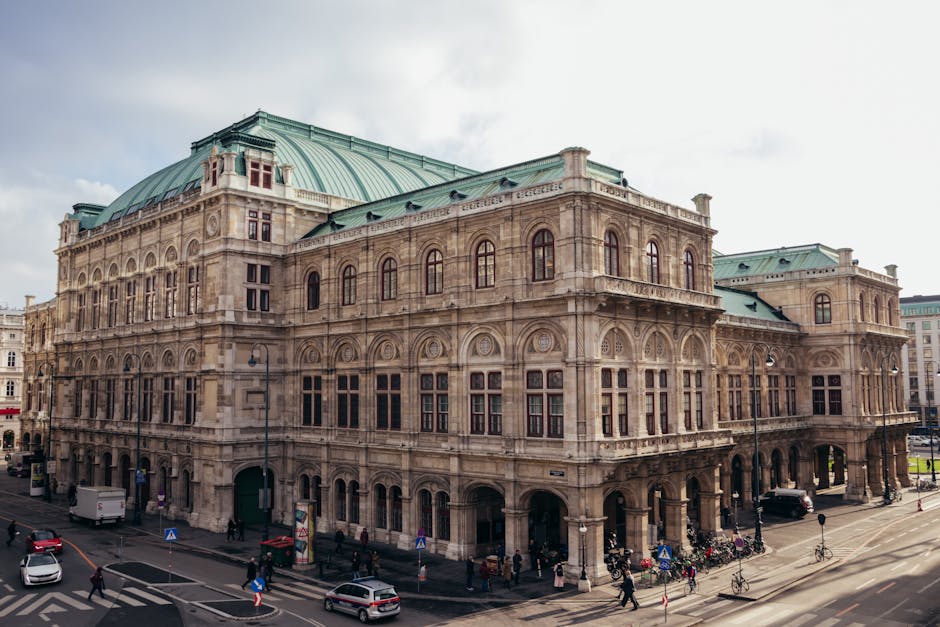 Moderate
Vienna, Austria
Discover the noir world of The Third Man and Cold War Vienna on this atmospheric self-guided audio walk through the historic Innere Stadt.
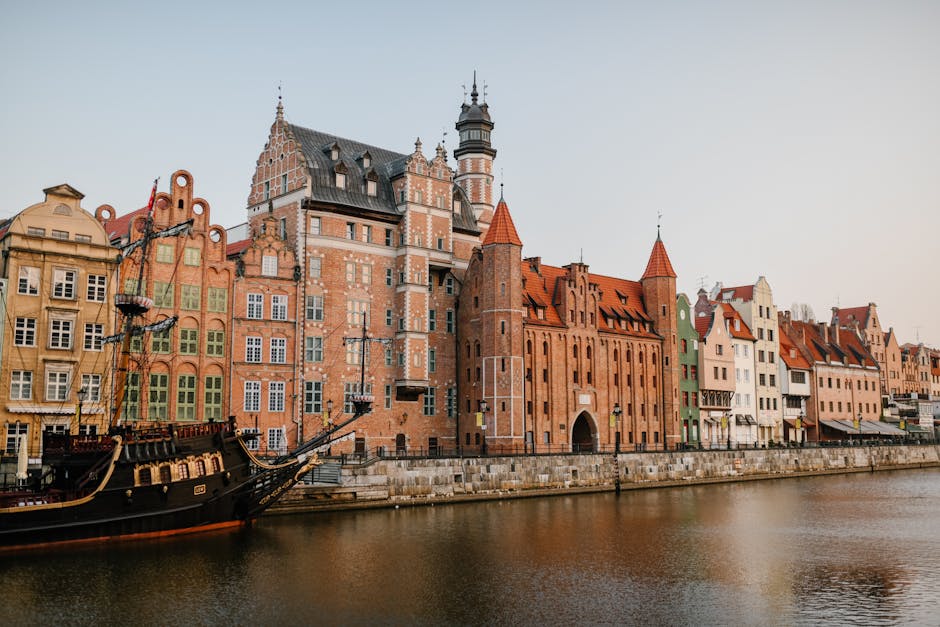 Easy
EasyGdansk, Poland
Discover the 'Baltic Gold' on this self-guided walk through Gdansk's historic mills, massive cathedrals, and the magical Mariacka Street.
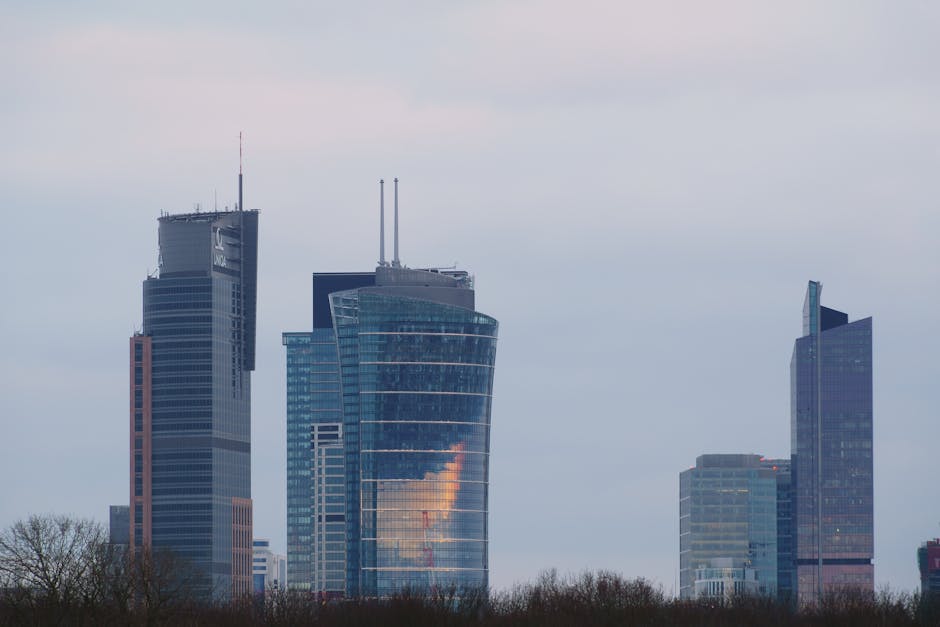 Easy
EasyWarsaw, Poland
Discover the hidden courtyards and grand pre-war architecture of Warsaw's most atmospheric neighborhood on this self-guided stroll.
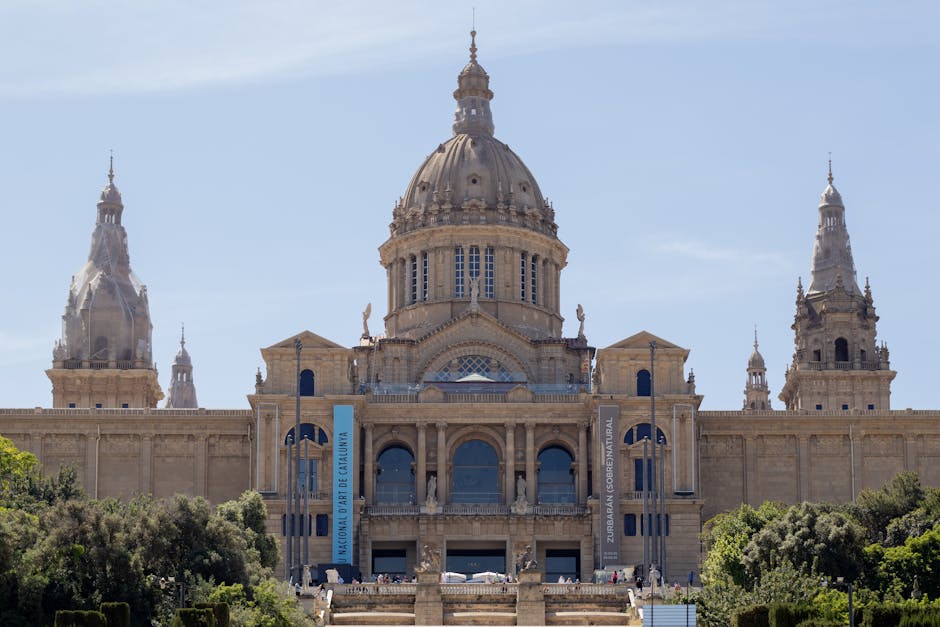 Moderate
Barcelona, Spain
Explore the elegant 'village' of Sarrià, where Gothic monasteries and Gaudí's hidden gems meet charming local markets and narrow streets.
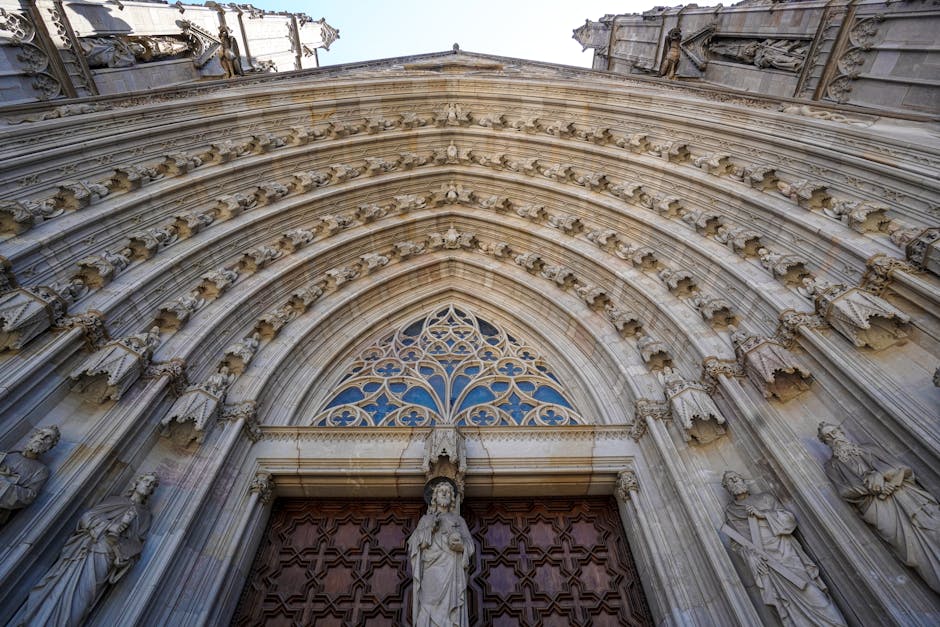 Moderate
Barcelona, Spain
Discover the revolutionary history and haunting scars of the Spanish Civil War on this self-guided walk through Barcelona's historic streets.
 Easy
EasyBarcelona, Spain
Discover the architectural wonders of Barcelona's Golden Square on this self-guided stroll through Eixample's most luxurious Modernista streets.
 Challenging
Barcelona, Spain
Explore Montjuïc’s lush gardens, historic fortress, and iconic Olympic venues on this scenic self-guided walk with panoramic Mediterranean views.