Self-guided audio tour in Amsterdam
Start Free on iPhone
Start free on iPhone to unlock this self-guided walking tour in Amsterdam. Hear all the stories that make it amazing, walk at your own pace, and begin whenever you want.
Your Private Tour Guide
Amsterdam’s identity is inseparable from the water. For centuries, the city’s wealth and global influence were forged in the busy docklands of the Oosterdok. This self-guided walk invites you to explore the fascinating evolution of the Dutch capital, from its 17th-century naval dominance to its modern status as a leader in science and urban design. As you wander along the historic waterfront, you will encounter the echoes of the Dutch East India Company (VOC) standing alongside the bold, futuristic silhouette of the NEMO Science Museum. This walking route highlights the maritime heritage that shaped the Netherlands while showcasing the innovative spirit that continues to drive the city forward today. Beginning at the monumental National Maritime Museum, you will travel through time, seeing where massive warships were once provisioned before they set sail for the ends of the earth. You'll explore the architecture of the Eastern Docklands, where classic 16th-century defensive towers meet the undulating, modern forms of the ARCAM Architecture Centre. This neighborhood stroll offers a perfect blend of history and modernity, providing ample opportunities for photography and quiet reflection by the water. Whether you are marvelling at the replica of an 18th-century merchant ship or enjoying the panoramic views from a rooftop terrace, this walking tour Amsterdam experience allows you to discover the city's seafaring soul at your own pace. The route is easy to navigate and flat, making it an ideal choice for history buffs, science enthusiasts, and families alike. By the end of this self-guided adventure, you will have a deeper understanding of how Amsterdam transformed from a swampy fishing village into a global maritime powerhouse and a modern center for scientific discovery.
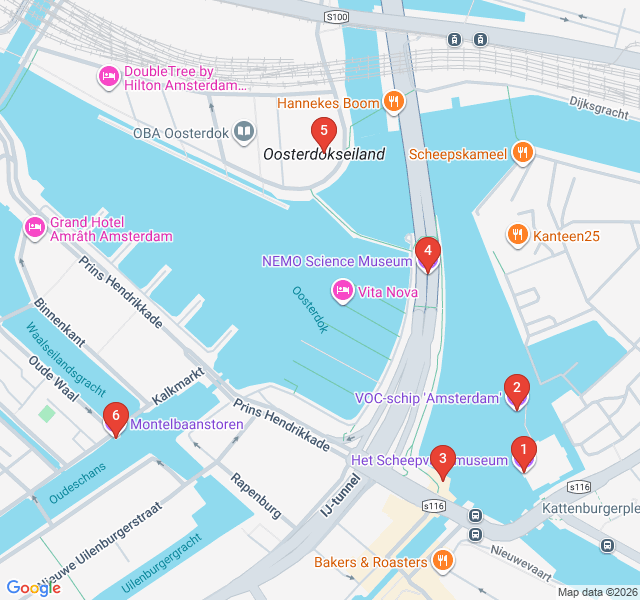
Numbers indicate the order of stops on the tour.
Welcome to the heart of Amsterdam’s naval history. This monumental building, known as 's Lands Zeemagazijn, was constructed in 1656 as a storehouse for the Dutch Admiralty. At the time, this was the world’s largest building of its kind, housing everything from sails and ropes to cannons and biscuits for the fleet. Take a moment to look up at the spectacular glass roof in the courtyard; it was added in 2011 and is inspired by the rhumb lines of old sea charts. This museum tells the story of how the tiny Dutch Republic became a global superpower, navigating the oceans with a mixture of daring, trade, and naval might.
Moored right outside the museum is a full-scale replica of the 'Amsterdam', a Dutch East India Company (VOC) ship. The original vessel met a tragic end on its maiden voyage in 1749, running aground in a storm off the coast of England. This replica was built in the 1980s using traditional methods and provides a vivid look at the cramped, difficult conditions sailors faced during their long journeys to Asia. The VOC was the first multinational corporation in the world, and ships like this were the backbone of its empire, carrying spices, porcelain, and silk across the globe.
As you move along the water, you’ll encounter a building that looks more like a sculpture than a traditional house. This is ARCAM, the Amsterdam Centre for Architecture. Designed by architect René van Zuuk, its skin is made of coated aluminum that wraps around the building in a continuous wave-like form. It stands as a gateway to the modern redevelopment of the docklands. Amsterdam is a city that constantly reinvents itself, and ARCAM serves as the hub for discussing how the city’s past architecture informs its future. It is a striking contrast to the 17th-century storehouse you just visited.
Rising from the water like the massive green hull of a sinking ship, the NEMO Science Museum is one of Amsterdam’s most recognizable modern landmarks. Designed by the world-renowned architect Renzo Piano, the building is actually situated on top of the IJ tunnel. Piano’s vision was to create a 'piazza' on the water, which is why the roof is a giant, sloping terrace open to the public. It’s a temple to curiosity and scientific exploration, emphasizing the Dutch spirit of innovation. Even if you don't go inside, the building’s interaction with the surrounding water is a masterclass in urban design.
This island is one of the largest urban redevelopment projects in Europe. Once a busy railway yard and industrial site, it has been transformed into a vibrant cultural and residential hub. Here you’ll find the OBA Public Library, another architectural marvel with fantastic views from its top-floor cafe. This area represents the 'New Amsterdam'—dense, multifunctional, and focused on public space. Look across the water toward the A’DAM Lookout and the Eye Film Museum on the North bank to see how the city has successfully integrated its industrial waterfront into the modern city center.
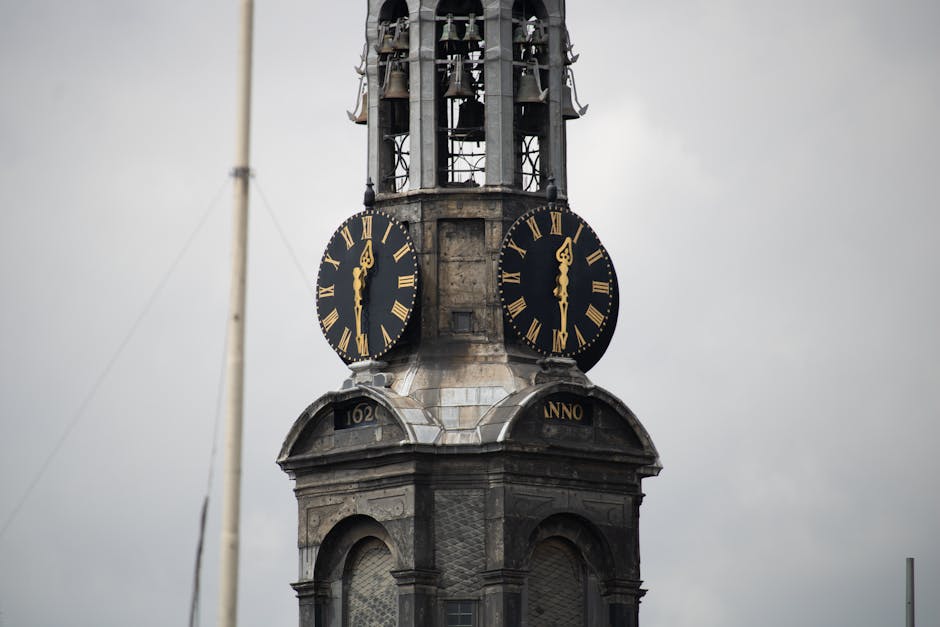
Our walk concludes at the Montelbaanstoren, a tower that dates back to 1516. Originally built as a defensive lookout for the city's expanding harbor, its decorative spire was added later by Hendrick de Keyser in 1606. The tower has a quirky history; for centuries, its clock was notorious for never telling the right time, earning it the nickname 'Malle Jaap' or 'Silly Jack.' It has survived floods, wars, and urban renewal, standing as a silent witness to Amsterdam’s journey from a fortified medieval town to the bustling maritime capital of the Golden Age.
Start Free on iPhone
Explore “Ships and Science: Amsterdam’s Maritime Heritage” with your very own Private Tour Guide with Zigway. Start free on iPhone, skip the large group and the fixed routes, and hear the city come alive as you go.
Your Private Tour Guide
Don't miss the good stuff
Explore Freely
 Easy
EasyAmsterdam, Netherlands
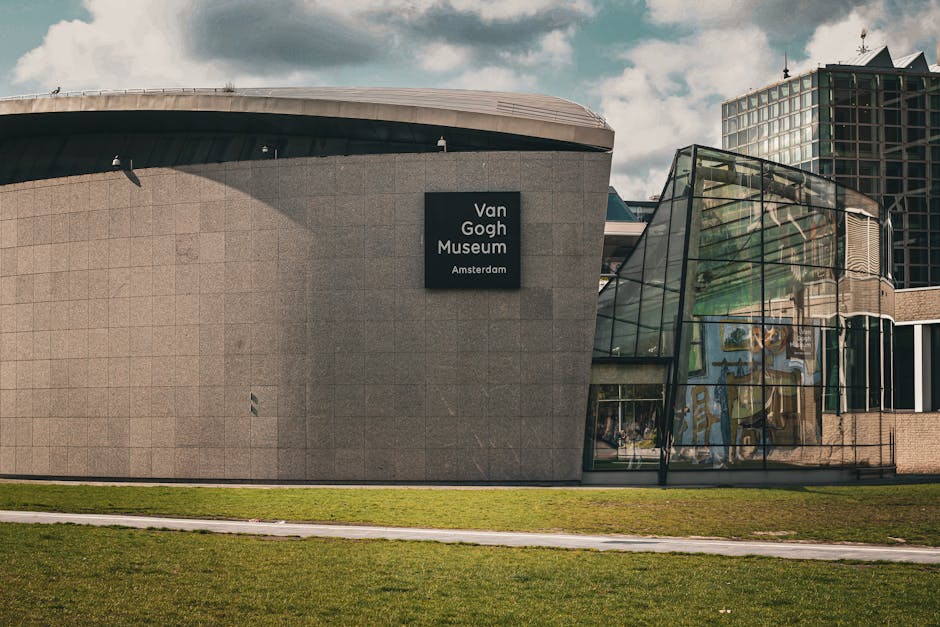
Discover Amsterdam's cultural heart on this self-guided walk from the iconic Museumplein to the serene blooming gardens of Vondelpark.
 Easy
EasyAmsterdam, Netherlands
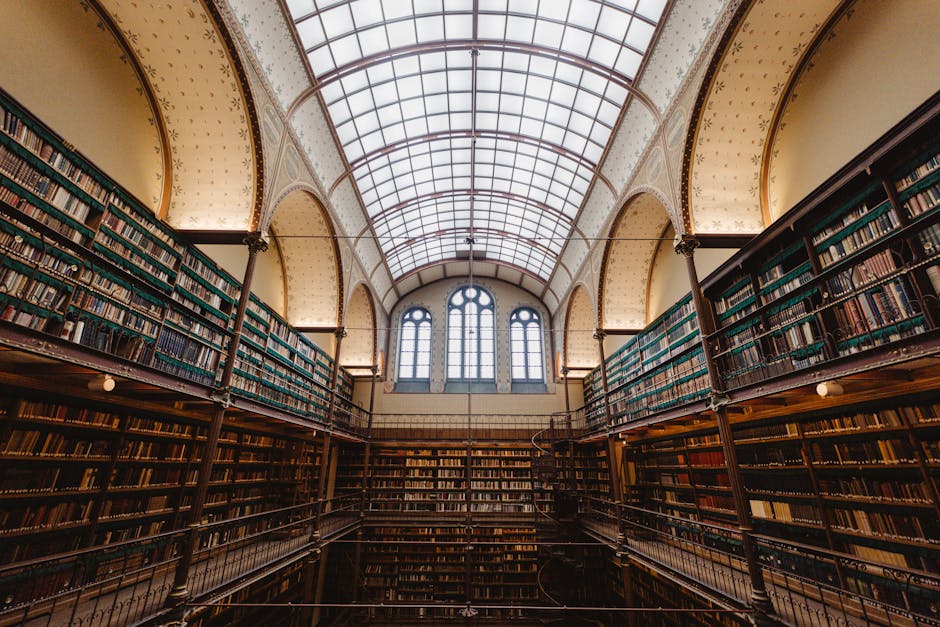
Discover Amsterdam's literary heart on this self-guided walk through historic bookshops, writers' haunts, and the homes of revolutionary thinkers.
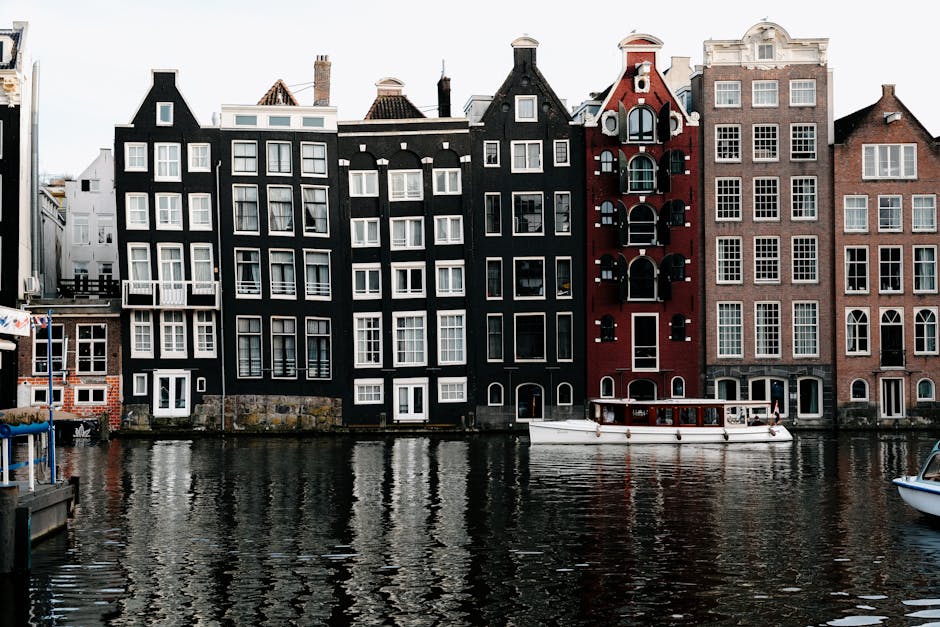 Easy
EasyAmsterdam, Netherlands
Capture the magic of Amsterdam with this self-guided photography walk across the iconic bridges and scenic banks of the Amstel River.
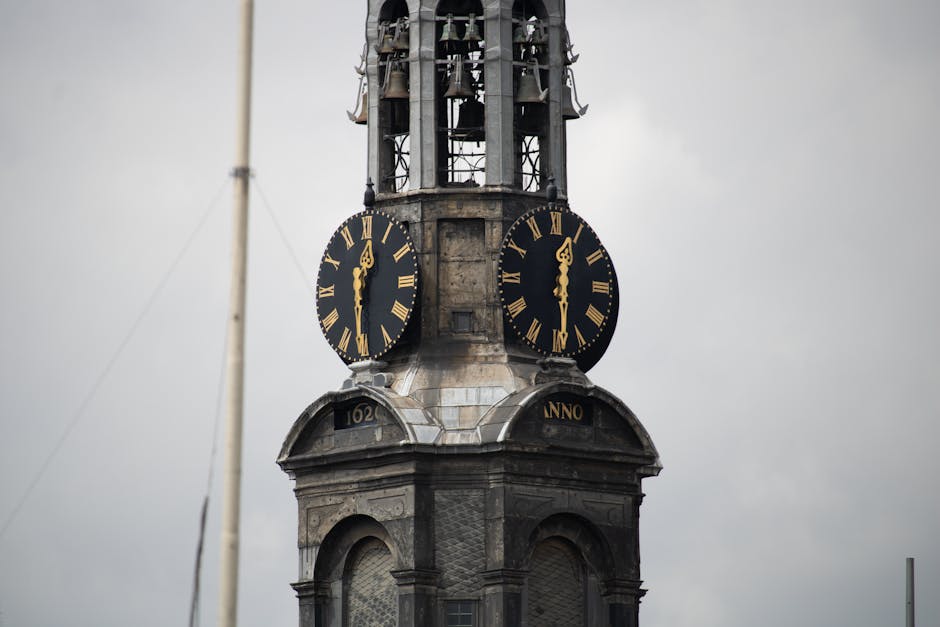 Easy
EasyAmsterdam, Netherlands
Discover the opulent 17th-century mansions and rich history of Amsterdam's famous Canal Belt on this self-guided architectural walking route.
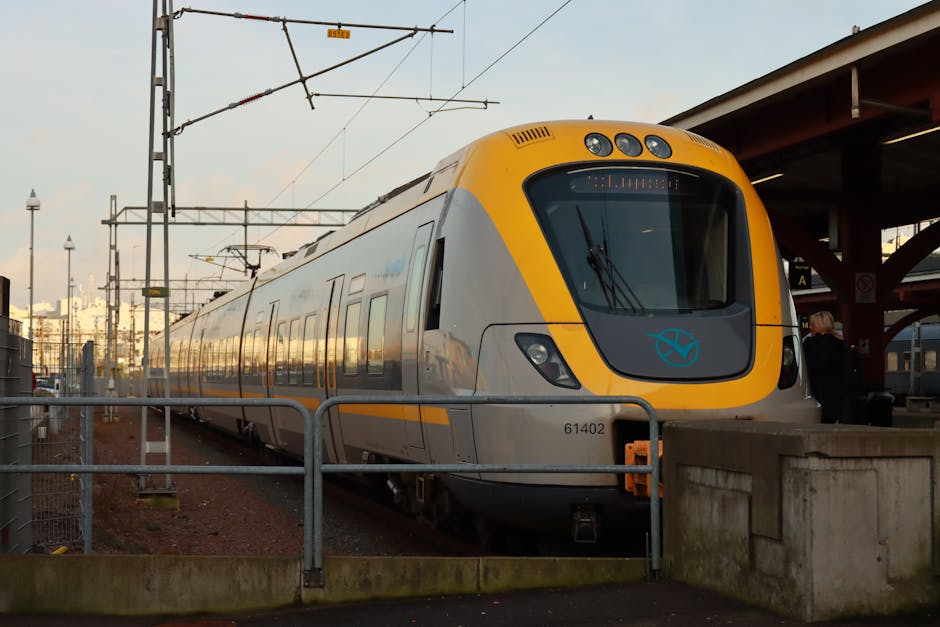 Easy
EasyGothenburg, Sweden
Discover Gothenburg’s 17th-century Dutch foundations, historic canals, and military fortifications on this self-guided architectural walk.
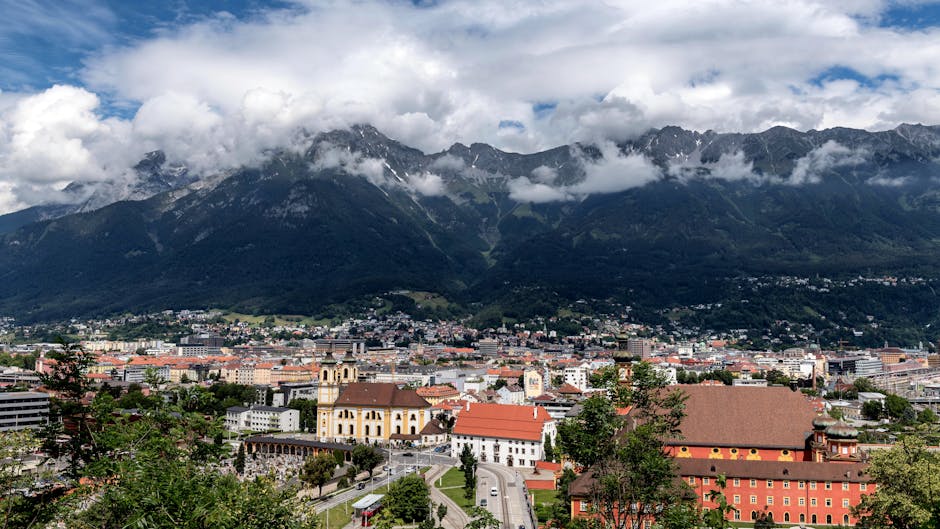 Easy
EasyInnsbruck, Austria
Uncover the myths and legends of Innsbruck on this self-guided walk through the historic Altstadt and beyond.
 Easy
EasyGdansk, Poland
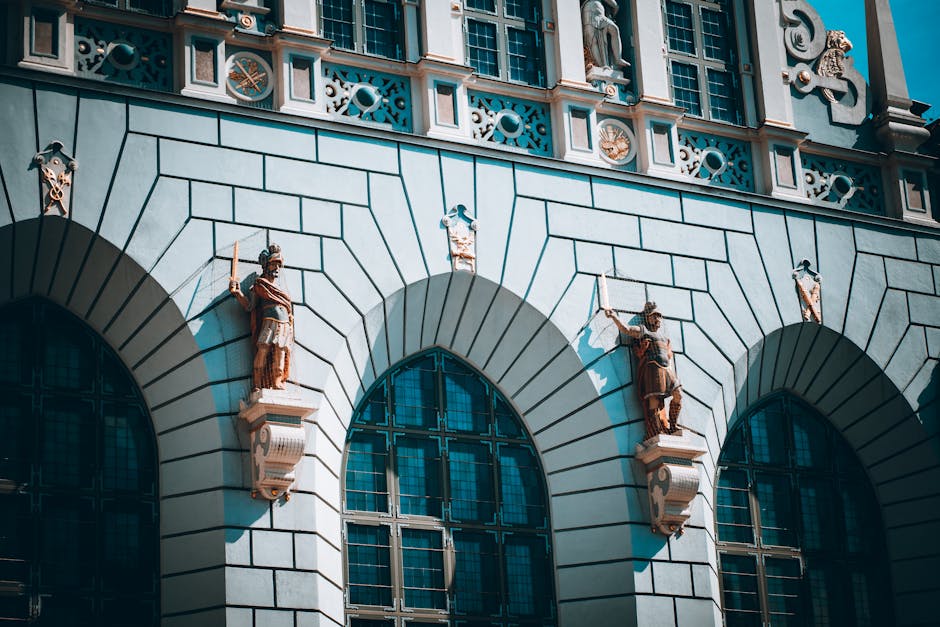
Discover the opulent Royal Way of Gdansk at your own pace. Explore Hanseatic history, gilded architecture, and the iconic Neptune's Fountain.
 Easy
EasyGdansk, Poland
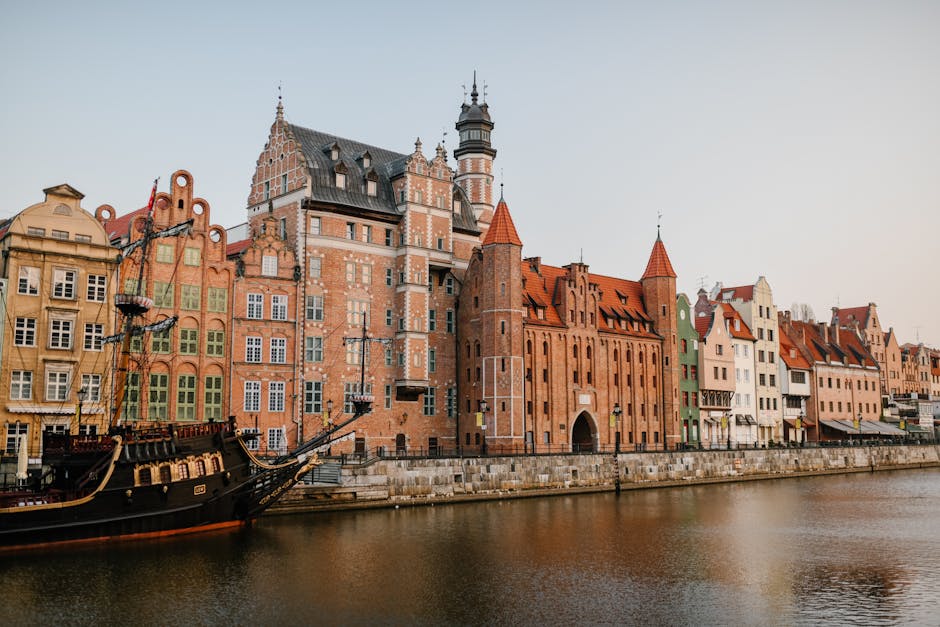
Discover the 'Baltic Gold' on this self-guided walk through Gdansk's historic mills, massive cathedrals, and the magical Mariacka Street.
 Easy
EasyRotterdam, Netherlands
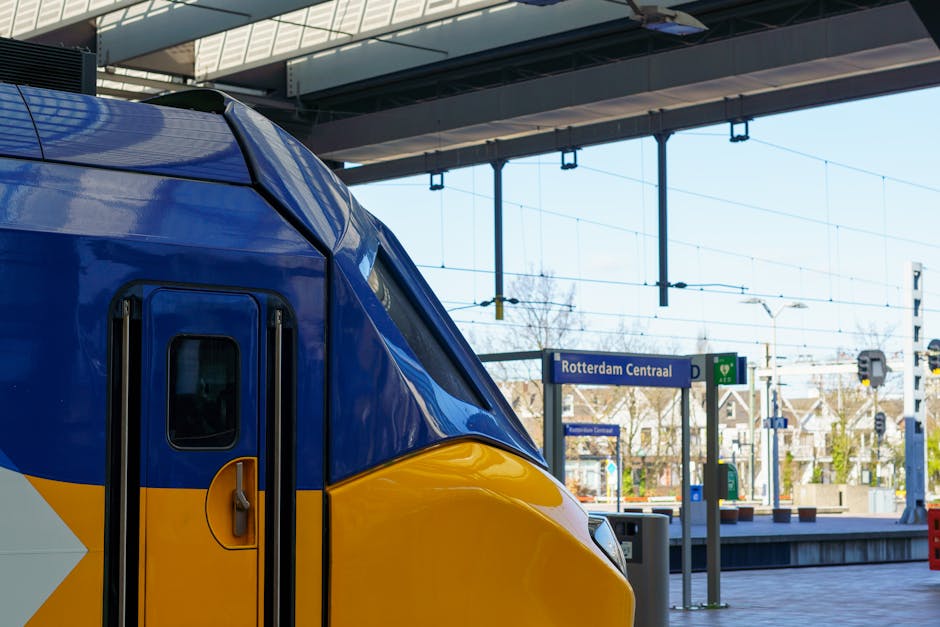
Explore Rotterdam’s cultural heart on this self-guided walk through world-class museums, modernist villas, and futuristic architectural landmarks.
 Easy
EasyRotterdam, Netherlands
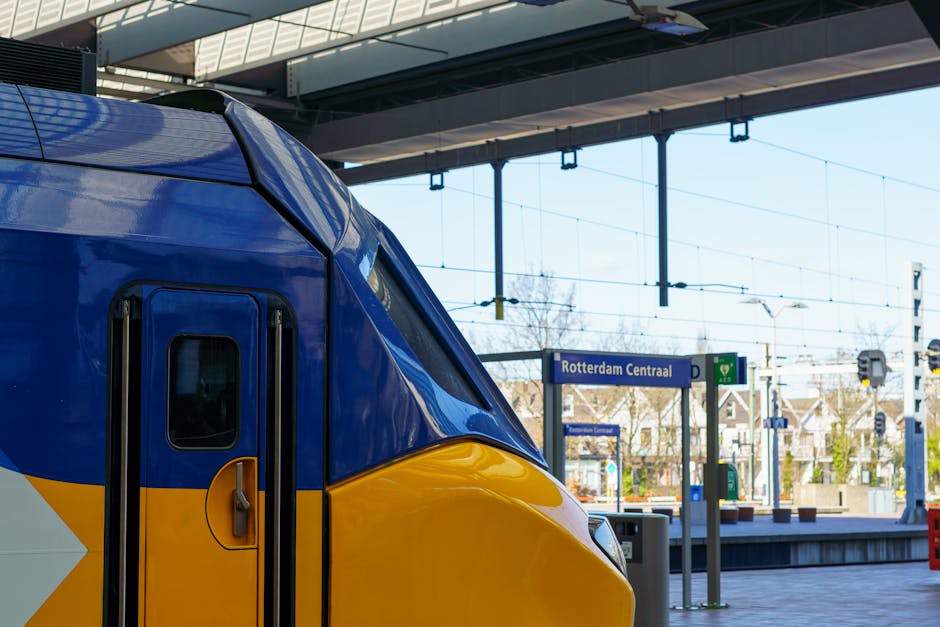
Capture Rotterdam's iconic skyline and historic bridges on this scenic self-guided photography walk along the Maas River and Noordereiland.
 Moderate
Rotterdam, Netherlands
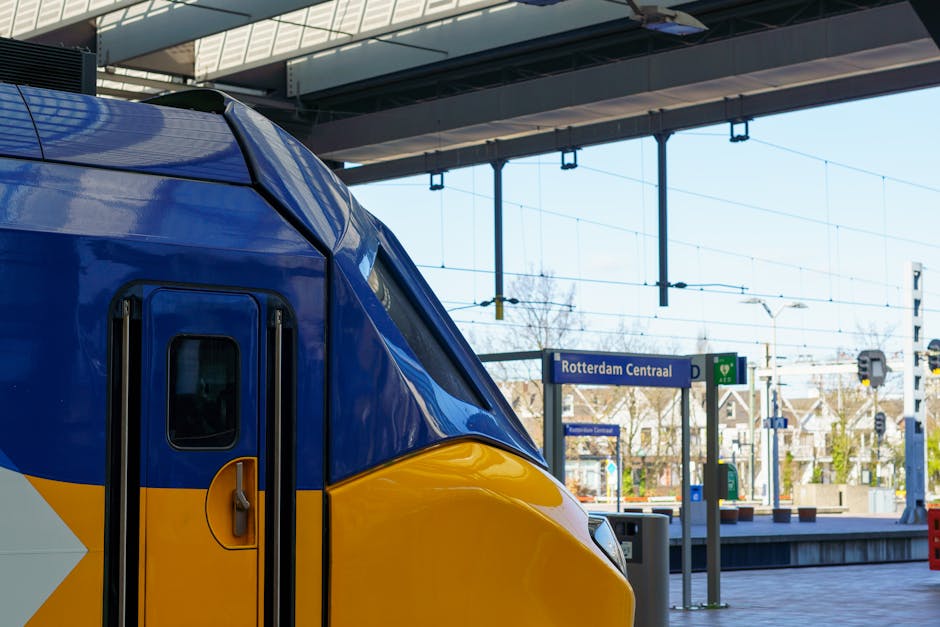
Explore Rotterdam’s lush side through secret gardens, historic harbors, and the elegant 19th-century Shipping Quarter on this self-guided walk.
 Easy
EasyRotterdam, Netherlands
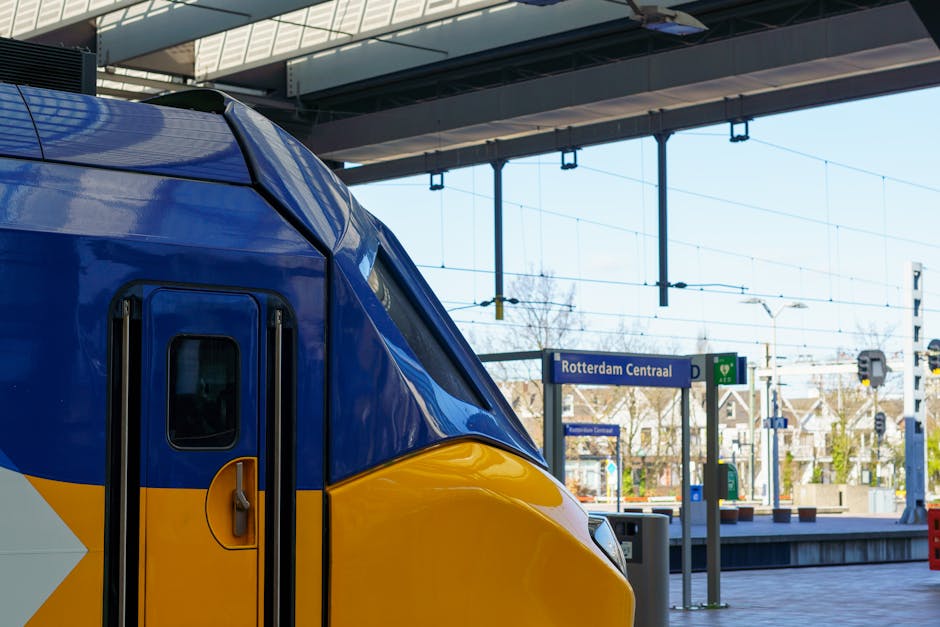
Explore Rotterdam's neon-lit streets and vibrant nightlife at your own pace with this independent audio walk through the city's coolest districts.