Self-guided audio tour in Amsterdam
Start Free on iPhone
Start free on iPhone to unlock this self-guided walking tour in Amsterdam. Hear all the stories that make it amazing, walk at your own pace, and begin whenever you want.
Your Private Tour Guide
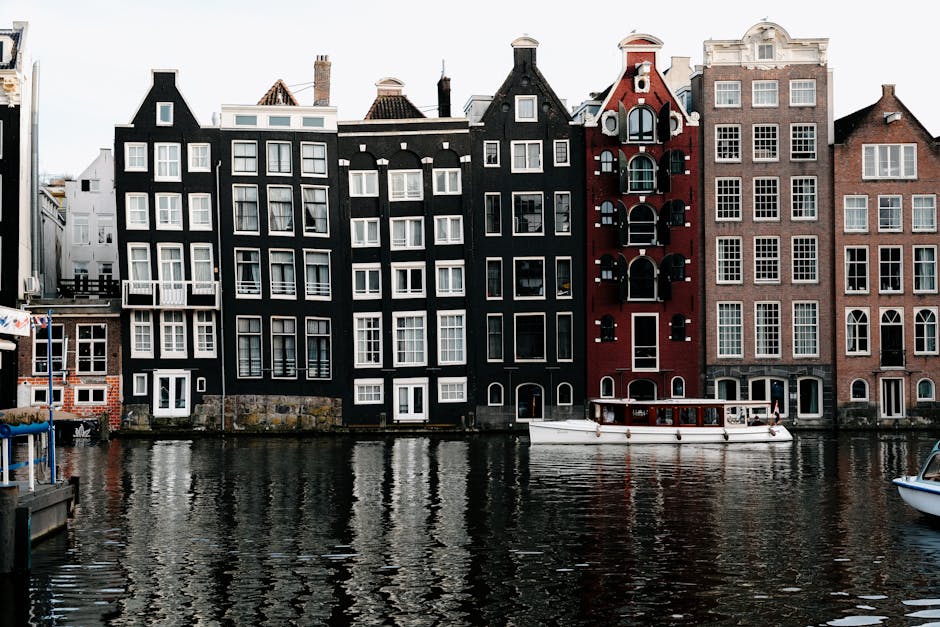
Step back into the 17th century, a time when Amsterdam was the wealthiest city in the world and the center of global trade. This self-guided walking route takes you through the heart of the Canal Belt, a UNESCO World Heritage site renowned for its stunning architecture and historical significance. As you explore the Herengracht and Keizersgracht, you will encounter the grand 'stadspaleizen' or city palaces built by wealthy merchants during the Dutch Golden Age. This neighborhood stroll reveals the stories behind the ornate gables and hidden gardens that define the city's unique landscape. You will begin at the prestigious Willet-Holthuysen Museum, where the lifestyle of the 19th-century elite is perfectly preserved within a Golden Age shell. From there, the route winds past the Museum Van Loon, offering a glimpse into the lives of the family that co-founded the Dutch East India Company. A highlight of this walking tour Amsterdam is the 'Gouden Bocht' or Golden Bend, the most exclusive stretch of canal where the city's most powerful regents once resided. The architecture here shifts from traditional Dutch styles to the grander, more symmetrical French-inspired designs of the late 17th century. You will also see the Cromhout House, a masterpiece of Dutch Classicism, before heading toward the monumental Royal Palace on Dam Square. This building, originally constructed as the City Hall, was once described as the 'Eighth Wonder of the World' due to its sheer scale and artistic detail. The journey concludes at the Museumhuis Bartolotti, an exceptional example of a Renaissance-style mansion with a distinctive curved facade. This independent travel experience allows you to appreciate the intricate carvings, the history of the merchant class, and the engineering marvels of the canal system at your own pace, without the constraints of a traditional guided tour Amsterdam. Whether you are an enthusiast of history or simply love beautiful cityscapes, this route offers a deep dive into the opulent past of the Netherlands.
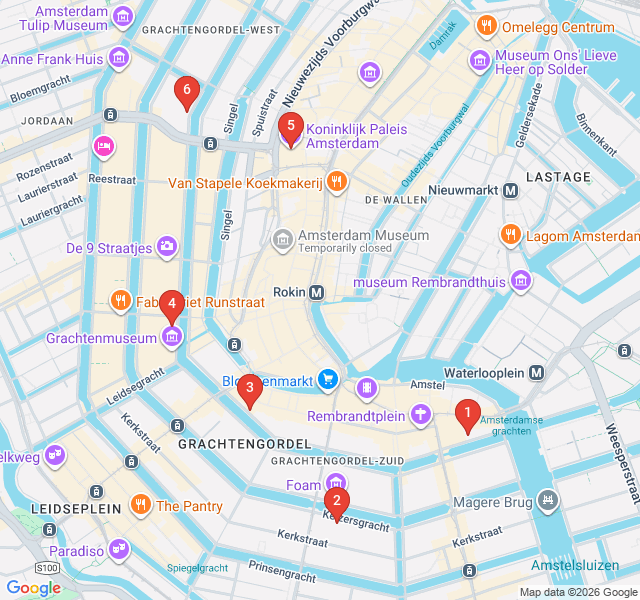
Numbers indicate the order of stops on the tour.
Start your exploration at Herengracht 605, a double-width mansion that serves as a portal to the past. This house was left to the city in 1895 by Louisa Willet-Holthuysen, the last resident of this grand estate. While the house was built in the late 17th century, the interiors reflect the lavish tastes of the late 19th century. As you walk through the period rooms, notice the transition from the formal dining room to the lush French-style garden at the rear. This stop perfectly illustrates how Golden Age wealth evolved through the centuries, maintained by the city's elite families who filled these halls with fine art and delicate glassware.
A short walk away on the Keizersgracht stands the home of the Van Loon family. Willem van Loon was a co-founder of the Dutch East India Company (VOC) in 1602, and his family’s influence is felt throughout this house. The mansion is unique because it retains its original 17th-century layout, including a magnificent formal garden and a coach house that looks like a Greek temple. Inside, the walls are lined with family portraits that tell the story of Dutch nobility and trade. The connection between the merchant's home and his business ventures is palpable here, showcasing the domestic side of Amsterdam's global reach.
You are now standing at the 'Gouden Bocht,' or the Golden Bend, located on the Herengracht between Leidsestraat and Vijzelstraat. This is the most prestigious part of the canal ring. During the 17th century, the wealthiest merchants bought double-sized plots here to build wider, grander houses that departed from the narrow, gabled traditional styles. Instead, you see smooth sandstone facades and monumental entrances influenced by French architecture. Look for the coat of arms and intricate carvings above the doors, which served as status symbols for the regents and bankers who lived here. Even today, this remains some of the most expensive real estate in the Netherlands.
The Cromhout House consists of four majestic buildings designed by the famous architect Philips Vingboons in the mid-17th century. The Cromhout family lived here for nearly two centuries, and the buildings represent the pinnacle of Dutch Classicism. The interior is famous for its 'staircase of the century' and the beautifully painted ceilings by Jacob de Wit. These houses were designed to be both functional for a merchant and impressive for a socialite. The symmetry and use of classical elements like pilasters and pediments were revolutionary at the time, marking a shift away from the medieval-style wooden structures of old Amsterdam.
As you reach Dam Square, the Royal Palace dominates the view. Built during the height of the Golden Age as the City Hall, it was a symbol of Amsterdam's power and independence. Architect Jacob van Campen used over 13,000 wooden piles to support this massive stone structure on the marshy ground. The interior, specifically the Citizens' Hall, features maps of the world inlaid in the floor, signifying that Amsterdam was the center of the universe. When Napoleon's brother, Louis Bonaparte, became King of Holland in 1808, he converted the building into a palace, which the Dutch Royal House still uses today for official state functions.
Finish your route at the Bartolotti House on the Herengracht. Built around 1617 for the wealthy merchant Willem van den Heuvel, who took the name Bartolotti to inherit a fortune from his Italian uncle, this house is a masterpiece of the Dutch Renaissance. The facade is unique for its slight curve, following the bend in the canal. The ornate red-brick and white-stone gable is decorated with scrolls, statues, and vases, representing the exuberant spirit of the early Golden Age. It stands as one of the finest examples of the transition from the practical merchant house to the artistic palace, concluding your journey through Amsterdam's architectural peak.
Start Free on iPhone
Explore “Golden Age Splendor: Grand Canal Houses of Amsterdam” with your very own Private Tour Guide with Zigway. Start free on iPhone, skip the large group and the fixed routes, and hear the city come alive as you go.
Your Private Tour Guide
Don't miss the good stuff
Explore Freely
 Easy
EasyAmsterdam, Netherlands
Discover Amsterdam's cultural heart on this self-guided walk from the iconic Museumplein to the serene blooming gardens of Vondelpark.
 Easy
EasyAmsterdam, Netherlands
Discover Amsterdam's literary heart on this self-guided walk through historic bookshops, writers' haunts, and the homes of revolutionary thinkers.
 Easy
EasyAmsterdam, Netherlands
Capture the magic of Amsterdam with this self-guided photography walk across the iconic bridges and scenic banks of the Amstel River.
 Easy
EasyAmsterdam, Netherlands
Explore Amsterdam’s hidden history on this self-guided walk through clandestine churches, medieval courtyards, and grand basilicas.
 Easy
EasyGothenburg, Sweden
Discover Gothenburg’s 17th-century Dutch foundations, historic canals, and military fortifications on this self-guided architectural walk.
 Easy
EasyGothenburg, Sweden
Explore Gothenburg's elegant academic district, featuring grand 19th-century stone architecture and the iconic cultural hub of Götaplatsen.
 Easy
EasyNairobi, Kenya
Explore Nairobi's architectural evolution from colonial-era landmarks to iconic Brutalist skyscrapers on this historic self-guided walking route.
 Easy
EasyNairobi, Kenya
Discover Nairobi's iconic skyline on this self-guided architecture walk through the CBD’s most famous modernist and Brutalist landmarks.
 Easy
EasyRotterdam, Netherlands
Explore Rotterdam’s cultural heart on this self-guided walk through world-class museums, modernist villas, and futuristic architectural landmarks.
 Easy
EasyRotterdam, Netherlands
Capture Rotterdam's iconic skyline and historic bridges on this scenic self-guided photography walk along the Maas River and Noordereiland.
 Moderate
Rotterdam, Netherlands
Explore Rotterdam’s lush side through secret gardens, historic harbors, and the elegant 19th-century Shipping Quarter on this self-guided walk.
 Easy
EasyRotterdam, Netherlands
Explore Rotterdam's neon-lit streets and vibrant nightlife at your own pace with this independent audio walk through the city's coolest districts.