Self-guided audio tour in Antwerp
Start Free on iPhone
Start free on iPhone to unlock this self-guided walking tour in Antwerp. Hear all the stories that make it amazing, walk at your own pace, and begin whenever you want.
Your Private Tour Guide
Antwerp is a city where every corner tells a story of immense wealth, artistic brilliance, and architectural ambition. This self-guided walk invites you to explore the 'Gilded Gateway' of the city, starting at what is widely considered one of the most beautiful railway stations in the world. As you begin your self-guided adventure, you will step out of the industrial grandeur of the late 19th century and directly into the shimmering heart of the global diamond trade. This walking route offers a unique perspective on how Antwerp’s commercial success fueled its cultural and religious monuments, creating a skyline that blends medieval Gothic styles with opulent Neo-Baroque designs. You will wander through the high-security Diamond District, where billions of dollars in gems change hands behind unassuming facades, before transitioning into the cultural sophistication of the Opera district. The experience culminates at the final resting place of Peter Paul Rubens, the master painter who defined the city's artistic identity. This neighborhood stroll is perfect for those who want to discover at their own pace, offering the flexibility to linger over architectural details or pause for a coffee on a grand boulevard. Unlike a traditional walking tour Antwerp, this audio walk allows you to skip the crowds and focus on the stories that interest you most. From the 'Railway Cathedral' to the hidden synagogues and the final majestic church, this itinerary captures the essence of a city that has always known how to display its riches. Whether you are a first-time visitor or a history enthusiast, this route provides a comprehensive introduction to the elegance and power of Antwerp's golden age.
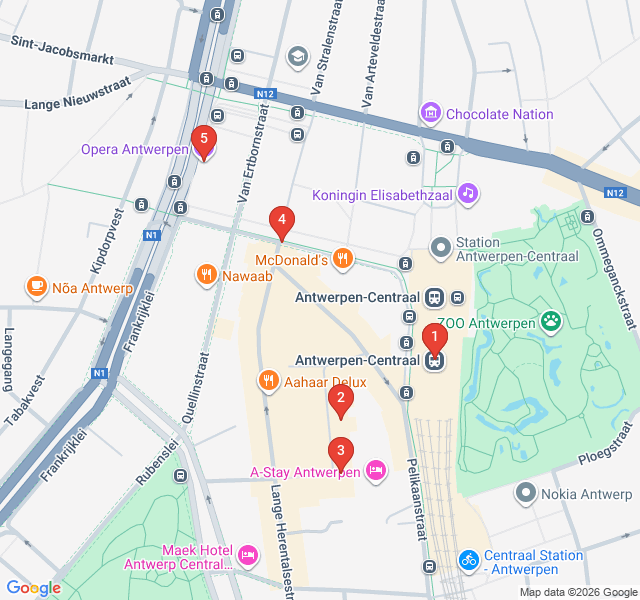
Numbers indicate the order of stops on the tour.
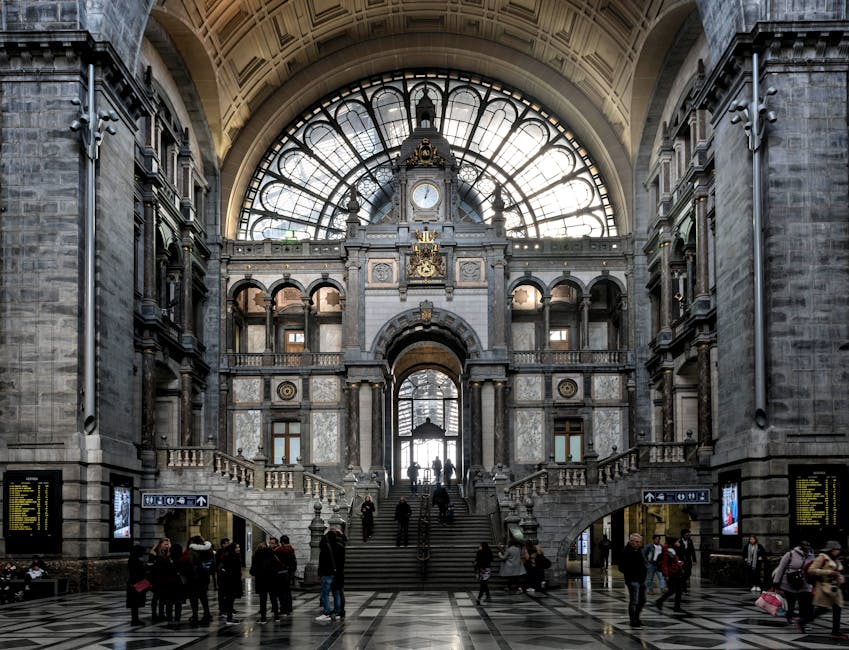
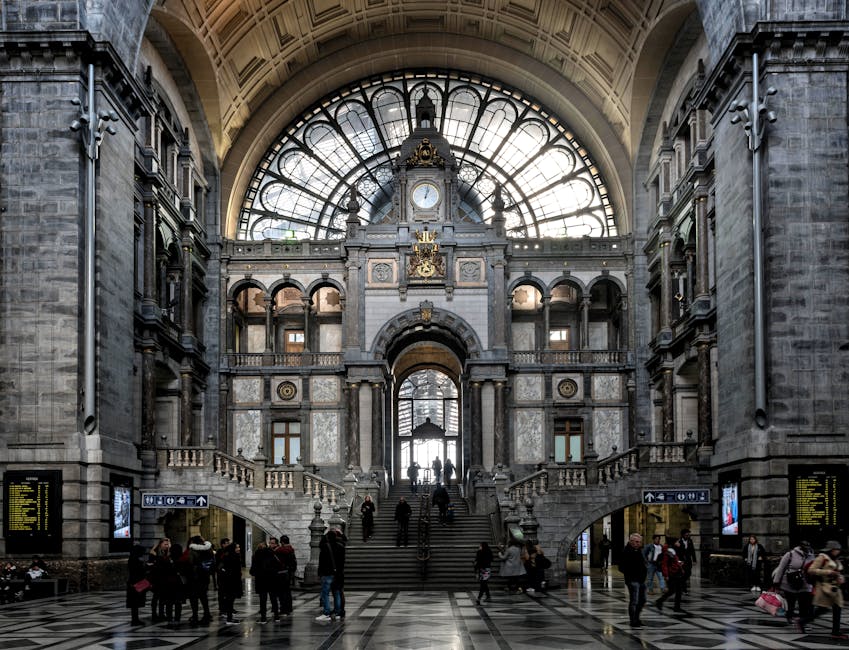
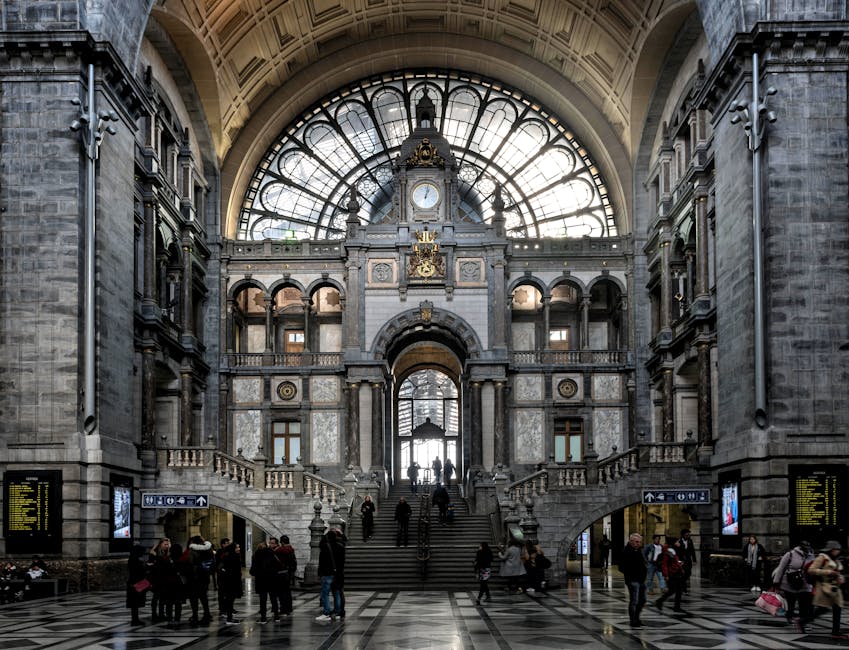
Start exploring with Zigway at what locals call the 'Railway Cathedral.' Built between 1895 and 1905, this station is an architectural masterpiece designed by Louis Delacenserie. Look up at the massive 75-meter high dome and the eclectic blend of styles that range from Neo-Baroque to Art Nouveau. The station was intended to signal Antwerp's status as a global hub of trade and travel. Notice the use of over twenty different types of marble and stone. It isn't just a transit hub; it's a monument to the industrial prosperity of King Leopold II’s reign. Even if you aren't catching a train, the monumental staircase and the glass-and-iron train hall are essential sights for any architecture enthusiast.
A short walk from the station brings you to the Portuguese Synagogue on Houtbriel. This building serves as a reminder of the deep historical roots of the Jewish community in Antwerp, particularly the Sephardic Jews who arrived here centuries ago. The current building, designed in a Neo-Romanesque style, dates back to the early 20th century. While its exterior is somewhat understated compared to the station, it represents a vital part of Antwerp's cultural fabric. The synagogue is a cornerstone of the local community, which has been instrumental in the city's diamond trade for generations. It stands as a symbol of religious freedom and the multicultural history that has shaped modern Antwerp.
You are now entering the Square Mile, the heart of the world’s diamond industry. While the streets of Hoveniersstraat and Rijfstraat might look like ordinary office blocks, approximately 80% of the world's rough diamonds pass through these very buildings. This area is home to four diamond exchanges and over 1,500 diamond firms. You may notice the high level of security, including bollards and cameras, which protects the billions of dollars in inventory housed here. The trade has been centered in Antwerp since the 15th century, and today, it remains a bustling hub where dealers, cutters, and polishers from around the world converge. It is a place where tradition meets high-stakes modern commerce.
Step onto De Keyserlei, Antwerp's grandest boulevard. This wide thoroughfare connects the Central Station to the main shopping district of Meir. In the late 19th and early 20th centuries, this was the place to see and be seen, lined with luxury hotels, theaters, and grand cafes. While many of the buildings have modernized, you can still feel the 19th-century 'Belle Époque' ambition in the scale of the street. It serves as a transition point between the industrial wealth of the station and the cultural heart of the city. Take a moment to appreciate the urban planning that transformed Antwerp into a cosmopolitan European capital during the Gilded Age.
Dominating the corner of the Teniersplaats is the Vlaamse Opera, or Antwerp Opera House. Opened in 1907, this Neo-Baroque building was designed by Alexis Van Mechelen and Emiel Van Averbeke. The facade is adorned with statues representing music, drama, and dance, reflecting the city’s commitment to the arts. The interior is equally lavish, featuring a painting by Karel Mertens on the ceiling of the auditorium. The Opera House was built during a time of Flemish cultural revival, and it remains a premier venue for world-class performances today. Its presence here marks the northern edge of the city’s historic theater district, where commerce and culture finally meet.
The final stop on your walking route is St James's Church, a magnificent example of Brabantine Gothic architecture. While the exterior is impressive, the interior is a treasure trove of Baroque art. This church is most famous as the burial place of Peter Paul Rubens, Antwerp’s most celebrated artist. Rubens and his family are interred in a private chapel behind the high altar, which features a painting by the master himself. The church served as the starting point for pilgrims heading to Santiago de Compostela, but for locals, it was the parish church of the wealthy elite. The sheer number of private chapels and ornate altars reflects the immense private wealth of Antwerp’s 17th-century citizens.
Start Free on iPhone
Explore “Diamonds and Grandeur: Antwerp's Gilded Gateway” with your very own Private Tour Guide with Zigway. Start free on iPhone, skip the large group and the fixed routes, and hear the city come alive as you go.
Your Private Tour Guide
Don't miss the good stuff
Explore Freely
 Easy
EasyAntwerp, Belgium
Taste your way through Antwerp's history on this self-guided walk featuring world-class beer, fries, and chocolate in the historic center.
 Moderate
Antwerp, Belgium
Explore Antwerp's Eilandje district on this self-guided walk, where historic docks meet futuristic architecture and maritime legends.
 Easy
EasyAntwerp, Belgium
Discover Antwerp’s printing revolution and literary heritage on this self-guided walk through the city's historic center and UNESCO sites.
 Easy
EasyAntwerp, Belgium
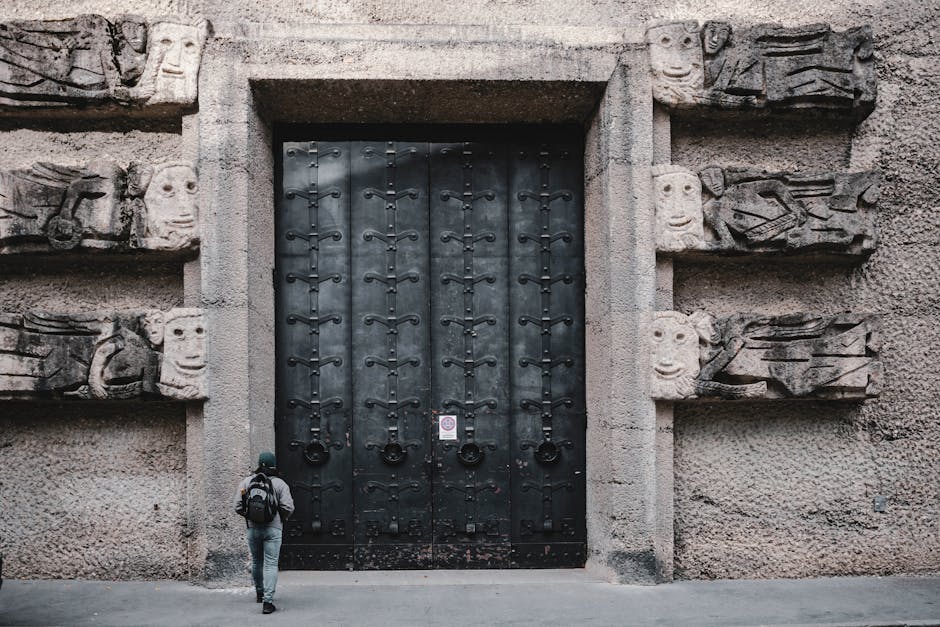
Discover how a gritty railway yard became Antwerp's most vibrant green space on this self-guided industrial heritage walk.
 Easy
EasySalzburg, Austria
Discover the 'Rome of the North' on this self-guided walk through the Baroque squares and monumental legacy of Salzburg’s Prince-Archbishops.
 Easy
EasyGothenburg, Sweden
Discover Gothenburg’s 17th-century Dutch foundations, historic canals, and military fortifications on this self-guided architectural walk.
 Easy
EasyNairobi, Kenya
Explore Nairobi's architectural evolution from colonial-era landmarks to iconic Brutalist skyscrapers on this historic self-guided walking route.
 Easy
EasyNairobi, Kenya
Discover Nairobi's iconic skyline on this self-guided architecture walk through the CBD’s most famous modernist and Brutalist landmarks.
 Easy
EasyBrussels, Belgium
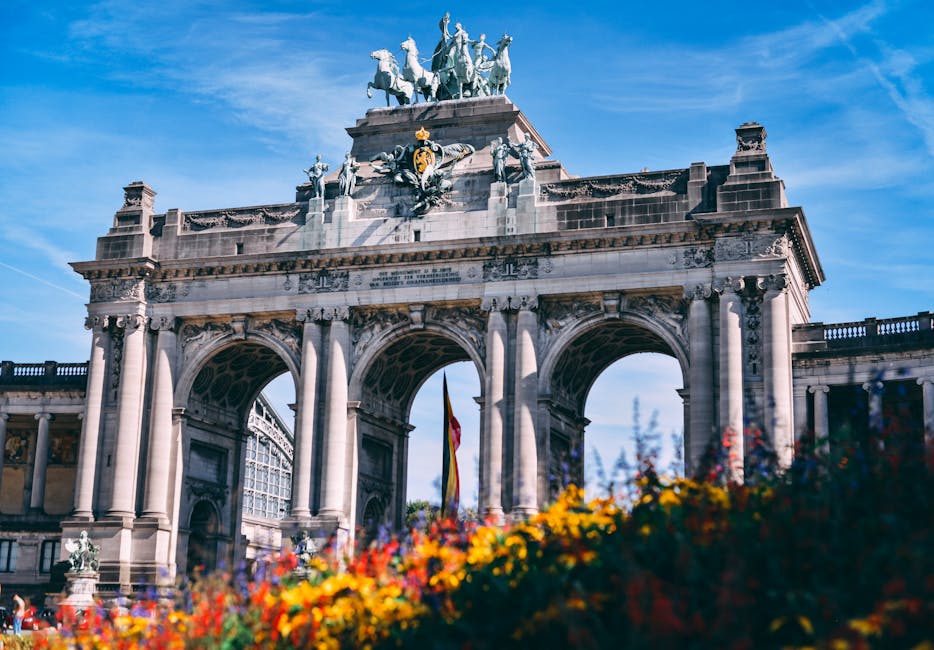
Discover the colorful world of Belgian comics on this independent walking route through the creative streets and murals of central Brussels.
 Moderate
Brussels, Belgium
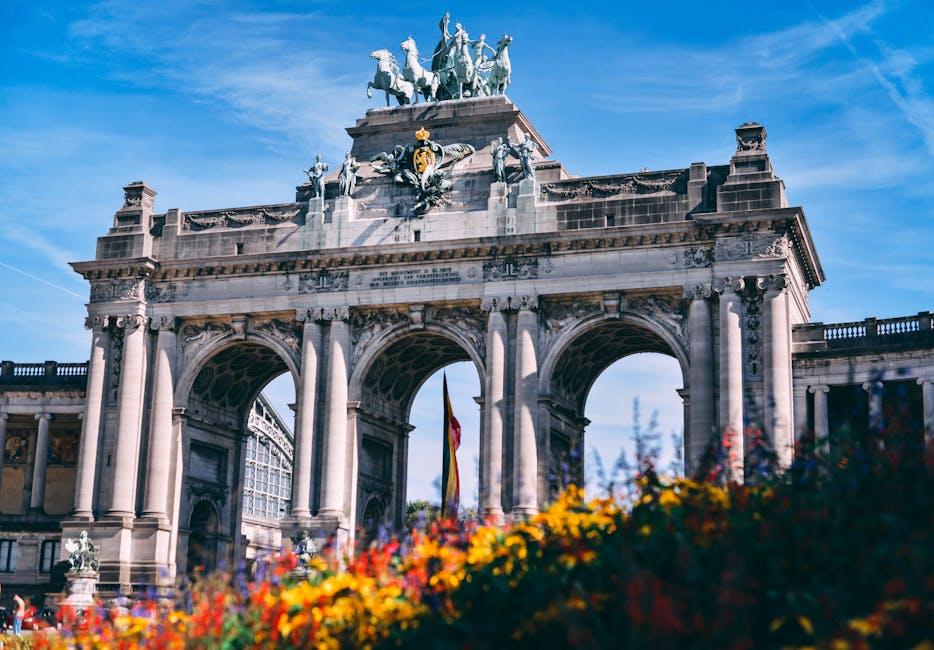
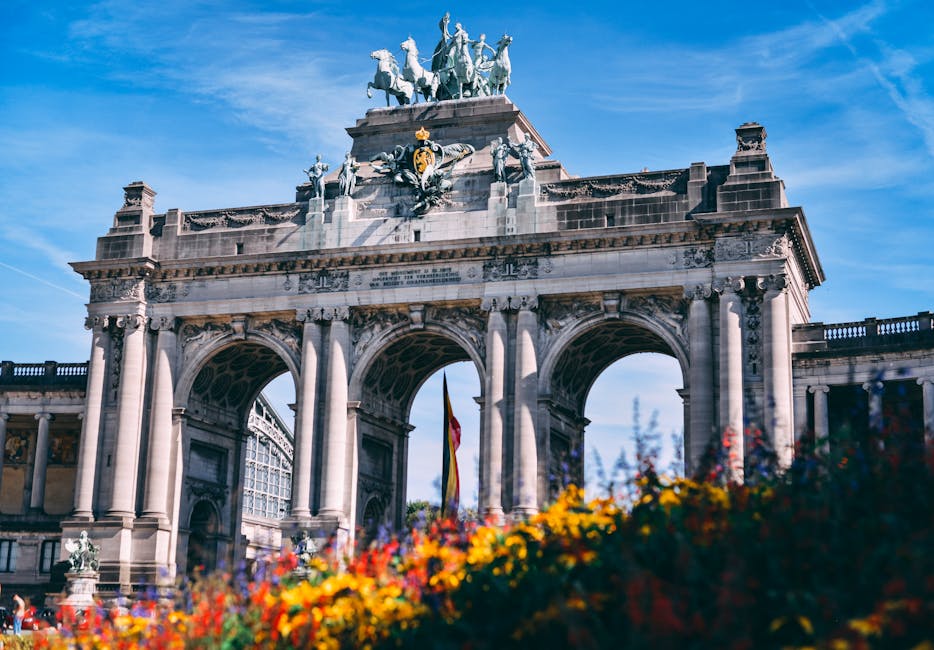
Explore the majestic Royal Quarter, from Art Nouveau gems to the King's Palace and the iconic views of Mont des Arts on this self-guided walk.
 Moderate
Brussels, Belgium
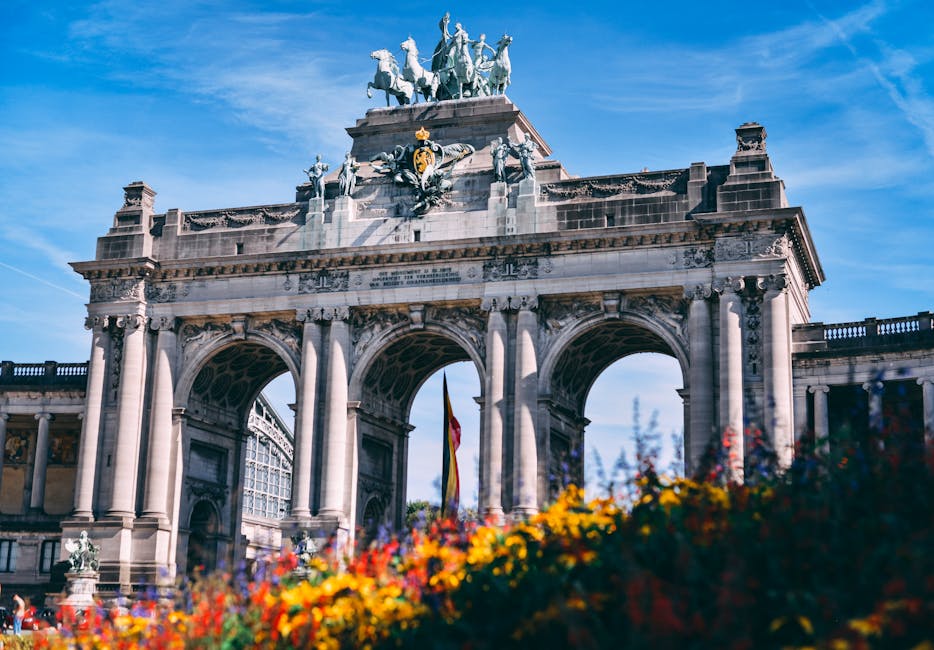
Explore Brussels' industrial heart and artistic rebirth on this self-guided walk through Molenbeek and the Canal district's iconic landmarks.
 Moderate
Brussels, Belgium
Discover Brussels' Art Nouveau masterpieces at your own pace, from Victor Horta's UNESCO sites to the flamboyant Maison Saint-Cyr.