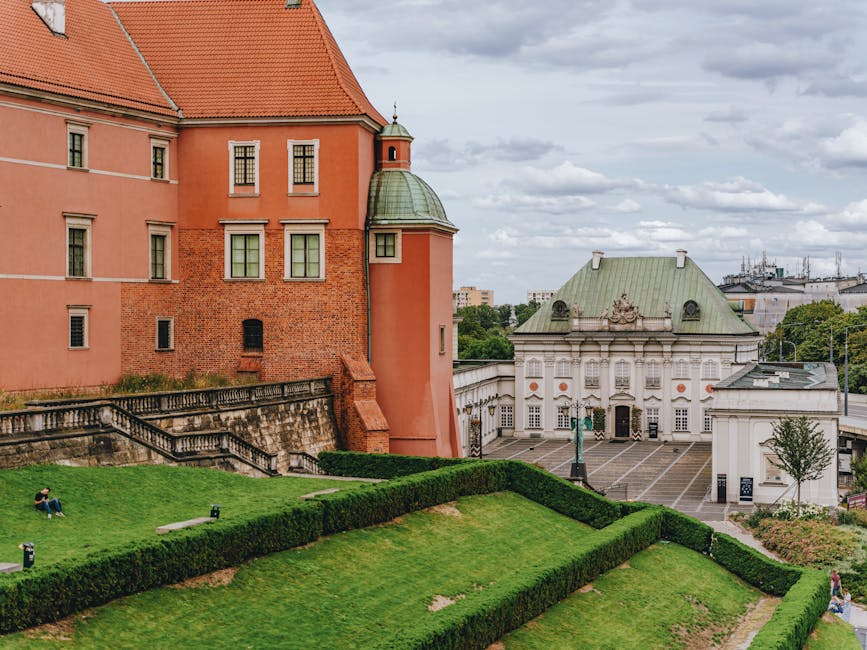
Self-guided audio tour in Warsaw
Start Free on iPhone
Start free on iPhone to unlock this self-guided walking tour in Warsaw. Hear all the stories that make it amazing, walk at your own pace, and begin whenever you want.
Your Private Tour Guide
Warsaw is a city that breathes the music of Fryderyk Chopin. While he spent his final years in Paris, the soul of the great composer remained forever tied to the streets of the Polish capital. This self-guided walk invites you to explore the landmarks of his youth, from the halls where he studied to the palace where he gave his first public performance as a child prodigy. Walking through the City Center, you will trace the footsteps of a man who transformed Polish folk rhythms into world-class masterpieces. This neighborhood stroll captures the essence of 19th-century Warsaw, a period of romanticism and revolution that shaped Chopin's artistic identity. The route begins at the modern Fryderyk Chopin Museum, housed in the historic Ostrogski Palace, before moving toward the Royal Route. One of the most moving stops is the Church of the Holy Cross, where the composer’s heart is famously entombed within a pillar—a testament to his dying wish to return to his homeland. You will also wander through the University of Warsaw campus and past the Presidential Palace, imagining the young 'Little Fryderyk' navigating these same paths. The journey concludes in the tranquil Saxon Garden, a place where the Chopin family once lived and played. Whether you are a classical music aficionado or a history enthusiast, this walking route offers a unique perspective on Warsaw's cultural heritage. Discover at your own pace how the city honors its most famous son, from the high-tech museum displays to the 'musical benches' scattered along the way. This walking tour Warsaw provides is more than just a list of sites; it is an immersion into the Romantic era. Exploring independently allows you to pause and listen to the nocturnes and polonaises that these very streets inspired. Start exploring with Zigway and connect with the heartbeat of Poland’s greatest musical genius.
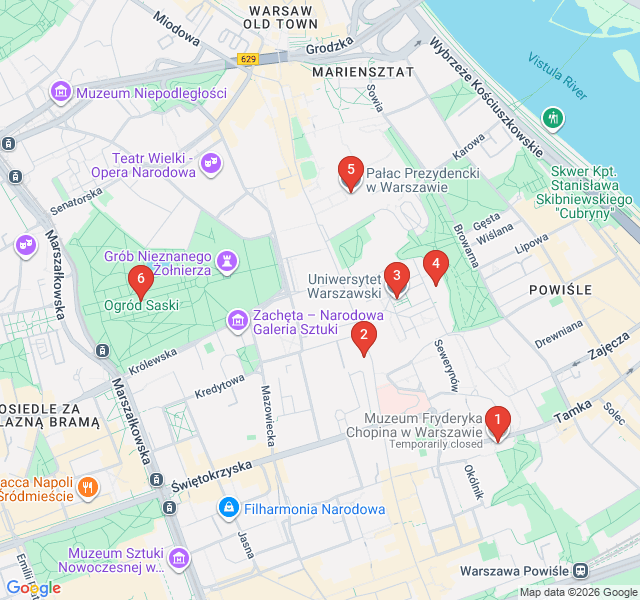
Numbers indicate the order of stops on the tour.
Begin your self-guided adventure at the Ostrogski Palace, which houses one of the most modern biographical museums in Europe. This museum is dedicated entirely to Fryderyk Chopin, who lived in Warsaw for the first twenty years of his life. Inside, the collection spans from his early childhood sketches to the last piano he ever played. The museum uses multimedia technology to allow visitors to immerse themselves in his music and personal letters. As you stand before this Baroque-style palace, consider that Chopin wasn't just a composer; he was a national symbol of Polish identity during a time when the country had disappeared from the map. This is the perfect place to ground yourself in his life story before heading out to see the city that raised him.
As you walk along Krakowskie Przedmieście, you will find the Church of the Holy Cross. This site holds a profound significance for the Polish people. When Chopin died in Paris in 1849, he was buried in the Père Lachaise Cemetery, but his dying wish was for his heart to be returned to Warsaw. His sister, Ludwika, smuggled the heart past Russian border guards in a jar of cognac. Today, the heart is interred within the second pillar on the left side of the nave. A plaque marks the spot with a verse from Matthew: 'For where your treasure is, there your heart will be also.' It is a somber and beautiful monument to a man who never stopped longing for his home.
Enter the main gates of the University of Warsaw, an institution that played a pivotal role in Chopin’s intellectual development. Between 1826 and 1829, Fryderyk studied here at the Main School of Music under the tutelage of Józef Elsner. Elsner was a visionary teacher who recognized Chopin's 'exceptional talent' and 'musical genius,' famously noting that he should not be bound by traditional rules. The campus atmosphere during the early 19th century was vibrant and revolutionary, filled with young poets and thinkers. Walking through these courtyards, you can imagine the teenage Chopin debating art and politics with his peers before rushing off to a rehearsal or a salon performance.
Located within the University grounds, the Kazimierzowski Palace was once the home of the Warsaw Lyceum, where Chopin’s father, Nicolas, taught the French language. The Chopin family lived in an apartment in the right wing of this building for several years. This was a domestic space filled with music; the family hosted 'literary Thursdays' and musical evenings that drew the city’s elite. It was in this environment that Fryderyk’s sisters and parents nurtured his early interest in the piano. The palace itself has a long history, serving as a royal residence for Polish kings before becoming an educational hub. Today, it serves as the Rectorate of the University.
The Presidential Palace, formerly known as the Radziwiłł Palace, is the site of a major milestone in music history. On February 24, 1818, an eight-year-old 'Little Fryderyk' gave his first public piano concert here. The event was a charity gala, and the child prodigy performed a concerto by Gyrowetz. He reportedly charmed the audience not just with his playing, but with his innocence; when asked what the audience liked most, he supposedly replied it was his new lace collar. This performance launched his reputation as the 'second Mozart.' Today, the building is the official residence of the Polish President, guarded by soldiers, but its musical legacy remains a point of immense national pride.
Conclude your walking route at the Saxon Garden, Warsaw’s oldest public park. In the early 1800s, the Chopin family lived in a wing of the now-lost Saxon Palace, which bordered these gardens. As a young boy, Fryderyk played among these trees and fountains. The park was modeled after Versailles and served as the center of social life in Warsaw. Although the palace was destroyed during World War II—leaving only the arches that now house the Tomb of the Unknown Soldier—the garden remains a peaceful retreat. Take a moment to sit on one of the benches and reflect on how the sights and sounds of this park influenced the pastoral themes found in Chopin’s later works.
Start Free on iPhone
Explore “Chopin’s Heart: The Composer's Warsaw” with your very own Private Tour Guide with Zigway. Start free on iPhone, skip the large group and the fixed routes, and hear the city come alive as you go.
Your Private Tour Guide
Don't miss the good stuff
Explore Freely
 Easy
EasyWarsaw, Poland
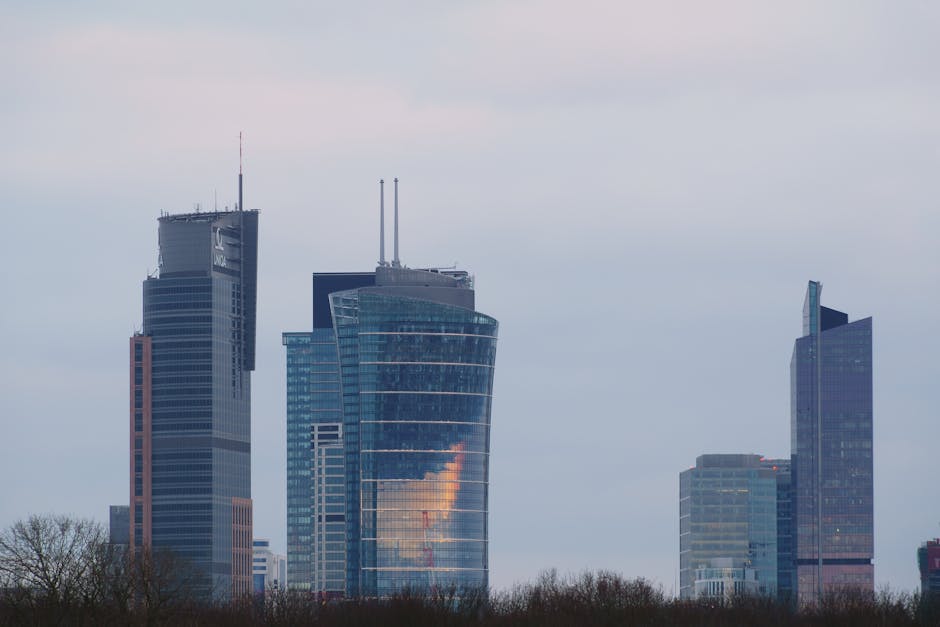
Discover the hidden courtyards and grand pre-war architecture of Warsaw's most atmospheric neighborhood on this self-guided stroll.
 Easy
EasyWarsaw, Poland
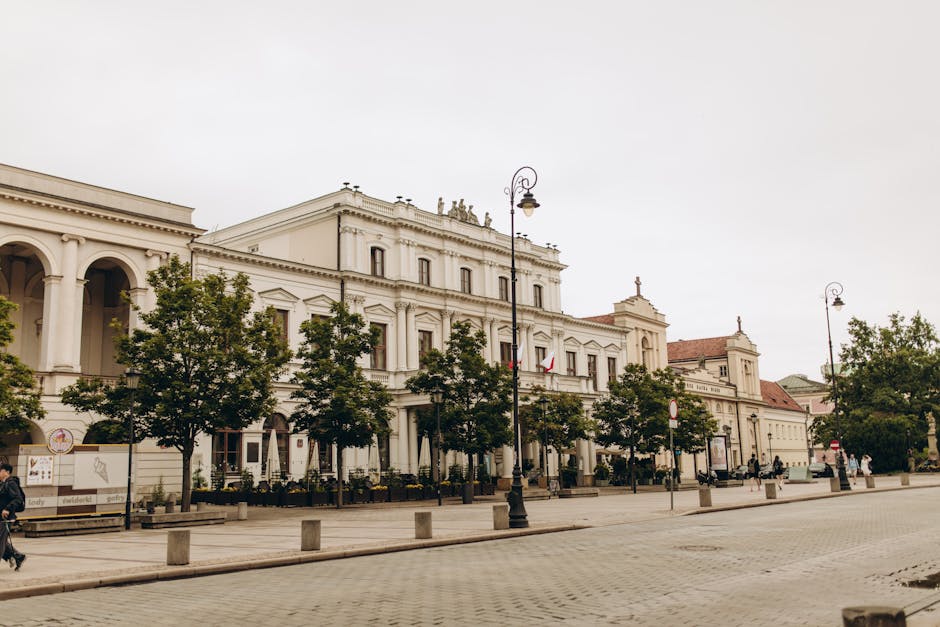
Explore the 'Polish Versailles' at your own pace. Discover Baroque architecture, royal history, and stunning gardens on this self-guided walk.
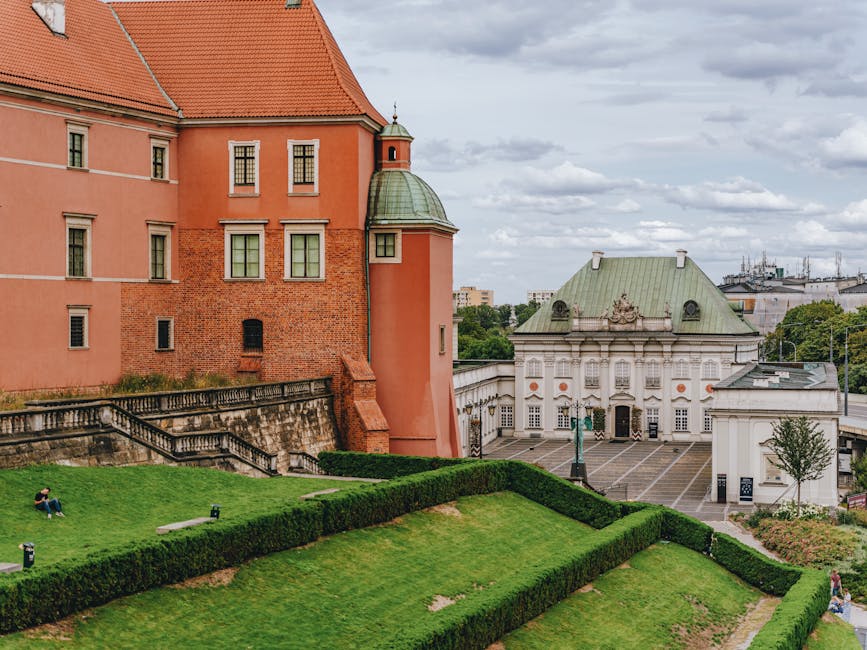 Moderate
Warsaw, Poland
Explore the resilient spirit of Warsaw's Muranów district on this self-guided walk through the history and landmarks of the former Jewish Ghetto.
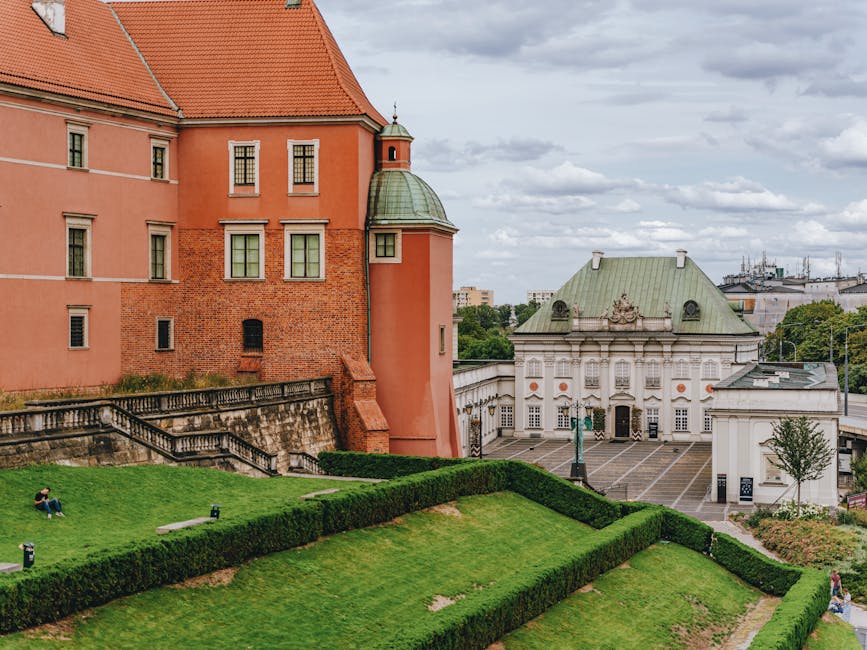 Moderate
Warsaw, Poland
A powerful self-guided walk through Warsaw's WWII history, tracking the 1944 Uprising from ruined skyscrapers to solemn memorials.
 Easy
EasyNairobi, Kenya
Discover Nairobi’s literary soul on this self-guided walk through historic libraries, iconic bookshops, and cultural centers in the heart of the CBD.
 Easy
EasyKrakow, Poland
Explore the prestigious Jagiellonian University district, featuring Neo-Gothic architecture, Baroque churches, and Krakow's hidden scholarly gems.
 Easy
EasyGothenburg, Sweden
Discover Gothenburg’s 17th-century Dutch foundations, historic canals, and military fortifications on this self-guided architectural walk.
 Easy
EasyNairobi, Kenya
Explore Nairobi's architectural evolution from colonial-era landmarks to iconic Brutalist skyscrapers on this historic self-guided walking route.
EasyKrakow, Poland
Explore the prestigious Jagiellonian University district, featuring Neo-Gothic architecture, Baroque churches, and Krakow's hidden scholarly gems.
 Easy
EasyKrakow, Poland
Explore Krakow's hidden nightlife with this self-guided walk through medieval cellars, jazz clubs, and bohemian bars in the Old Town and Kazimierz.
 Easy
EasyKrakow, Poland
Discover Krakow’s creative soul in Zabłocie, exploring industrial heritage, contemporary art museums, and avant-garde architecture at your own pace.
 Easy
EasyKrakow, Poland
Explore the historic heart of Kazimierz on this self-guided walk through synagogues, ancient cemeteries, and vibrant squares.