Self-guided audio tour in Warsaw
Start Free on iPhone
Start free on iPhone to unlock this self-guided walking tour in Warsaw. Hear all the stories that make it amazing, walk at your own pace, and begin whenever you want.
Your Private Tour Guide
Muranów is a place where history isn't just recorded; it is literally built into the ground beneath your feet. This walking route takes you through a neighborhood that rose from the literal ashes of the Warsaw Ghetto. Once a thriving center of Jewish life and culture in Europe, this district became a site of unimaginable tragedy during World War II. Today, it stands as a unique architectural experiment of the socialist era and a living memorial to those who were lost. As you explore this self-guided walk, you will encounter the POLIN Museum, which celebrates a millennium of Jewish presence in Poland, and the Monument to the Ghetto Heroes, which honors the bravery of those who fought back in 1943. The route leads you toward the Umschlagplatz, a place of somber reflection marking the deportation point to Treblinka. You will also visit Miła 18, the site of the Jewish Combat Organization's final bunker, buried beneath a mound of rubble. The journey concludes near the modern city center at the Nożyk Synagogue and a surviving fragment of the ghetto wall, tucked away in a quiet residential courtyard. This neighborhood stroll offers a profound look at resilience and memory, allowing you to reflect on the layers of Warsaw's past at your own pace. Discovering Muranów is an essential experience for anyone interested in the complex history of 20th-century Europe. The architecture here is equally fascinating—post-war residential blocks were built directly on top of the debris of the destroyed district, creating a literal landscape of memory. This walking route Warsaw provides a deep dive into the stories of the people who lived, fought, and died here, as well as the community that continues to honor their legacy today. It is a journey that balances the weight of loss with the enduring power of remembrance.
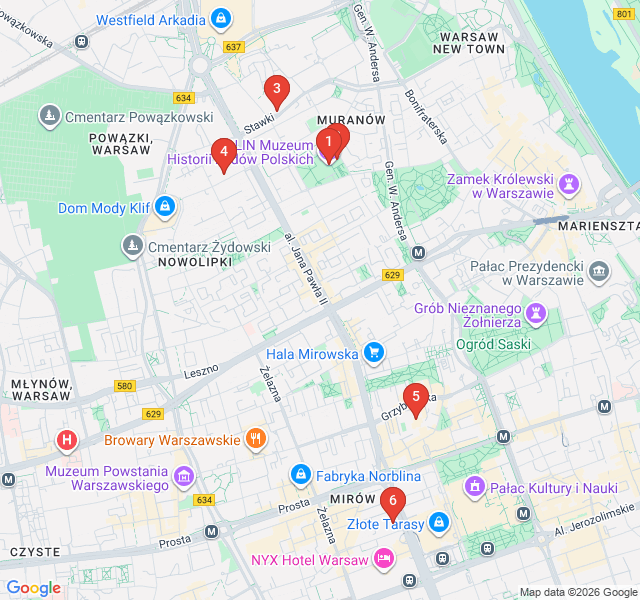
Numbers indicate the order of stops on the tour.
Begin your self-guided adventure at the POLIN Museum, a masterpiece of modern architecture. The building's copper-and-glass exterior features a massive vertical crack, symbolizing the 'parting of the Red Sea' or the rupture of Jewish history in Poland. While the museum's interior houses centuries of stories, the site itself is significant—it stands where the pre-war Jewish quarter was most vibrant. Before the war, this was a dense urban neighborhood; today, the museum sits in a spacious park, reflecting the total destruction and subsequent rebuilding of the area. This museum serves as a bridge between the past and present, celebrating life rather than just mourning death.
Just outside the museum stands the Monument to the Ghetto Heroes, unveiled in 1948. Sculpted by Nathan Rapoport, it was made using Labradorite stone originally intended by the Nazis for a victory monument. On the front, you see the 'Heroes'—powerful, muscular figures representing the 1943 Ghetto Uprising. On the reverse side, a more somber relief depicts the 'Martyrs'—the elderly, women, and children being led to their deaths. This contrast captures the dual nature of the Ghetto’s history: incredible resistance against impossible odds and the tragic reality of the Holocaust. It remains one of the most important sites of remembrance in Poland.
As you continue your walking route, you reach the Umschlagplatz. This stark, white marble monument marks the spot where, between 1942 and 1943, over 300,000 Jews were loaded onto cattle cars and sent to the Treblinka extermination camp. The walls of the monument are inscribed with hundreds of Jewish first names, symbolizing the individuals who lost their lives. The design resembles an open freight car, and the narrow entrance creates a sense of confinement. It is a place of profound silence in the middle of a busy city, serving as a permanent reminder of the scale of the tragedy that unfolded on these very tracks.
A short walk brings you to a small mound of earth known as Miła 18. This was the site of the main bunker of the Jewish Combat Organization (ŻOB) during the Ghetto Uprising. In May 1943, when the bunker was discovered by the Nazis, many of the fighters, including their leader Mordechai Anielewicz, chose to take their own lives rather than surrender. Because the bodies were never recovered from the ruins, the mound itself is considered a mass grave. A memorial stone sits atop the hill, listing the names of the known leaders. It is a powerful testament to the defiant spirit of the youth who led the resistance.
The Nożyk Synagogue is a miracle of survival. It is the only Jewish house of prayer in Warsaw that survived the total destruction of the city. Built at the turn of the 20th century, it was used by the Nazis as a stable and a storehouse, which is why it was spared from demolition. After the war, it was restored and now serves as the heart of the small but active Jewish community in Warsaw. Its Neo-Romanesque facade stands in sharp contrast to the modern skyscrapers that now surround it, representing the persistence of Jewish culture in a city that was once nearly 30% Jewish.
The final stop on this neighborhood stroll is hidden from the street. Tucked inside the courtyard of a residential building on Sienna Street, you will find an original fragment of the Ghetto wall. This brick structure once separated the 'Aryan' side of the city from the Ghetto. If you look closely, you can see where bricks were removed by residents after the war or where memorial plaques have been added. It is a haunting, physical boundary that brings the abstract history of the Ghetto into sharp, tangible focus. Standing here, you are at the very edge of what was once a prison within a city.
Start Free on iPhone
Explore “Echoes of the Ghetto: A Journey Through Muranów” with your very own Private Tour Guide with Zigway. Start free on iPhone, skip the large group and the fixed routes, and hear the city come alive as you go.
Your Private Tour Guide
Don't miss the good stuff
Explore Freely
 Easy
EasyWarsaw, Poland
Discover the hidden courtyards and grand pre-war architecture of Warsaw's most atmospheric neighborhood on this self-guided stroll.
 Easy
EasyWarsaw, Poland
Explore the 'Polish Versailles' at your own pace. Discover Baroque architecture, royal history, and stunning gardens on this self-guided walk.
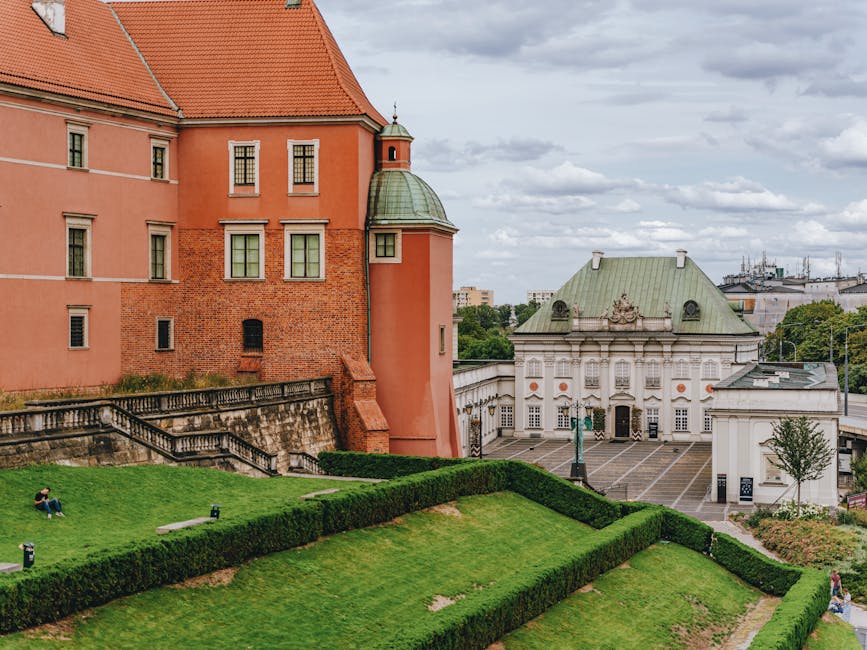 Moderate
Warsaw, Poland
A powerful self-guided walk through Warsaw's WWII history, tracking the 1944 Uprising from ruined skyscrapers to solemn memorials.
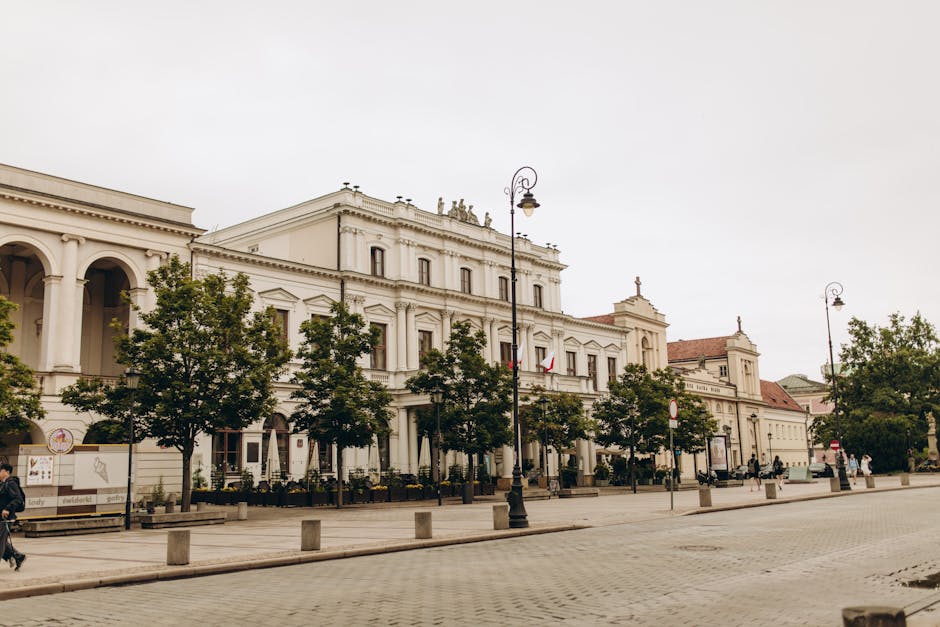 Easy
EasyWarsaw, Poland
Explore Warsaw's scenic riverfront, rooftop gardens, and industrial-chic architecture on this self-guided stroll through the Powiśle district.
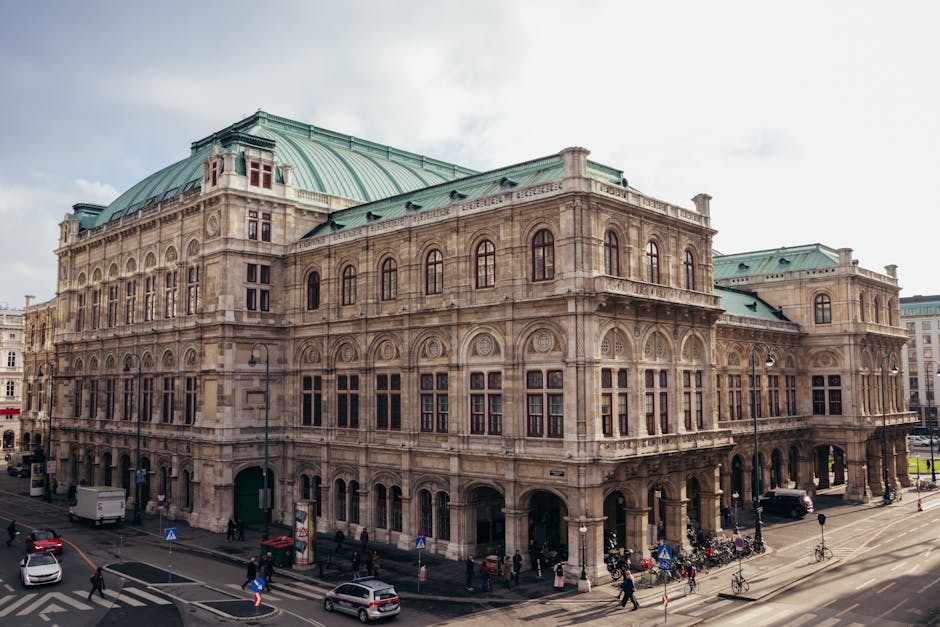 Moderate
Vienna, Austria
Follow the footsteps of Mozart and Strauss through Vienna’s historic center on this self-guided walk through the city's rich musical history.
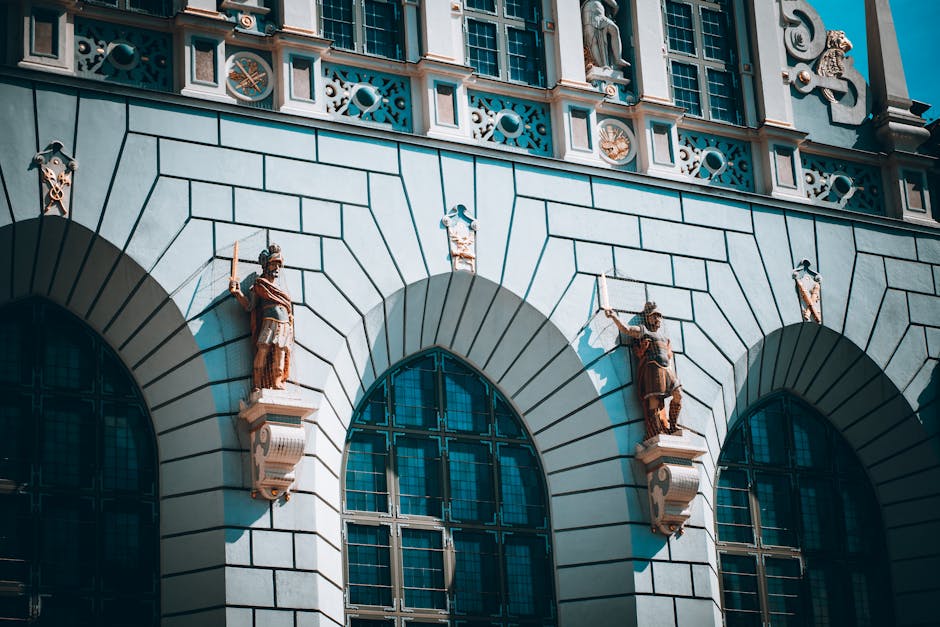 Moderate
Gdansk, Poland
Discover the origins of WWII in Gdansk on this self-guided walk through heroic last stands, massive museums, and strategic hilltop fortifications.
 Moderate
Helsinki, Finland
Explore the 'Gibraltar of the North' on this independent walking route through the historic bastions and hidden gardens of Suomenlinna Sea Fortress.
 Moderate
Gothenburg, Sweden
Discover Gothenburg’s maritime soul on this self-guided walk from the historic Central Station to the scenic riverfront at Stenpiren.
 Easy
EasyKrakow, Poland
Explore the prestigious Jagiellonian University district, featuring Neo-Gothic architecture, Baroque churches, and Krakow's hidden scholarly gems.
 Easy
EasyKrakow, Poland
Explore Krakow's hidden nightlife with this self-guided walk through medieval cellars, jazz clubs, and bohemian bars in the Old Town and Kazimierz.
 Easy
EasyKrakow, Poland
Discover Krakow’s creative soul in Zabłocie, exploring industrial heritage, contemporary art museums, and avant-garde architecture at your own pace.
 Easy
EasyKrakow, Poland
Explore the historic heart of Kazimierz on this self-guided walk through synagogues, ancient cemeteries, and vibrant squares.