Self-guided audio tour in New York City
Now a Guided Walk in the Zigway app
Meat hooks, freight tracks and broken piers, reborn as parks, stairs and sculpture.
3.4 km · 47 min walking · 34 min of stories
The introduction and the first minute at the first stop.
Chelsea Market
Nabisco chose the site for butchers' lard, a key ingredient in many of its products. The meat district next door was, in effect, its pantry.
Pier 54 & Little Island
Just ahead, on a forest of concrete stalks rising from the water, sits Little Island. Beside you is the old steel structure of Pier 54, and the island's entrance bridge lines up with it.
Pier 57
Notice its steel frame, metal panels and curved corners. They're part of the old structure, and the designers kept them on purpose.
The High Line (Chelsea Market Passage) and High Line 23rd Street & the Chelsea Gallery District
Next to the viaduct, a slim residential tower called HL23 seems to lean out over the narrow park. After the last trains stopped, this structure faced demolition.
Whitney Museum of American Art
A huge overhang juts out over the plaza, sheltering the space below. The ground floor is glass on three sides, and the whole block seems to hover on slender steel columns.
Guided Walk · in the Zigway app
Buy it once in the app and walk it whenever you're in New York City. GPS plays each story as you arrive, it works offline, and the introduction and first stop are free to try.
Start Free on iPhone
Hear the stories behind the streets and sights around you as you walk New York City. Try it free on iPhone.
Your Private Tour Guide
Manhattan’s West Side has undergone one of the most dramatic transformations in urban history. Once a gritty industrial corridor dominated by meatpacking plants and freight trains, it is now a world-class destination for contemporary art and innovative landscape architecture. This self-guided walk invites you to explore the seamless blend of historic grit and futuristic design along the Hudson River. Starting in the trendy Meatpacking District, this neighborhood stroll takes you through the cantilevered galleries of the Whitney Museum and onto the floating gardens of Little Island. You will discover how an abandoned elevated railway was saved from demolition to become the High Line, a lush ribbon of green that winds through the city’s skyline. Along this walking route, you’ll encounter the culinary hub of Chelsea Market—the birthplace of the Oreo cookie—and witness the monumental engineering of Hudson Yards. The experience culminates at the Vessel and The Shed, showcasing the cutting edge of 21st-century New York. This self-guided adventure allows you to set your own pace, whether you want to linger over a coffee with a view of the Hudson or dive deep into the history of NYC's industrial heritage. It’s a perfect way to travel through the city's past and future in a single afternoon. This walking tour New York City provides an intimate look at how urban spaces can be reimagined for the public good without losing their soul.
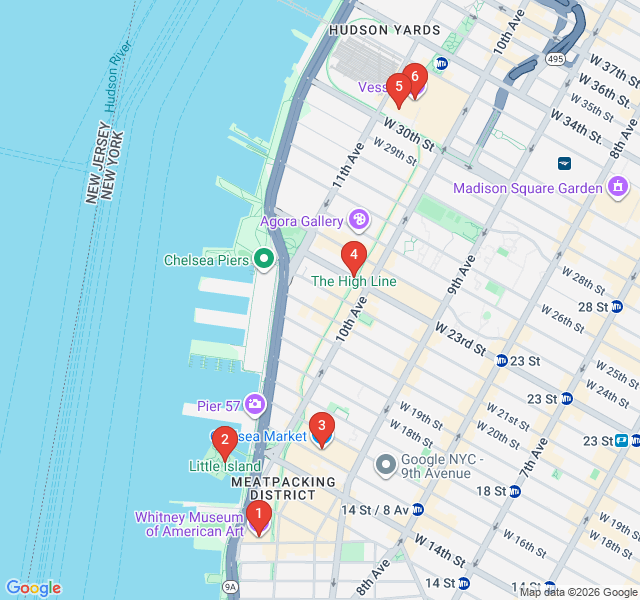
Numbers indicate the order of stops on the tour.
Our journey begins at the Whitney Museum of American Art, a striking asymmetric building designed by Pritzker Prize-winning architect Renzo Piano. Founded in 1930 by Gertrude Vanderbilt Whitney, the museum moved to this Gansevoort Street location in 2015 to anchor the southern end of the High Line. Notice how the steel and glass structure cantilevers toward the Hudson River, reflecting the industrial character of the surrounding Meatpacking District. The museum is dedicated to 20th and 21st-century American art, with a particular focus on living artists. Even from the outside, you can see how the building’s outdoor terraces serve as 'sculpture gardens in the sky,' bridging the gap between the indoor galleries and the urban landscape below.
Step off the mainland and onto Little Island, New York's newest floating park. Opened in 2021, this 'urban oasis' rests on 132 concrete 'tulips' rising from the Hudson River. This was once Pier 54, a historic site where survivors of the Titanic were brought by the Carpathia in 1912. Today, the space has been reimagined by designer Thomas Heatherwick as a whimsical landscape of hills, walking paths, and performance spaces. As you wander, look for the amphitheater and the varied plant life designed to withstand the river's winds. It is a testament to how industrial infrastructure can be repurposed into a communal green space that feels miles away from the city traffic.
Walk back toward the city to enter Chelsea Market, a food hall and shopping mall housed in the former National Biscuit Company (Nabisco) factory complex. This is the exact site where the Oreo cookie was invented and first produced in 1912. As you walk through the ground floor, notice the exposed brick, reclaimed wood, and industrial pipes that pay homage to its factory past. It’s a sensory experience where the smell of fresh bread from Amy’s Bread mixes with global spices. This building perfectly captures the transition of the Chelsea neighborhood from a gritty manufacturing hub to a center of creative industry and culinary innovation.
Climb the stairs or take the elevator to the High Line, an elevated public park built on a historic freight rail line. In the mid-20th century, trains ran directly through buildings to deliver goods to the Meatpacking District. After the tracks fell into disrepair and were threatened with demolition, local residents fought to save them. The result is a 1.45-mile 'living system' of wildflowers, grasses, and trees inspired by the self-seeded plants that grew on the abandoned tracks. As you walk north, look for the 'Falconer' sculpture and various rotating art installations. The design preserves the original tracks, integrating them into the walkways to remind us of the city's rail-bound history.
As the High Line approaches Hudson Yards, you will encounter The Shed, a revolutionary cultural center designed by Diller Scofidio + Renfro. Its most incredible feature is its movable outer shell, which can roll out on massive wheels to double the building's footprint for large-scale performances and exhibitions. This 'telescoping' design reflects the flexibility of modern art. The silver, quilted facade is made of ETFE panels, the same lightweight material used in the Beijing Water Cube. It stands as a symbol of the neighborhood's leap into the future, where architecture is not static but adaptable to the needs of the artists and the public.
We conclude our walk at the Vessel, the centerpiece of the Hudson Yards development. Designed by Thomas Heatherwick, this honeycomb-like structure consists of 154 interconnecting flights of stairs and 80 landings. Standing 150 feet tall, it was intended as a vertical public space where people could enjoy new perspectives of the city. Its copper-colored steel finish reflects the surrounding skyscrapers and the Hudson River. While access to the upper levels may vary, the ground level offers a unique view into the complex geometry of the structure. It serves as a bold punctuation mark at the end of our journey through the architectural evolution of the West Side.
Start Free on iPhone
Open Zigway as you walk and your private tour guide tells the stories behind what you pass.
Your Private Tour Guide
Don't miss the good stuff
Explore Freely
 Easy
New York City, United States
Explore the golden age of Manhattan architecture on this self-guided walk through Midtown's iconic Art Deco skyscrapers and historic landmarks.
 Easy
New York City, United States
Discover the literary legends, jazz haunts, and revolutionary history of Greenwich Village on this immersive self-guided walking route.
 Easy
New York City, United States
Discover the world's finest cast-iron architecture and the evolution of fashion on this self-guided walking route through NYC's iconic SoHo district.
 Easy
New York City, United States
Explore the birthplace of American democracy and the heart of global finance on this self-guided walk through NYC's historic Financial District.
 Easy
Gdansk, Poland
Discover the 'Baltic Gold' on this self-guided walk through Gdansk's historic mills, massive cathedrals, and the magical Mariacka Street.
 Easy
Krakow, Poland
Discover Krakow’s creative soul in Zabłocie, exploring industrial heritage, contemporary art museums, and avant-garde architecture at your own pace.
 Easy
Warsaw, Poland
Explore Warsaw's scenic riverfront, rooftop gardens, and industrial-chic architecture on this self-guided stroll through the Powiśle district.
 Easy
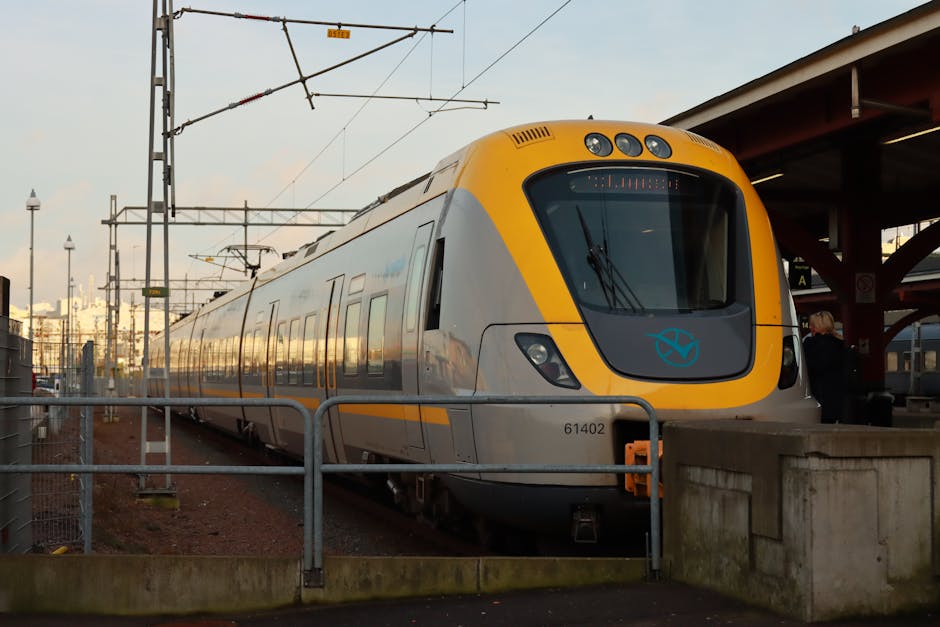
Gothenburg, Sweden
Explore Gothenburg's maritime soul on this self-guided walk from historic shipyards to sleek modern piers and iconic industrial landmarks.
 Easy
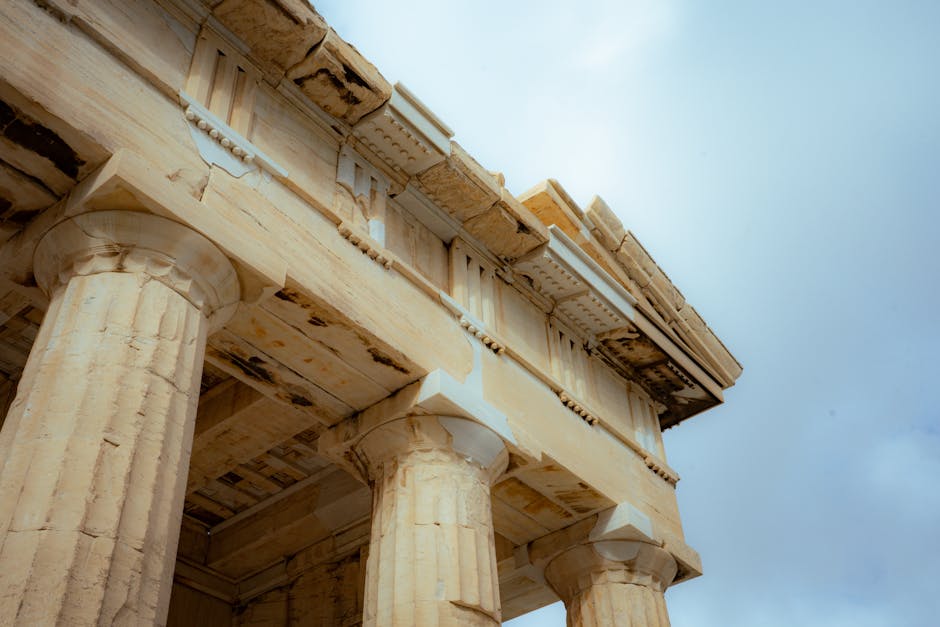
Nashville, United States
Explore the 'Athens of the South' on this self-guided walk through Centennial Park, featuring the world's only full-scale Parthenon replica.
 Easy
Nashville, United States
Explore Nashville's academic heart and Art Deco gems on this self-guided walk through historic Hillsboro Village.
 Easy
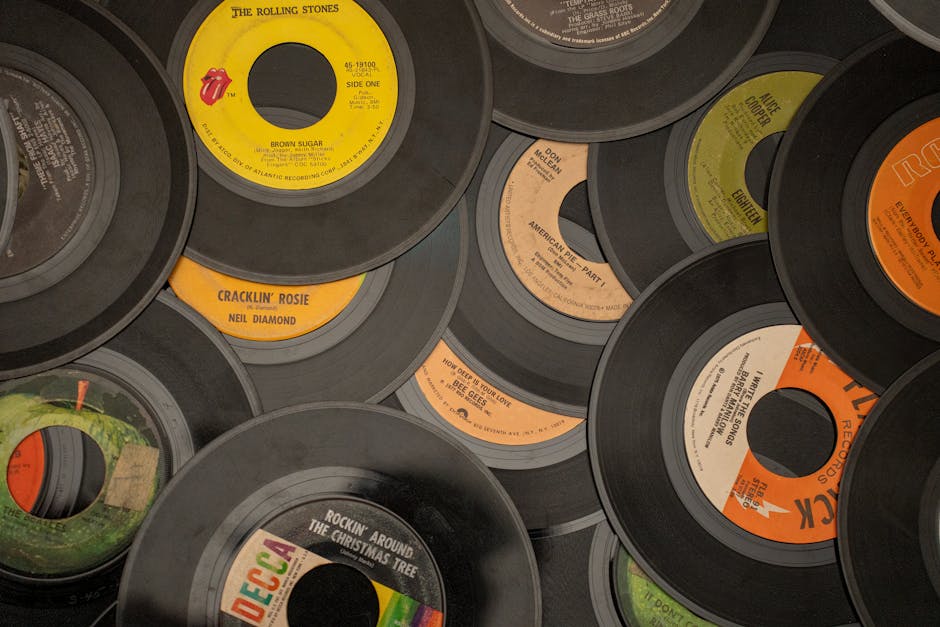
Nashville, United States
Explore the heart of Nashville's music industry. Discover iconic studios and the history of the legendary Nashville Sound at your own pace.
 Easy
Nashville, United States
Explore Nashville's oldest neighborhood! Discover Victorian architecture, Civil War history, and world-class craft beer on this self-guided walk.