Self-guided audio tour in Naples
Start Free on iPhone
Start free on iPhone to unlock this self-guided walking tour in Naples. Hear all the stories that make it amazing, walk at your own pace, and begin whenever you want.
Your Private Tour Guide
Venture beyond the bustling Spaccanapoli to discover Rione Sanità, a neighborhood that captures the raw, unfiltered soul of Naples. This self-guided walk invites you to explore a district defined by its dramatic contrasts: the opulence of 18th-century Baroque architecture and the mysterious silence of ancient underground ossuaries. Historically, this valley was a site of burial for early Christians, but it later became a playground for the Neapolitan nobility. Today, it is a vibrant labyrinth of street markets, artisanal workshops, and profound local devotion. Your journey begins at the Palazzo dello Spagnolo, a masterpiece of the Baroque of the stairs. As you wander this neighborhood stroll, you will encounter the architectural genius of Ferdinando Sanfelice, whose hawk-wing staircases transformed the local landscape. The route also pays homage to Totò, Italy’s most beloved comedian, who was born in these very streets. As you move deeper into the valley, the theme shifts from the earthly to the eternal. The Basilica di Santa Maria della Sanità serves as the gateway to the Catacombs of San Gaudioso, where early Christian history is literally etched into the volcanic tuff. Finally, the walking route concludes at the Fontanelle Cemetery, a hauntingly beautiful cavern filled with thousands of skulls. Here, you can witness the unique Neapolitan tradition of adopting a soul from the afterlife. This independent travel experience offers a rare glimpse into a part of the city often missed by those sticking to the main tourist path. By following this walking tour Naples route, you will see how Sanità has reinvented itself from a marginalized suburb into a hub of cultural rebirth. Whether you are an architecture enthusiast or a seeker of hidden gems, this self-guided adventure provides the flexibility to linger at a market stall or spend extra time reflecting in the cool air of a crypt. This walking tour Naples experience is perfect for those who want to understand the city's complex relationship with life and death.
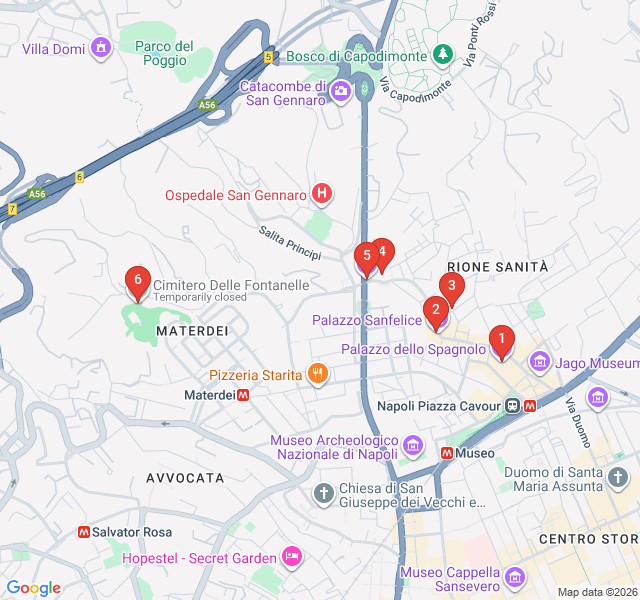
Numbers indicate the order of stops on the tour.
Welcome to the heart of the Sanità district. Standing before you is the Palazzo dello Spagnolo, perhaps the most famous example of the 'Neapolitan Baroque' style. Built in 1738 for the Marquis Nicola Moscati, its defining feature is the double-flight 'hawk-wing' staircase. Notice how the stairs create a sense of movement and drama, a theatrical stage for the residents of the era to see and be seen. The intricate stucco work and the play of light through the open arches make it a photographer's dream. Although it is a private residential building, the courtyard often welcomes respectful visitors looking to admire the genius of architect Ferdinando Sanfelice. It's a reminder of a time when this valley was the most prestigious address in Naples.
Just a short walk away, we find the personal residence of the architect we just mentioned: Ferdinando Sanfelice. Built between 1724 and 1728, this palace served as a prototype for many of the grand residences in the neighborhood. Sanfelice designed it to accommodate his family and to showcase his architectural innovation. Look for the internal staircase, which mirrors the design of the Palazzo dello Spagnolo but with its own unique geometry. This building has a gritty, lived-in charm that captures the modern spirit of Naples; it has frequently appeared as a backdrop in films and television series, including 'Gomorrah.' It perfectly illustrates the Sanità’s blend of aristocratic history and contemporary urban life.
You are now standing in front of the birthplace of Antonio de Curtis, known to the world simply as Totò. Born here in 1898, Totò was the 'Prince of Laughter' and remains the most iconic figure in Italian cinema and theater. Even decades after his death, his presence in Sanità is palpable. Look around at the street art, small shrines, and local tributes dedicated to him. Totò’s comedy often drew from the daily struggles and the resilient spirit of the Neapolitan people he grew up with here. This humble apartment building is a pilgrimage site for many, representing the neighborhood's pride in its most famous son who never forgot his roots.
Dominating the main square is the Basilica di Santa Maria della Sanità, known to locals as 'La Cucchiella.' Built in the early 17th century, its striking dome is covered in yellow and green majolica tiles, a landmark visible from the bridge high above. The church was built directly over the site where the remains of San Gaudioso were found. Inside, you'll find a wealth of Baroque art and a unique circular presbytery. The basilica is more than just a place of worship; it is the center of the neighborhood's social and cultural revival, hosting community projects and providing access to the ancient world beneath its floors.
Descending beneath the Basilica, you enter a different world. The Catacombs of San Gaudioso date back to the 4th and 5th centuries. This was the burial site of North African Bishop Gaudiosus. During the 17th century, a macabre burial practice emerged here: the bodies of aristocrats were placed in 'scolatoi' (draining chairs) until only the bones remained. The skulls were then embedded into the walls, and the bodies were painted in frescoes below them, depicting the social status of the deceased. It is a haunting reflection on the Neapolitan philosophy of 'memento mori'—remembering that we must all die—and the thin veil between life and the afterlife.
Our walk concludes at the Fontanelle Cemetery, one of the most evocative sites in Italy. Located in a massive tufa cave, this former quarry became an ossuary in the 17th century to house victims of the plague and famine. What makes this place unique is the cult of the 'anime pezzentelle' (abandoned souls). For centuries, Neapolitans would 'adopt' a skull, cleaning it, giving it a name, and placing it in a small shrine in exchange for protection or favors. Walking through the silent rows of thousands of 'capuzzelle' (skulls), you witness the profound and deeply personal relationship Naples maintains with its ancestors. It is a place of peace, devotion, and incredible mystery.
Start Free on iPhone
Explore “Rione Sanità: Baroque Palaces and Catacombs” with your very own Private Tour Guide with Zigway. Start free on iPhone, skip the large group and the fixed routes, and hear the city come alive as you go.
Your Private Tour Guide
Don't miss the good stuff
Explore Freely
 Moderate
Naples, Italy
Explore the vibrant street art, hidden shrines, and legendary Maradona murals in the heart of Naples' most iconic neighborhood.
 Challenging
Naples, Italy
Follow Elena and Lila’s journey through Naples. Explore the gritty streets and elegant plazas that defined Elena Ferrante’s Neapolitan Novels.
 Easy
EasyNaples, Italy
Uncover 2,500 years of history on this self-guided walk through the subterranean wonders and ancient layers of the Naples historic center.
 Easy
EasyNaples, Italy
Explore the Bourbon legacy on this self-guided walk from the ornate Galleria Umberto I to the historic Ovo Castle overlooking the sea.
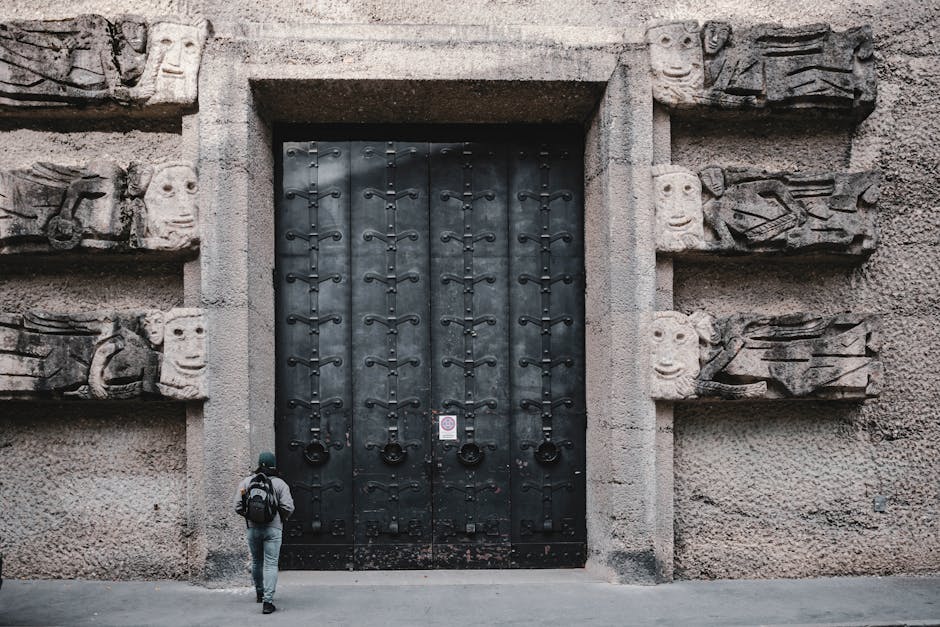 Easy
EasySalzburg, Austria
Discover Salzburg's oldest medieval alley, the birthplace of the 'Silent Night' author, and breathtaking views on this quiet self-guided walk.
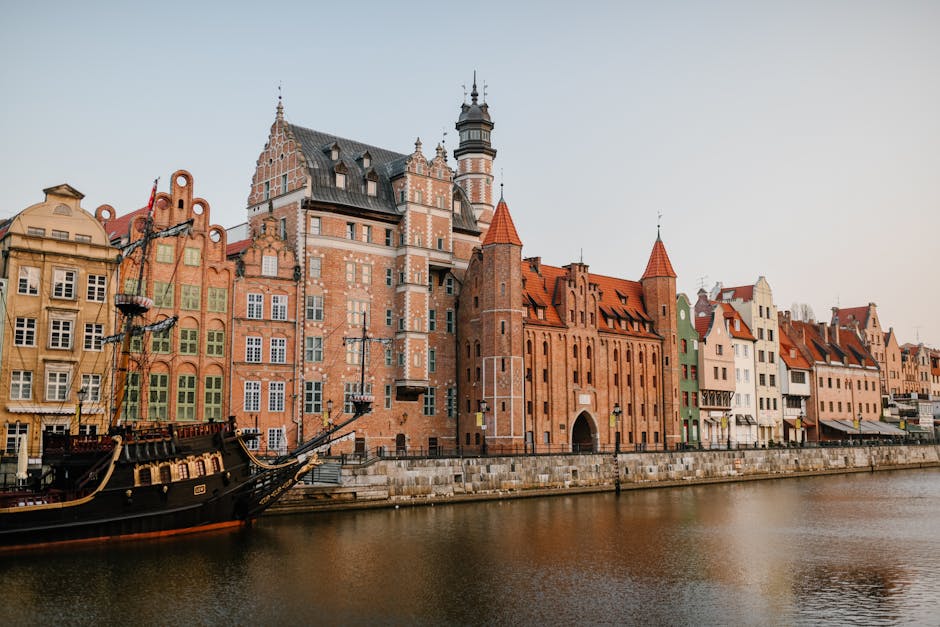 Moderate
Gdansk, Poland
Discover the raw beauty of Gdansk’s Lower Town. Explore industrial ruins, hidden sluices, and riverside bastions on this self-guided walk.
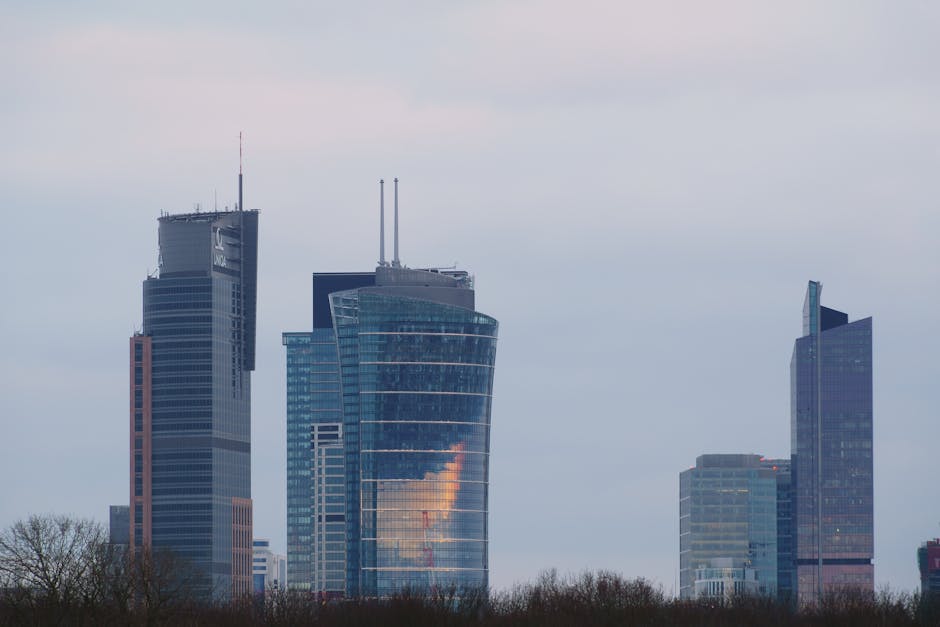 Easy
EasyWarsaw, Poland
Discover the hidden courtyards and grand pre-war architecture of Warsaw's most atmospheric neighborhood on this self-guided stroll.
 Easy
EasyHelsinki, Finland
Discover Helsinki's oldest neighborhood on this self-guided audio walk through Kruununhaka’s historic streets, hidden courtyards, and scenic shores.
 Easy
EasyRome, Italy
Explore Rome’s industrial heart on this self-guided walk featuring massive murals, the 'Iron Colosseum,' and unique industrial archaeology.
 Easy
EasyRome, Italy
Explore Rome’s whimsical Fairytale District. A self-guided walk through Art Nouveau palaces, mythical fountains, and the magical Coppedè architecture.
 Moderate
Rome, Italy
Uncover Rome's hidden history on this self-guided walk through ancient gladiator pits, subterranean temples, and buried Roman houses.
 Challenging
Rome, Italy
Walk the 'Queen of Roads.' Explore ancient catacombs, imperial villas, and historic basalt stones on this scenic self-guided Roman adventure.