Self-guided audio tour in Nara
Start Free on iPhone
Start free on iPhone to unlock this self-guided walking tour in Nara. Hear all the stories that make it amazing, walk at your own pace, and begin whenever you want.
Your Private Tour Guide
Beyond the bowing deer and the towering Great Buddha lies a Nara that few visitors truly see—a city of hidden workshops and ancient guilds that have defined Japanese aesthetics for over thirteen centuries. This self-guided walking route Nara offers an intimate look at the master artisans who perfected the tools of the scholar, the monk, and the samurai. As you traverse the quiet, atmospheric streets of Naramachi and the cultural district, you will discover why Nara remains the spiritual home of Japanese craftsmanship. Your journey begins in the heart of the merchant district, where the scent of aged wood and pine-soot ink still lingers in the air. This neighborhood stroll takes you through specialized museums and centuries-old storefronts that continue to produce Japan’s finest calligraphy brushes and traditional ink. You will explore the evolution of these crafts, from their introduction via Silk Road monks to their refinement in the courts of the Heian period. Along the way, the route highlights the transition of Nara’s legendary bladesmiths from forging samurai swords to crafting some of the world’s most precise kitchen cutlery. This is more than just a historical travel experience; it is an invitation to witness living traditions. You will encounter the delicate textures of hand-woven hemp textiles at modern flagship stores and see the intricate process of creating Nara Fude, the brushes used by Japan's master calligraphers. Whether you are an art enthusiast or a history buff, this walking tour Nara provides the context needed to appreciate the 'spirit of things'—the dedication to perfection that characterizes Japanese art. By following this route independently, you can linger at the displays of exquisite lacquerware or spend extra time admiring the Ukiyo-e prints at the Prefectural Museum of Art, moving at a pace that suits your curiosity.
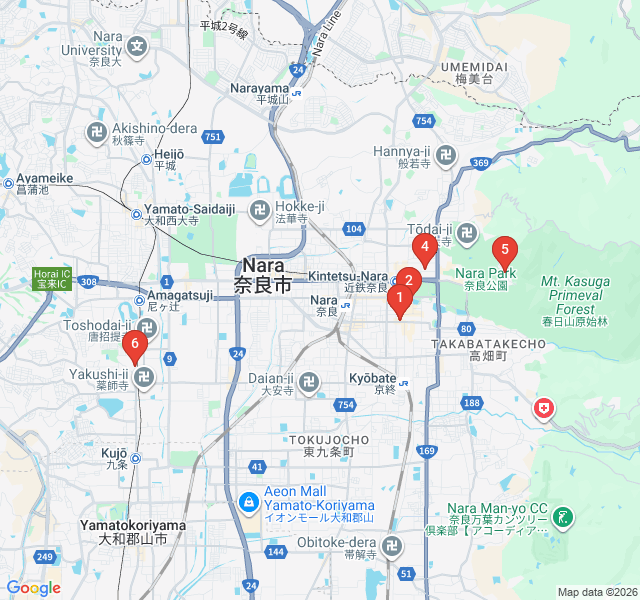
Numbers indicate the order of stops on the tour.
Welcome to the starting point of your exploration into Nara’s artisan soul. The Nara Craft Museum serves as a comprehensive introduction to the city's 'Big Five' traditional crafts: lacquerware, calligraphy brushes, ink sticks, textiles, and bamboo carving. As you look through the exhibits, notice the intricate Nara-shikki lacquerware, known for its mother-of-pearl inlays. These techniques weren't just for decoration; they were developed to satisfy the aesthetic demands of the imperial court and the great temples. The museum highlights how Nara’s position as the end of the Silk Road influenced these designs, bringing Persian and Chinese motifs into the heart of Japanese craftsmanship.
This isn't just a shop; it’s a monument to the survival of traditional industry. Founded in 1716, Nakagawa Masashichi Shoten began as a purveyor of Nara-zarashi, a high-quality hand-spun hemp textile. During the Edo period, this fabric was so prized it was used for the formal robes of samurai and high-ranking priests. Today, the flagship store demonstrates how a 300-year-old brand can evolve, blending ancient weaving techniques with modern lifestyle design. The architecture itself is a marvel, featuring a renovated 'machiya' or merchant house that connects the historic Naramachi district to contemporary Japanese aesthetic sensibilities.
Step into the world of the 'Nara Fude,' or Nara Brush. The history of these brushes dates back over 1,300 years to when the monk Kukai returned from China with the secrets of brush-making. At Tanaka, the legacy continues. Creating a single brush involves up to 120 separate steps, including the 'nerimaze' method, where different types of animal hair—from goat to deer—are blended in water to create the perfect tension and ink-hold. This specific craft was essential for the spread of Buddhism and literacy in Japan, making Nara the undisputed capital of calligraphy tools.
Moving north toward the park district, this museum offers a broader lens on Nara's artistic impact. While it hosts rotating international exhibits, its core strength lies in its collection of Japanese art, including Ukiyo-e woodblock prints and traditional ceramics. The museum emphasizes the connection between Nara’s landscape and its artistic output. Look for works that depict the local temples and the sacred deer, which have been subjects for painters for centuries. It provides a quiet space to reflect on how the crafts you've seen so far fit into the wider tapestry of Japanese fine art history.
Located near the entrance to Todai-ji Temple, this shop holds a history that cuts deep. The Kanenaga family were legendary bladesmiths, originally forging swords for the samurai of the Kamakura period. Legend has it that their blades were so sharp and well-balanced they were favored by the elite warriors of the Shogunate. As the era of the samurai ended, the family transitioned their skills from the battlefield to the kitchen. Today, they produce world-renowned cutlery. The 'Kikuichi' name, meaning 'First Chrysanthemum,' refers to an imperial seal granted to their ancestors, a testament to their unparalleled skill in metalwork.
Your final stop brings you to the essence of the scholar's study: Sumi, or traditional ink. Nara is responsible for approximately 95% of Japan’s sumi production. At this museum, you can learn how soot from burnt pine or rapeseed oil is mixed with animal glue and fragrance, then pressed into wooden molds. Some of the ink sticks here are centuries old, and like fine wine, they are said to improve with age. The process is slow and seasonal, occurring only in the cold winter months to ensure the glue sets correctly. It is a fitting end to your walk, representing the patience and precision that defines Nara’s artisan heritage.
Start Free on iPhone
Explore “Ink, Brushes, and Blades: Nara's Artisan Heritage” with your very own Private Tour Guide with Zigway. Start free on iPhone, skip the large group and the fixed routes, and hear the city come alive as you go.
Your Private Tour Guide
Don't miss the good stuff
Explore Freely
 Moderate
Nara, Japan
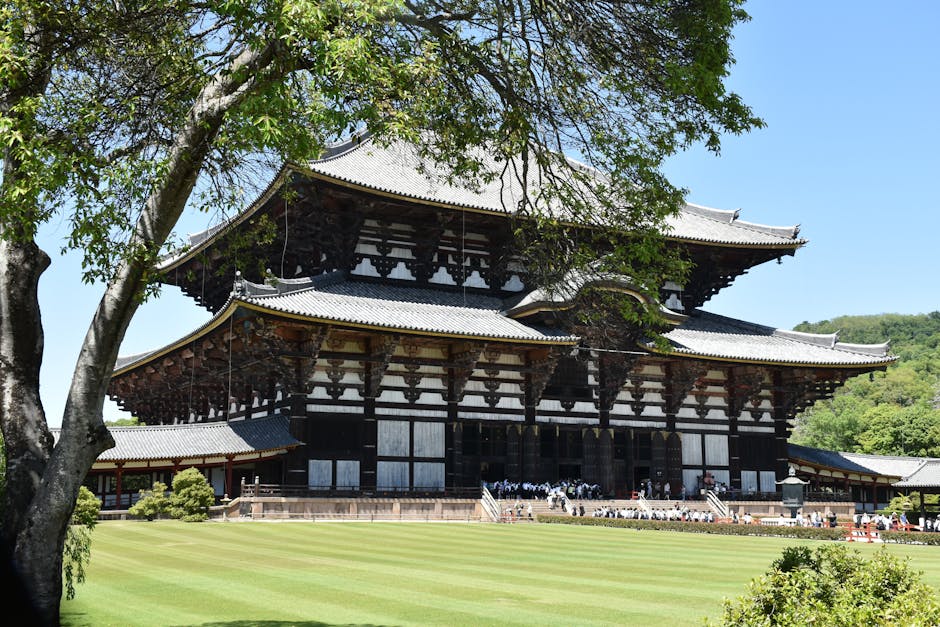
Discover a mystical path through Nara's ancient forest, lined with 3,000 lanterns and sacred deer on this serene self-guided walk.
 Challenging
Nara, Japan
Journey from Nara's imperial ruins and refined gardens into the ancient, sacred silence of the UNESCO-protected Mount Kasuga Primeval Forest.
 Moderate
Nara, Japan
Discover Nara’s literary soul on this self-guided walk through historic Takabatake’s temples, writer residences, and poetic gardens.
 Easy
EasyNara, Japan
Explore Nara's evening charm on this self-guided walk through illuminated pagodas, historic shopping streets, and world-class hidden bars.
 Moderate
Gdansk, Poland
Discover the origins of WWII in Gdansk on this self-guided walk through heroic last stands, massive museums, and strategic hilltop fortifications.
 Easy
EasyNairobi, Kenya
Discover Nairobi’s literary soul on this self-guided walk through historic libraries, iconic bookshops, and cultural centers in the heart of the CBD.
 Easy
EasyKrakow, Poland
Explore the prestigious Jagiellonian University district, featuring Neo-Gothic architecture, Baroque churches, and Krakow's hidden scholarly gems.
 Moderate
Gdansk, Poland
Discover Zaspa, a massive open-air gallery where grey housing blocks are transformed by over 60 monumental murals. Explore at your own pace.
 Moderate
Tokyo, Japan
Discover Tokyo's premier creative district on this self-guided walk through Roppongi’s world-class museums and striking modern architecture.
 Easy
EasyTokyo, Japan
Discover the 'Old Tokyo' charm of Yanaka on this self-guided walk through historic temples, artisan alleys, and a stunning torii gate shrine.
 Easy
EasyTokyo, Japan
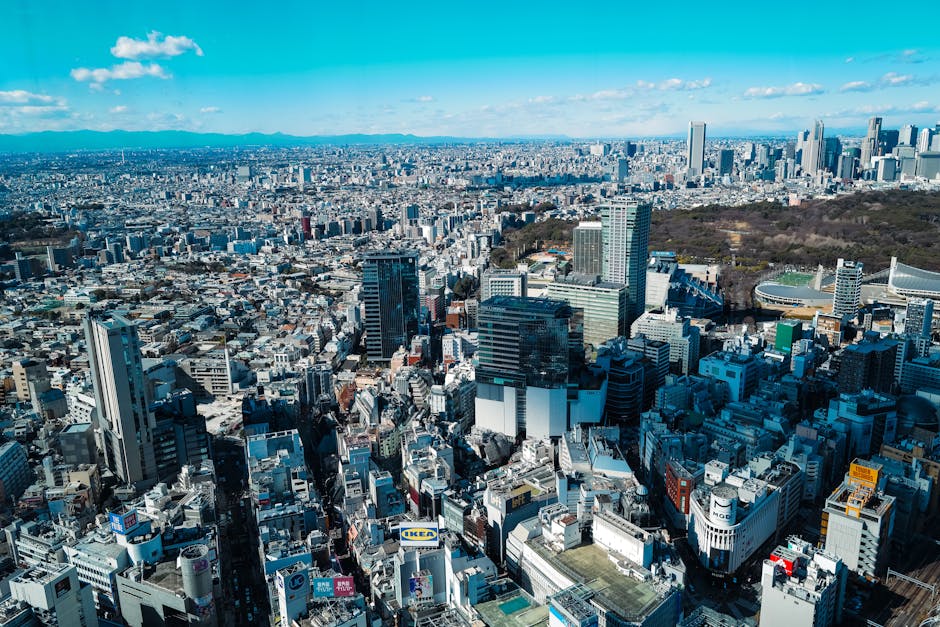
Experience Shibuya's electric energy on this self-guided walk from the iconic Scramble Crossing to the panoramic views of Shibuya Sky.
 Easy
EasyTokyo, Japan
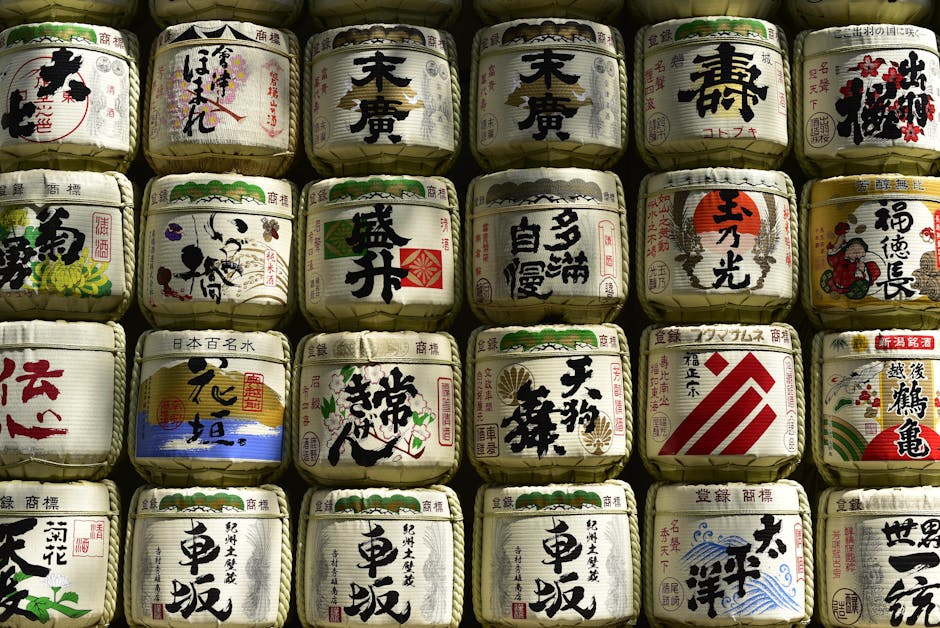
Explore Tokyo's indie heart. From vintage fashion in Shimokitazawa to world-class art in Shinjuku, discover the city's creative soul independently.