Self-guided audio tour in Nara
Start Free on iPhone
Start free on iPhone to unlock this self-guided walking tour in Nara. Hear all the stories that make it amazing, walk at your own pace, and begin whenever you want.
Your Private Tour Guide
While most travelers flock to the Great Buddha of Todai-ji, a quieter, more contemplative side of Nara awaits in the Takabatake district. This self-guided walk explores the intersection of literature, history, and nature, following the footsteps of Japan's most celebrated poets and novelists. Takabatake was once the intellectual heart of the city, a neighborhood of traditional homes and hidden temples where the 'God of Fiction,' Shiga Naoya, and his circle of literary friends once gathered. As you explore independently, you will discover how the landscape of Nara has inspired centuries of creative expression. The walking route begins at the Irie Taikichi Memorial Museum, dedicated to the photographer who spent his life capturing the 'soul' of Nara. From there, you will journey through the ancient gates of Shin Yakushi-ji and into the preserved home of Shiga Naoya, where the architecture itself reflects a literary sensibility. The path then leads into the Manyo Botanical Gardens, a living library of plants mentioned in Japan's oldest collection of poetry, the Manyoshu. Here, the verses of the 8th century come to life among the wisteria and seasonal blooms. As you continue this neighborhood stroll, you will reach the serene Sagi Pond, home to the iconic Ukimido gazebo, before ascending toward Byakugo-ji. This hillside temple offers a breathtaking vantage point over the city, serving as the perfect final stop for reflection. This is not a typical walking tour Nara visitors take; it is a journey for those who prefer to discover at their own pace, away from the crowds, immersed in the same pines and pagodas that have fueled Japanese art for over a millennium. Whether you are a fan of classic literature or simply seeking a peaceful escape into Nara's past, this route provides a deep, atmospheric connection to the city's cultural heritage.
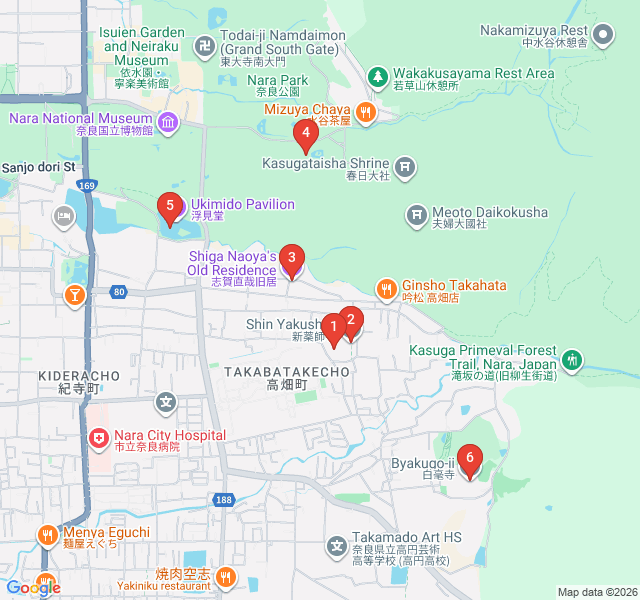
Numbers indicate the order of stops on the tour.
Begin your self-guided adventure at a museum dedicated to the man who defined Nara's visual identity. Irie Taikichi spent over half a century photographing the city's Buddhist statues, landscapes, and traditional festivals. His work is deeply connected to the literary theme of this walk, as he sought to capture the 'Manyo' spirit—the ancient aesthetic described in 8th-century poetry. The museum building itself, designed by Kisho Kurokawa, is a masterpiece of modern architecture that harmonizes with the surrounding landscape. Take a moment to appreciate how Irie’s lens turned the silent stone of temples into emotional narratives, setting the stage for the stories you will encounter today.
Just a short walk away lies Shin Yakushi-ji, a temple founded in 747 by Empress Komyo. While much of the original complex was lost to fire, the Main Hall remains a rare example of Nara-period architecture. Inside, you will find the Yakushi Nyorai (Healing Buddha) surrounded by the Twelve Heavenly Generals. These clay figures, with their fierce expressions and dynamic poses, are considered some of the finest examples of Buddhist sculpture in Japan. Writers and artists have long visited this hall to find inspiration in the contrast between the serene Buddha and his militant protectors. The quiet, uncrowded atmosphere here offers a stark contrast to the busier temples in central Nara.
This stop is the heart of our literary theme. Shiga Naoya, often called the 'God of Fiction' in Japan, designed this house himself and lived here during the 1920s and 30s. It became a salon for the 'Shirakaba' (White Birch) literary school, where writers and thinkers gathered to discuss art and philosophy. As you explore the rooms, notice the blend of Japanese, Western, and Chinese architectural elements. The sunroom, in particular, was a revolutionary addition for its time. Shiga wrote his only full-length novel, 'A Dark Night's Passing,' while living here. The garden and the view of Mt. Kasuga from the second floor illustrate the deep connection between his writing and the natural world.
Located within the grounds of the Kasuga Taisha Shrine, this garden is a living tribute to the Manyoshu, Japan's oldest poetry anthology. The collection contains over 4,500 poems, many of which use plants and flowers as metaphors for human emotion. This garden features over 300 species of plants mentioned in those ancient verses. The most famous feature is the Wisteria Garden, which boasts 20 different varieties that bloom in late April and early May. Even outside of wisteria season, the garden offers a peaceful walking route where you can see the botanical symbols that have appeared in Japanese literature for over 1,200 years.
Sagi Pond, or Heron Pond, provides a picturesque transition between the wilder woods of Nara Park and the residential streets of Takabatake. In the center of the pond sits the Ukimido, a hexagonal wooden gazebo that appears to float on the water. This is a favorite spot for local painters and photographers, especially when the cherry blossoms or autumn leaves reflect in the still surface. For the literary traveler, it serves as a place for 'mon no aware'—a Japanese term for the pathos of things or a bittersweet realization of the ephemeral nature of beauty. It is a perfect spot to rest and observe the deer that often wander down to the water's edge.
Your journey concludes at Byakugo-ji, known as the 'Temple of the White Cloud.' Perched on a hillside, it requires a bit of a climb, but the reward is one of the best panoramic views of the Nara basin. This temple is famous for its 'Five-Colored Camellias,' which were a favorite subject of local poets. The quiet grounds house several important Buddhist statues, including a rare image of King Enma, the judge of the afterlife. Standing here as the sun begins to set, looking out over the pagodas and forests you’ve just traversed, you can truly feel the timelessness that has inspired generations of Nara's literary giants.
Start Free on iPhone
Explore “Poetry and Pines: A Literary Walk Through Nara” with your very own Private Tour Guide with Zigway. Start free on iPhone, skip the large group and the fixed routes, and hear the city come alive as you go.
Your Private Tour Guide
Don't miss the good stuff
Explore Freely
 Moderate
Nara, Japan
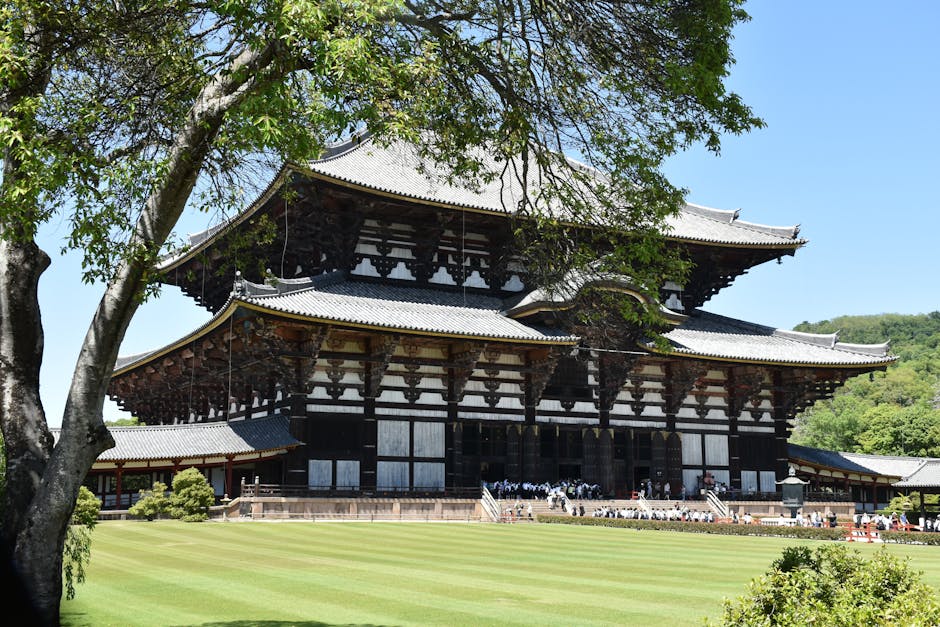
Discover a mystical path through Nara's ancient forest, lined with 3,000 lanterns and sacred deer on this serene self-guided walk.
 Challenging
Nara, Japan
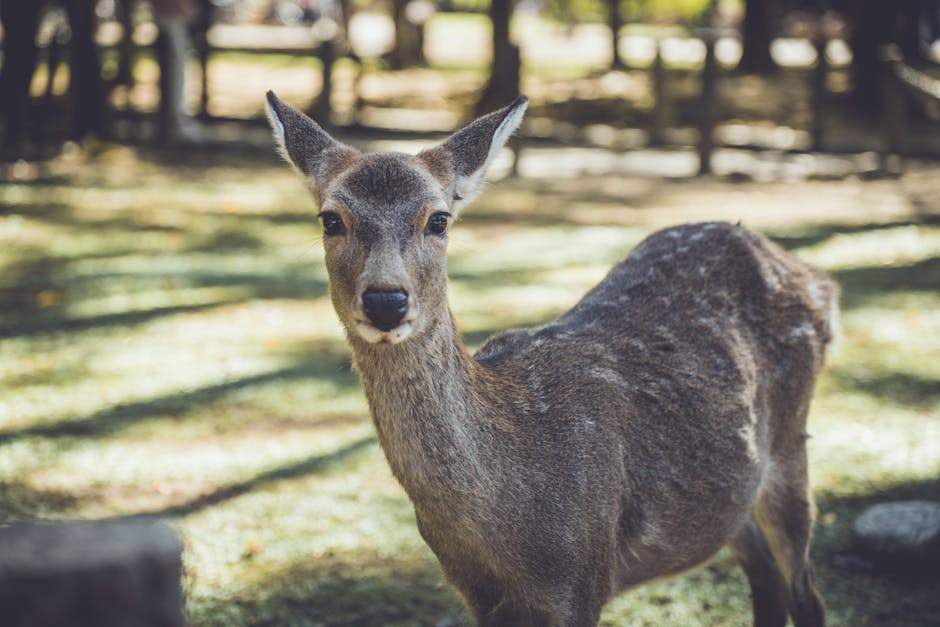
Journey from Nara's imperial ruins and refined gardens into the ancient, sacred silence of the UNESCO-protected Mount Kasuga Primeval Forest.
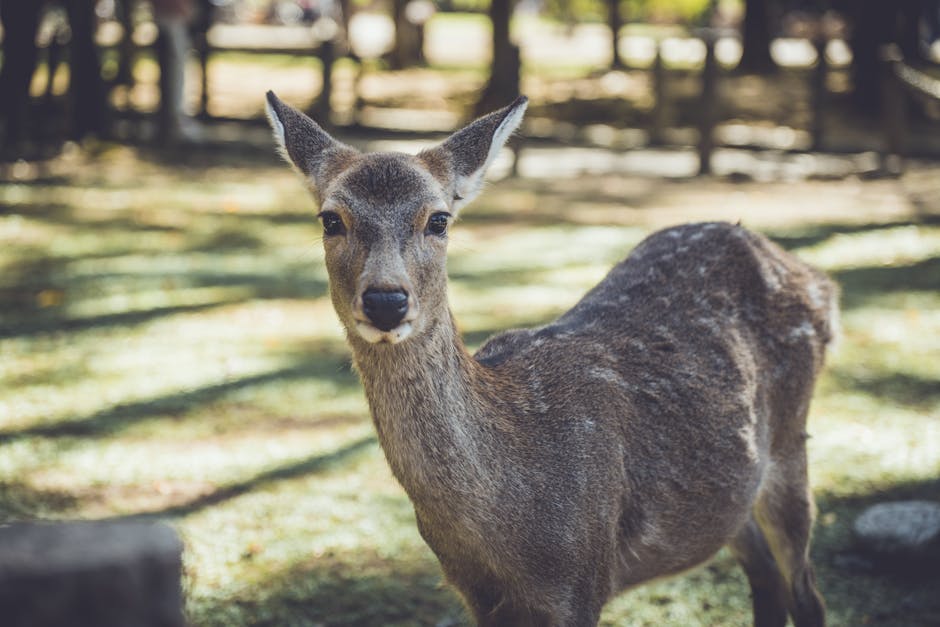 Easy
EasyNara, Japan
Explore Nara's evening charm on this self-guided walk through illuminated pagodas, historic shopping streets, and world-class hidden bars.
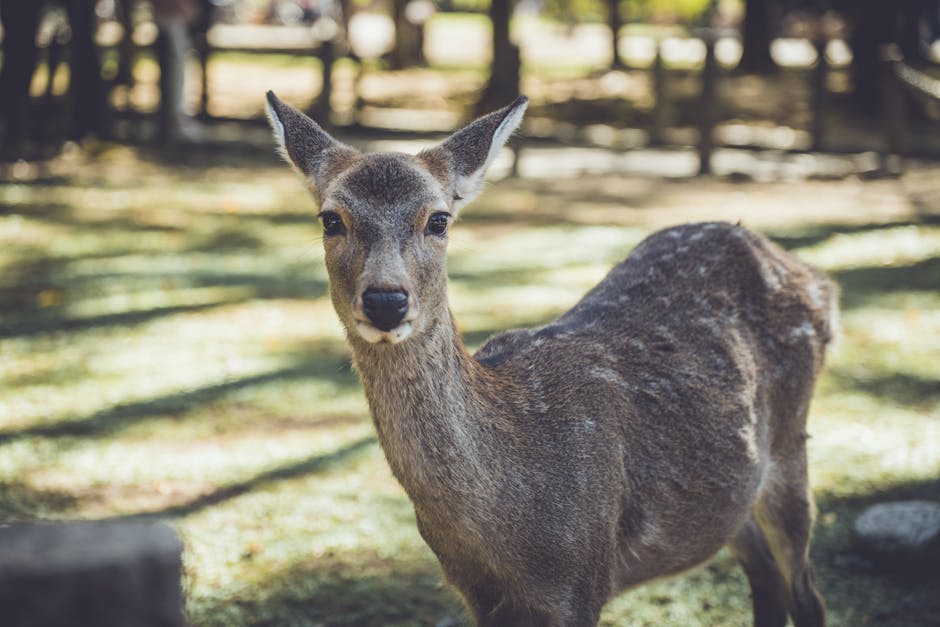 Challenging
Nara, Japan
Ascend the grassy slopes of Mount Wakakusa for panoramic vistas, hidden waterfalls, and the serene gardens of Nara on this challenging self-guided walk.
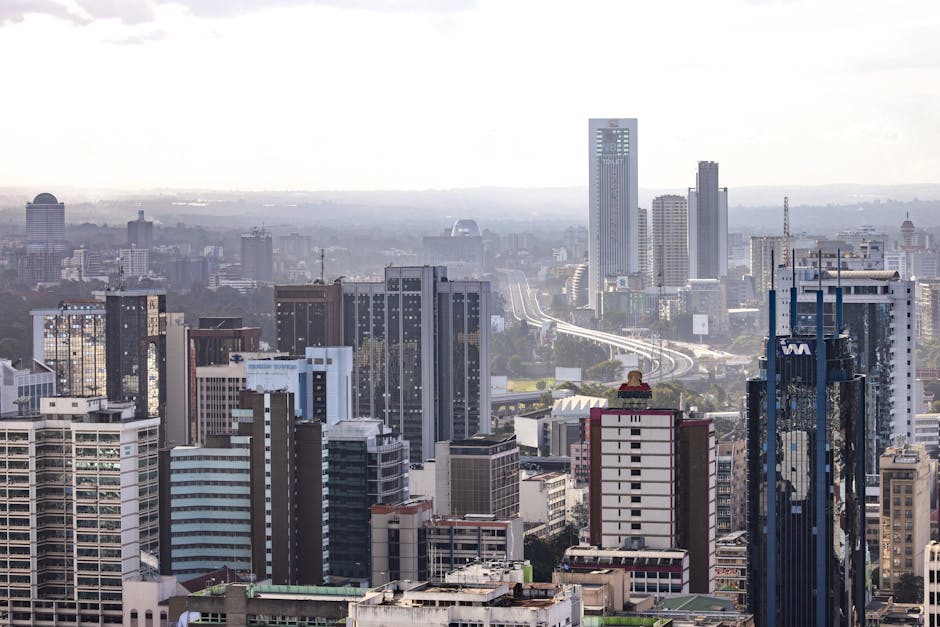 Moderate
Nairobi, Kenya
Discover Nairobi's lush side on this self-guided walk through botanical gardens, historic memorials, and vibrant local markets.
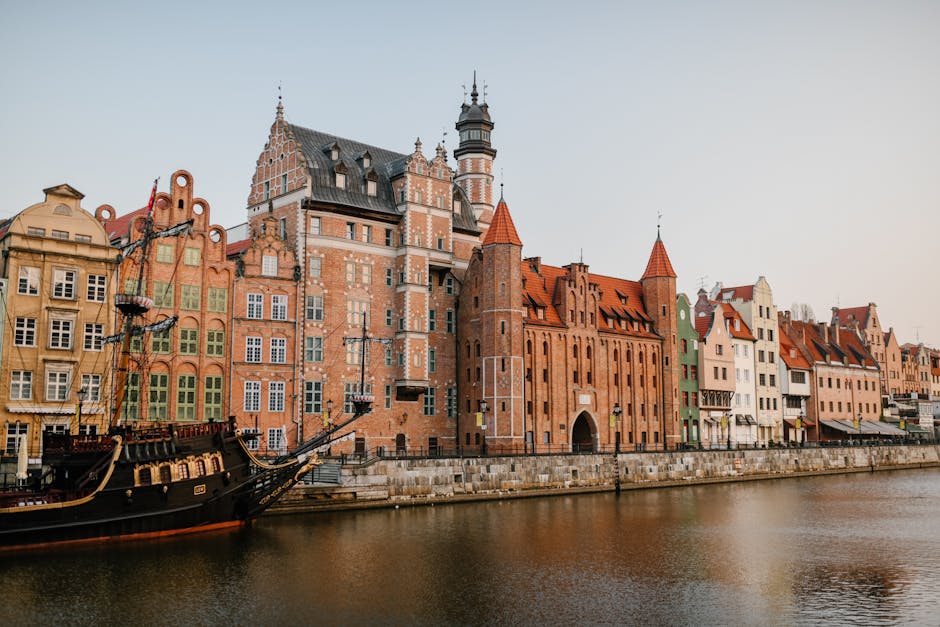 Moderate
Gdansk, Poland
Discover the bohemian soul of Gdańsk. Explore the literary landmarks of Günter Grass, Prussian villas, and the trendy cafes of historic Wrzeszcz.
 Easy
EasyGdansk, Poland
Discover the monastic heritage, world-famous organs, and lush botanical gardens of Oliwa on this peaceful self-guided neighborhood stroll.
 Moderate
Gdansk, Poland
Discover Zaspa, a massive open-air gallery where grey housing blocks are transformed by over 60 monumental murals. Explore at your own pace.
 Moderate
Tokyo, Japan
Discover Tokyo's premier creative district on this self-guided walk through Roppongi’s world-class museums and striking modern architecture.
 Easy
EasyTokyo, Japan
Discover the 'Old Tokyo' charm of Yanaka on this self-guided walk through historic temples, artisan alleys, and a stunning torii gate shrine.
 Easy
EasyTokyo, Japan
Experience Shibuya's electric energy on this self-guided walk from the iconic Scramble Crossing to the panoramic views of Shibuya Sky.
 Easy
EasyTokyo, Japan
Explore Tokyo's indie heart. From vintage fashion in Shimokitazawa to world-class art in Shinjuku, discover the city's creative soul independently.