Self-guided audio tour in Antwerp
Start Free on iPhone
Hear the stories behind the streets and sights around you as you walk Antwerp. Try it free on iPhone.
Your Private Tour Guide
Antwerp's Baroque old town is Rubens territory, and the self-guided route tracks Peter Paul Rubens from his statue and his house to the churches that hold his great paintings. In the 17th century Antwerp was a city with huge ambitions, and Rubens was the man whose brushwork defined the age. He was a painter, but also a diplomat and a collector, and the most influential Baroque artist in northern Europe. The Master's Palette: Rubens' Baroque Antwerp traces the 'Prince of Painters' through Antwerp's Golden Age, from his grand home to the churches where his best-loved work still hangs. Walking the historic center, you'll see how he changed the city's skyline and its sense of itself. It's a solid introduction to the art and history of Flanders, and you get the stories behind the canvases at your own speed. You'll stand in the soaring Cathedral of Our Lady, where his giant altarpieces still fill the space. You'll also see the less-visited churches of the Jesuit and Dominican orders, Baroque architecture at its most lavish. There's a person behind the art too. Rubens moved easily between royal courts and the workshop, and the walk gives you a feel for that life. The route winds through narrow alleys and big squares, in a city that still treats its favorite son as its living gallery. It suits art lovers, and anyone curious about the 1600s who'd rather skip a rigid schedule. Follow it and you'll see the same light that inspired the Flemish masters, and how one man helped turn a trading port into a world capital of art.
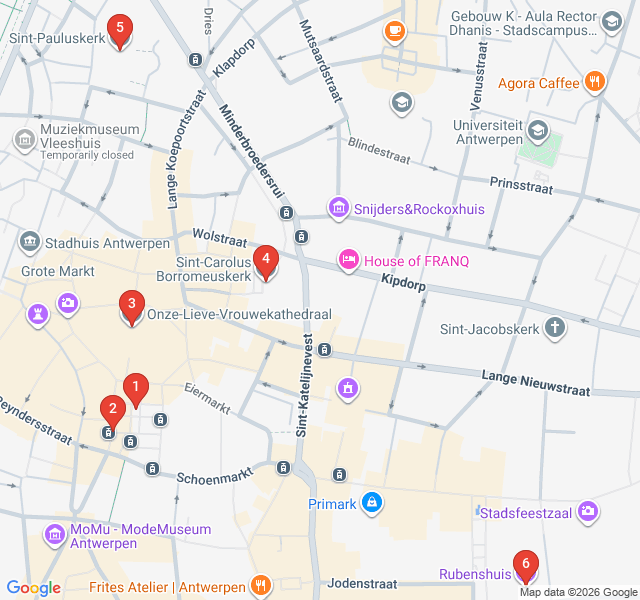
Numbers indicate the order of stops on the tour.
Start at the feet of the master himself. This bronze statue of Peter Paul Rubens was unveiled in 1843, marking 200 years since his death. Look at how he's shown. He's not just a painter holding a palette but a nobleman and diplomat, with a sword at his side and expensive robes. That fits his status: Rubens was knighted by both King Philip IV of Spain and King Charles I of England. Up here in the middle of the city, he still acts as the symbolic guardian of Antwerp's art. Have a look around the square too. It's a good first taste of the grandeur of the Flemish Baroque.
Groenplaats, the 'Green Square', has more history than it lets on. For a long time it was the city's main cemetery, until Emperor Joseph II of Austria banned burials inside city walls in the late 18th century. Now it's one of Antwerp's liveliest places to meet. From here you get a superb view of the spire of the Cathedral of Our Lady, a masterpiece of Brabantine Gothic. Rubens would have crossed this square many times, since it links his home with the city's key religious and civic buildings. The medieval street plan and the 17th-century Baroque spirit he helped grow meet right here. Good spot for a coffee, too.
The Cathedral of Our Lady is where Rubens' art feels most at home. Inside this UNESCO World Heritage site hang four of his most famous works: 'The Raising of the Cross', 'The Descent from the Cross', 'The Resurrection of Christ' and 'The Assumption of the Virgin Mary'. These enormous triptychs were made for these exact spaces. They use dramatic light and muscular figures to stir strong emotion, which is classic Baroque. Think about who first saw them. Worshippers in the 17th century lived in a world of much duller colors, and these bright, life-sized paintings must have hit hard. If you only go inside one church, make it this one.
Sint-Carolus Borromeuskerk is often called the 'Rubens Church', and it's the high point of Jesuit Baroque in the Low Countries. Rubens didn't only paint here. He worked as architect and decorator too, designing the tower and the stunning facade in front of you. He also painted 39 ceiling pieces for the church, but sadly most were lost in a fire caused by lightning in 1718. Take a good look at the high altar. It has a rare mechanism that lets the large paintings be swapped depending on the church season. The whole building is Counter-Reformation in spirit, using beauty and drama to pull people back to the Catholic faith.
St Paul's Church sits near the old docks and is easy to overlook. Gothic outside, it's a Baroque feast inside. It holds work by the 'Big Three' of Antwerp painting: Rubens, Van Dyck and Jordaens. Don't skip the 'Calvary', an extraordinary 18th-century garden outside the church with over 60 life-sized statues showing the road to the crucifixion. Rubens painted several works for St Paul's, including the 'Dispute on the Holy Sacrament'. In 1968 a huge fire broke out, and the church survived thanks to local residents and 'ladies of the night' from the nearby red-light district, who helped carry the priceless art to safety. Best story on the walk, easily.
Last comes the Rubenshuis, where the master lived, worked and died. Rubens bought the property in 1610 and rebuilt it as an Italian-style palazzo, inspired by villas he'd seen in Rome and Genoa. It was also his studio, where he and his assistants turned out hundreds of paintings for the royal courts of Europe. Walk through the inner courtyard to see the ornate portico he designed, linking the living quarters to the studio. Even from the street, the house tells you how rich Rubens was, and how much he wanted to bring the classical beauty of the Italian Renaissance home to the north.
Explore Mode
Open Zigway, start Explore Mode and just walk. Your guide notices where you are and tells you the story of what's around you, on this route or any street you turn into.
Start Free on iPhone
Open Zigway as you walk and your private tour guide tells the stories behind what you pass.
Your Private Tour Guide
Don't miss the good stuff
Explore Freely
 Easy
Antwerp, Belgium
Taste your way through Antwerp's history on this self-guided walk featuring world-class beer, fries, and chocolate in the historic center.
 Moderate
Antwerp, Belgium
Explore Antwerp's Eilandje district on this self-guided walk, where historic docks meet futuristic architecture and maritime legends.
 Easy
Antwerp, Belgium
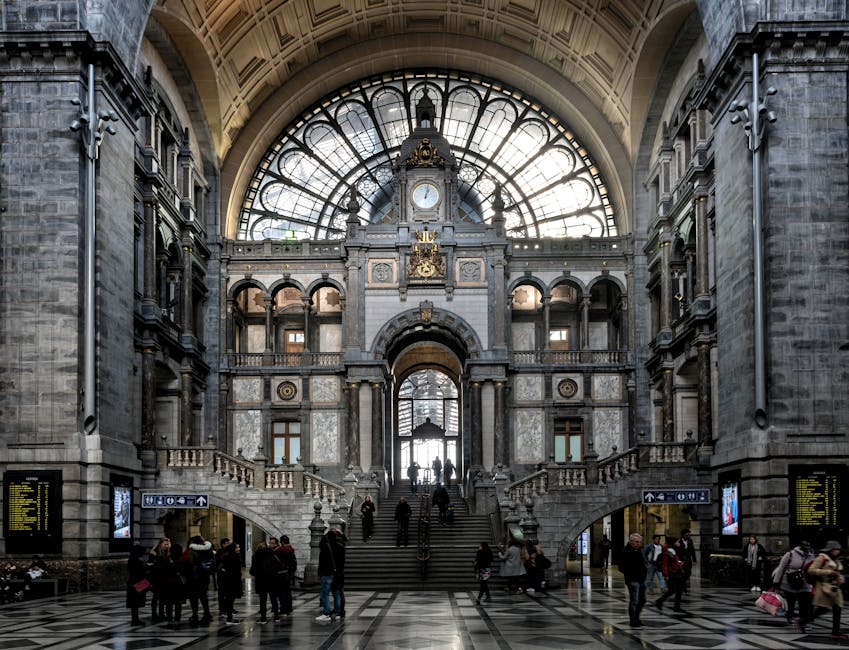
Discover Antwerp’s printing revolution and literary heritage on this self-guided walk through the city's historic center and UNESCO sites.
 Easy
Antwerp, Belgium
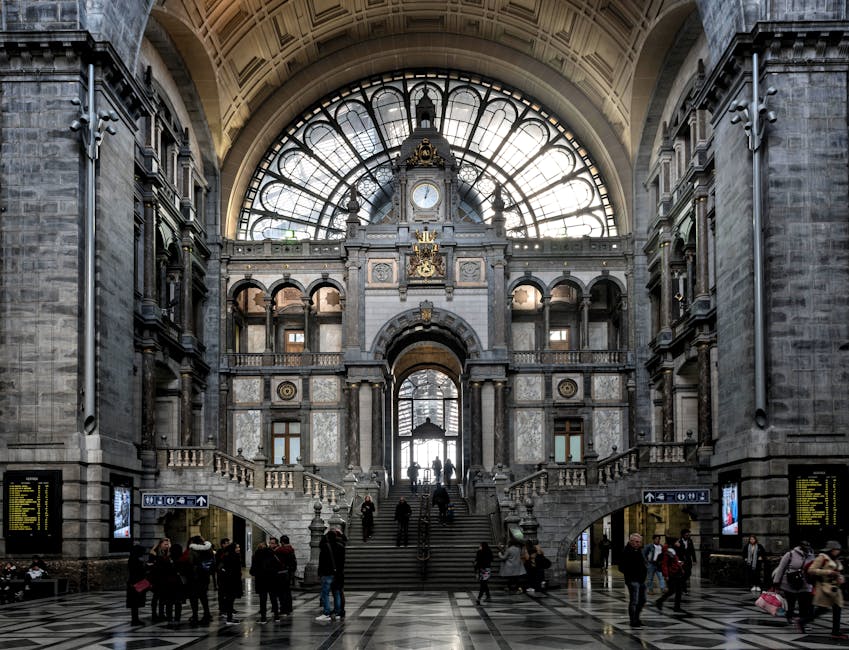
Discover how a gritty railway yard became Antwerp's most vibrant green space on this self-guided industrial heritage walk.
 Easy
Salzburg, Austria
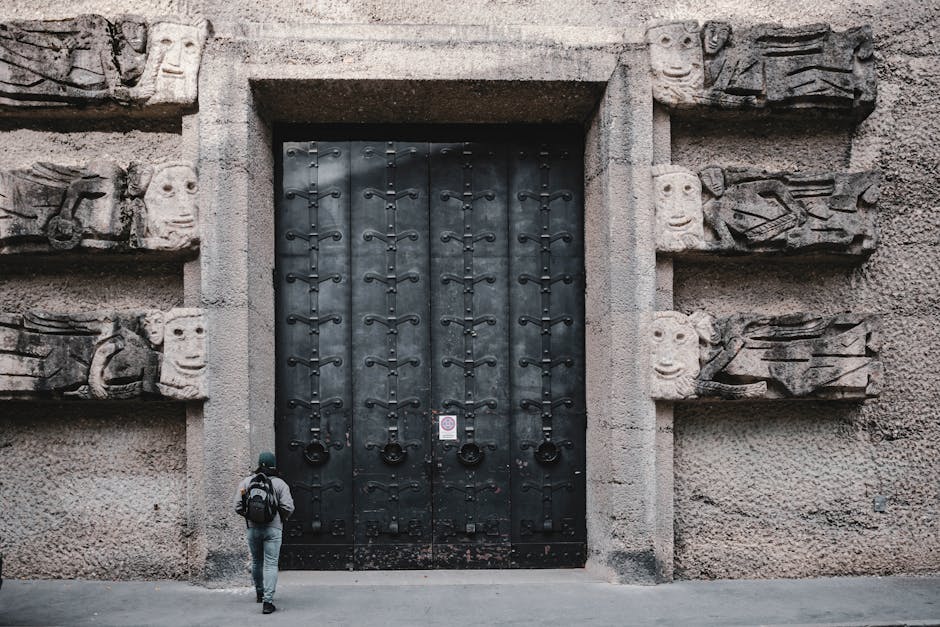
Discover the 'Rome of the North' on this self-guided walk through the Baroque squares and monumental legacy of Salzburg’s Prince-Archbishops.
 Easy
Nairobi, Kenya
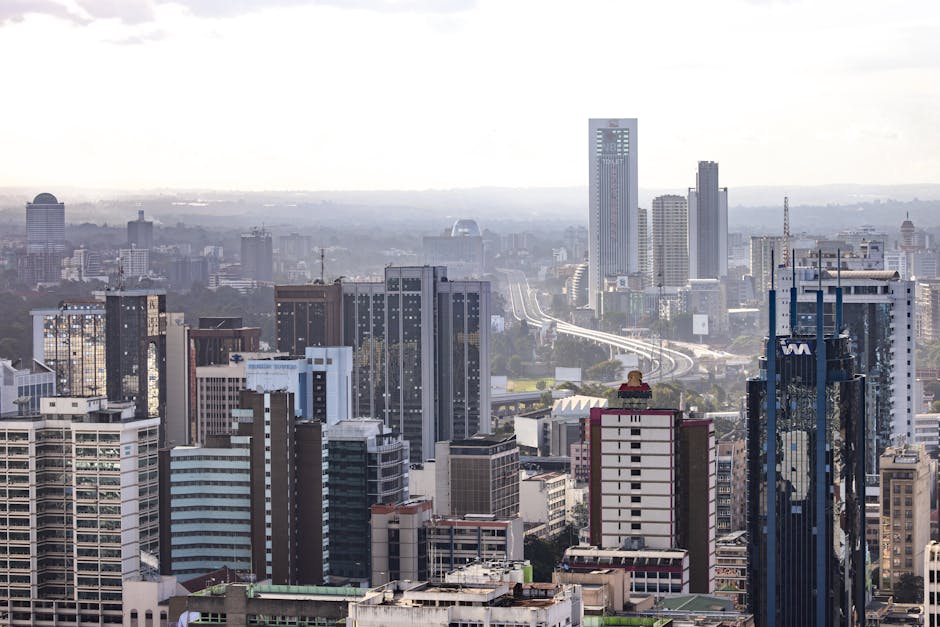
Explore Nairobi's architectural evolution from colonial-era landmarks to iconic Brutalist skyscrapers on this historic self-guided walking route.
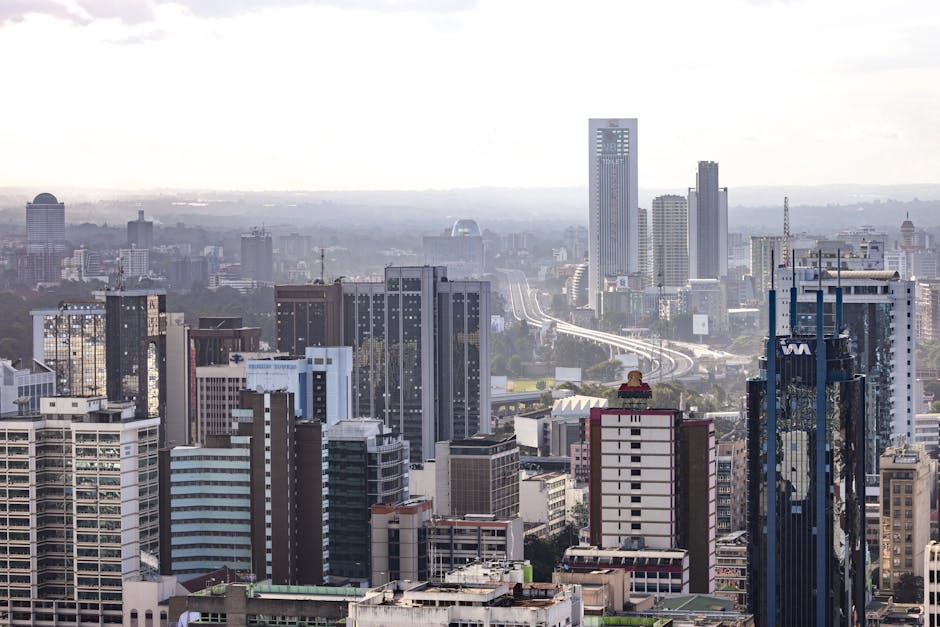 Easy
Nairobi, Kenya
Discover Nairobi's iconic skyline on this self-guided architecture walk through the CBD’s most famous modernist and Brutalist landmarks.
 Easy
Krakow, Poland
Explore the historic heart of Kazimierz on this self-guided walk through synagogues, ancient cemeteries, and vibrant squares.
 Easy
Brussels, Belgium
Discover the colorful world of Belgian comics on this independent walking route through the creative streets and murals of central Brussels.
 Moderate
Brussels, Belgium
Explore the majestic Royal Quarter, from Art Nouveau gems to the King's Palace and the iconic views of Mont des Arts on this self-guided walk.
 Moderate
Brussels, Belgium
Explore Brussels' industrial heart and artistic rebirth on this self-guided walk through Molenbeek and the Canal district's iconic landmarks.
 Moderate
Brussels, Belgium
Discover Brussels' Art Nouveau masterpieces at your own pace, from Victor Horta's UNESCO sites to the flamboyant Maison Saint-Cyr.