Self-guided audio tour in Bordeaux
Start Free on iPhone
Start free on iPhone to unlock this self-guided walking tour in Bordeaux. Hear all the stories that make it amazing, walk at your own pace, and begin whenever you want.
Your Private Tour Guide
Discover the harmonious blend of stone and greenery in Bordeaux with this self-guided walk through the city's most iconic landmarks and tranquil parks. This walking route, titled Botanical Bliss, begins in the medieval heart of the city and gradually transitions into the lush, open spaces of the Jardin Public and beyond. You will explore the architectural grandeur of the UNESCO-listed city center before finding sanctuary in the elegant 18th-century gardens that have served as the city's 'green lungs' for generations. This self-guided adventure highlights the contrast between the imposing Gothic spires of the Tour Pey Berland and the delicate blossoms of the botanical garden. As you wander from the historic Grosse Cloche toward the riverfront at Place de la Bourse, you will experience the evolution of Bordeaux from a fortified medieval stronghold to an enlightened European capital. The route then leads you away from the bustling quays toward the Monument aux Girondins, the gateway to the Jardin Public neighborhood. Here, the narrative shifts toward nature and relaxation. You can explore the Muséum de Bordeaux or simply enjoy a neighborhood stroll under the canopy of ancient trees in the Jardin Public. For those who wish to see more of Bordeaux's horticultural heritage, the route continues toward the Roman ruins of Palais Gallien and further out to the expansive Parc Bordelais. This walking tour Bordeaux offers is designed for those who appreciate both history and horticulture, providing a peaceful escape from the urban rush while keeping you connected to the stories that shaped this magnificent French city. Whether you are a first-time visitor or a returning traveler, this journey through the parks and plazas offers a unique perspective on the city's lifestyle and its deep-rooted connection to the natural world.
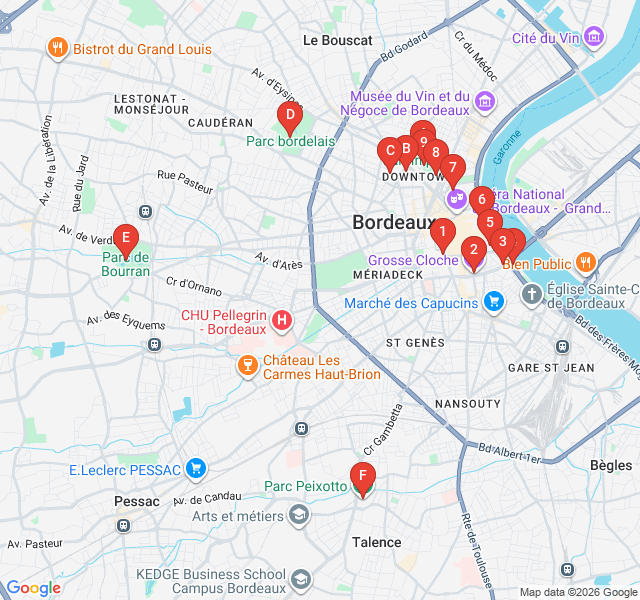
Numbers indicate the order of stops on the tour.
Begin your self-guided adventure at the Tour Pey Berland, a striking 15th-century bell tower that stands independently from the nearby Cathedral of Saint-André. This separation was intentional; the weight and vibration of the massive bells would have threatened the structural integrity of the cathedral's Gothic arches. Built in the Flamboyant Gothic style, the tower is topped with a gilded statue of Notre-Dame d'Aquitaine. As you stand here, you are at the spiritual and historical heart of Bordeaux. The tower serves as a soaring introduction to the city's medieval past before we transition toward the elegant greenery of our later stops.
Walking toward the old city center, you encounter the Grosse Cloche, or the Big Bell. This is one of the few remaining medieval gates in Bordeaux and once served as the belfry for the former town hall. The current bell, cast in 1775, weighs over seven tons and is rung only on special occasions. Look closely at the gateway's architecture; it served as a prison for many years, and the weather vane on top features a leopard, a symbol of the English influence in Aquitaine. This landmark marks the transition into the narrow, winding streets that define the historic Saint-James neighborhood.
You have reached the Porte de Bourgogne, an 18th-century stone arch that once stood as the formal entrance to the city for travelers arriving from Paris. Its neoclassical design is simple yet imposing, reflecting the city's desire for symmetry and grandeur during the Enlightenment. Positioned at the end of the Cours Victor Hugo, this gate overlooks the Garonne River and serves as a gateway between the medieval core and the vibrant riverfront. It is a perfect spot to observe the bustling energy of Bordeaux's modern tram system as it passes through historic architecture.
The Saint-Michel district is one of the most vibrant and diverse areas in the city. The Basilica of Saint-Michel is famous for its separate bell tower, which is the tallest in the South of France at 114 meters. This neighborhood has historically been home to merchants and craftsmen, and today it hosts a lively market. The atmosphere here is a contrast to the manicured gardens we will see later, offering a glimpse into the local, everyday life of Bordeaux. The Flamboyant Gothic details of the basilica are a must-see for any fan of medieval art and history.
Standing before you is the Porte Cailhau, a magnificent monument built in 1494 to commemorate King Charles VIII's victory at the Battle of Fornovo. This gate looks like it belongs in a fairytale, with its conical roofs and decorative turrets. It served both as a defensive gate and a triumphal arch. From here, you can see the white stone facades that line the river, a hallmark of Bordeaux's 18th-century urban planning. The gate provides a beautiful frame for the river views and marks our progress toward the grandest plaza in the city.
Place de la Bourse is the quintessential symbol of Bordeaux. Designed by the King’s architect, Ange-Jacques Gabriel, in the mid-1700s, this crescent-shaped square opened the city to the river. Facing the square is the Miroir d'eau, or Water Mirror, the world's largest reflecting pool. The thin layer of water creates a perfect reflection of the neoclassical buildings, occasionally turning into a mist. This stop represents the height of French urban design, where architecture and water elements were used to create a sense of infinite space and light. It is one of the most photographed spots in France.
As you move toward the Quinconces, one of the largest city squares in Europe, you will find the Monument aux Girondins. This massive fountain and column were built to honor the Girondists, a political group during the French Revolution. The bronze statues in the fountain represent Liberty, Eloquence, and History, while the rearing horses symbolize the triumph of the Republic. During World War II, these statues were removed and hidden to prevent them from being melted down for metal. This monument serves as a dramatic entrance to the more tranquil, garden-focused portion of our walking route.
Entering the Jardin Public area, you will find L'Orangerie. Historically, this building was used to protect citrus trees and other delicate plants from the frost during the winter months. Today, it has been transformed into a charming cafe and venue, but it retains its classic architectural elegance. It is a reminder of the 18th-century obsession with botany and exotic flora. This is an ideal spot to pause and enjoy the view of the park's central pond, marking your shift from the city's stone monuments into its botanical heart.
Located within the grounds of the Jardin Public, the Muséum de Bordeaux - Science et Nature is housed in the historic Hôtel de Lisleferme. This natural history museum has been recently renovated and offers a fascinating look at biodiversity through its vast collections. Even if you don't go inside, notice how the building is integrated into the garden landscape. The museum's presence highlights the park's dual role as a place for public recreation and a center for scientific study, a concept that dates back to the Age of Enlightenment when the park was founded.
The Jardin Public is the centerpiece of this botanical journey. Created in 1746, it was the first garden in Bordeaux intended for the health and well-being of its citizens. Originally designed in the French formal style, it was later redesigned as an English-style park with winding paths, a large lake, and an arboretum. Explore the botanical garden section, which contains over 3,000 species of plants. The park is a masterpiece of landscape architecture, featuring rare trees and a serene atmosphere that has made it a local favorite for over two centuries. Take a moment to breathe in the fresh air and enjoy the tranquility.
A short walk from the Jardin Public brings you to the Palais Gallien, the remains of a 2nd-century Roman amphitheater. This is the oldest surviving monument in Bordeaux and a reminder of the city's ancient origins as 'Burdigala.' At its height, this arena could hold up to 15,000 spectators for gladiatorial games. Today, the brick and stone arches stand quietly in a residential neighborhood, offering a poignant contrast between the ancient ruins and the modern city. It is a hidden gem that many travelers miss, providing a deep historical layer to our walk.
Place de Lerme is a quiet, circular square that showcases the understated elegance of Bordeaux's residential architecture. It is a perfect example of the 'neighborhood stroll' experience, where the scale is intimate and the pace is slow. The square's design reflects the urban planning of the 19th century, meant to provide light and air to the surrounding homes. As you walk through, notice the ornate ironwork on the balconies and the consistency of the limestone facades. This stop offers a peaceful transition as we head toward the larger suburban parks.
Parc Bordelais is the city's largest park, spanning 28 hectares. Designed in the late 19th century by Eugene Bühler, it was intended to be a 'countryside in the city' for the residents of the expanding western neighborhoods. The park features a large lake, farm animals, and hundreds of majestic oak trees. It is a classic example of a 19th-century landscape park, designed for long walks and family outings. While it is a bit of a trek from the city center, it is easily accessible and offers a more rugged, expansive version of the botanical theme we have followed today.
Located in the nearby suburb of Mérignac, Parc de Bourran is worth the detour for its romantic landscape. This park surrounds a 19th-century chateau and is famous for its artificial ruins, bridges, and exotic tree species like giant sequoias and bald cypresses. The design is intended to evoke a sense of drama and discovery, with winding paths leading to hidden viewpoints. It is a protected historic monument and represents the late 19th-century trend of creating 'picturesque' gardens that blend natural beauty with architectural curiosities.
Our final stop is Parc Peixotto in Talence. This park surrounds an elegant 18th-century chateau and serves as the gateway to the university campus. It is home to a beautiful botanical garden and a variety of themed plant collections. The park is a favorite among students and locals for its peaceful lawns and well-maintained flower beds. Standing here, you have traversed the history of Bordeaux's green spaces, from royal formal gardens to modern community parks. It is a fitting end to a journey focused on the 'botanical bliss' of this region.
Start Free on iPhone
Explore “Botanical Bliss: The Public Garden Walk” with your very own Private Tour Guide with Zigway. Start free on iPhone, skip the large group and the fixed routes, and hear the city come alive as you go.
Your Private Tour Guide
Don't miss the good stuff
Explore Freely
 Easy
EasyBordeaux, France
Explore the vibrant Saint-Michel district and the legendary Marché des Capucins on this self-guided food and culture walk through Bordeaux.
 Easy
EasyBordeaux, France
Discover the intellectual soul of Bordeaux on this self-guided walk through the haunts of legendary philosophers and writers.
 Moderate
Bordeaux, France
Explore the bold Brutalist architecture of Bordeaux's Mériadeck district on this self-guided walk through 1970s urban design and hanging gardens.
 Moderate
Bordeaux, France
Explore Bordeaux's creative edge on this self-guided walk from classic museums to the vibrant Darwin Ecosystem and industrial ruins.
 Easy
EasyNairobi, Kenya
Discover Nairobi's iconic skyline on this self-guided architecture walk through the CBD’s most famous modernist and Brutalist landmarks.
 Easy
EasyInnsbruck, Austria
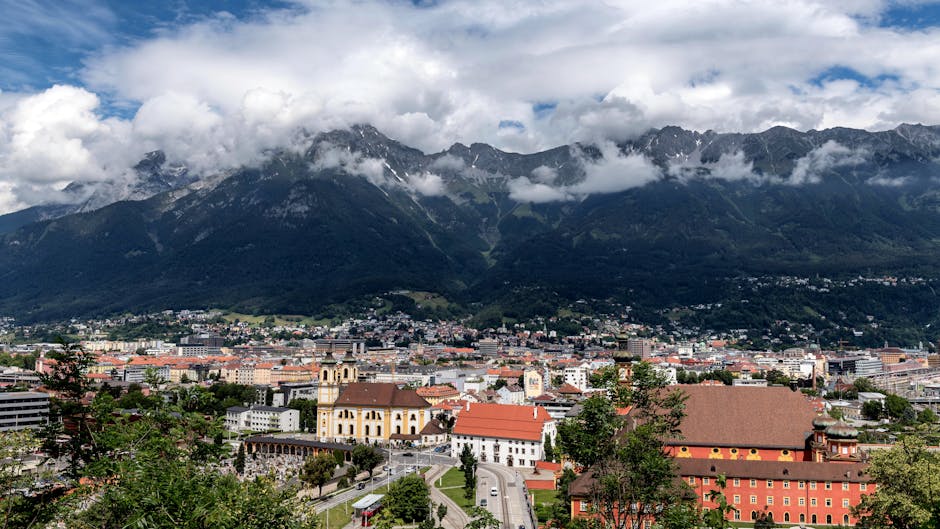
Uncover the myths and legends of Innsbruck on this self-guided walk through the historic Altstadt and beyond.
 Easy
EasyGdansk, Poland
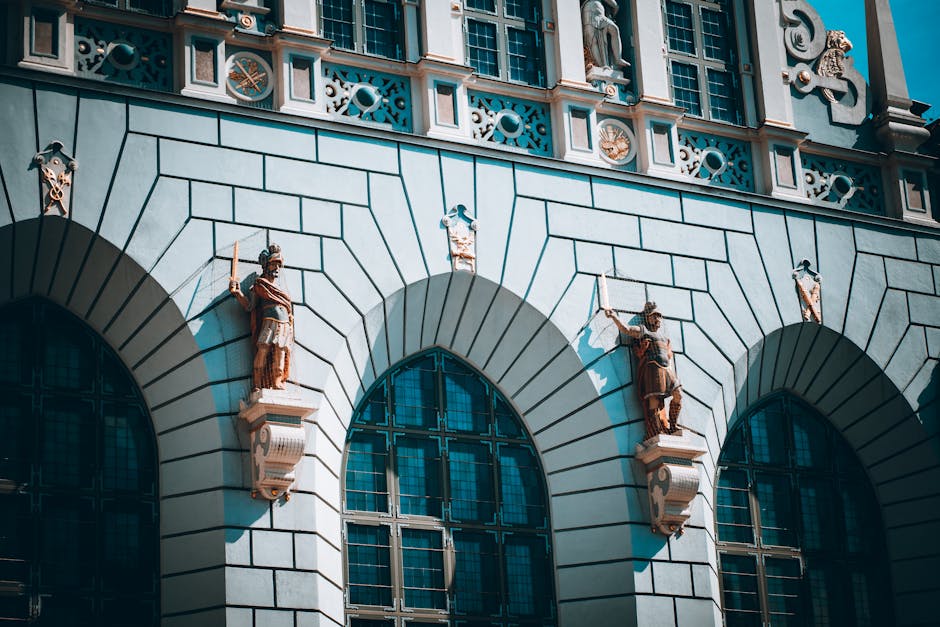
Discover the opulent Royal Way of Gdansk at your own pace. Explore Hanseatic history, gilded architecture, and the iconic Neptune's Fountain.
 Easy
EasyGdansk, Poland
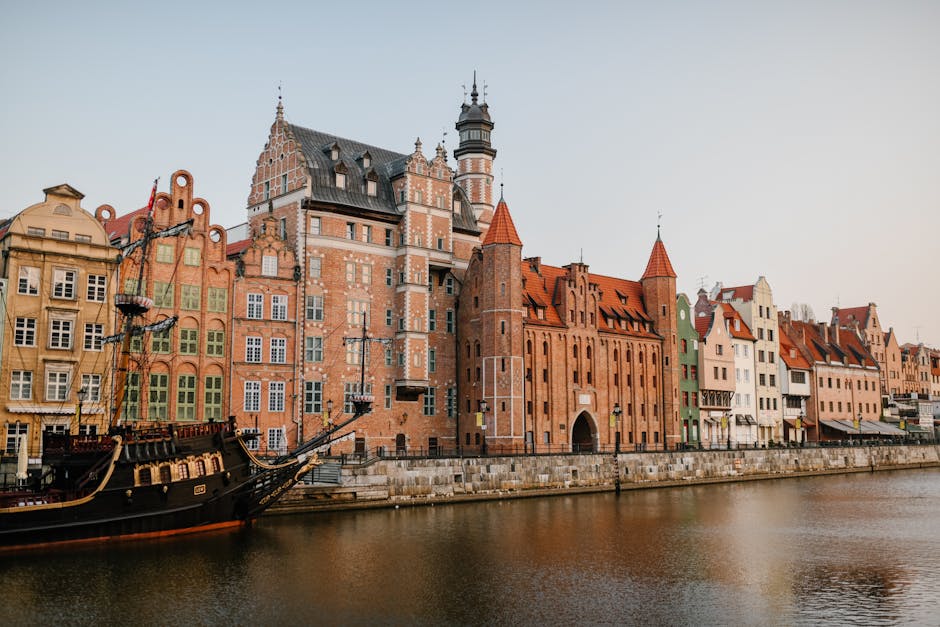
Discover the monastic heritage, world-famous organs, and lush botanical gardens of Oliwa on this peaceful self-guided neighborhood stroll.
 Challenging
Paris, France
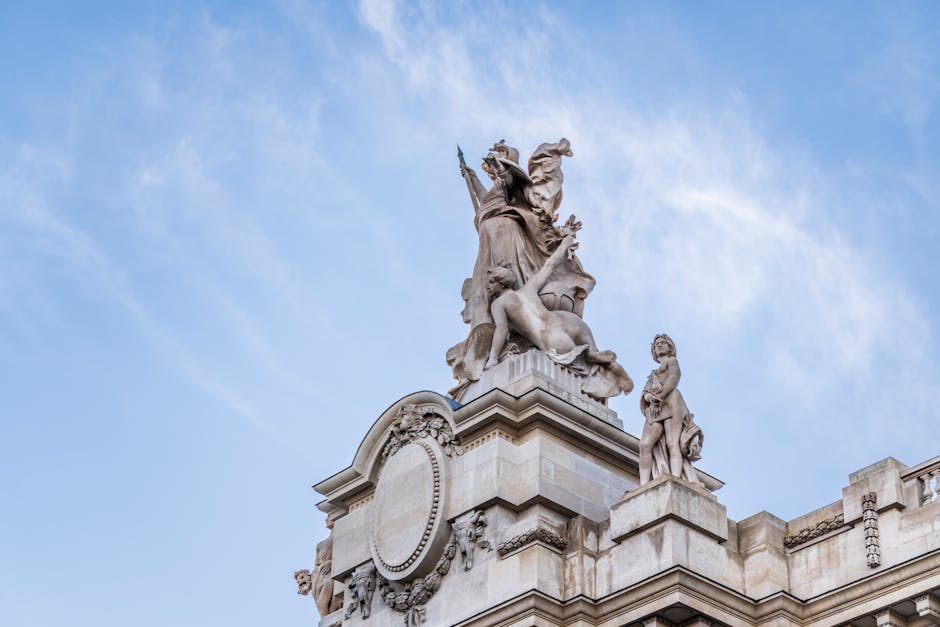
Explore the secret vineyards, legendary artist studios, and hidden squares of Paris's iconic hilltop on this self-guided bohemian walking route.
 Easy
EasyParis, France
Explore the evolution of Parisian design from Art Nouveau whimsy to Le Corbusier's Modernist masterpieces on this self-guided architectural walk.
 Easy
EasyParis, France
Explore the flavors and history of Bastille on this self-guided walk through the legendary Aligre Market and the scenic Coulée Verte.
 Easy
EasyParis, France
Discover aristocratic mansions, secret medieval courtyards, and royal history on this self-guided walk through the enchanting Marais district.