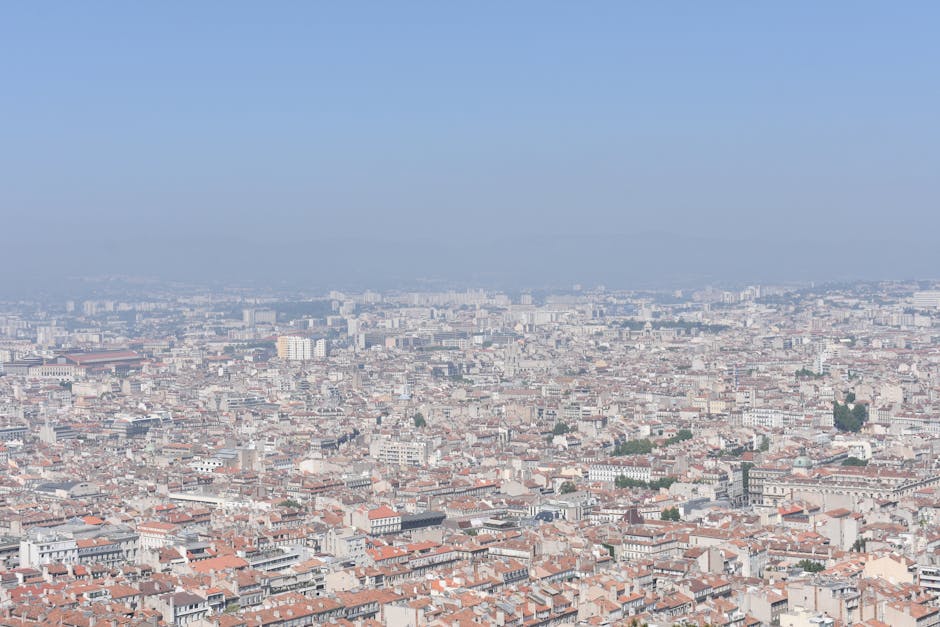
Self-guided audio tour in Marseille
Start Free on iPhone
Start free on iPhone to unlock this self-guided walking tour in Marseille. Hear all the stories that make it amazing, walk at your own pace, and begin whenever you want.
Your Private Tour Guide
Step into the pages of Alexandre Dumas’ legendary novel on a self-guided walk through the Frioul Islands and the rugged coastline of Marseille. This architectural and natural journey begins in the shadow of the Château d'If, the island fortress where the fictional Edmond Dantès was unjustly imprisoned before transforming into the Count of Monte Cristo. While the novel is a work of fiction, the haunting atmosphere of the limestone cells and the crashing Mediterranean waves make the legend feel entirely real. This neighborhood stroll offers a unique blend of literary history and the raw beauty of the Provençal coast, taking you far from the bustling city center into a landscape of white cliffs and turquoise waters. As you explore independently, you will discover that the Frioul archipelago is more than just a literary backdrop. It is a place shaped by centuries of maritime history, from its role as a quarantine center during the yellow fever outbreaks to its strategic military importance. The walking route leads you through the ruins of the Hôpital Caroline and across the sea-wall to Ratonneau Island, where the scent of wild rosemary and the sound of cicadas dominate the air. This self-guided adventure is perfect for those who want to combine a historical walking tour Marseille with a refreshing hike through some of the Mediterranean's most pristine landscapes. The journey concludes by looking toward the mainland’s Côte Bleue, where the Calanque de l’Éverine offers a final, secluded escape into nature. Whether you are a fan of classic literature, a photography enthusiast, or simply a traveler looking to experience the wild side of the French Riviera, this route provides the flexibility to discover Marseille’s secrets at your own pace. Bring plenty of water, comfortable shoes, and your imagination as you follow the trail of one of literature’s most famous fugitives.
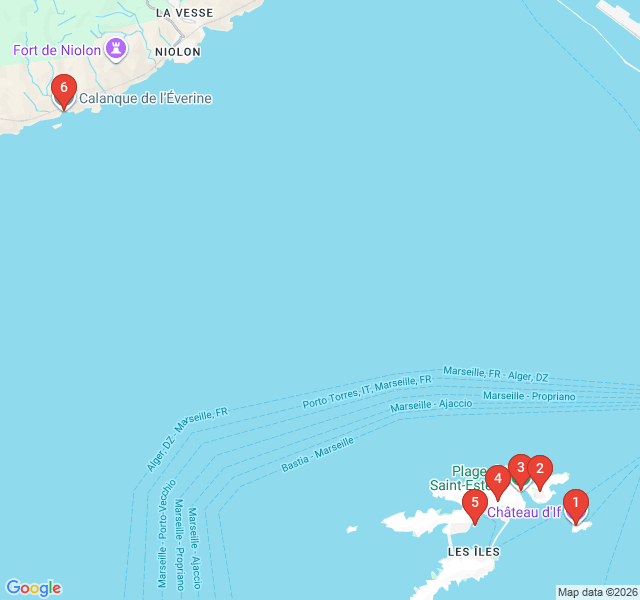
Numbers indicate the order of stops on the tour.
Your self-guided walk begins at the most famous prison in French literature. Built by King François I in the 16th century as a coastal defense, this fortress soon became a dreaded state prison. Its most famous 'resident' was Edmond Dantès, the hero of Alexandre Dumas’ The Count of Monte Cristo. While Dantès was fictional, the prison held real political figures and revolutionaries over the centuries. As you walk through the dark stone corridors, look for the 'hole' supposedly dug by Dantès, and notice the contrast between the grim interior and the brilliant blue of the surrounding sea. The fortress remains a powerful symbol of isolation and the enduring power of storytelling.
A short boat ride or walk across the archipelago brings you to the Hôpital Caroline on Ratonneau Island. This 19th-century complex was designed with a specific, somber purpose: quarantine. Named after the Duchess of Berry, the hospital was built to treat sailors arriving from the East during yellow fever and plague outbreaks. Its neoclassical architecture was revolutionary for the time, emphasizing ventilation and isolation to prevent the spread of disease. Today, the ruins stand as a hauntingly beautiful monument to Marseille’s medical history and its long-standing role as the 'Gateway to the Orient.' The site often hosts cultural events, breathing new life into these historic stone walls.
Continue your walking route to one of the most popular swimming spots on the islands. Plage de Saint-Estève is a sheltered cove known for its shallow, crystal-clear water and views of the Hôpital Caroline. The beach is a perfect example of the Frioul’s unique geology—white limestone rocks meeting the deep azure of the Mediterranean. It’s a great place to pause and imagine the ships of centuries past anchored nearby, waiting for clearance to enter the Port of Marseille. In the summer months, the underwater snorkeling trail here allows you to see the vibrant marine life protected within the Calanques National Park.
Ascend toward the highest point of the island to reach the Fort de Ratonneau. This military site has seen use from the Roman era through to the German occupation during World War II. The current ruins reflect the massive fortifications built to protect the entrance to the harbor. As you explore the plateau, you’ll find abandoned bunkers and artillery placements that offer 360-degree views of the archipelago and the city of Marseille in the distance. The wind can be strong here, but the panoramic perspective of the sea and the rugged coastline is unmatched, making it a favorite spot for photographers.
Descend back toward the center of island life at the Port du Frioul. This modern marina was developed in the 1970s and serves as the primary hub for the few hundred permanent residents of the islands. The port is connected to Pomègues Island by the Berry Dam, which was built in 1822 to create a safe harbor. It is a vibrant spot where you can find small shops and cafes lining the waterfront. This is the heart of the local community, where life moves at a significantly slower pace than on the mainland. It’s the perfect place to grab a snack before heading back to the city or continuing your exploration.
The final stop on this extended journey takes you back toward the mainland coast, specifically the Côte Bleue. The Calanque de l’Éverine is a hidden gem characterized by its iconic 'viaduct' bridge and a small pebble beach. While it requires a hike from the village of Niolon or Ensues-la-Redonne, the effort is rewarded with a secluded paradise. The water here is exceptionally clear, and the surrounding cliffs provide a sense of total immersion in nature. It serves as a mainland counterpart to the Frioul Islands, echoing the same rugged limestone beauty that inspired the setting for the dramatic escapes in Dumas’ novels.
Start Free on iPhone
Explore “Monte Cristo’s Footsteps: The Frioul Islands” with your very own Private Tour Guide with Zigway. Start free on iPhone, skip the large group and the fixed routes, and hear the city come alive as you go.
Your Private Tour Guide
Don't miss the good stuff
Explore Freely
 Easy
EasyMarseille, France
Explore Marseille's green heart at Parc Borély and discover Le Corbusier's iconic Unité d'Habitation on this self-guided architecture walk.
 Moderate
Marseille, France
Discover Marseille's historic spine from the Old Port to the majestic Palais Longchamp on this self-guided architectural walking route.
 Moderate
Marseille, France
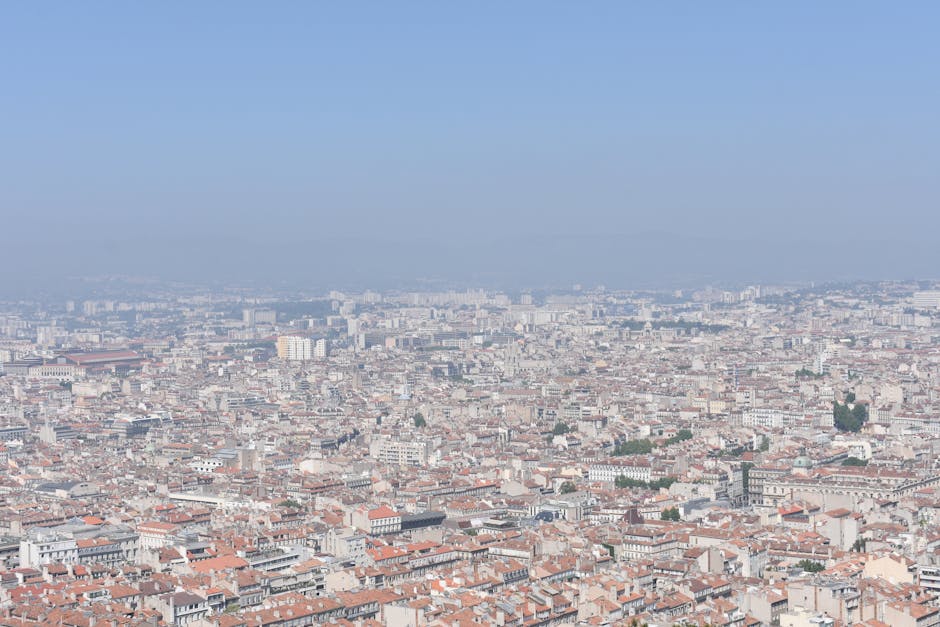
Explore the vertical gardens and hidden villas of Endoume on this self-guided walk through Marseille’s most charming coastal neighborhood.
 Easy
EasyMarseille, France
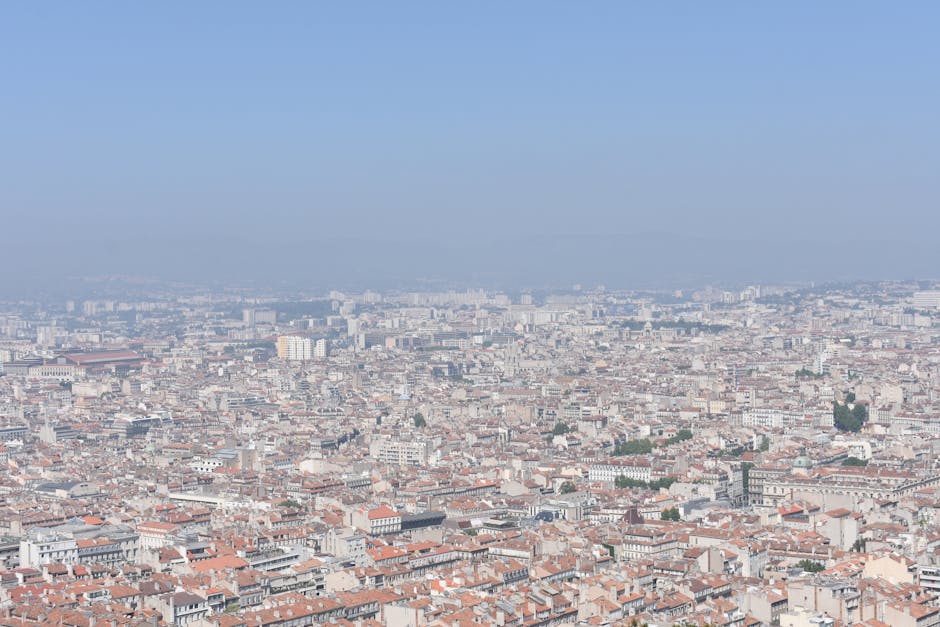
Discover the cinematic soul of Marseille on this self-guided walk through the historic Vieux Port, inspired by the works of Marcel Pagnol.
 Moderate
Nairobi, Kenya
Discover Nairobi's lush side on this self-guided walk through botanical gardens, historic memorials, and vibrant local markets.
 Moderate
Krakow, Poland
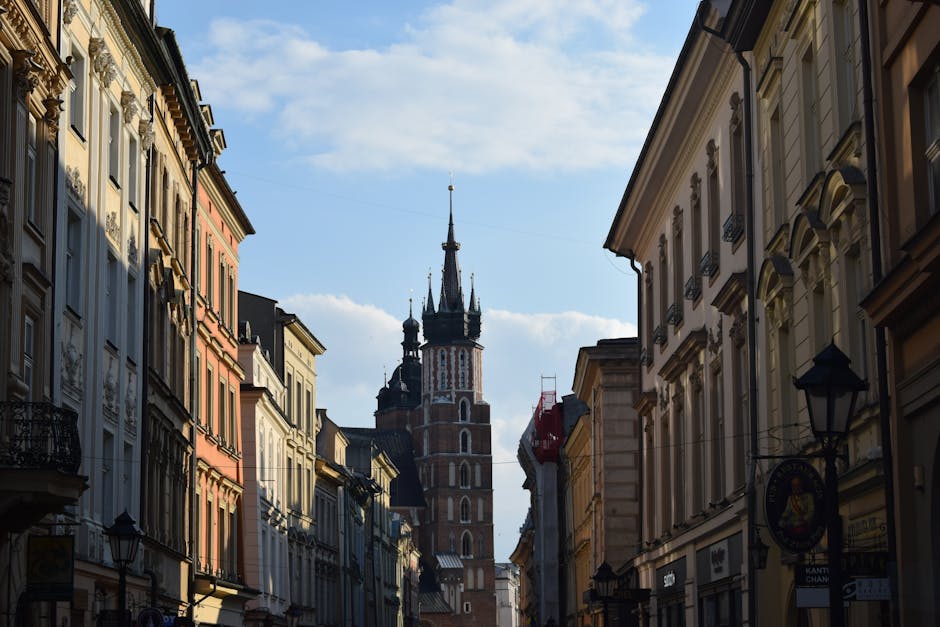
Discover Krakow’s stunning skyline and riverside charm on this self-guided audio walk through scenic viewpoints and historic mounds.
 Moderate
Helsinki, Finland
Explore the 'Gibraltar of the North' on this independent walking route through the historic bastions and hidden gardens of Suomenlinna Sea Fortress.
 Moderate
Gothenburg, Sweden
Discover Gothenburg’s maritime soul on this self-guided walk from the historic Central Station to the scenic riverfront at Stenpiren.
 Challenging
Paris, France
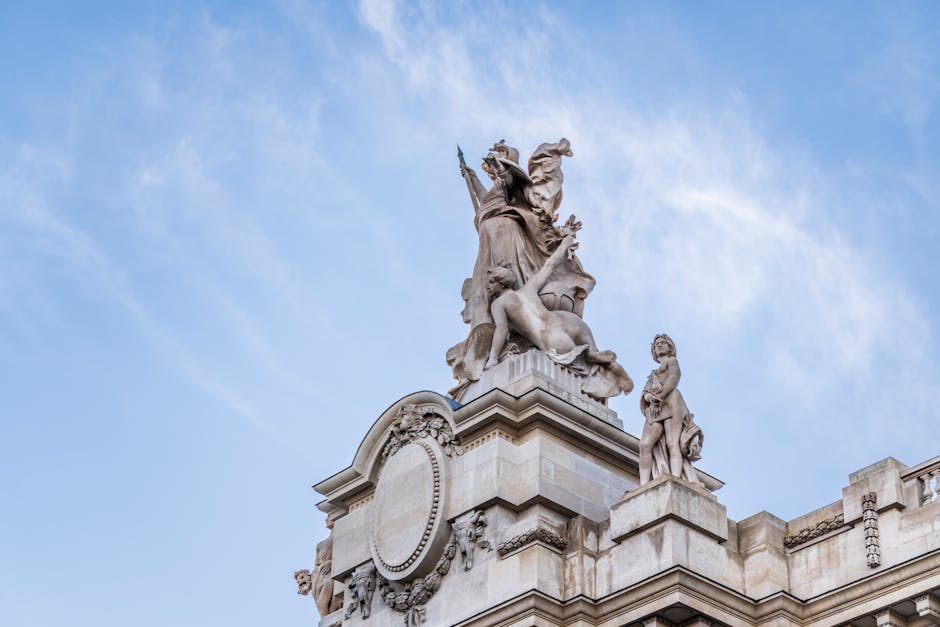
Explore the secret vineyards, legendary artist studios, and hidden squares of Paris's iconic hilltop on this self-guided bohemian walking route.
 Easy
EasyParis, France
Explore the evolution of Parisian design from Art Nouveau whimsy to Le Corbusier's Modernist masterpieces on this self-guided architectural walk.
 Easy
EasyParis, France
Explore the flavors and history of Bastille on this self-guided walk through the legendary Aligre Market and the scenic Coulée Verte.
 Easy
EasyParis, France
Discover aristocratic mansions, secret medieval courtyards, and royal history on this self-guided walk through the enchanting Marais district.