Self-guided audio tour in Paris
Walked and written by a Zigway contributor · Last reviewed November 2026
Now a Guided Walk in the Zigway app
Cheap rooms, café tables and one brave bookshop: how the Left Bank made modern literature.
3.9 km · 56 min walking · 37 min of stories
The introduction and the first minute at the first stop.
Church of Saint-Séverin
The church takes its name from Séverin, a hermit who lived on this spot in the sixth century. Vikings destroyed the first church here.
Collège de France
In 1530, King François the First founded it as a place for higher learning and research. Parisian humanists, scholars devoted to ancient texts, had persuaded him to protect the free study of ancient languages.
L'Hôtel on Rue des Beaux-Arts
Above it is a silver ram's head, and on the wall, a plaque. This is L'Hôtel, and the plaque is for Oscar Wilde.
Place de l'Estrapade
The estrapade, the strappado in English, was a torture carried out here, used mostly on Protestants. Victims were tied to a rope and dropped, then jerked to a stop just before they hit the ground.
Sylvia Beach's Original Shakespeare and Company
Sylvia Beach opened her English-language bookshop on Rue Dupuytren, then moved it to larger rooms at number twelve. She called it Shakespeare and Company.
Guided Walk · in the Zigway app
Buy it once in the app and walk it whenever you're in Paris. GPS plays each story as you arrive, it works offline, and the introduction and first stop are free to try.
Start Free on iPhone
Hear the stories behind the streets and sights around you as you walk Paris. Try it free on iPhone.
Your Private Tour Guide
The Left Bank of the Seine has long been the intellectual heartbeat of Paris, but during the 1920s, it became a sanctuary for a group of expatriate writers known as the "Lost Generation." This self-guided walk invites you to trace the footsteps of Ernest Hemingway, F. Scott Fitzgerald, and James Joyce through the winding streets of the Latin Quarter and Saint-Germain-des-Pr)s. This isn't just a neighborhood stroll; it's an immersion into a world of jazz, absinthe, and revolutionary literature. Starting at the legendary Shakespeare and Company, you’ll explore the roots of English-language literature in France. The route then ascends towards the Panth)on and the quiet corners of the 5th arrondissement, where Hemingway lived in humble apartments while writing his early masterpieces. You'll see the cafes where these icons spent their afternoons debating philosophy and the hotels where they sought refuge. A walking tour Paris often focuses on the big monuments, but this literary adventure dives deeper into the soul of the city. You’ll visit the iconic Les Deux Magots and Caf) de Flore, where the lines between art and life blurred daily. These weren't just eateries; they were the "offices" of the world's greatest thinkers. The journey concludes at L'H)tel, a place steeped in history where Oscar Wilde spent his final days, marking the transition from the Belle )poque to the modern era. As you follow this walking route, you have the freedom to stop for a caf) cr)me exactly where Hemingway might have sat. There is no need for a guided tour Paris when the city itself speaks through its historic facades and cobblestone alleys. This independent exploration allows you to absorb the atmosphere of the "Moveable Feast" at your own pace. Whether you are a bibliophile or a history enthusiast, this audio walk provides a window into a vanished world that continues to shape the cultural identity of Paris today.
Take the RER B or C, or metro line 4, to Saint-Michel Notre-Dame and walk east along the quai, or take metro line 10 to Maubert-Mutualité. Shakespeare and Company is on Rue de la Bûcherie, facing Notre-Dame across the river.
A weekday, starting soon after Shakespeare and Company opens, before the queue builds on the pavement. That puts you at the Saint-Germain cafés in mid-afternoon, a quieter time to get a terrace table than lunch or early evening.
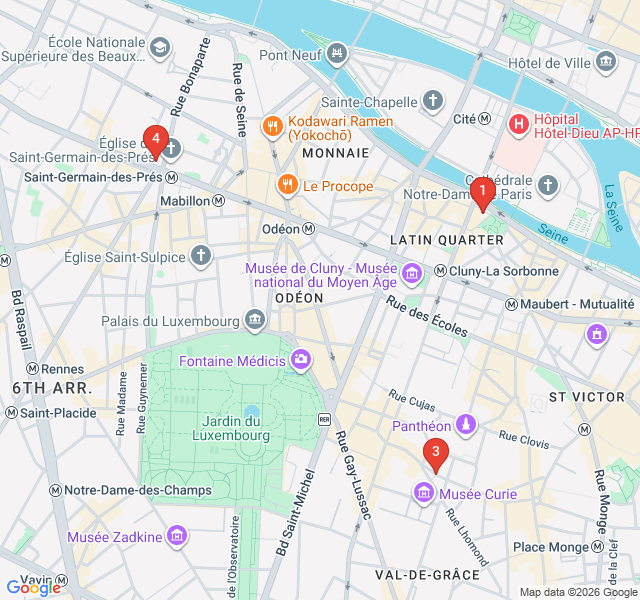
Numbers indicate the order of stops on the tour.
Begin your journey at perhaps the most famous bookstore in the world. While the current shop was opened by George Whitman in 1951, it carries the spirit of Sylvia Beach’s original 1919 bookstore. Beach was the patron saint of the Lost Generation, famously publishing James Joyce's 'Ulysses' when no one else would. Hemingway used to borrow books here when he was too poor to buy them, often recording his visits in his memoir, 'A Moveable Feast.' Look up at the 'Tumbleweed' beds nestled among the shelves, where aspiring writers still sleep in exchange for working in the shop. This building, a former 17th-century monastery, remains a beacon for the English-speaking literary community in Paris.
As you walk up the hill, the massive dome of the Panth)on dominates the skyline. Originally built as a church dedicated to Saint Genevieve, it became a secular mausoleum during the French Revolution. It houses the remains of France's most distinguished citizens, including literary giants like Victor Hugo, )mile Zola, and Voltaire. For the Lost Generation writers, this monument served as a constant geographical anchor. Hemingway often walked past these columns on his way to the Place de la Contrescarpe, observing the contrast between the grandeur of France's 'Great Men' and the gritty, impoverished lives of the workers living in the nearby narrow alleys during the 1920s.
This charming square feels like a village within the city. Just steps away, at 74 rue du Cardinal Lemoine, Hemingway lived in a small, third-floor apartment with his first wife, Hadley, and their son, Bumby. The apartment had no running water and a primitive toilet, yet Hemingway recalled these as some of his happiest days. This neighborhood provided the raw material for his early sketches of Parisian life. Today, while the square is known to many as a filming location for 'Emily in Paris,' for the literary traveler, it represents the humble beginnings of a Nobel Prize winner who sharpened his craft in the local cafes while struggling to stay warm.
Arriving in the heart of Saint-Germain-des-Pr)s, you encounter Les Deux Magots. Named after the two Chinese wooden statues inside, this cafe became the unofficial headquarters for the international intelligentsia. Hemingway, Fitzgerald, and later, the Existentialists like Jean-Paul Sartre, made this their second home. Hemingway famously wrote parts of 'The Sun Also Rises' here. In the 1920s, the terrace was a place to see and be seen, where a single coffee could buy you an entire afternoon of writing time and intellectual debate. It remains one of the most iconic spots to observe the Parisian 'art de vivre' while imagining the ghosts of literary legends at the next table.
Just a few steps away sits the eternal rival of Les Deux Magots: Caf) de Flore. While both cafes hosted the same crowd, the Flore was known for being slightly more rebellious. During the Nazi occupation, it became a sanctuary for Simone de Beauvoir and Sartre because the red heaters kept them warm while they wrote their philosophical treatises. For the Lost Generation, these two cafes were the center of the universe. The rivalry between the two establishments continues today, with each hosting its own prestigious literary prize. Notice the classic Art Deco interior, which has remained largely unchanged since the days when the air was thick with cigarette smoke and revolutionary ideas.
Conclude your walk at this discreet, luxury boutique hotel on Rue des Beaux-Arts. Before it was a five-star destination, it was a modest boarding house where Oscar Wilde spent his final days in 1900. He famously quipped, 'My wallpaper and I are fighting a duel to the death. One or the other of us has to go.' Wilde's presence here bridge the gap between the 19th-century decadents and the 20th-century expatriates who followed. Later, writers like Jorge Luis Borges and celebrities like Elizabeth Taylor sought out its privacy. The circular staircase and lush decor evoke a sense of hidden history, serving as a quiet finale to your exploration of the Left Bank's storied past.
Walk to the end of Rue des Beaux-Arts and onto the Quai Malaquais, then browse the bouquinistes' green boxes along the river towards the Pont des Arts.
Start Free on iPhone
Open Zigway as you walk and your private tour guide tells the stories behind what you pass.
Your Private Tour Guide
Don't miss the good stuff
Explore Freely
 Challenging
Paris, France
Explore the secret vineyards, legendary artist studios, and hidden squares of Paris's iconic hilltop on this self-guided bohemian walking route.
 Easy
Paris, France
Explore the evolution of Parisian design from Art Nouveau whimsy to Le Corbusier's Modernist masterpieces on this self-guided architectural walk.
 Easy
Paris, France
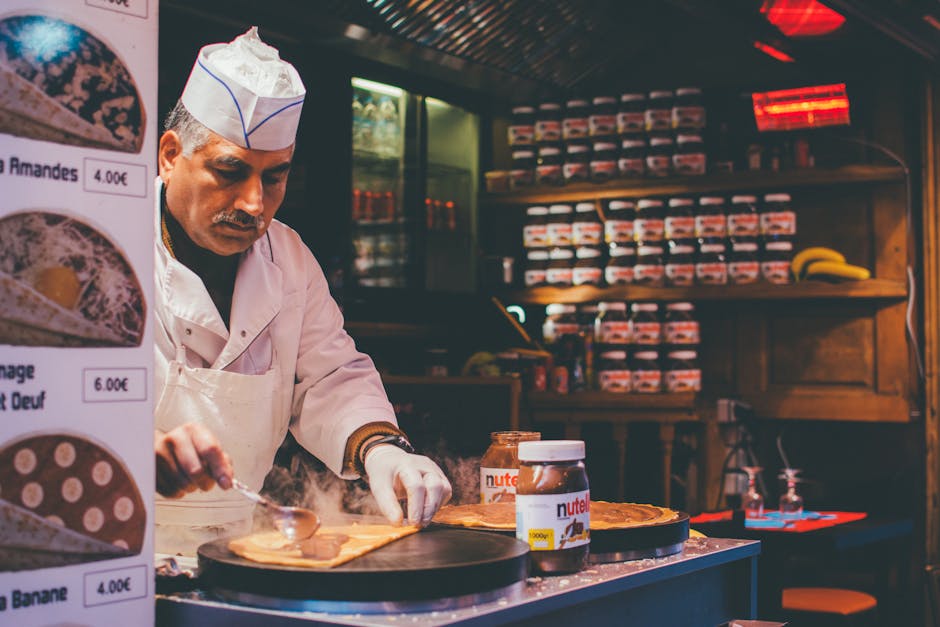
Explore the flavors and history of Bastille on this self-guided walk through the legendary Aligre Market and the scenic Coulée Verte.
 Easy
Paris, France
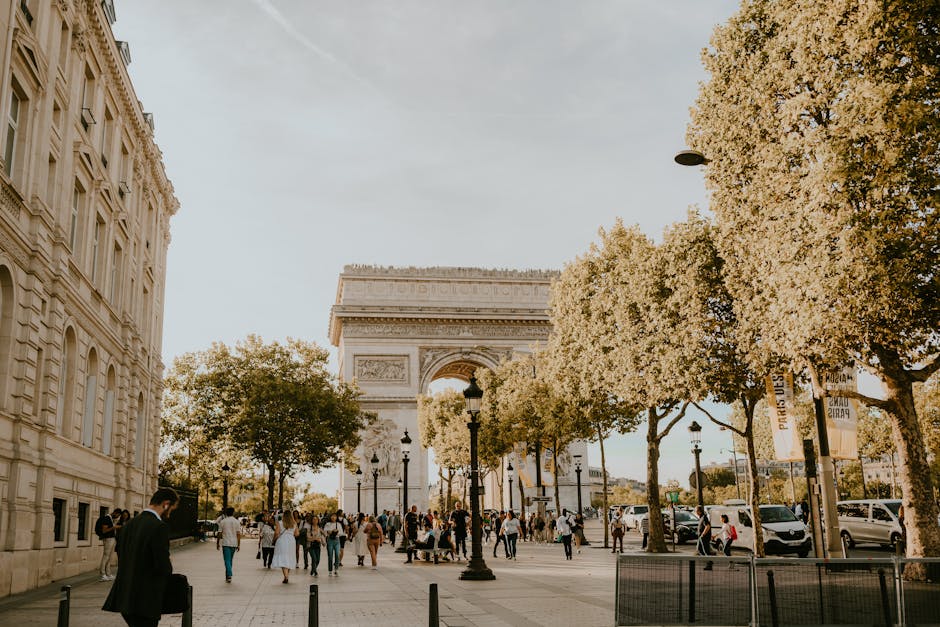
Discover aristocratic mansions, secret medieval courtyards, and royal history on this self-guided walk through the enchanting Marais district.
 Easy
Krakow, Poland
Explore the prestigious Jagiellonian University district, featuring Neo-Gothic architecture, Baroque churches, and Krakow's hidden scholarly gems.
 Easy
Warsaw, Poland
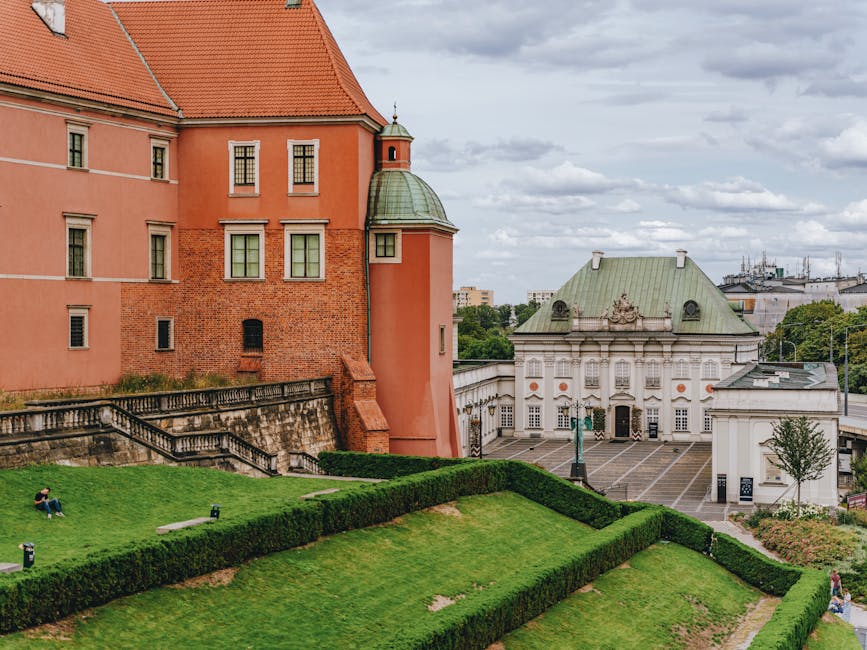
Follow the life of Fryderyk Chopin through Warsaw’s historic center. See where he lived, studied, and where his heart remains today.
 Easy
Gothenburg, Sweden
Discover Gothenburg’s 17th-century Dutch foundations, historic canals, and military fortifications on this self-guided architectural walk.
 Easy
Nairobi, Kenya
Discover Nairobi’s literary soul on this self-guided walk through historic libraries, iconic bookshops, and cultural centers in the heart of the CBD.
 Easy
Lyon, France
Discover Lyon's culinary soul on this self-guided walk from historic Presqu'île to the legendary Halles Paul Bocuse food market.
 Easy
Lyon, France
Explore Lyon’s futuristic waterfront! A self-guided walk through Confluence’s bold architecture and reclaimed industrial docks.
 Easy
Lyon, France
Discover the multicultural soul and industrial heritage of Lyon's 7th arrondissement on this vibrant self-guided walking route.
 Moderate
Lyon, France
Ascend the 'Hill that Prays' to explore Roman ruins, a shimmering basilica, and secret panoramic gardens on this historic self-guided walk in Lyon.