Self-guided audio tour in Krakow
Start Free on iPhone
Start free on iPhone to unlock this self-guided walking tour in Krakow. Hear all the stories that make it amazing, walk at your own pace, and begin whenever you want.
Your Private Tour Guide
Escape the bustling crowds of the Main Market Square and venture into the serene, leafy district of Salwator. This neighborhood stroll offers a refreshing blend of natural beauty and profound history, taking you through what locals often call the 'Garden City' of Krakow. The route begins where the Vistula and Rudawa rivers meet, guiding you along the scenic Bulwar Rodła, a favorite spot for locals to walk and reflect. As you move away from the river, you'll encounter the imposing, fortress-like walls of the Convent of the Norbertine Sisters, a site that has stood guard over the city for nearly nine centuries and survived countless invasions. What makes this self-guided walk truly special is the transition from historic architecture to the peaceful greenery of the Bronisława Hill. You will explore the architectural charm of the Salwator villa district, where early 20th-century modernist and eclectic homes peek through lush gardens. The path continues to the Salwator Cemetery, widely considered one of the most beautiful and atmospheric graveyards in Poland, offering breathtaking views of the city and the distant mountains. This walking route Krakow provides is a deep dive into the soul of the city's intellectual and artistic elite, as you pass the final resting places of world-renowned figures like Stanisław Lem and Andrzej Wajda. The journey culminates at the Kościuszko Mound, a monumental tribute to a national hero, offering the most iconic panoramic view of Krakow. Along the way, you'll discover hidden gems like the ancient St. Margaret's Chapel, tucked away in a quiet clearing. This experience is perfect for those who want to explore independently and see a side of the city that many tourists miss. Whether you are interested in the legends of the Tatar raids or the quiet elegance of Polish modernism, this neighborhood stroll reveals the bohemian bliss of Krakow's most prestigious residential area.
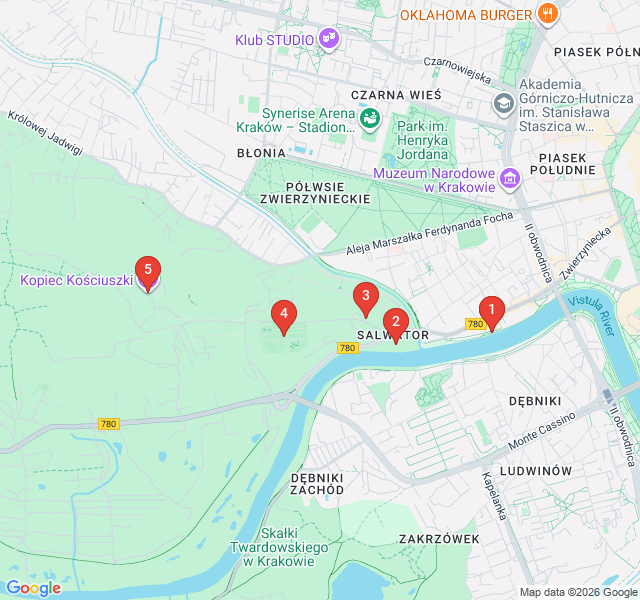
Numbers indicate the order of stops on the tour.
Start exploring at Bulwar Rodła, a peaceful stretch of the Vistula riverbanks. This spot is historically significant as the confluence of the Vistula and the smaller Rudawa river. For centuries, this area was the heart of the 'Emmaus' Easter fair, a tradition that still brings thousands of Krakovians here every year. As you look across the water, imagine the ancient raftsmen who once navigated these currents. This is where the city’s urban energy begins to soften into the lush greenery of the Zwierzyniec district. It is a perfect place to breathe in the fresh air before heading toward the historic heart of Salwator.
Standing before you is one of Krakow’s oldest and most resilient landmarks. Founded in the 12th century, this convent was built like a fortress to withstand the frequent Tatar raids that plagued medieval Poland. Notice the thick walls and defensive towers. Legend has it that during one invasion, the sisters hid in the towers while the invaders searched the grounds. Today, it remains a working convent. Listen for the 'Zygmunt's brother' bell; it is said that if it rings at an unusual time, it portends a great event for the city. Its presence here marks the gateway to the more spiritual, quiet side of Krakow.
As you walk through these streets, you are entering Krakow's 'Garden City.' This neighborhood was developed in the early 20th century as an elite residential area, away from the industrial smoke of the center. The villas here are masterpieces of modernist and eclectic architecture, often designed by the city’s most famous architects of the era. This has long been a bohemian enclave, home to artists, professors, and writers. Take a moment to admire the intricate woodwork and the lush, private gardens that give this area its distinctive, tranquil character. It feels less like a city and more like a high-end village frozen in time.
The Salwator Cemetery is often described as the most beautiful burial ground in Krakow. Unlike the more famous Rakowicki Cemetery, this site offers a sense of intimacy and stunning natural vistas. As you walk the uphill paths, look for the graves of science fiction master Stanisław Lem and Oscar-winning director Andrzej Wajda. The cemetery is perched on a hill, and on clear days, the view of the Vistula valley and the distant Tatra Mountains is unparalleled. It is a place where nature and memory intertwine, reflecting the quiet, contemplative soul of the Polish intelligentsia who chose this as their final resting place.
Rising high above the city, the Kościuszko Mound is a symbolic monument completed in 1823. It was built by the people of Krakow, who literally carried soil from all over Poland to create this tribute to Tadeusz Kościuszko, a hero of both the Polish and American Revolutions. The mound is surrounded by 19th-century Austrian fortifications, part of the 'Festung Krakau.' Climbing to the top rewards you with the most famous panorama in the city—you can see the Wawel Castle, the Old Town, and the vast Wolski Forest stretching out to the west. It is a testament to national pride and a masterpiece of landscape engineering.
This small, octagonal wooden and brick chapel is a hidden gem tucked away near the path back toward the city. Dating back to the 17th century, though standing on a site with much older pagan roots, St. Margaret’s is a rare example of the small-scale religious architecture that once dotted the Polish countryside. Its unusual shape and simple interior offer a final moment of reflection. Local lore suggests the chapel was built on the site of an ancient temple dedicated to the goddess Marzanna. It serves as a quiet bookend to your journey through Salwator, reminding us of the deep layers of history buried beneath Krakow’s soil.
Start Free on iPhone
Explore “Bohemian Bliss: Salwator and Beyond” with your very own Private Tour Guide with Zigway. Start free on iPhone, skip the large group and the fixed routes, and hear the city come alive as you go.
Your Private Tour Guide
Don't miss the good stuff
Explore Freely
 Easy
EasyKrakow, Poland
Explore the prestigious Jagiellonian University district, featuring Neo-Gothic architecture, Baroque churches, and Krakow's hidden scholarly gems.
 Easy
EasyKrakow, Poland
Explore Krakow's hidden nightlife with this self-guided walk through medieval cellars, jazz clubs, and bohemian bars in the Old Town and Kazimierz.
 Easy
EasyKrakow, Poland
Discover Krakow’s creative soul in Zabłocie, exploring industrial heritage, contemporary art museums, and avant-garde architecture at your own pace.
 Easy
EasyKrakow, Poland
Explore the historic heart of Kazimierz on this self-guided walk through synagogues, ancient cemeteries, and vibrant squares.
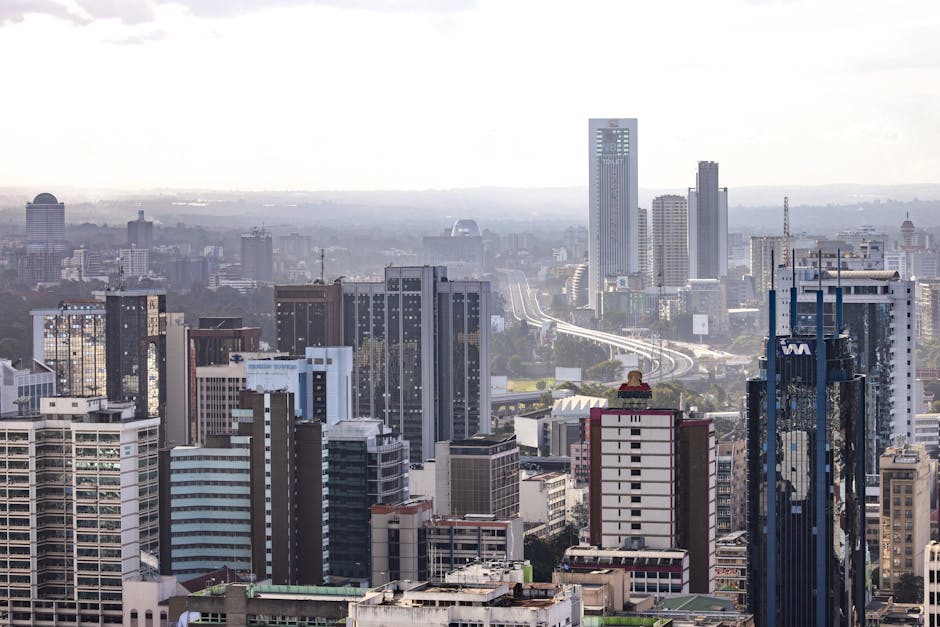 Moderate
Nairobi, Kenya
Discover Nairobi's lush side on this self-guided walk through botanical gardens, historic memorials, and vibrant local markets.
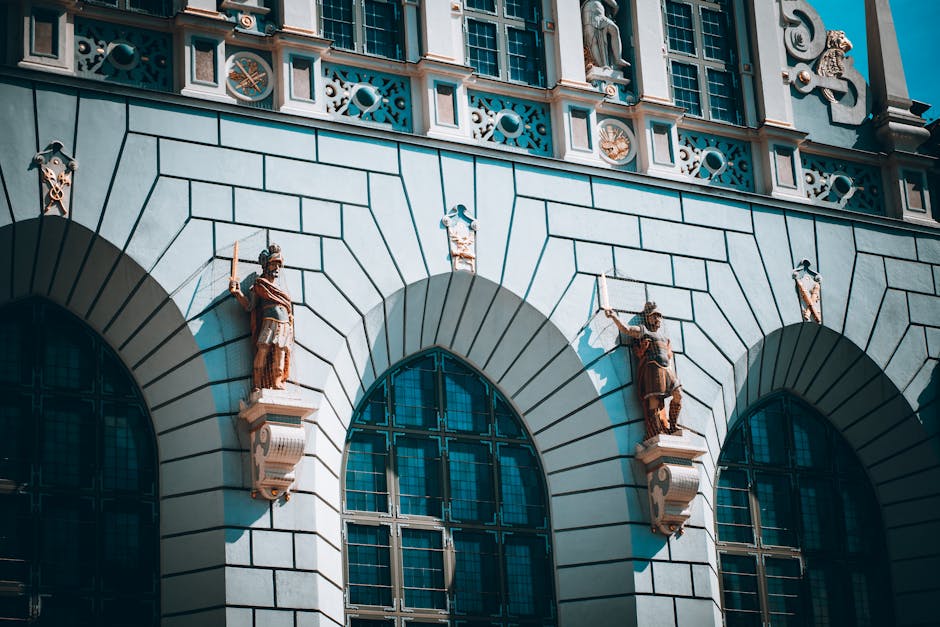 Moderate
Gdansk, Poland
Discover Zaspa, a massive open-air gallery where grey housing blocks are transformed by over 60 monumental murals. Explore at your own pace.
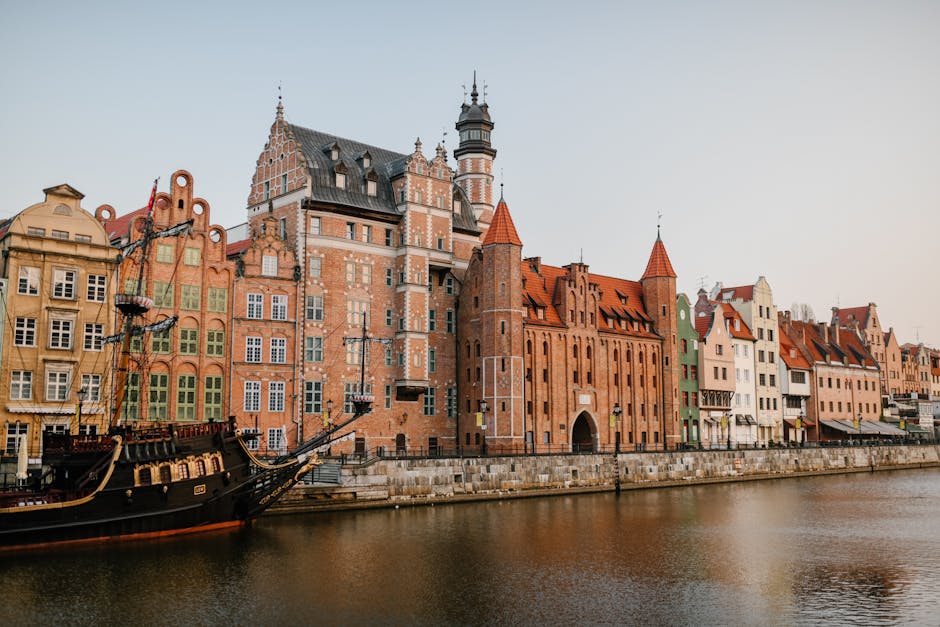 Moderate
Gdansk, Poland
Discover the bohemian soul of Gdańsk. Explore the literary landmarks of Günter Grass, Prussian villas, and the trendy cafes of historic Wrzeszcz.
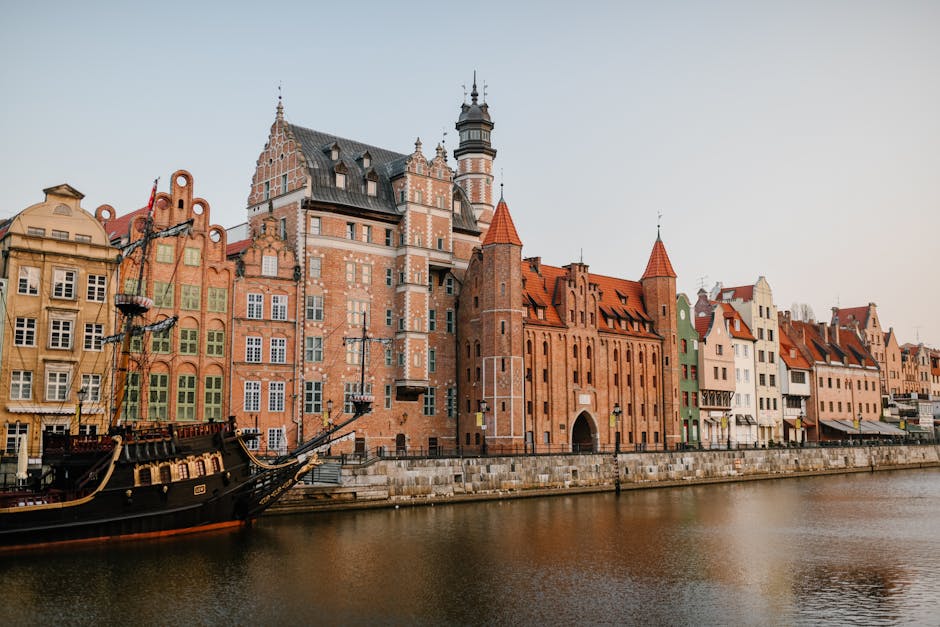 Moderate
Gdansk, Poland
Discover the raw beauty of Gdansk’s Lower Town. Explore industrial ruins, hidden sluices, and riverside bastions on this self-guided walk.
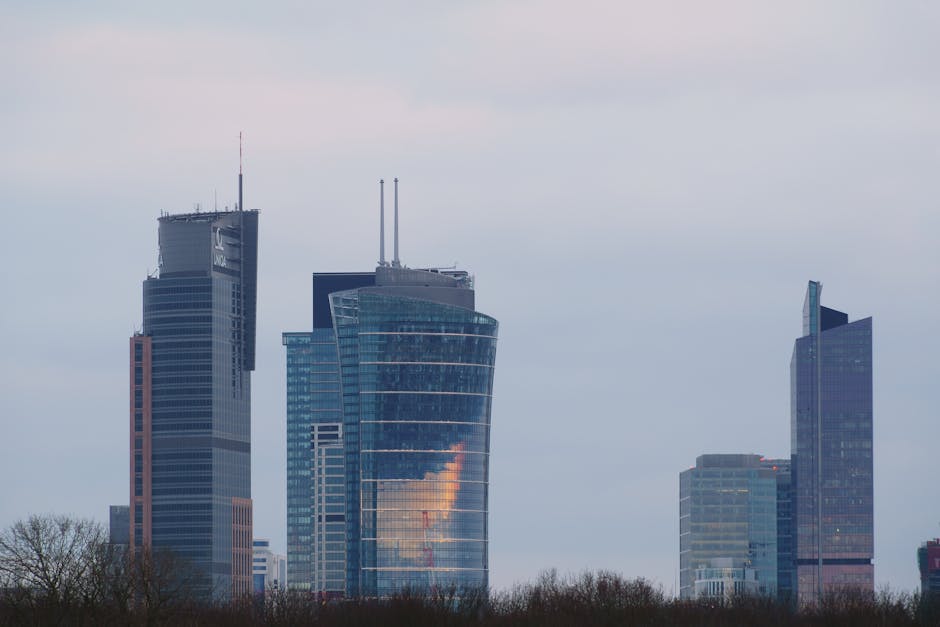 Easy
EasyWarsaw, Poland
Discover the hidden courtyards and grand pre-war architecture of Warsaw's most atmospheric neighborhood on this self-guided stroll.
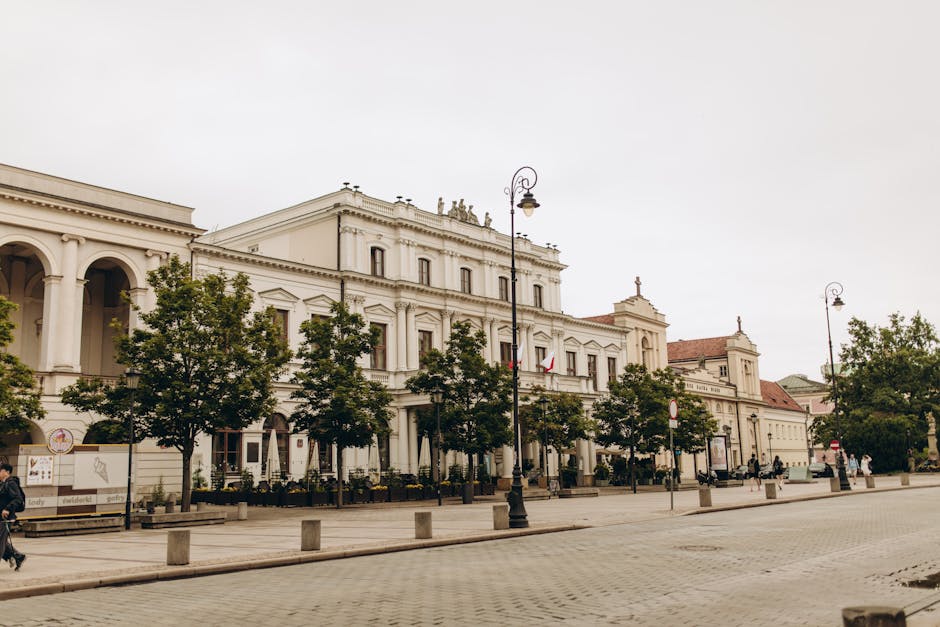 Easy
EasyWarsaw, Poland
Explore the 'Polish Versailles' at your own pace. Discover Baroque architecture, royal history, and stunning gardens on this self-guided walk.
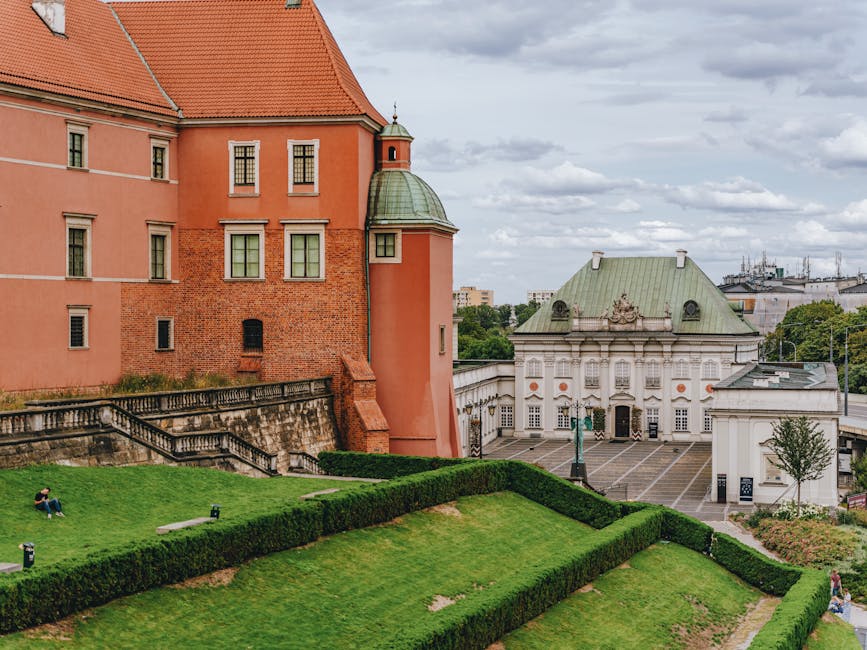 Moderate
Warsaw, Poland
Explore the resilient spirit of Warsaw's Muranów district on this self-guided walk through the history and landmarks of the former Jewish Ghetto.
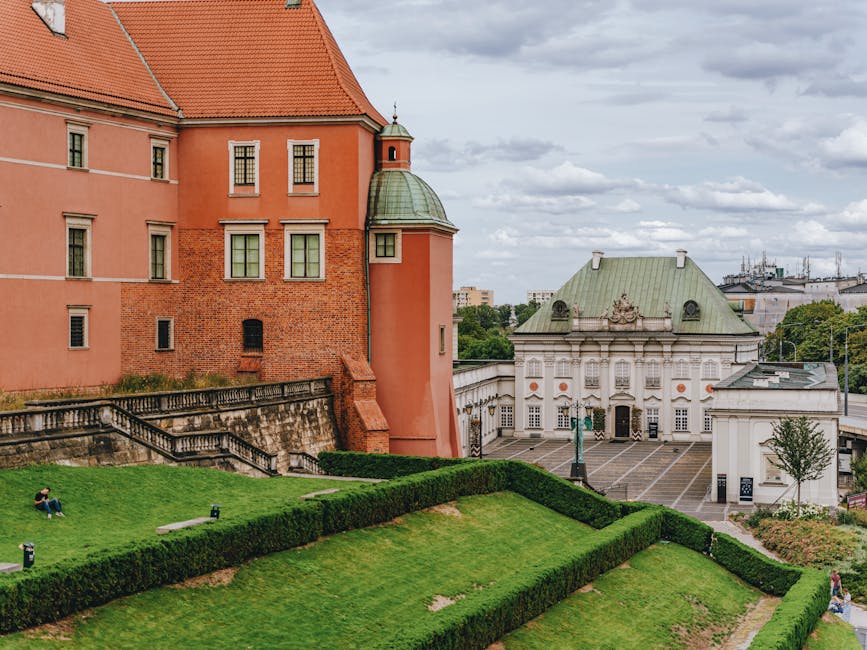 Moderate
Warsaw, Poland
A powerful self-guided walk through Warsaw's WWII history, tracking the 1944 Uprising from ruined skyscrapers to solemn memorials.