Self-guided audio tour in York
Start Free on iPhone
Start free on iPhone to unlock this self-guided walking tour in York. Hear all the stories that make it amazing, walk at your own pace, and begin whenever you want.
Your Private Tour Guide
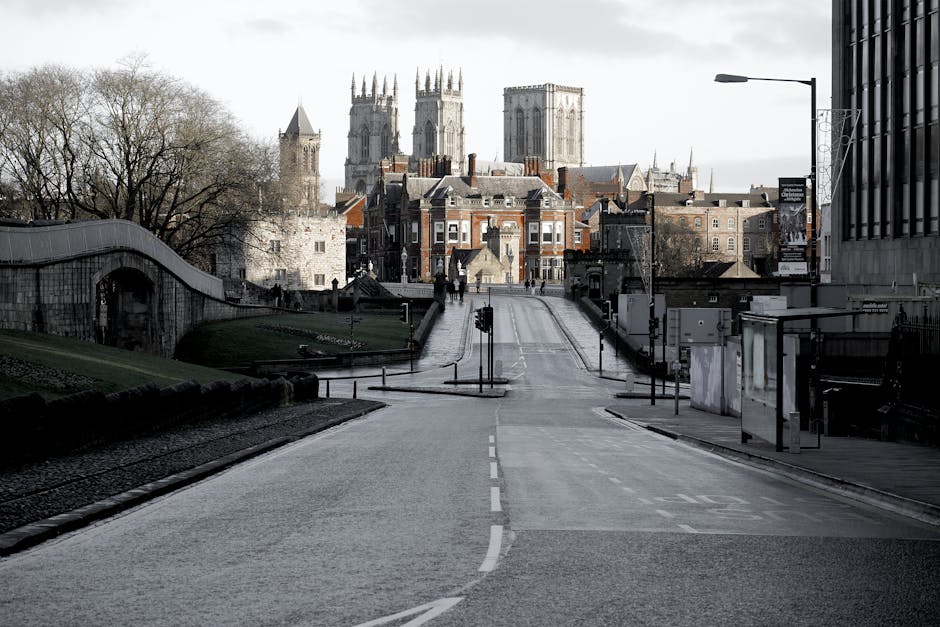
Step into a story spanning two millennia with this self-guided walk along the York City Walls, the longest and best-preserved medieval town walls in England. This circuit offers an unparalleled perspective on York’s evolution, from its origins as the Roman fortress of Eboracum to its status as a powerful medieval capital. As you traverse the elevated stone walkways, you will encounter the four major 'Bars' or gatehouses that once controlled access to the city, each serving as a monumental entrance that has welcomed kings and repelled invaders. This neighborhood stroll is more than just a history lesson; it is a premier photography experience. The elevated vantage point provides breathtaking views of the York Minster’s Gothic towers, the winding River Ouse, and the patchwork of timber-framed houses that define the city's skyline. Unlike a traditional walking tour York might offer in the crowded streets below, this route allows you to rise above the bustle and explore at your own pace. You will discover how the walls were adapted over centuries, moving from Roman stone to Viking earthworks and finally the limestone masonry seen today. Highlights include the rare survival of a defensive barbican at Walmgate Bar and the only brick-built tower on the circuit, known as the Red Tower. Whether you are a photography enthusiast looking for the perfect angle of the Minster or a history buff eager to stand where Roman sentries once kept watch, this walking route provides the most comprehensive way to see the city. This travel experience is entirely flexible, allowing you to pause for a coffee in a gatehouse or simply soak in the atmosphere of northern England’s most historic city. By following this circuit, you are tracing the very boundaries that shaped York’s identity for over 2,000 years.
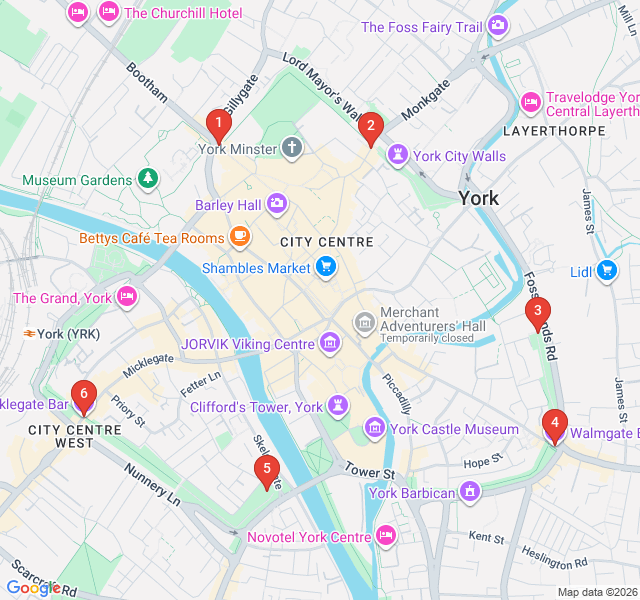
Numbers indicate the order of stops on the tour.
Begin your journey at Bootham Bar, a gateway that stands on the site of one of the four main entrances to the Roman fortress of Eboracum. While much of what you see today dates from the 14th and 19th centuries, the lower masonry contains Roman stone nearly 2,000 years old. In the medieval era, this bar served a grim purpose: the heads of traitors were often displayed here on spikes as a warning to those entering the city from the north. Look up to see the stone figures, or 'wildmen,' guarding the battlements. This gate marks the transition between the city’s ancient defenses and the grand approach to the York Minster.
As you continue to Monk Bar, you are standing before the tallest and most formidable of York’s gatehouses. Completed in the 14th century, Monk Bar was designed as a self-contained fortress, capable of being defended even if the rest of the walls fell. It still houses a working portcullis, a heavy timber and iron gate that could be dropped to trap invaders. This section of the wall offers some of the most spectacular, unobstructed views of the York Minster’s East Window. Notice the narrowness of the walkway here, a reminder of the practical, defensive nature of these structures.
The Red Tower is a unique anomaly on the York circuit. Built in 1490, it is the only part of the wall constructed from red brick rather than the local magnesian limestone. Its construction was highly controversial; the city’s stonemasons were so angry about the use of bricklayers that they allegedly murdered one of the workers. The tower was built to protect the point where the walls met the 'King’s Fishpool,' a large medieval lake and marsh created by damming the River Foss. Today, it stands as a quiet, picturesque reminder of York’s medieval industrial disputes and hydraulic engineering.
Walmgate Bar is arguably the most important architectural survival on the route. It is the only gatehouse in England to still possess its original barbican—the narrow, walled outwork designed to funnel attackers into a 'killing zone' before they could reach the main gate. The heavy wooden doors and the 12th-century stone archway have survived numerous sieges, including the Civil War Siege of York in 1644. Look closely at the inner side of the gate to see a 16th-century timber-framed house built directly onto the stone structure, illustrating how the city’s residents lived alongside their defenses.
After crossing the River Ouse, you will reach Baile Hill. This grassy mound is all that remains of the Old Baile, one of two motte-and-bailey castles built by William the Conqueror in 1068 to subdue the rebellious north. While the wooden castle that once stood here is long gone, the hill remains a significant landmark in York’s military topography. From this height, you can look across the river to Clifford’s Tower, the keep of York’s second castle. This section of the wall highlights the strategic importance of the river in controlling trade and movement through medieval Yorkshire.
Your walk concludes at Micklegate Bar, the most prestigious of the four main gates. Historically, this was the entrance used by reigning monarchs when visiting York; even today, the tradition continues with the Sovereign requesting permission from the Lord Mayor to enter. For centuries, this was also the site where the heads of high-ranking rebels and traitors were displayed, including those of Richard Plantagenet, Duke of York. The current structure is a beautiful example of 12th and 14th-century masonry, topped with stone statues of men-at-arms. It serves as a fittingly grand finale to your circuit of the city's ancient boundaries.
Start Free on iPhone
Explore “The Complete York City Walls Circuit” with your very own Private Tour Guide with Zigway. Start free on iPhone, skip the large group and the fixed routes, and hear the city come alive as you go.
Your Private Tour Guide
Don't miss the good stuff
Explore Freely
 Easy
EasyYork, United Kingdom
Discover York's industrial soul on this self-guided walk through grand Victorian stations and world-class railway history.
 Easy
EasyYork, United Kingdom
Uncover the secrets of Roman Eboracum on this self-guided walk through York’s ancient fortress walls, hidden towers, and legendary haunted basements.
 Easy
EasyYork, United Kingdom
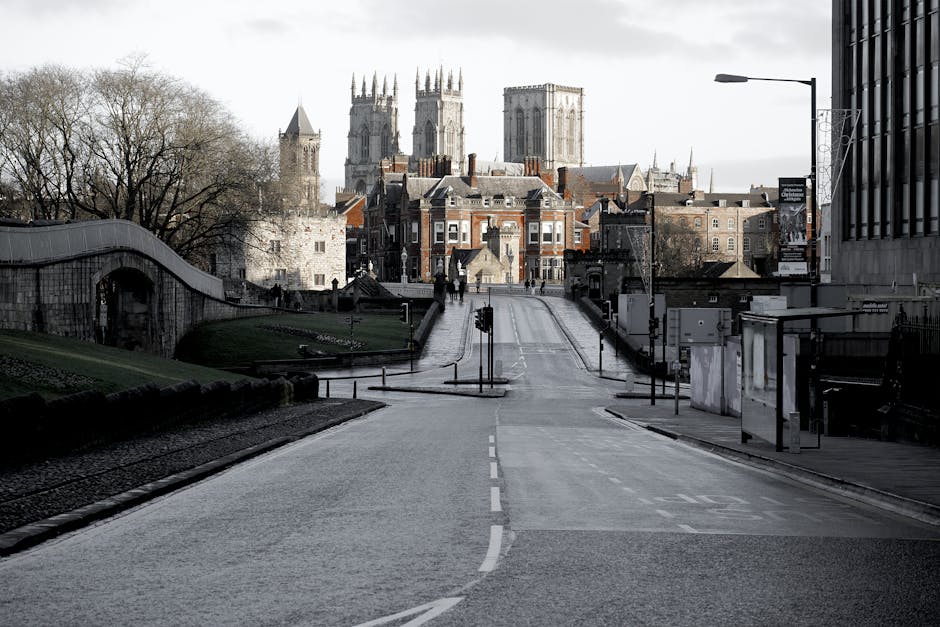
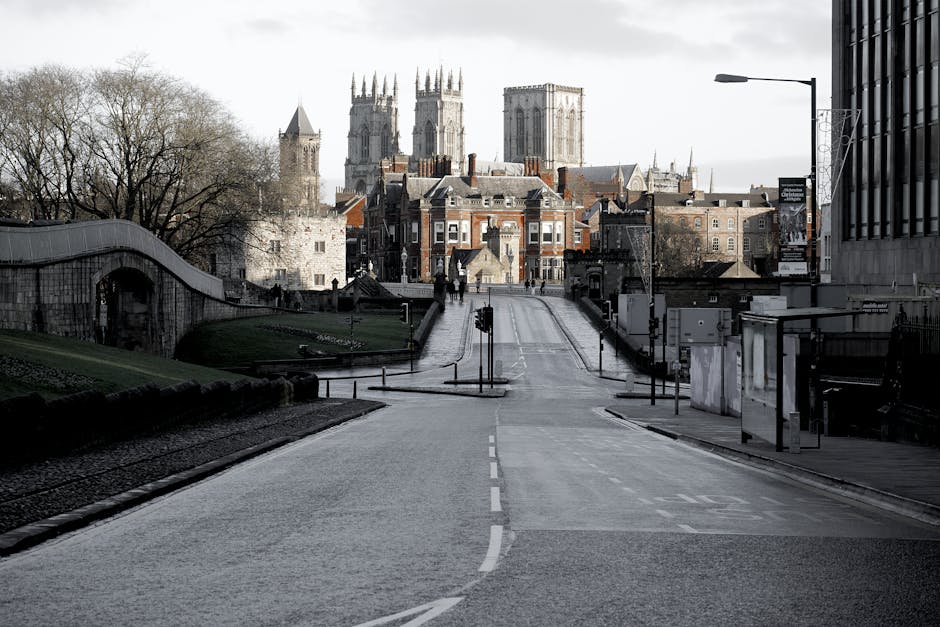
Explore the architectural wonders of York’s Minster Quarter at your own pace with this independent audio walk through Gothic history.
 Easy
EasyYork, United Kingdom
Explore York's delicious artisan food scene on this self-guided walking route through medieval streets and modern creative hubs.
 Moderate
Gothenburg, Sweden
Discover Gothenburg’s maritime soul on this self-guided walk from the historic Central Station to the scenic riverfront at Stenpiren.
 Easy
EasyNairobi, Kenya
Discover Nairobi's iconic skyline on this self-guided architecture walk through the CBD’s most famous modernist and Brutalist landmarks.
 Moderate
Vienna, Austria
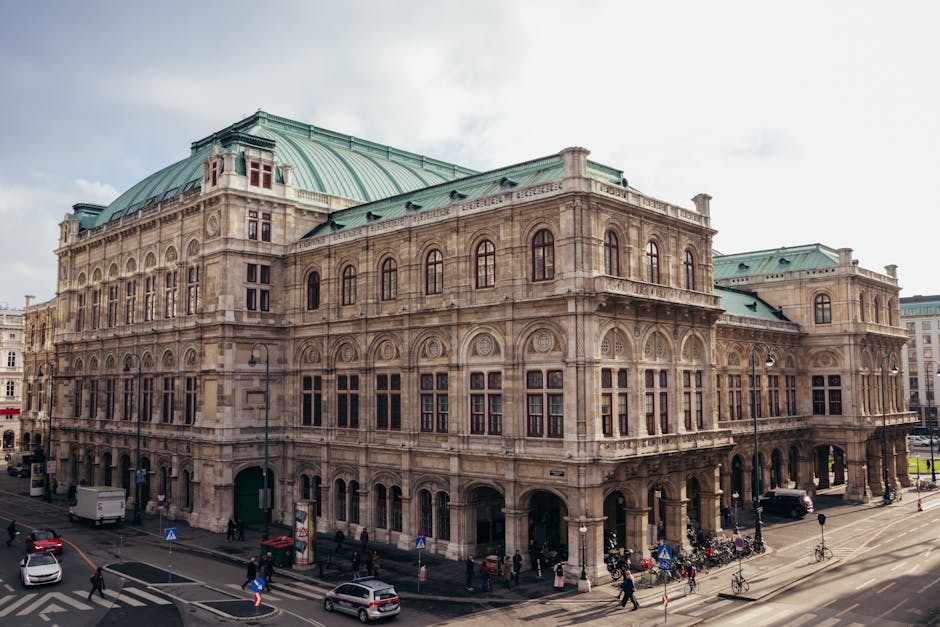
Follow the footsteps of Mozart and Strauss through Vienna’s historic center on this self-guided walk through the city's rich musical history.
 Moderate
Warsaw, Poland
A powerful self-guided walk through Warsaw's WWII history, tracking the 1944 Uprising from ruined skyscrapers to solemn memorials.
 Easy
EasyEdinburgh, United Kingdom
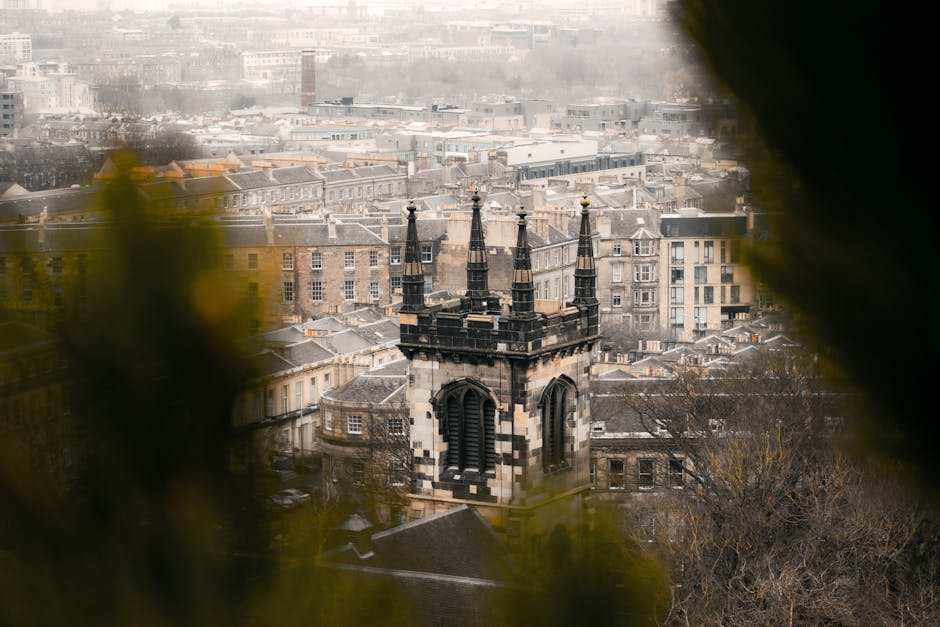
Explore Edinburgh's historic Royal Mile at your own pace, from the heights of the Castle to the royal Palace of Holyroodhouse.
 Easy
EasyEdinburgh, United Kingdom
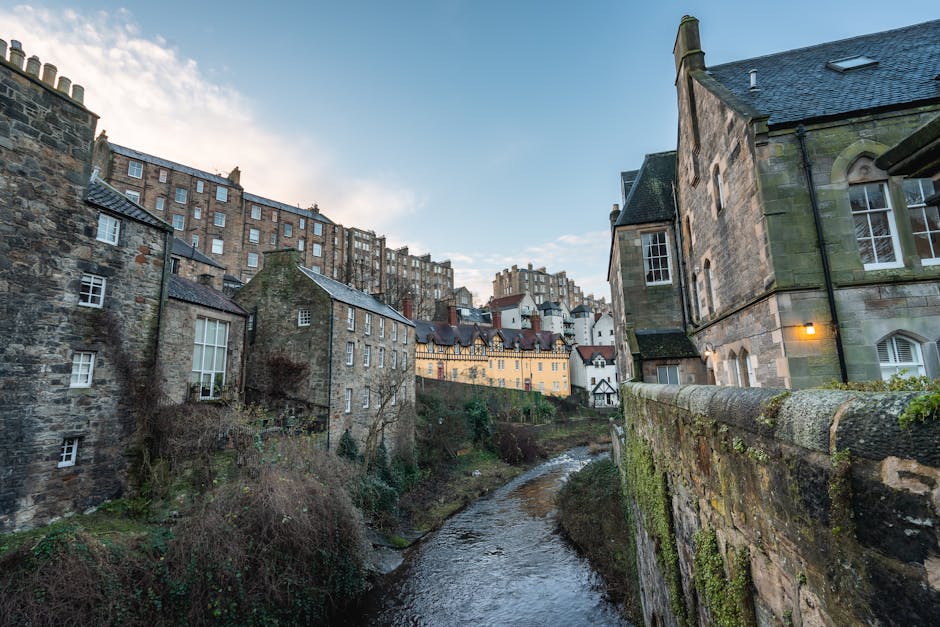
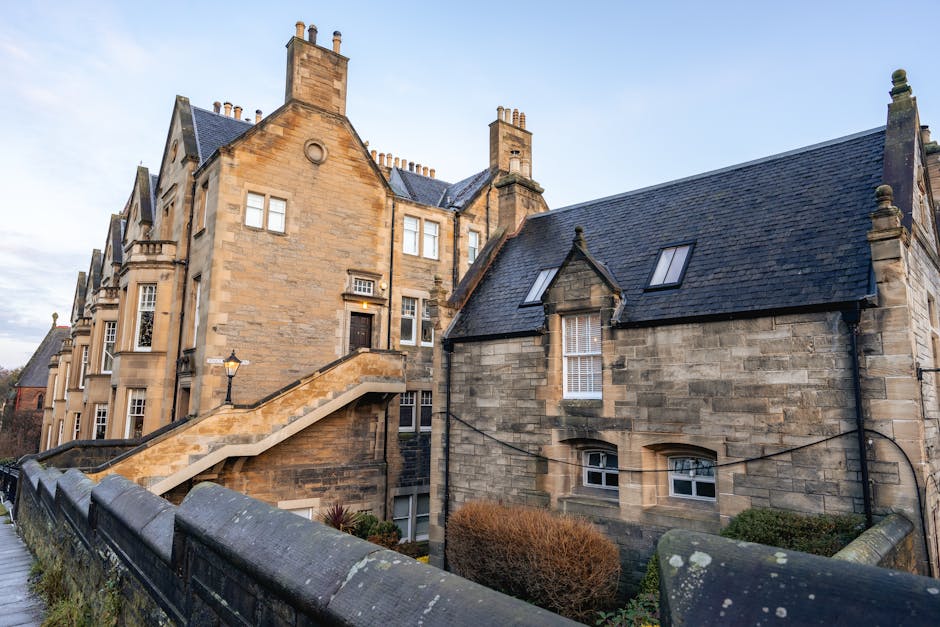
Capture the magic of Edinburgh on this self-guided stroll through the fairy-tale Dean Village, floral Circus Lane, and the scenic Water of Leith.
 Easy
EasyEdinburgh, United Kingdom
Explore Edinburgh's creative soul on this self-guided walk from historic museums to the stylish galleries and boutiques of the West End.
 Challenging
Edinburgh, United Kingdom
Ascend an ancient volcano and discover royal history on this challenging self-guided walk through Edinburgh's iconic Holyrood Park.