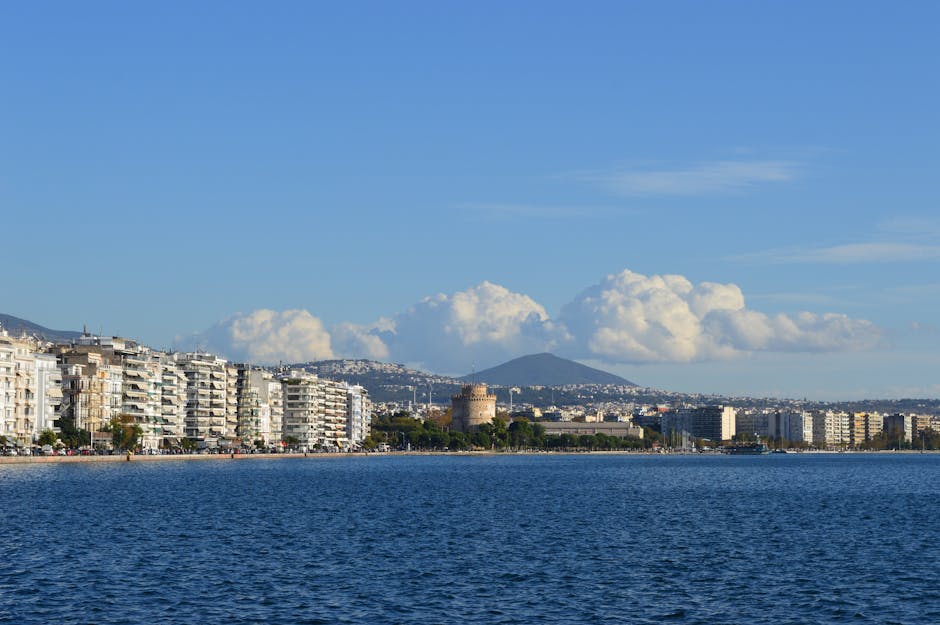
Self-guided audio tour in Thessaloniki
Start Free on iPhone
Start free on iPhone to unlock this self-guided walking tour in Thessaloniki. Hear all the stories that make it amazing, walk at your own pace, and begin whenever you want.
Your Private Tour Guide
Thessaloniki is widely regarded as Greece’s gastronomic capital, and nowhere is this more evident than in the rhythmic bustle of its central markets. This self-guided walk invites you to step into the sensory heart of the city, where the scents of wild oregano and fresh-roasted coffee mingle with the calls of vendors. By choosing a neighborhood stroll through these historic districts, you gain an intimate look at the layers of history—Roman, Ottoman, Jewish, and Modern Greek—that have shaped the local palate. Your route begins in the open-air intensity of Kapani Market, the city’s oldest public market, before transitioning into the architectural elegance of the newly renovated Agora Modiano. This contrast between the raw, traditional trade and the modern, upscale food hall experience defines the evolving culinary landscape of the city today. Beyond the food stalls, you will encounter remnants of the Ottoman era, such as the Yahudi Hamam and the Bedesten, which remind us that these areas have been hubs of commerce for over five hundred years. As you explore independently, you will wander through narrow lanes filled with wicker-work artisans and spice merchants, eventually reaching the atmospheric Athonos Square. This walking route is designed for those who want to discover at their own pace, stopping to sample a local bougatsa or a handful of Kalamata olives whenever the mood strikes. Whether you are a dedicated foodie or a history enthusiast, this audio walk provides the context needed to understand why Thessaloniki remains a crossroads of flavors and cultures. It is a chance to see the city not just as a collection of monuments, but as a living, breathing pantry that feeds the soul of northern Greece. Prepare for a vibrant journey through the sights, sounds, and tastes that make this city truly unique. **Note:** This area is known for its ever-changing character. Street art, pop-up venues, and temporary exhibitions may differ from what's described. That's part of the adventure - you might discover something entirely new!
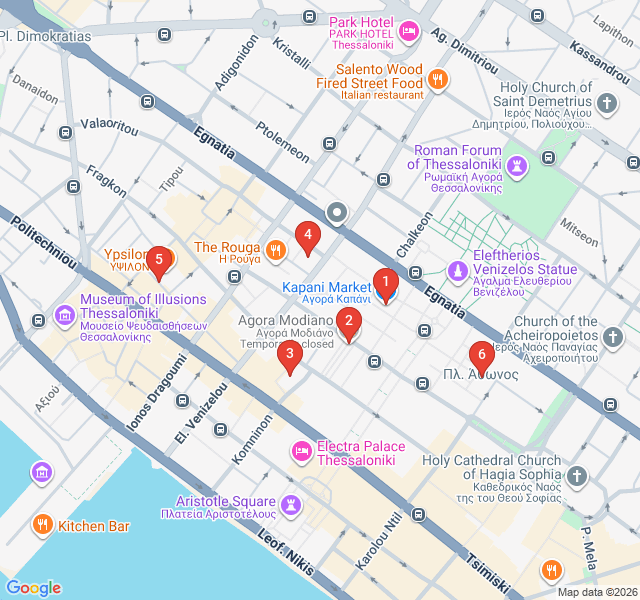
Numbers indicate the order of stops on the tour.
Welcome to Kapani, also known as Agora Vlali. This is the oldest traditional market in Thessaloniki, and its name derives from the Turkish phrase 'Un-Kapan,' meaning flour market. As you walk through these narrow alleys, you are experiencing a tradition of trade that has remained largely unchanged for centuries. The market is organized by product: one street for fish, another for meats, and others for spices or household goods. Take a moment to observe the interaction between vendors and locals; it is a theatrical display of Greek daily life. The produce here is often sourced directly from the surrounding region of Macedonia, offering a seasonal snapshot of the local harvest. While the vendors may change, the atmosphere of this bustling hub remains the eternal pulse of the city.
Just a short walk from the grit of Kapani lies the Agora Modiano, an architectural gem designed by Eli Modiano in the 1920s. This cross-shaped building was modeled after the grand markets of Paris, representing the city's modernization after the Great Fire of 1917. After years of decline, it has recently been restored into a high-end food hall. Look up at the glass roof and the intricate metalwork that defines its structure. Inside, you will find a blend of traditional Greek products and contemporary culinary concepts. It serves as a bridge between the city's past as a commercial center and its future as a global foodie destination. The mix of artisanal cheeses, local wines, and gourmet deli items makes this a perfect spot to appreciate the refinement of Greek gastronomy.
Standing at the edge of the flower market is the Yahudi Hamam, or the 'Bath of the Jews.' Built in the 16th century, its name reflects its location in the heart of the city's Sephardic Jewish quarter. This Ottoman-era bathhouse features characteristic domes with glass 'eyes' that once let light into the steam rooms below. While it no longer functions as a bath, the building remains a silent witness to the multicultural history of Thessaloniki, where Muslim, Jewish, and Christian communities lived and traded side-by-side. Today, the surrounding area is often used for flower stalls and small cafes, but the solid stone walls of the hamam remind us of the sophisticated urban infrastructure the Ottomans brought to the Balkans.
The Bedesten is one of the most significant Ottoman monuments in the city. Built during the reign of Sultan Mehmed II in the 15th century, this rectangular building with its lead-covered domes served as the market for the most precious goods: jewelry, fine fabrics, and silks. Its thick walls were designed to protect merchants from both fire and theft. Even today, the Bedesten remains a place of commerce, housing various shops within its historic arches. As you walk around it, notice how the city has grown up around this fortress of trade. It stands as a symbol of Thessaloniki’s historical importance as a major economic node on the route between Constantinople and Europe.
As you move toward the Edessis area, the atmosphere shifts from traditional trade to a more bohemian, creative vibe. This neighborhood was once part of the industrial and commercial district near the port, characterized by warehouses and workshops. In recent years, these sturdy brick buildings have been repurposed into vibrant cafes, bars, and creative spaces. The street art and industrial aesthetic here offer a look at how Thessaloniki’s younger generation is reclaiming historic spaces. It is a volatile area where new pop-up galleries or small bistros frequently appear, making it a favorite for locals seeking a break from the more tourist-heavy center. It is the perfect place to see the city's modern, urban evolution.
Our route concludes at Athonos Square, a charming pocket of the city where time seems to slow down. Historically, this was the district of woodworkers and wicker-makers, and you can still find several small workshops where craftsmen weave baskets or carve furniture by hand. The square is also famous for its 'ouzeris' and small tavernas, many of which are tucked under lush greenery and wooden trellises. It is a favorite evening spot for locals, but during the day, it retains a quiet, village-like atmosphere. The combination of traditional crafts and the smell of grilled octopus and oregano makes Athonos Square the perfect summary of Thessaloniki’s enduring charm—a place where tradition is not just remembered, but lived.
Start Free on iPhone
Explore “The Culinary Pulse of Modiano and Kapani Markets” with your very own Private Tour Guide with Zigway. Start free on iPhone, skip the large group and the fixed routes, and hear the city come alive as you go.
Your Private Tour Guide
Don't miss the good stuff
Explore Freely
 Moderate
Thessaloniki, Greece
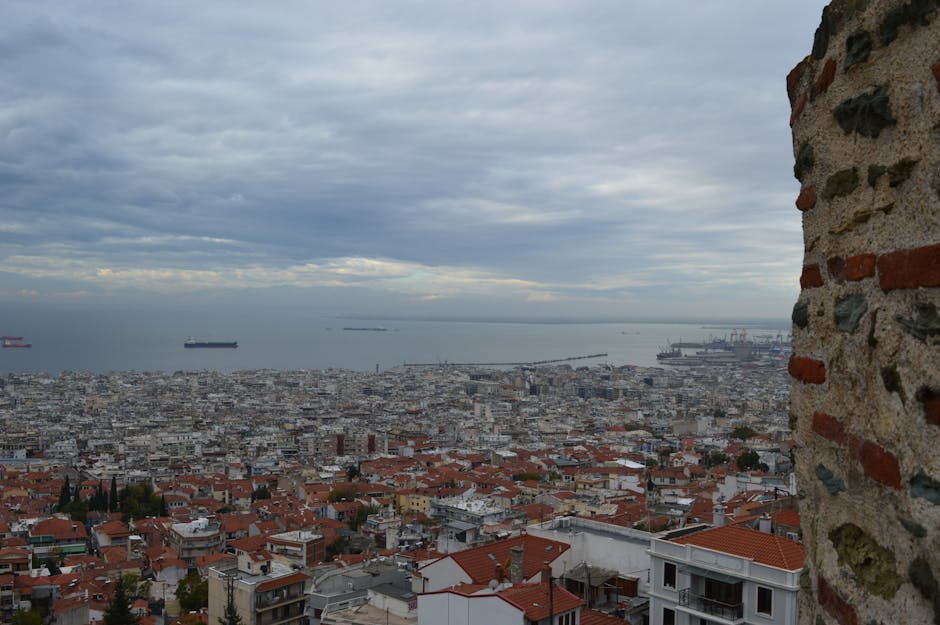
Discover Thessaloniki’s creative soul on this self-guided walk through hidden alleys, vibrant murals, and iconic modern art installations.
 Easy
EasyThessaloniki, Greece
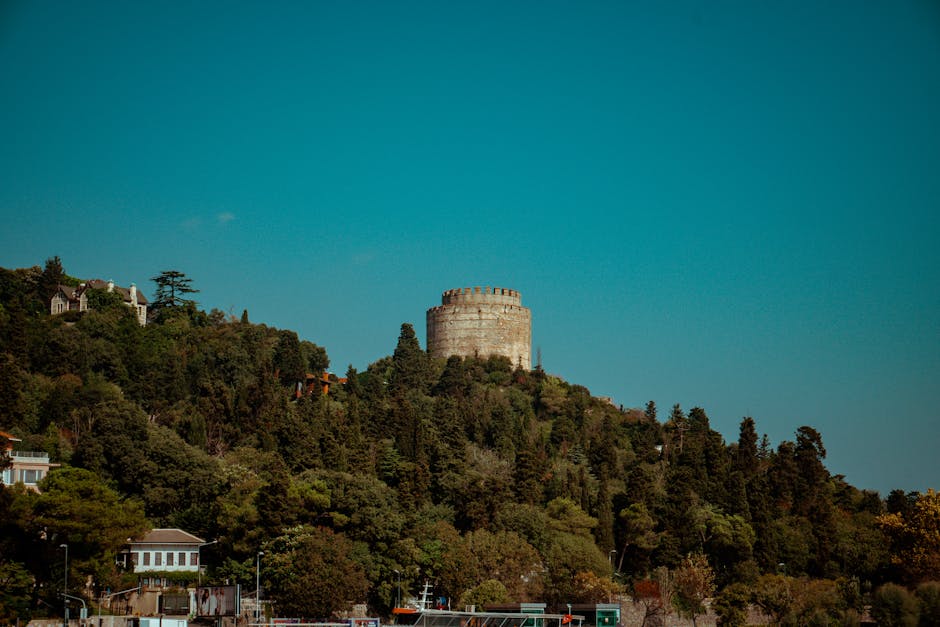
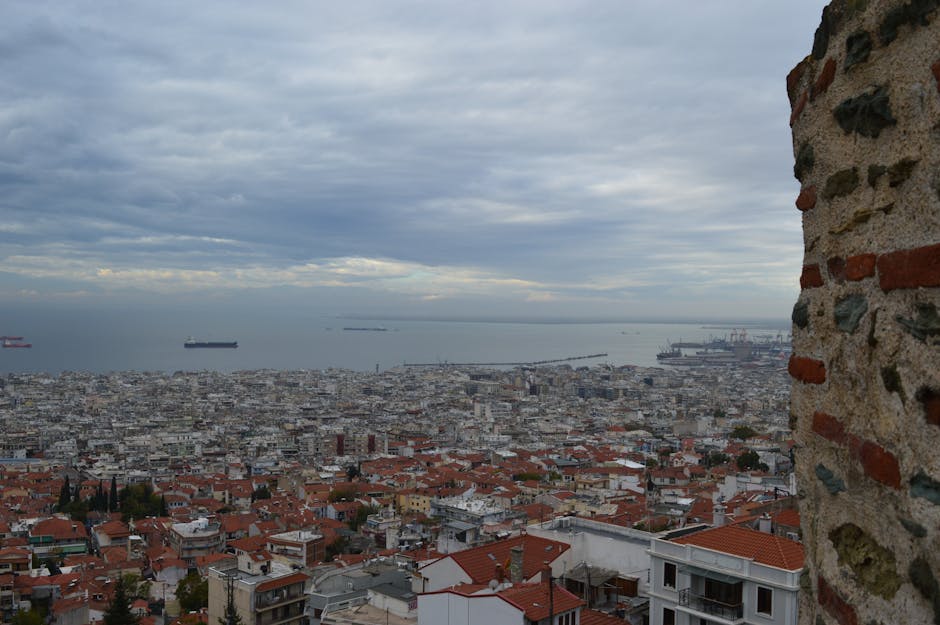
Uncover the hidden Ottoman soul of Thessaloniki. Explore ancient bathhouses, vibrant markets, and historic mosques on this self-guided audio walk.
 Easy
EasyThessaloniki, Greece
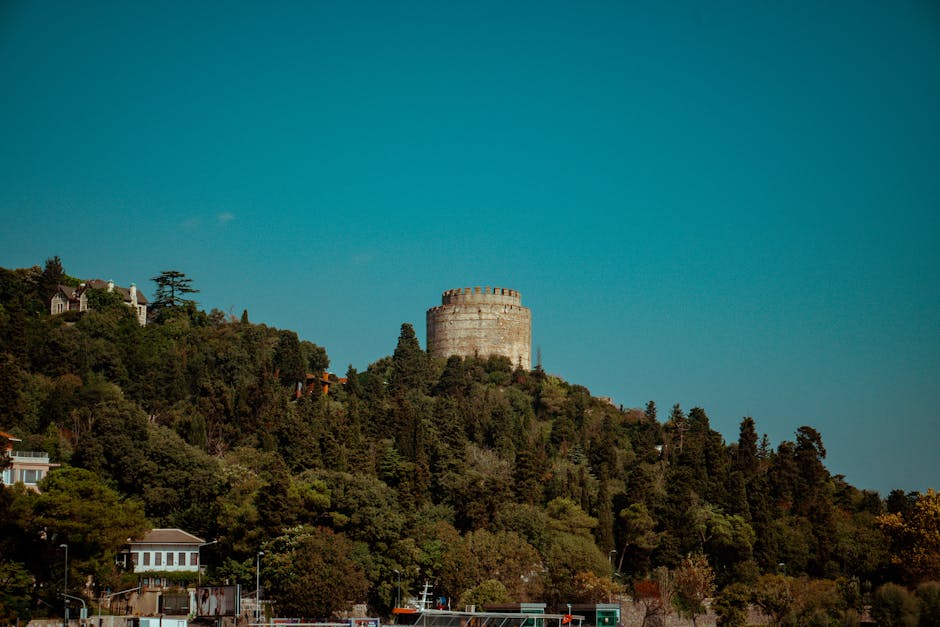
Discover how the 1917 Great Fire transformed Thessaloniki into a modern European masterpiece on this self-guided architectural walking route.
 Easy
EasyThessaloniki, Greece
Explore the heart of Thessaloniki on this self-guided walk, discovering Roman ruins and Byzantine masterpieces at your own pace.
 Easy
EasyGothenburg, Sweden
Discover Gothenburg’s maritime flavors on this self-guided walk through historic market halls and iconic seafood landmarks.
 Easy
EasyKrakow, Poland
Explore the prestigious Jagiellonian University district, featuring Neo-Gothic architecture, Baroque churches, and Krakow's hidden scholarly gems.
 Easy
EasyInnsbruck, Austria
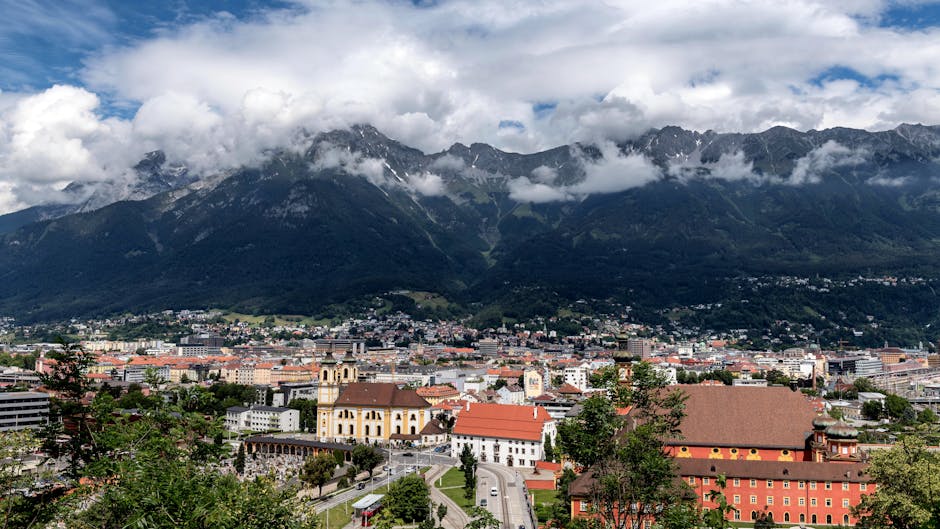
Discover the flavors of Tyrol on this self-guided stroll through Innsbruck’s historic Old Town and vibrant market hall.
 Easy
EasySalzburg, Austria
Discover the 'Rome of the North' on this self-guided walk through the Baroque squares and monumental legacy of Salzburg’s Prince-Archbishops.
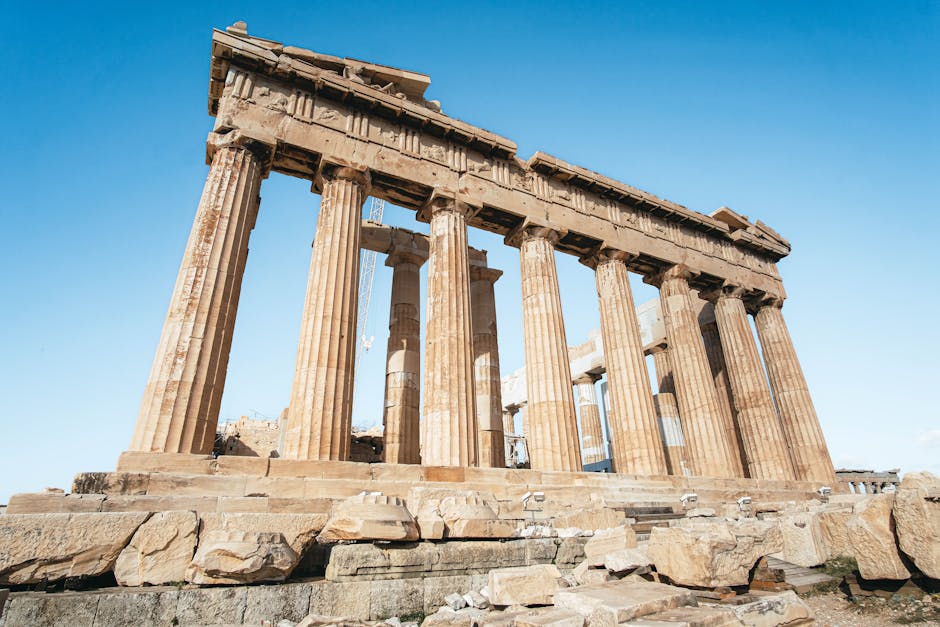 Easy
EasyAthens, Greece
Explore the intersection of ancient history and industrial art on this self-guided walk through Kerameikos and the vibrant Gazi district.
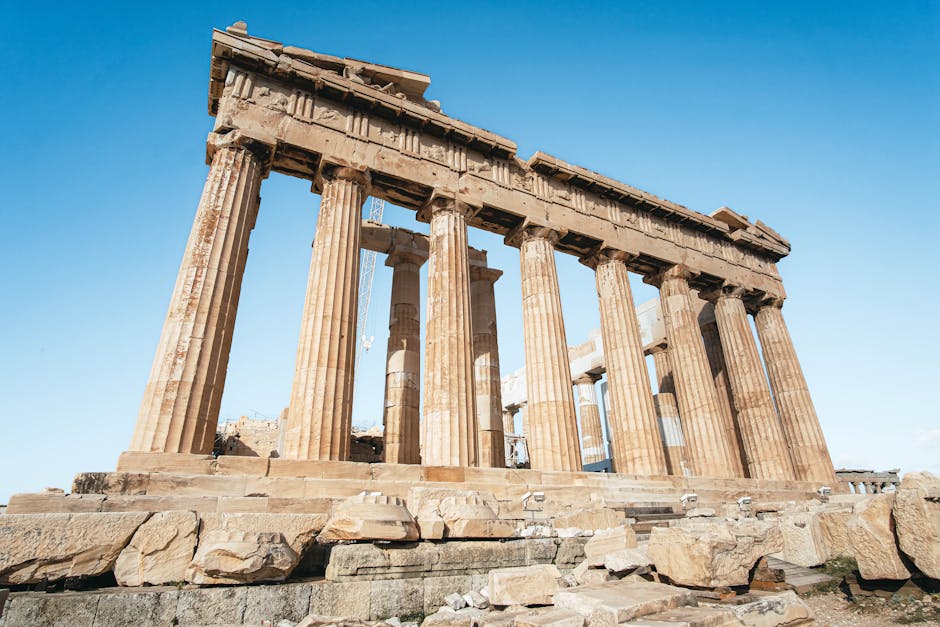 Moderate
Athens, Greece
Ascend the Hill of the Muses for breathtaking Acropolis views and ancient democratic sites on this scenic self-guided walking route in Athens.
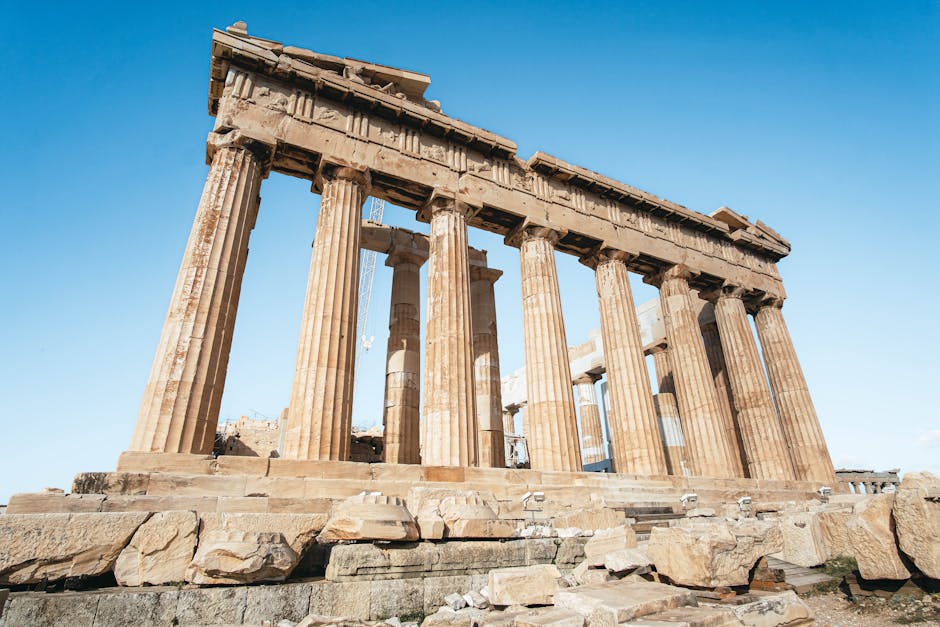 Moderate
Athens, Greece
Discover a hidden Cycladic village and ancient monuments on this self-guided walking route through the enchanting alleys of Plaka and Anafiotika.
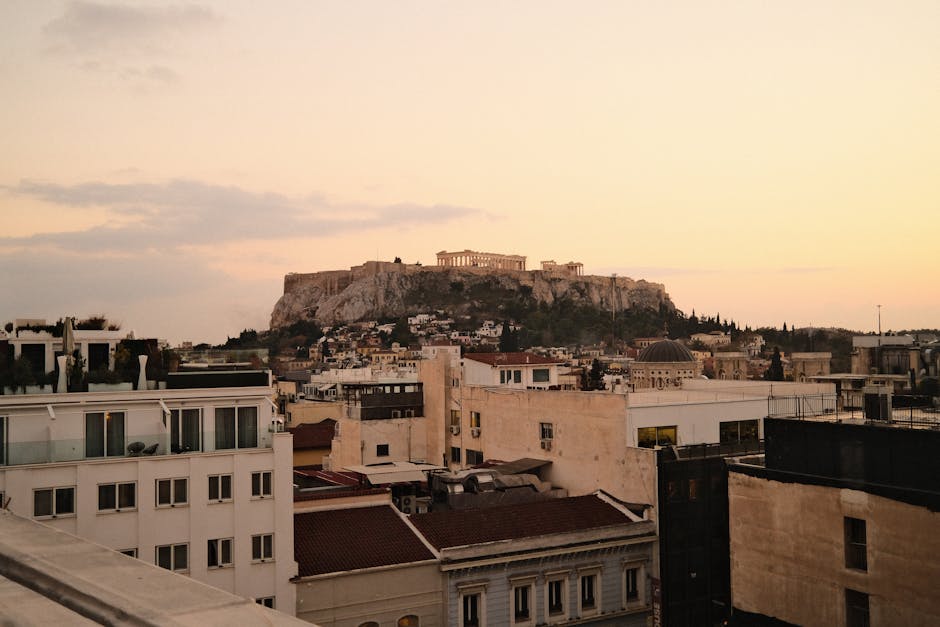 Challenging
Athens, Greece
Conquer the highest peak in Athens on this self-guided walking route through chic Kolonaki to the stunning 360-degree summit of Mount Lycabettus.