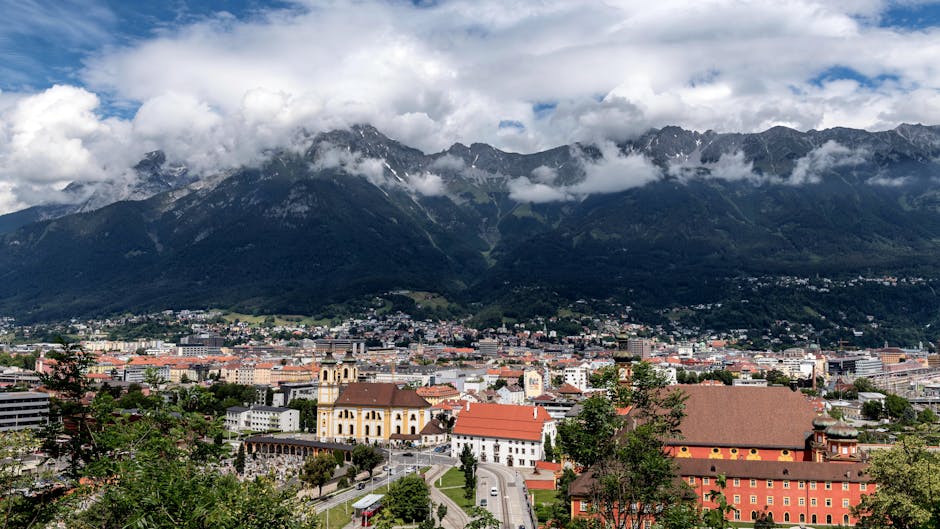
Self-guided audio tour in Innsbruck
Start Free on iPhone
Start free on iPhone to unlock this self-guided walking tour in Innsbruck. Hear all the stories that make it amazing, walk at your own pace, and begin whenever you want.
Your Private Tour Guide
Nestled at the foot of the imposing Bergisel Hill, the Wilten district offers a side of Innsbruck that many travelers miss. This self-guided walk invites you to explore a landscape where the ancient echoes of bronze bells meet the sharp, futuristic lines of modern architecture. Wilten is not just a neighborhood; it is the historical soul of the Inn Valley, serving as a religious and industrial hub for centuries. As you follow this walking route, you will witness the fascinating tension between tradition and innovation that defines the Tyrolean capital. The journey begins at a 400-year-old foundry, where the art of bell-casting remains unchanged by time. From there, the path leads through the spiritual heart of the city, visiting two of Austria's most beautiful religious sites. The Wilten Basilica, a masterpiece of Rococo design, stands in elegant contrast to the nearby Stift Wilten, a Premonstratensian monastery with roots stretching back to the 12th century. These sites offer a peaceful retreat from the city center and showcase the deep-seated faith and artistry of the region. As you ascend toward the Bergisel, the theme shifts from the spiritual to the heroic and the high-tech. You will encounter the monument to Andreas Hofer, the local folk hero who led the Tyrolean rebellion against Napoleonic forces. Nearby, the Tirol Panorama provides a 360-degree look at this pivotal history through one of the world's few remaining giant panoramic paintings. The climax of this neighborhood stroll is the Bergisel Ski Jump, a striking piece of contemporary architecture designed by Zaha Hadid. Whether you are interested in the meticulous craft of bell-making, the ornate beauty of Alpine churches, or the adrenaline-fueled history of the Winter Olympics, this walking route Innsbruck provides a comprehensive look at the city's multifaceted identity. Explore independently and at your own pace, taking time to enjoy the panoramic views of the Nordkette mountains that frame every turn of this half-day adventure.
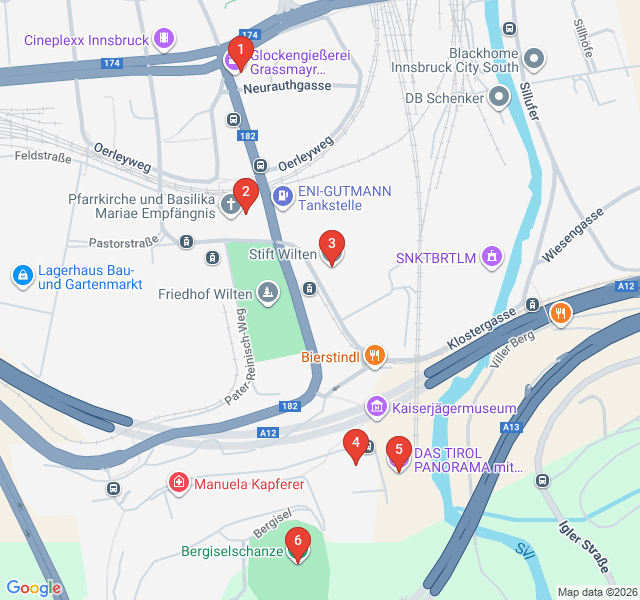
Numbers indicate the order of stops on the tour.
Start exploring with Zigway at the Grassmayr Bell Foundry, a place where time seems to resonate in bronze. Since 1599, the Grassmayr family has been casting bells that now ring out in over 100 countries. This is more than a museum; it’s an active workshop where the secrets of bell-making have been passed down through 14 generations. As you walk through the sound room and the foundry, you’ll learn how the 'mathematics of music' dictates the shape and sound of every bell. The deep, vibrating tones you hear are the result of centuries of refined Tyrolean craftsmanship.
A short walk brings you to the Wilten Basilica, widely considered the most beautiful Rococo church in Austria. According to legend, Roman legionnaires once worshipped a miraculous image of Mary here. The current structure, completed in the mid-18th century, is a riot of pastel colors, delicate gold leaf, and light-filled spaces. Take a moment to look up at the ceiling frescoes, which depict the life of the Virgin Mary. The basilica is also the home of the Wilten Boys' Choir, one of the oldest and most prestigious traditional choirs in the world.
Just across the street lies Stift Wilten, a Premonstratensian monastery that has served as a spiritual center since 1138. The entrance is guarded by two massive stone giants, Haymon and Tyrsus, who, according to local folklore, were involved in the founding of the abbey. The interior of the abbey church is a masterpiece of Baroque architecture, featuring heavy red marble columns and a magnificent high altar. The quiet cloisters and the sense of history here provide a stark contrast to the bustling city center just a few tram stops away.
As you begin your ascent of Bergisel Hill, you encounter the bronze figure of Andreas Hofer. This site is hallowed ground for Tyroleans; it was here in 1809 that Hofer led a ragtag army of farmers and locals against the professional forces of Napoleon and his Bavarian allies. Though Hofer was eventually captured and executed, he remains a symbol of Tyrolean identity and independence. The statue, erected in 1893, looks out over the valley where these historic battles for freedom took place.
To truly understand the scale of the battles fought on this hill, step inside the Tirol Panorama. This museum houses a breathtaking 1,000-square-meter giant circular painting (Riesenrundgemälde) that depicts the third Battle of Bergisel. It is one of the few remaining panoramas of its kind in the world, offering a 360-degree immersion into the 19th-century landscape and conflict. The adjacent Kaiserjäger Museum explores the military history of the Tyrolean Imperial Infantry, rounding out the historical context of the Bergisel site.
Your self-guided adventure concludes at the pinnacle of modern Innsbruck: the Bergisel Ski Jump. Designed by the renowned architect Zaha Hadid and completed in 2002, this structure is a blend of a sports facility and a work of art. Its organic, sweeping lines look like a high-heeled shoe or a wave frozen in mid-air. Take the elevator to the terrace for a panoramic view that stretches from the Nordkette mountains to the Serles peak. It’s a fitting end to a walk that bridges the gap between medieval traditions and 21st-century vision.
Start Free on iPhone
Explore “Wilten's Wonders: Monasteries and Modernity” with your very own Private Tour Guide with Zigway. Start free on iPhone, skip the large group and the fixed routes, and hear the city come alive as you go.
Your Private Tour Guide
Don't miss the good stuff
Explore Freely
 Easy
EasyInnsbruck, Austria
Discover the flavors of Tyrol on this self-guided stroll through Innsbruck’s historic Old Town and vibrant market hall.
 Easy
EasyInnsbruck, Austria
Uncover the myths and legends of Innsbruck on this self-guided walk through the historic Altstadt and beyond.
 Easy
EasyInnsbruck, Austria
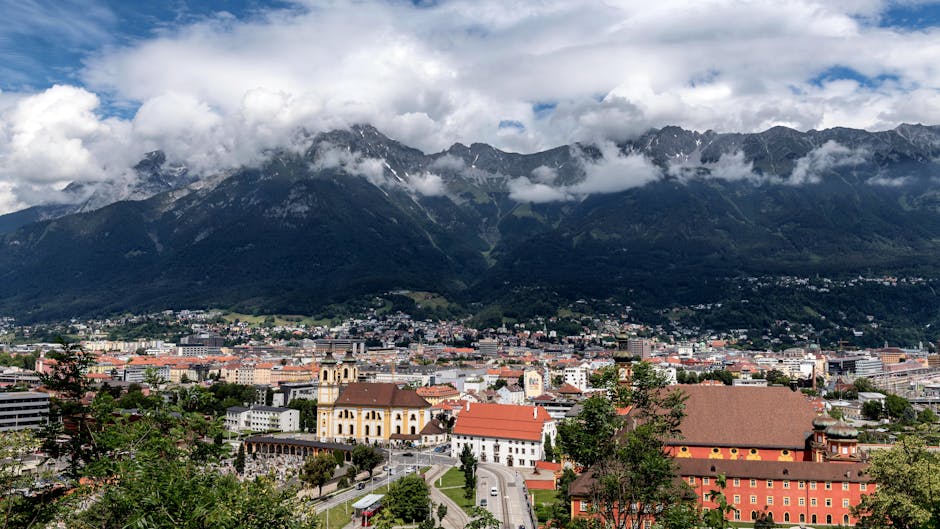
Discover Innsbruck's evolution from Gothic roots to Zaha Hadid's futuristic designs on this self-guided architectural walking route.
 Challenging
Innsbruck, Austria
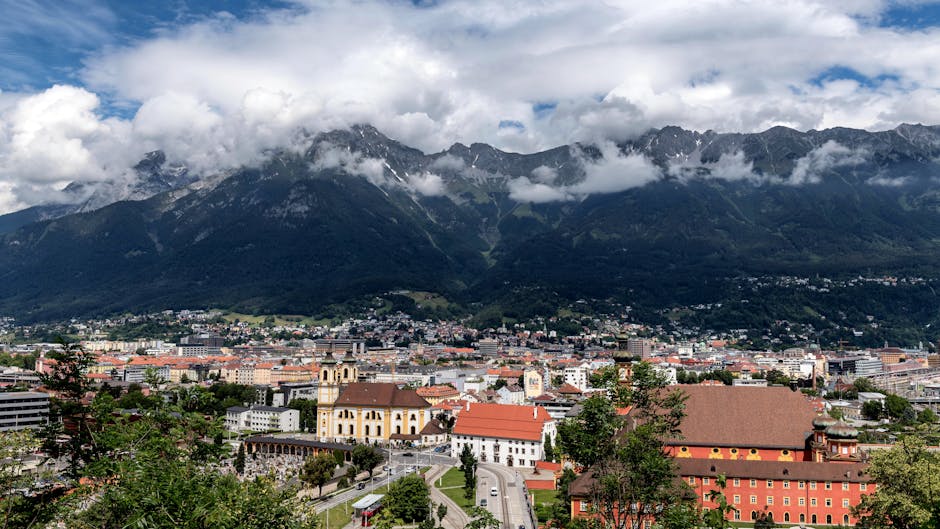
Scale the sun-drenched slopes of Hötting on this self-guided walk featuring panoramic Alps views, steep historic streets, and hidden forest chapels.
 Moderate
Warsaw, Poland
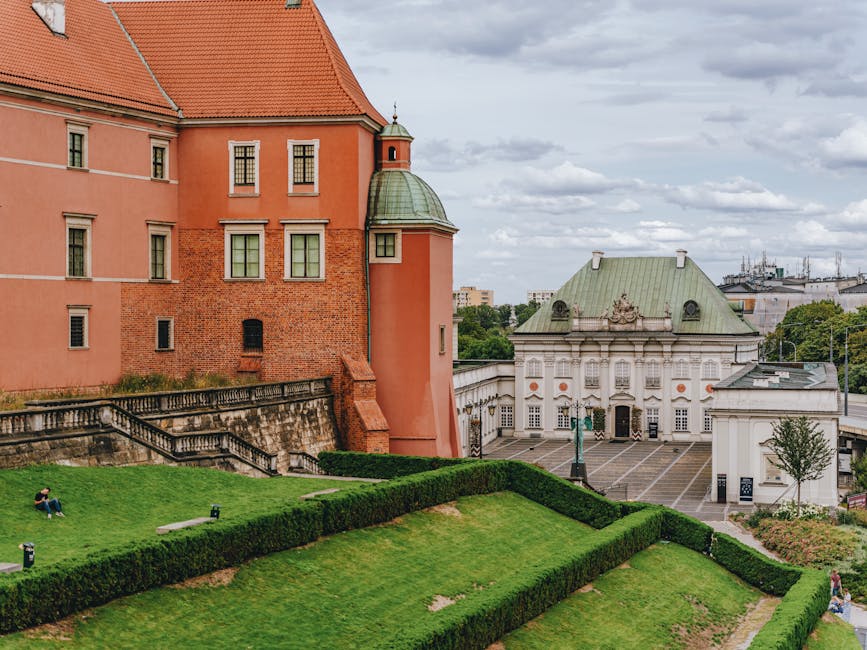
Explore the resilient spirit of Warsaw's Muranów district on this self-guided walk through the history and landmarks of the former Jewish Ghetto.
 Moderate
Vienna, Austria
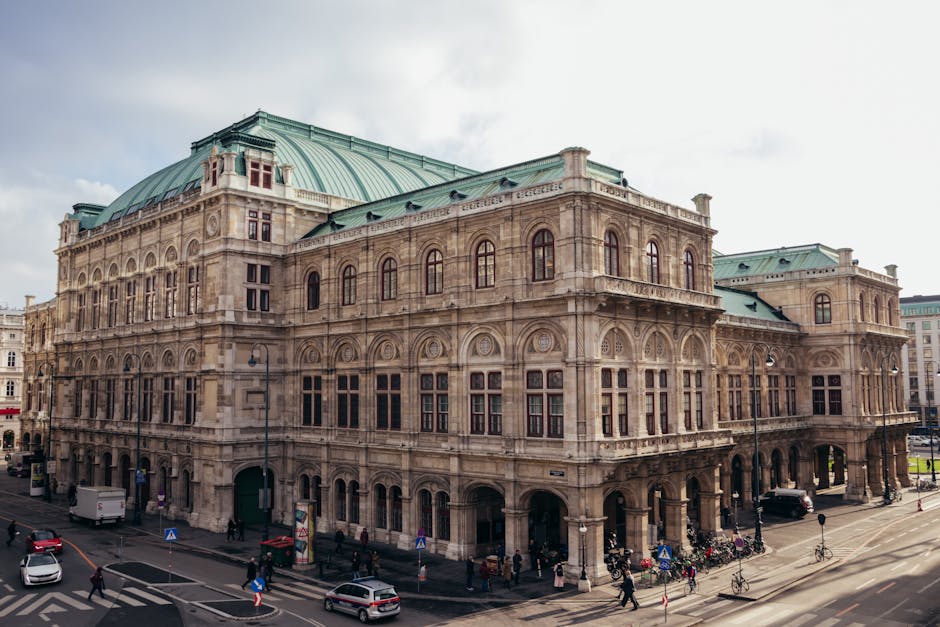
Discover the noir world of The Third Man and Cold War Vienna on this atmospheric self-guided audio walk through the historic Innere Stadt.
 Easy
EasyKrakow, Poland
Explore the historic heart of Kazimierz on this self-guided walk through synagogues, ancient cemeteries, and vibrant squares.
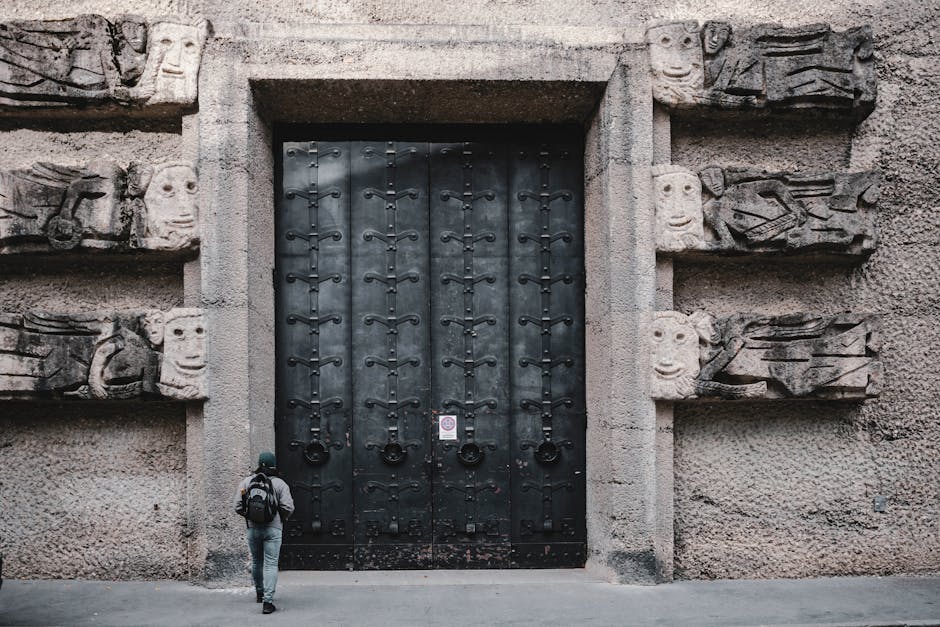 Easy
EasySalzburg, Austria
Discover the 'Rome of the North' on this self-guided walk through the Baroque squares and monumental legacy of Salzburg’s Prince-Archbishops.
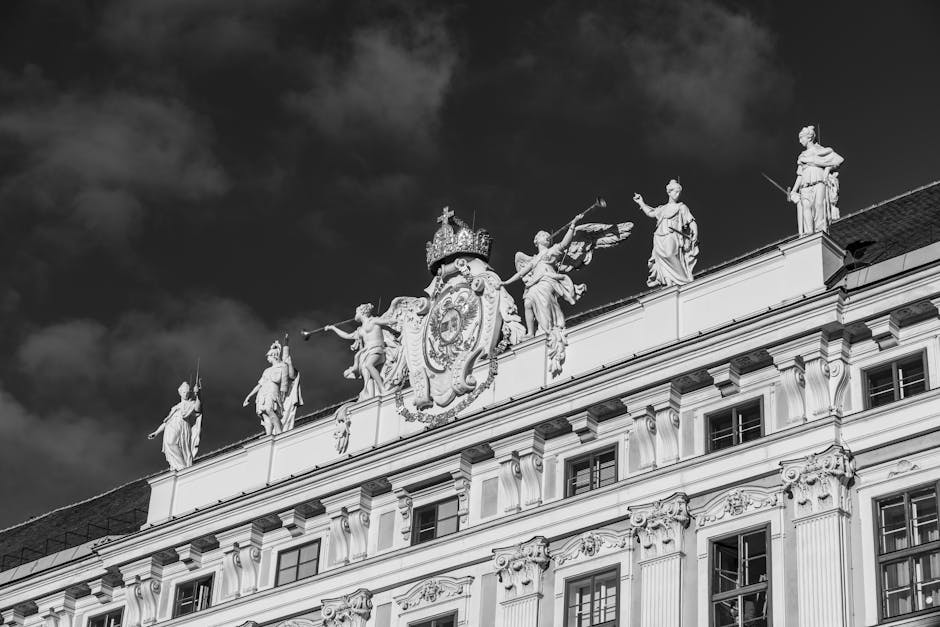 Easy
EasyVienna, Austria
Explore Vienna’s vibrant open-air gallery along the Danube Canal on this self-guided street art and nightlife stroll through Leopoldstadt.
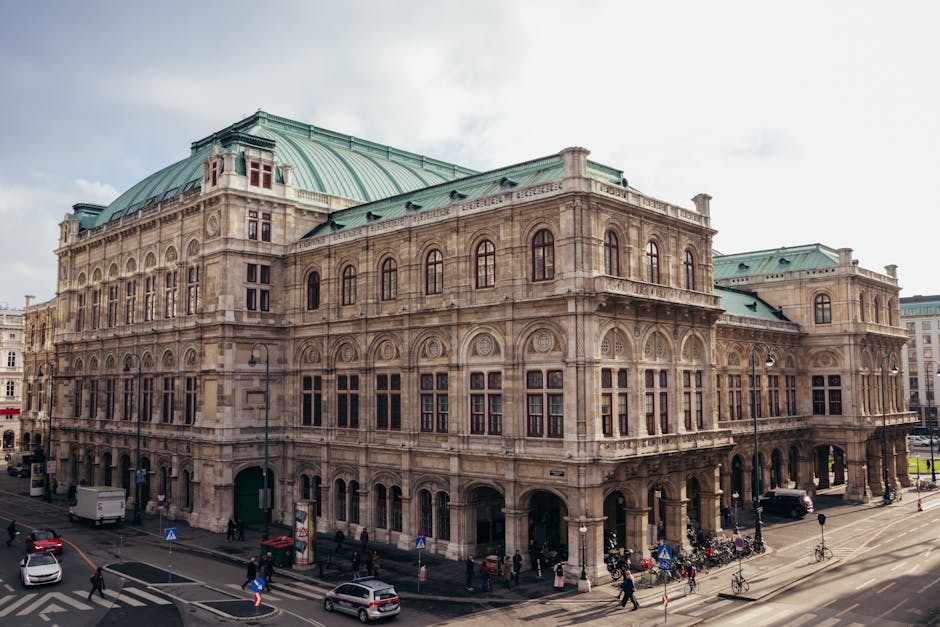 Moderate
Vienna, Austria
Follow the footsteps of Mozart and Strauss through Vienna’s historic center on this self-guided walk through the city's rich musical history.
ModerateVienna, Austria
Discover the noir world of The Third Man and Cold War Vienna on this atmospheric self-guided audio walk through the historic Innere Stadt.
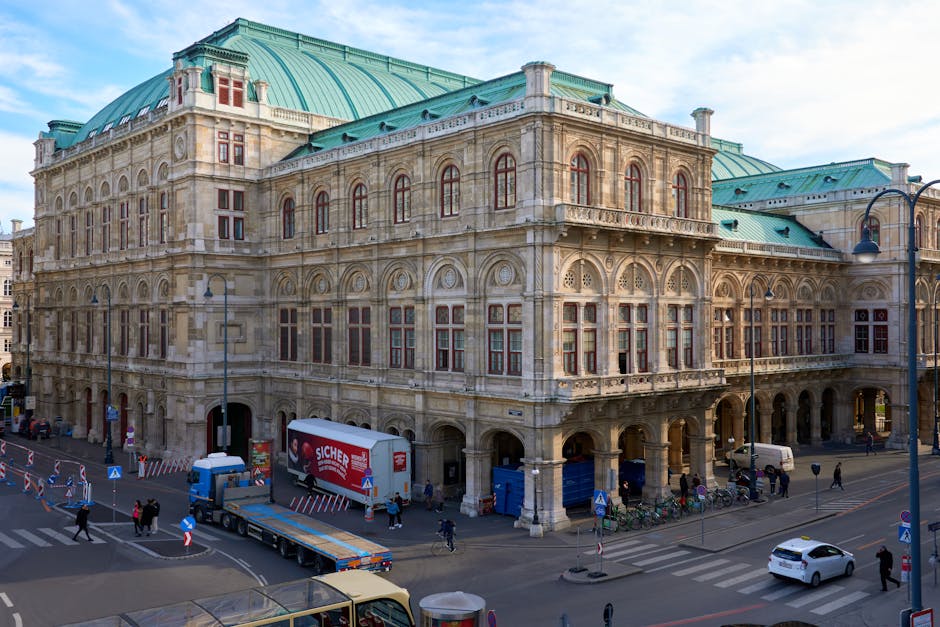 Easy
EasyVienna, Austria
Discover the literary haunts and architectural gems of Vienna's legendary coffee culture on this self-guided stroll through the historic city center.