Self-guided audio tour in Bangkok
Start Free on iPhone
Start free on iPhone to unlock this self-guided walking tour in Bangkok. Hear all the stories that make it amazing, walk at your own pace, and begin whenever you want.
Your Private Tour Guide
Step away from the glimmering skyscrapers and neon lights of central Bangkok to discover Thonburi, the city’s historic 'other side.' For a brief period in the 18th century, Thonburi served as the capital of Siam, and today it remains a treasure trove of riverside heritage that feels worlds apart from the modern metropolis. This self-guided walk invites you to explore a unique multicultural tapestry where Buddhist temples, Catholic churches, and Chinese shrines stand side-by-side along the banks of the Chao Phraya River. Your journey begins by crossing the iconic Memorial Bridge, offering panoramic views of the river traffic. From there, you will delve into the labyrinthine alleys of the Kudichin community, a neighborhood founded by Portuguese settlers over 200 years ago. This area is one of Bangkok’s best-kept secrets, famous for its unique fusion architecture and traditional bakeries that still produce 'Khanom Farang,' a Portuguese-inspired sponge cake. As you follow this walking route, you will encounter the stunning white stupa of Wat Prayurawongsawas, which earned a UNESCO Award of Merit for its restoration, and the towering Santa Cruz Church with its salmon-colored dome. This neighborhood stroll is more than just a sightseeing trip; it is an immersion into the soul of old Bangkok. You will see how diverse ethnic groups—Thai, Portuguese, Chinese, and Muslim—have lived in harmony for centuries. The route also features grand riverside temples like Wat Kanlayanamit, home to one of the largest seated Buddha images in the country, and concludes in the tranquil gardens of the Princess Mother Memorial Park. This is a moderate-paced walking tour Bangkok enthusiasts will love for its authenticity and depth, providing a rare glimpse into the hidden gems of the riverside. Whether you are a history buff or a photography lover, this self-guided adventure offers the freedom to explore independently while uncovering the layers of Thonburi’s fascinating past.
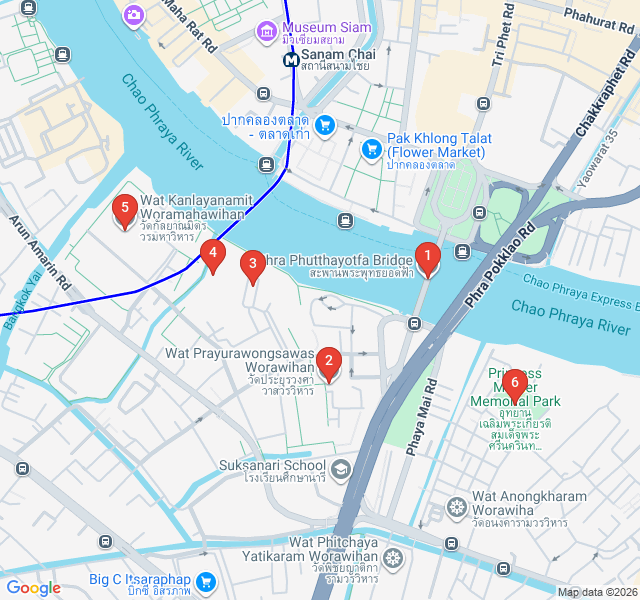
Numbers indicate the order of stops on the tour.
Known locally as Saphan Phut or Memorial Bridge, this green steel structure was opened in 1932 to commemorate the 150th anniversary of the Chakri Dynasty and the founding of Bangkok. As you walk across, notice the statue of King Rama I at the foot of the bridge on the Bangkok side. This bridge was the first to connect the two sides of the Chao Phraya River, symbolizing the unification of the old capital, Thonburi, with the new power center. The view from the pedestrian walkway offers a perfect vantage point to see the contrast between the modern skyline and the traditional wooden houses lining the riverbanks. It is a transition point from the bustling city into the quieter, more historic pace of Thonburi.
This temple is instantly recognizable by its massive, bell-shaped white stupa. Wat Prayurawongsawas is a masterpiece of early 19th-century architecture and was the first temple in Thailand to receive a UNESCO Award of Merit for Cultural Heritage Conservation. Take a moment to look at the unique 'fencing' surrounding the stupa; it is made from ancient iron weapons like swords, axes, and lances, donated by a high-ranking official. Don't miss the 'Turtle Mountain' (Khao Mo) area, a miniature rock garden and pond where locals come to feed the turtles. The peaceful atmosphere here reflects the temple's role as a center for community and spiritual life for nearly two centuries.
The striking salmon-colored dome of Santa Cruz Church is a landmark of the Kudichin community. The original wooden church was built here in 1770 after King Taksin granted this land to Portuguese soldiers who had fought alongside him. The current Renaissance-style structure dates back to 1913. It stands as a testament to the long-standing relationship between Thailand and Portugal. Look closely at the architectural details, which blend European styles with subtle local influences. The church remains the heart of this Catholic enclave, surrounded by narrow alleys where you can still hear the church bells ringing out over the river, just as they have for generations.
Tucked away in the narrow backstreets, this small private museum is dedicated to preserving the history of the Portuguese-Thai community. The ground floor often serves as a cafe where you can try the famous 'Khanom Farang Kudichin,' a sponge cake made with a recipe brought over by the Portuguese. The museum upstairs displays heirlooms, old photographs, and artifacts that tell the story of the settlers who integrated into Thai society while maintaining their faith and culinary traditions. It is a wonderful example of local pride and cultural preservation. The rooftop offers a unique 'alley-level' view of the neighborhood's tightly packed rooftops and the nearby church spire.
As you approach the river again, you’ll find Wat Kanlayanamit, a temple that showcases the deep influence of Chinese culture on Thai art during the reign of King Rama III. The main chapel is exceptionally tall to accommodate the 'Luang Phor Tho,' one of the largest seated Buddha images in Thailand. The temple's name means 'True Friend,' and it was founded by a wealthy Thai-Chinese merchant. Notice the Chinese stone guardians and the intricate porcelain decorations on the gables. The riverside location makes it a popular stop for river boats, but the interior remains a solemn place of worship where the scale of the Buddha image is truly awe-inspiring.
Your walk concludes at this serene public park, built on the site of the childhood home of Princess Srinagarindra, the mother of King Rama IX. The park features a beautiful reproduction of her modest family home and a small museum detailing her life and royal projects. The gardens are meticulously landscaped with tropical plants and ancient trees, offering a cool, shaded escape from the city noise. It is a place of deep respect for Thais, honoring a princess who was beloved for her simplicity and dedication to the poor. It serves as a perfect, quiet bookend to your exploration of Thonburi’s rich human history.
Start Free on iPhone
Explore “Thonburi: The Hidden Riverside Communities” with your very own Private Tour Guide with Zigway. Start free on iPhone, skip the large group and the fixed routes, and hear the city come alive as you go.
Your Private Tour Guide
Don't miss the good stuff
Explore Freely
 Easy
EasyBangkok, Thailand
Discover a labyrinth of industrial scrap yards, vibrant street art, and centuries-old mansions in Bangkok's most atmospheric neighborhood.
 Easy
EasyBangkok, Thailand
Discover Ari's blend of retro architecture, Michelin-rated street food, and vibrant cafe culture on this self-guided neighborhood stroll.
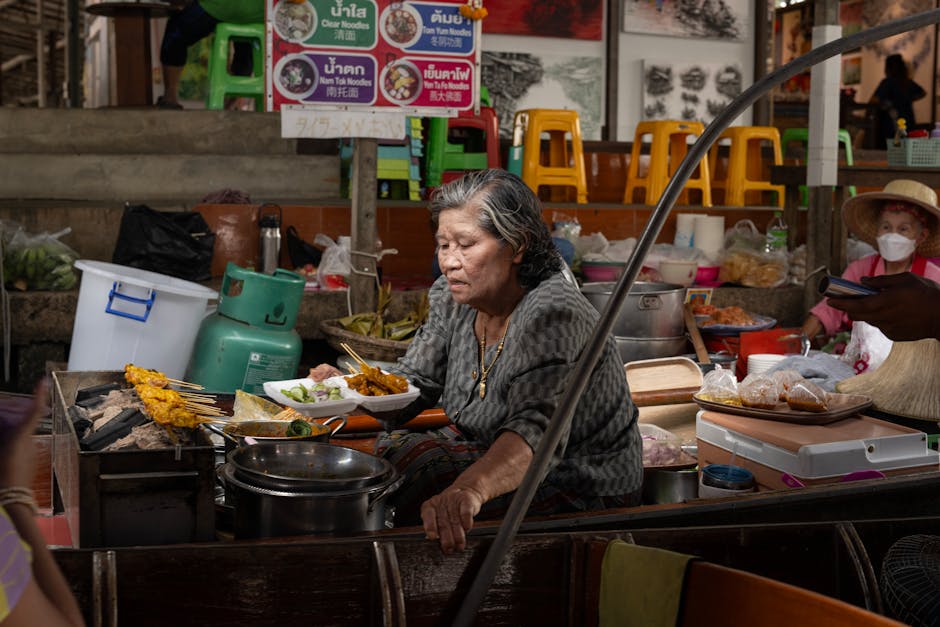 Moderate
Bangkok, Thailand
Discover the golden spires and royal history of Bangkok's Old City on this self-guided audio walk through the majestic Rattanakosin Island.
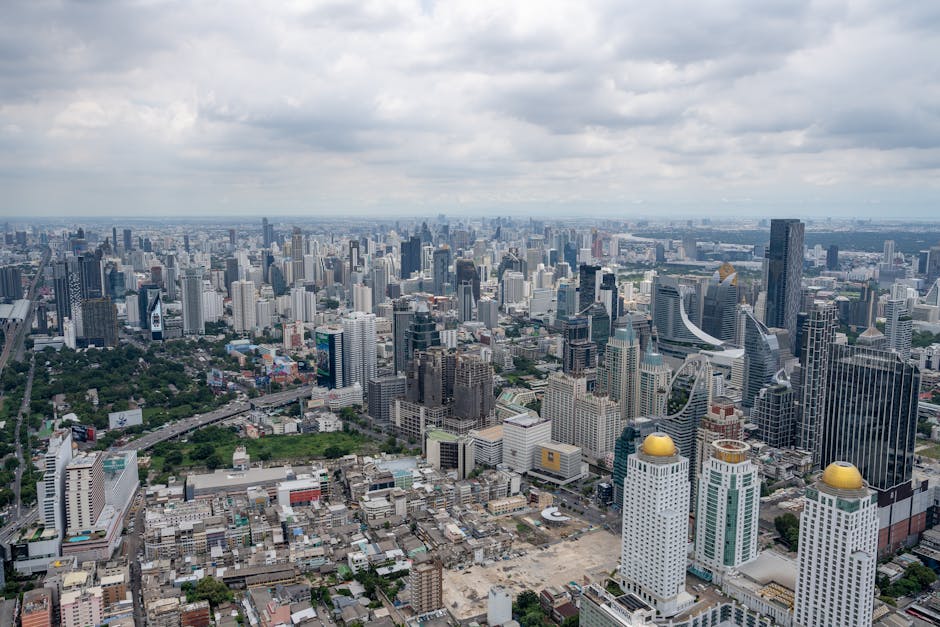 Easy
EasyBangkok, Thailand
Discover the European-inspired grandeur of Bangkok's Dusit district on this self-guided royal architectural walk.
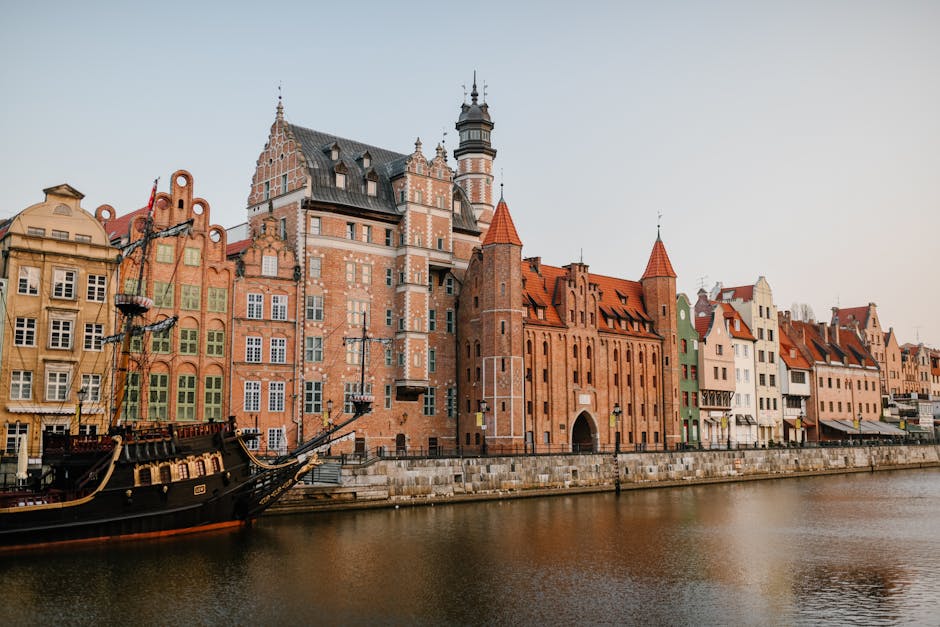 Moderate
Gdansk, Poland
Discover the raw beauty of Gdansk’s Lower Town. Explore industrial ruins, hidden sluices, and riverside bastions on this self-guided walk.
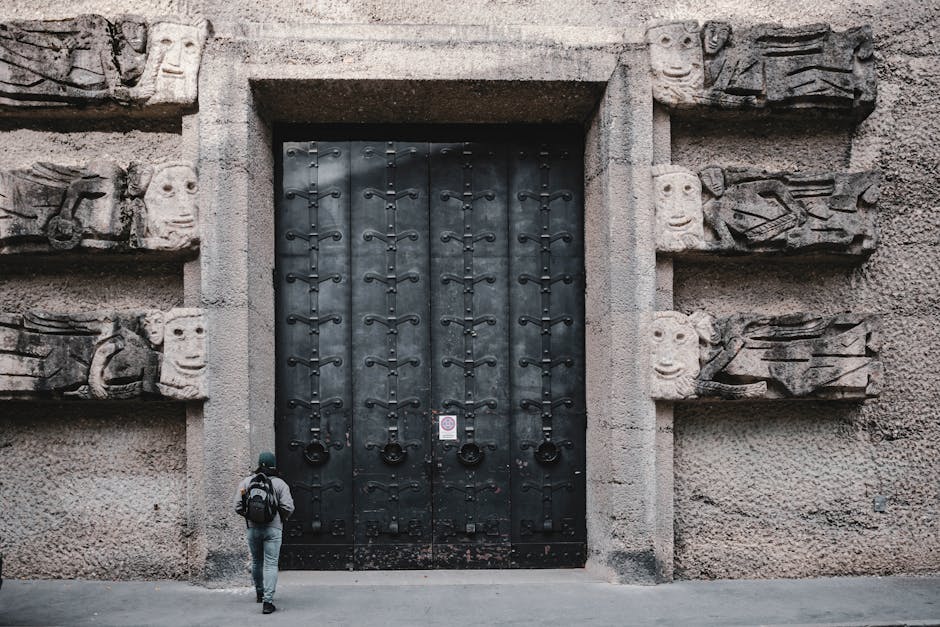 Easy
EasySalzburg, Austria
Discover Salzburg's oldest medieval alley, the birthplace of the 'Silent Night' author, and breathtaking views on this quiet self-guided walk.
 Moderate
Nairobi, Kenya
Discover the creative soul of Nairobi on this self-guided walk through the city's premier art galleries, markets, and artisan workshops.
 Moderate
Nairobi, Kenya
Discover Nairobi's lush side on this self-guided walk through botanical gardens, historic memorials, and vibrant local markets.
 Easy
EasyChiang Mai, Thailand
Explore Chiang Mai's trendiest district at your own pace. Discover contemporary art galleries, local design shops, and iconic modern architecture.
 Moderate
Chiang Mai, Thailand
Explore Chiang Mai's creative soul, from Nimman’s boutique bookshops to the mystical tunnels of Wat Umong and the scenic Angkaew Reservoir.
 Moderate
Chiang Mai, Thailand
Discover Chiang Mai’s soul through its markets and flavors. A self-guided route from the historic Kad Luang to the city’s best street food gems.
 Easy
EasyChiang Mai, Thailand
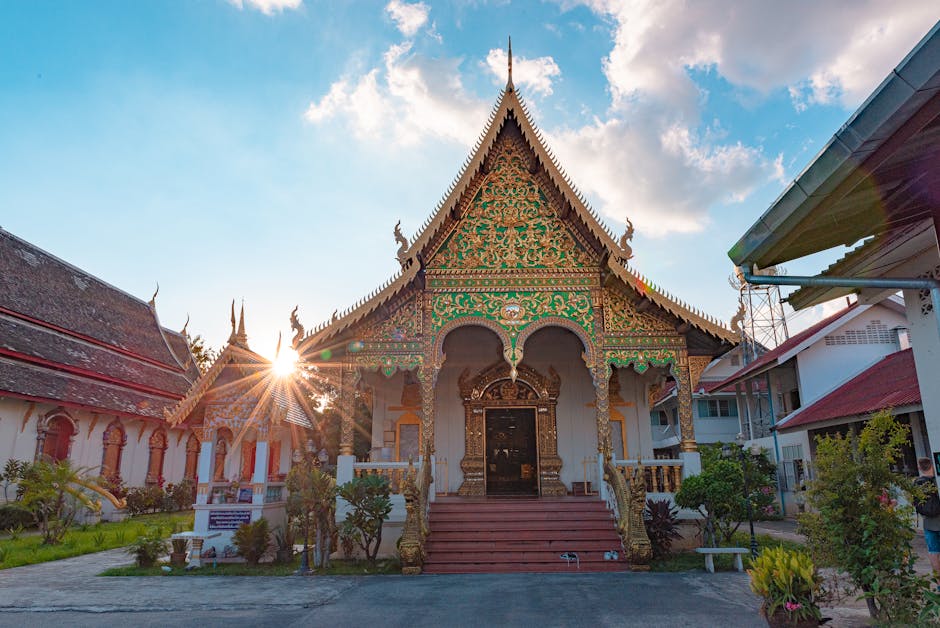
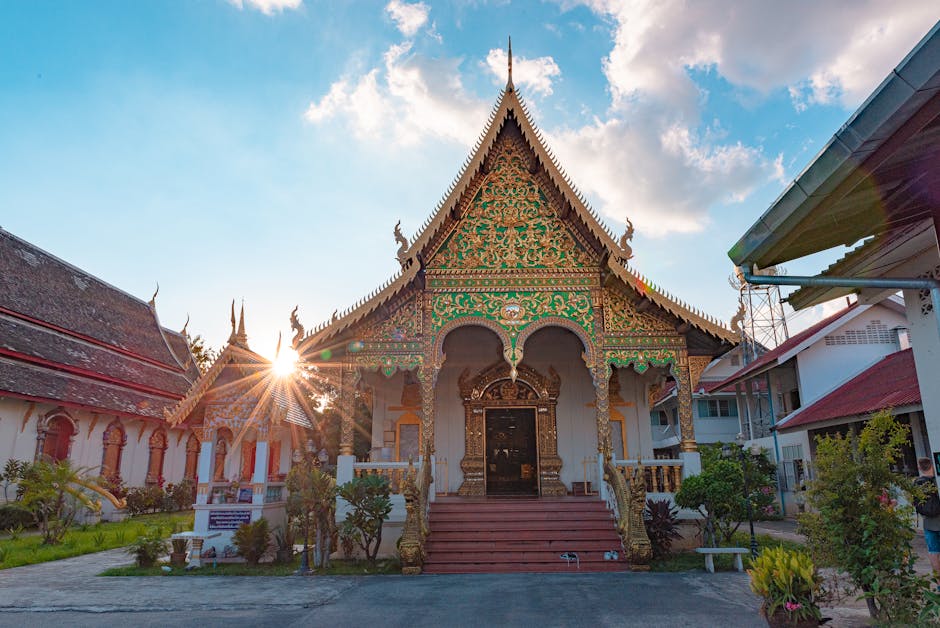
Discover hidden temples, traditional brass-smith workshops, and local markets on this serene self-guided walk through Chiang Mai's southern district.