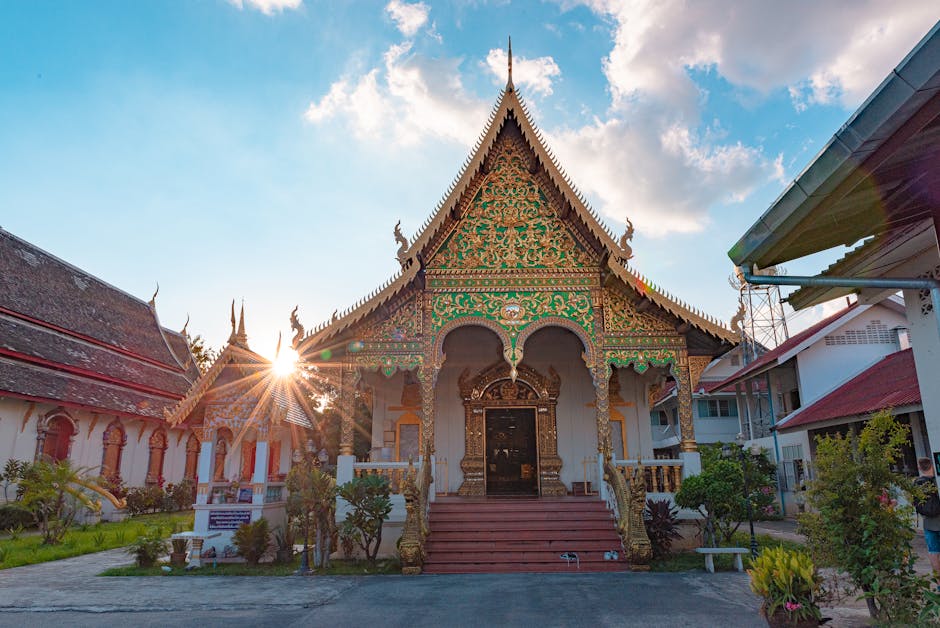
Self-guided audio tour in Chiang Mai
Start Free on iPhone
Start free on iPhone to unlock this self-guided walking tour in Chiang Mai. Hear all the stories that make it amazing, walk at your own pace, and begin whenever you want.
Your Private Tour Guide
Step away from the crowded tourist trails of the Old City and discover the quiet, artisanal soul of Chiang Mai's southern district. This neighborhood stroll through the Bumrung Buri area offers a rare glimpse into the living traditions of the Lanna people, where ancient metalworking techniques and traditional market culture still thrive side-by-side. Your self-guided adventure begins at the bustling Bumrung Buri Market, the perfect place to sample authentic Northern Thai breakfast snacks before diving into the maze of nearby lanes. Unlike a standard walking tour Chiang Mai visitors usually experience, this route emphasizes the 'hidden-gems' found in the workshops of local craftsmen and the courtyards of lesser-known temples. As you explore independently, you will encounter the serene Wat Chet Lin, famous for its picturesque bamboo bridge, and Wat Puak Taem, the beating heart of the city's traditional brass-smithing community. Here, the clinking of hammers on metal provides a rhythmic soundtrack to your walk, as artisans create the intricate 'Chatra' (sacred umbrellas) that adorn temple spires across Thailand. This walking route isn't just about the past; it’s about the living heritage of a neighborhood that has maintained its character amidst the city's modernization. You’ll also pass through Saen Pung Gate, a site steeped in local legend and history, before concluding your audio walk at the lush Buak Hard Public Park. This green oasis is where locals come to exercise and relax, offering a peaceful conclusion to your journey. Whether you are a photography enthusiast looking for unique architecture or a culture seeker interested in traditional crafts, this self-guided walk provides a deep, authentic connection to the spirit of Chiang Mai. This is more than just a walk; it is an invitation to see the city through the eyes of the artisans who have shaped its physical and spiritual landscape for generations.
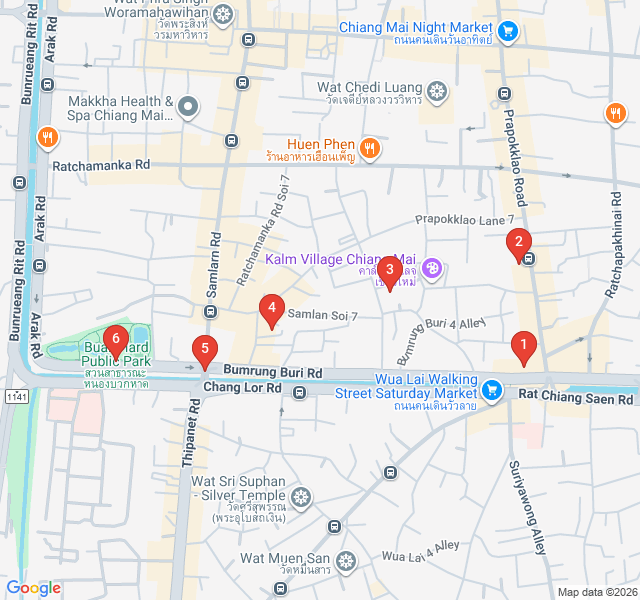
Numbers indicate the order of stops on the tour.
Welcome to the start of your journey at Bumrung Buri Market, the southern gateway to Chiang Mai's Old City. While the North Gate is famous for its night food, this market is the soul of the morning. As you stand among the stalls, you’ll smell the fragrant 'Sai Oua' (northern Thai sausage) and see locals buying fresh produce for the day. This market has served the community for decades, acting as a social hub. Take a moment to look at the South Gate, or Pratu Chiang Mai, across the street. Historically, this was the main entrance for royalty and important visitors coming from the southern regions. The market vibe here is authentic and unhurried, offering a perfect introduction to the neighborhood’s daily rhythm.
Just a short walk from the market, you enter the tranquil grounds of Wat Chet Lin. This temple is a masterpiece of atmospheric design, featuring a large pond covered in lotus blossoms and giant Victoria amazonica lilies. The highlight here is the 'Kua Tae,' a traditional bamboo bridge that stretches across the water. Historically, this temple was significant for the coronation ceremonies of Lanna kings, who would come here to perform ritual ablutions. Look for the Mon-style architecture and the unique Buddha images. The peaceful gardens offer a stark contrast to the busy market you just left, embodying the 'hidden-gem' quality of the southern Old City.
Continuing through the narrow residential lanes, you arrive at Wat Pan Whean. This temple is deeply integrated into the local community and is well-known among residents for its traditional Thai massage school and herbal medicine. The name 'Pan Whean' translates to 'thousand rings,' and local lore suggests a connection to the royal jewelry makers of the past. As you walk around, notice the intricate wood carvings on the viharn (assembly hall), which are characteristic of Northern Thai craftsmanship. It’s a quiet spot where you can often hear the chanting of monks or the gentle rustle of Bodhi trees, providing a sense of the spiritual life that anchors this neighborhood.
You are now at Wat Puak Taem, perhaps the most unique stop on this route. This is the 'Temple of the Brass Smiths.' For generations, the families living in the surrounding 'Ban Puak Taem' village have been the primary producers of decorative metalwork for temples all over Thailand. If you listen closely, you might hear the rhythmic tapping of hammers. The artisans here specialize in creating 'Chatra,' the multi-tiered gold umbrellas seen atop pagodas. Look around the temple grounds and the adjacent workshops; you will see brass ornaments in various stages of completion. This is a rare example of an urban craft guild that has survived into the 21st century, maintaining techniques passed down from the Lanna Kingdom.
As you reach the southwestern corner of the city walls, you encounter Saen Pung Gate. In ancient times, this gate held a somber significance; it was known as the 'Gate of a Thousand Punctures' or the 'Gate of the Dead.' Traditionally, deceased residents of the Old City were carried out through this gate for cremation or burial outside the walls, as it was considered inauspicious to keep the dead within the city limits. Today, the gate is a peaceful historical monument, but its presence serves as a reminder of the complex spiritual geography that dictated life in old Chiang Mai. The brickwork here offers a great perspective on the scale of the original city fortifications.
Your walk concludes at Buak Hard Public Park, the only significant public green space within the Old City walls. This beautifully landscaped park is a favorite among locals for morning yoga, evening jogs, and family picnics. With its manicured gardens, bridges, and fountains, it’s a perfect place to sit and reflect on the artisans and history you’ve discovered today. During the first weekend of February, this park becomes the centerpiece of the Chiang Mai Flower Festival, transforming into a sea of tropical blooms. Grab a coffee or a fresh coconut from a nearby vendor and enjoy the relaxed atmosphere of this urban sanctuary.
Start Free on iPhone
Explore “South Gate Artisans and Markets” with your very own Private Tour Guide with Zigway. Start free on iPhone, skip the large group and the fixed routes, and hear the city come alive as you go.
Your Private Tour Guide
Don't miss the good stuff
Explore Freely
 Easy
EasyChiang Mai, Thailand
Explore Chiang Mai's trendiest district at your own pace. Discover contemporary art galleries, local design shops, and iconic modern architecture.
 Moderate
Chiang Mai, Thailand
Explore Chiang Mai's creative soul, from Nimman’s boutique bookshops to the mystical tunnels of Wat Umong and the scenic Angkaew Reservoir.
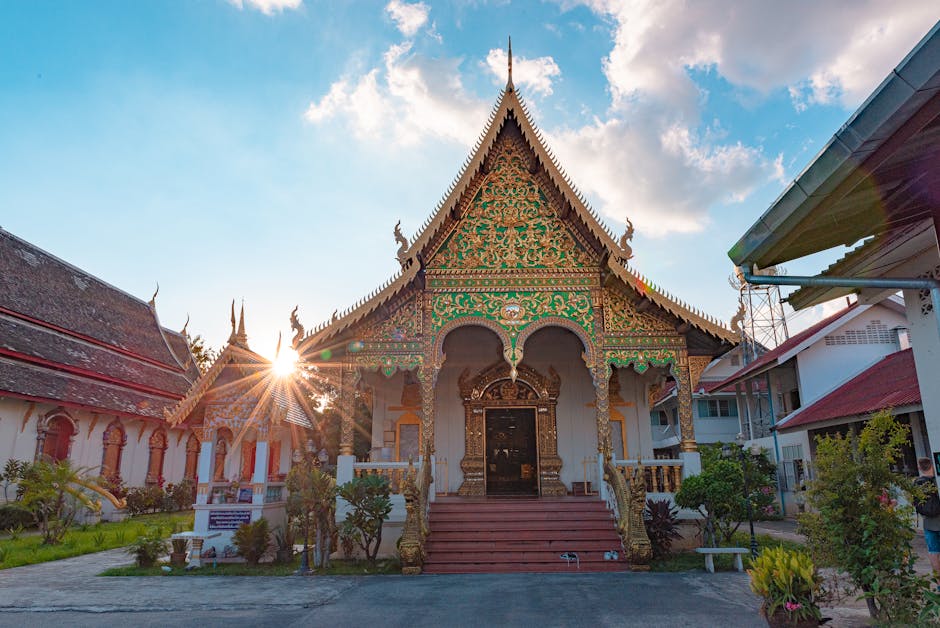 Moderate
Chiang Mai, Thailand
Discover Chiang Mai’s soul through its markets and flavors. A self-guided route from the historic Kad Luang to the city’s best street food gems.
 Challenging
Chiang Mai, Thailand
A challenging self-guided hike from the city's historic railway station through lush parks to the hidden forest temple of Wat Pha Lat.
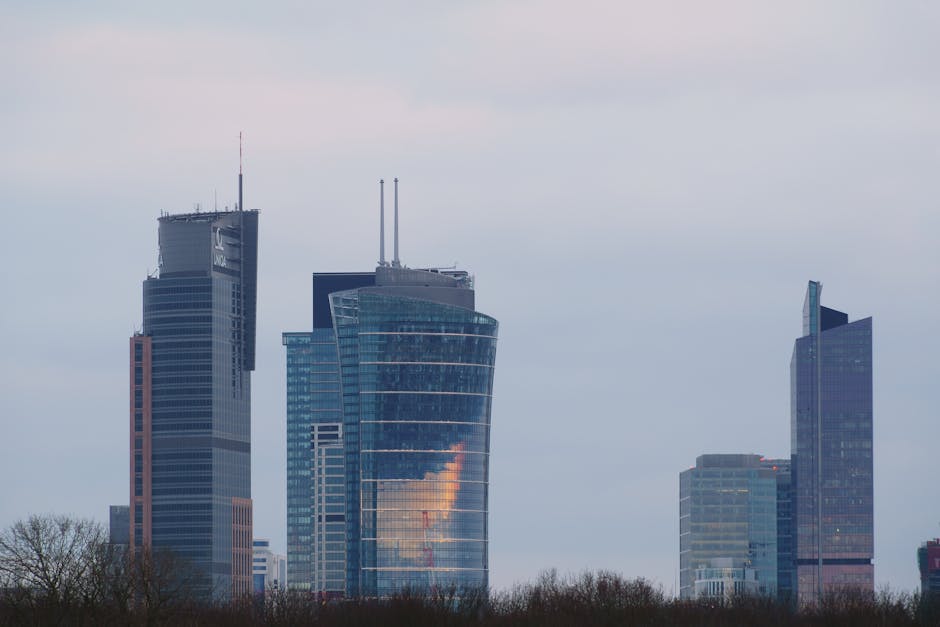 Easy
EasyWarsaw, Poland
Discover the hidden courtyards and grand pre-war architecture of Warsaw's most atmospheric neighborhood on this self-guided stroll.
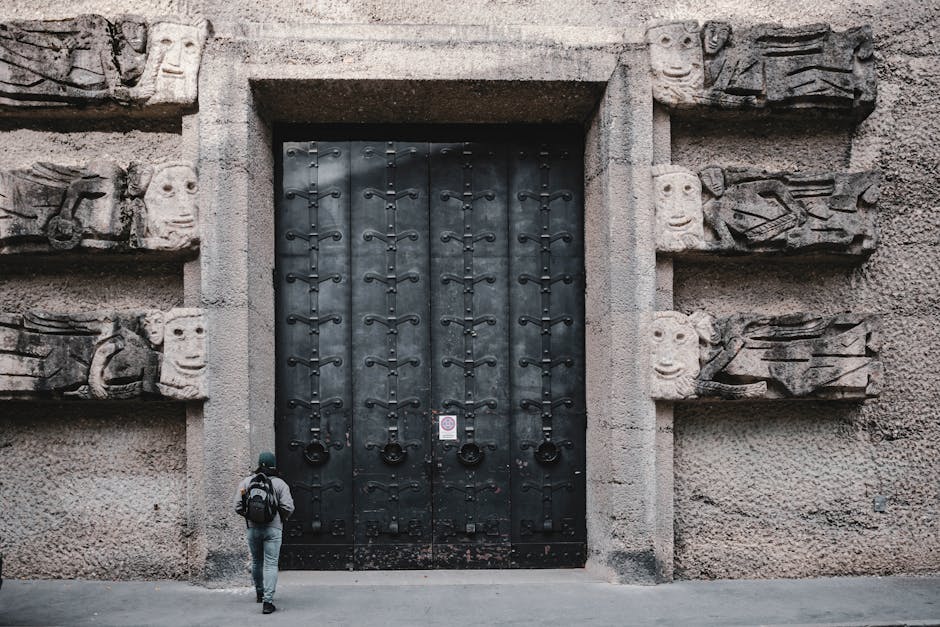 Easy
EasySalzburg, Austria
Discover Salzburg's oldest medieval alley, the birthplace of the 'Silent Night' author, and breathtaking views on this quiet self-guided walk.
 Easy
EasyNairobi, Kenya
Discover Nairobi's iconic skyline on this self-guided architecture walk through the CBD’s most famous modernist and Brutalist landmarks.
 Easy
EasyKrakow, Poland
Explore the prestigious Jagiellonian University district, featuring Neo-Gothic architecture, Baroque churches, and Krakow's hidden scholarly gems.
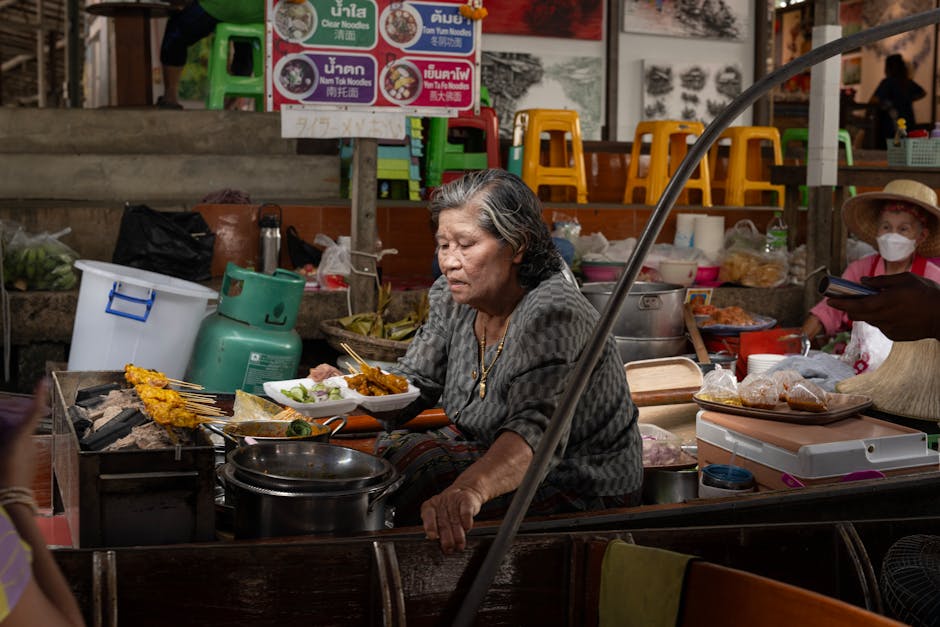 Easy
EasyBangkok, Thailand
Discover a labyrinth of industrial scrap yards, vibrant street art, and centuries-old mansions in Bangkok's most atmospheric neighborhood.
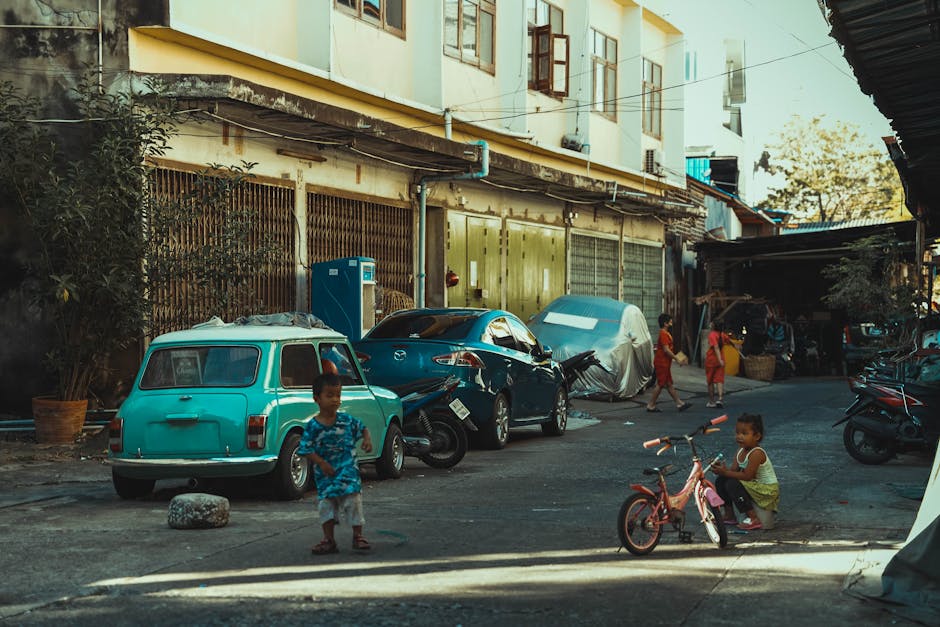 Easy
EasyBangkok, Thailand
Discover Ari's blend of retro architecture, Michelin-rated street food, and vibrant cafe culture on this self-guided neighborhood stroll.
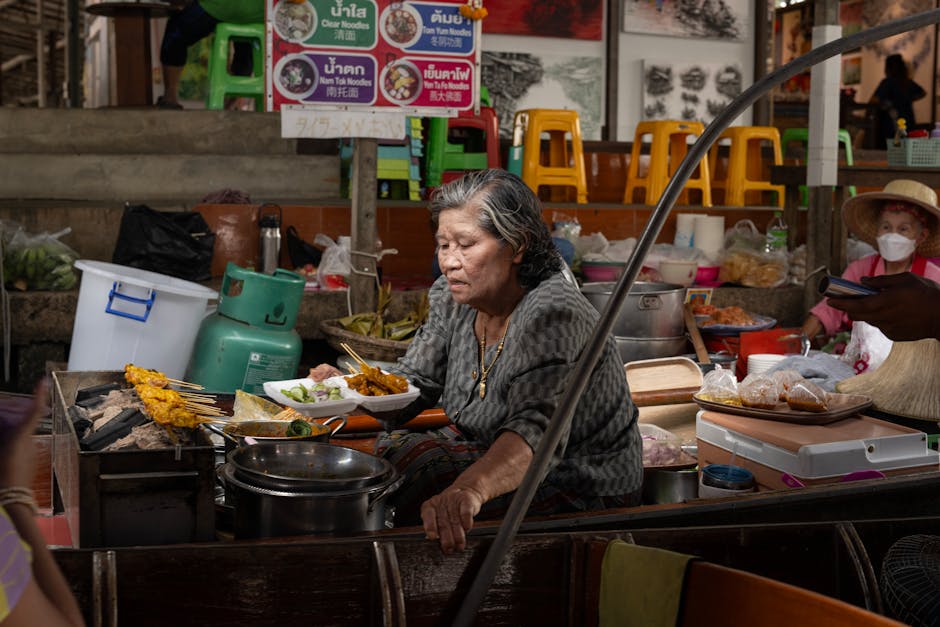 Moderate
Bangkok, Thailand
Discover the golden spires and royal history of Bangkok's Old City on this self-guided audio walk through the majestic Rattanakosin Island.
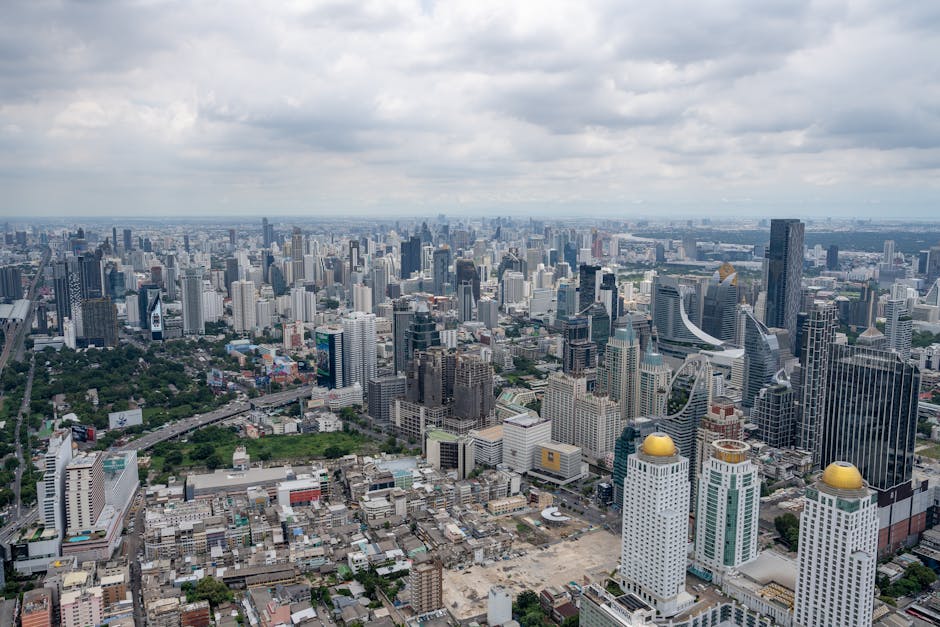 Easy
EasyBangkok, Thailand
Discover the European-inspired grandeur of Bangkok's Dusit district on this self-guided royal architectural walk.