Self-guided audio tour in Varanasi
Start Free on iPhone
Start free on iPhone to unlock this self-guided walking tour in Varanasi. Hear all the stories that make it amazing, walk at your own pace, and begin whenever you want.
Your Private Tour Guide
Varanasi, also known as Kashi, is often described as the spiritual heart of India. This self-guided walk invites you to explore the profound transformation of the city's ancient core through the Golden Spires and River Views route. The journey begins in the labyrinthine Vishwanath Gali, a place where the air is thick with the scent of incense, jasmine, and street food. As you navigate these narrow lanes, you will witness the daily rhythms of a city that has been inhabited for millennia. This neighborhood stroll captures the essence of Varanasi's religious fervor and its architectural evolution, leading you from the cramped traditional alleyways to the grand, open spaces of the newly inaugurated Kashi Vishwanath Corridor. The route highlights the delicate balance between the old and the new. You will pass the historic Gyanvapi Mosque, a site that stands as a testament to the complex layers of Indian history. From there, the walk opens up into the massive Kashi Vishwanath Corridor, a modern architectural feat that has physically reconnected the sacred temple with the life-giving waters of the Ganges. This project has significantly altered the landscape, creating a sense of scale and openness previously unknown in the old city. As you move toward the riverfront, the route takes you to the unique Nepali Temple at Lalita Ghat, famous for its intricate wood carvings that contrast sharply with the surrounding stone architecture. Finally, the walking route concludes at Manikarnika Ghat, the city’s primary cremation ground. Here, the cycle of life and death is visible in its most raw and public form. Observing the 'Eternal Flame' from a respectful distance offers a contemplative end to your journey. This walk is not just about seeing landmarks; it is about experiencing the spiritual energy that draws millions to these riverbanks every year. By following this self-guided adventure, you can explore the sacred geography of Varanasi at your own pace, soaking in the sights, sounds, and stories of one of the world's oldest living cities.
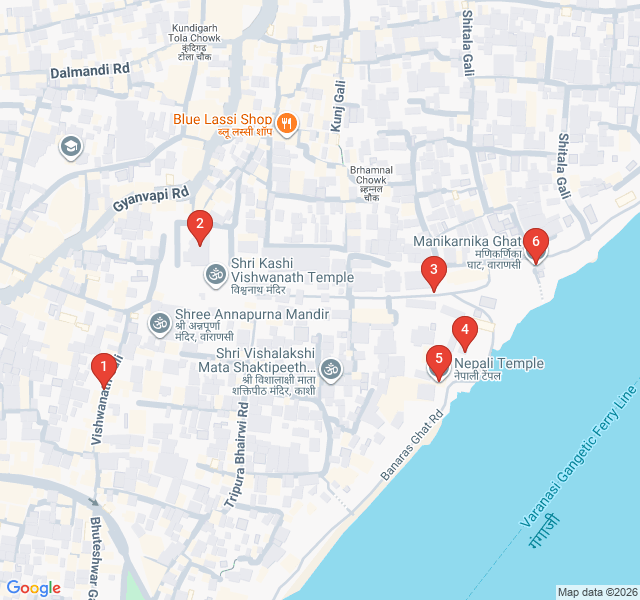
Numbers indicate the order of stops on the tour.
Welcome to the heart of old Varanasi. Vishwanath Gali is more than just an alley; it is a sensory explosion. As you begin your self-guided walk, notice the narrowness of the path, designed centuries ago to keep the sun out and the air cool. Here, shops sell everything from vibrant silk saris to copper prayer vessels and local sweets like 'Malaiyo'. This lane has served as the primary artery for pilgrims heading to the Kashi Vishwanath Temple for generations. The rhythmic chanting, the ringing of bells, and the constant flow of people create an energy that is unique to Kashi. Take a moment to observe the small shrines tucked into the walls, often overlooked by the rushing crowds.
Standing adjacent to the temple site, the Gyanvapi Mosque is a focal point of Varanasi's complex history. Built in the 17th century, the mosque's architecture features high white domes and minarets that dominate the local skyline. The name 'Gyanvapi' means 'Well of Knowledge,' referring to a sacred well located between the mosque and the temple. This site is a powerful reminder of the overlapping layers of time, where different eras and faiths have occupied the same sacred ground. While the interior is generally restricted, the exterior walls and the surrounding security perimeter offer a glimpse into the architectural synthesis and the historical narratives that continue to shape the city today.
You are now entering the Kashi Vishwanath Corridor, a massive redevelopment project inaugurated in 2021. This area represents a dramatic shift in Varanasi’s urban fabric. Before this corridor existed, the temple was hidden behind a dense cluster of buildings. Now, a broad, paved plaza connects the 'Golden Temple' directly to the Ganges River. As you explore independently, notice the use of Chunar sandstone and the traditional motifs carved into the modern structures. The corridor was designed to ease the movement of millions of pilgrims, providing facilities like museums, libraries, and viewing galleries. It is a rare example of modern infrastructure being built into the heart of a prehistoric city.
As you descend the steps toward the water, you reach Lalita Ghat, named after the Goddess Lalita. This ghat provides one of the best vantage points to see the scale of the new corridor from the river's edge. The atmosphere here changes from the bustling commerce of the alleys to the reflective calm of the Ganges. You will likely see pilgrims performing 'Surya Arghya'—offering water to the rising sun—and boats bobbing on the river. The stone steps, or 'ghats', are the lifeblood of Varanasi, serving as places for ritual, social gathering, and laundry. Look back toward the city to see the rising spires of temples against the sky.
Perched atop Lalita Ghat is the Nepali Temple, also known as Kathwala Temple. This structure is an architectural anomaly in Varanasi. Built in the 19th century by the King of Nepal, it is constructed entirely of wood, terracotta, and stone in a pagoda style reminiscent of Kathmandu. The intricate wood carvings are famous for their detail, including erotic scenes similar to those found in Khajuraho. Because the wood is treated to resist termites, the temple has survived the humid river climate for nearly two centuries. The peaceful courtyard offers a quiet break from the intensity of the riverfront, showcasing a different tradition of Himalayan craftsmanship in the middle of the plains.
The final stop on our walking route is Manikarnika Ghat, the most sacred cremation site in Hinduism. Here, it is believed that the fire has never gone out for thousands of years. In Hindu philosophy, dying in Varanasi and being cremated at Manikarnika ensures 'Moksha'—liberation from the cycle of rebirth. While it may seem jarring to visitors, for locals, this is a place of profound peace and transition. Please observe with the utmost respect: photography of the cremations is strictly forbidden. Watch the smoke rise against the backdrop of the 'Leaning Temple' of Ratneshwar Mahadev nearby. This site serves as a powerful conclusion to the walk, representing the ultimate spiritual destination for millions.
Start Free on iPhone
Explore “Golden Spires and River Views: The Corridor Route” with your very own Private Tour Guide with Zigway. Start free on iPhone, skip the large group and the fixed routes, and hear the city come alive as you go.
Your Private Tour Guide
Don't miss the good stuff
Explore Freely
 Moderate
Varanasi, India
Explore the ancient spiritual reservoirs of Varanasi on this self-guided walk through sacred kunds and the iconic Durga Temple.
 Easy
EasyVaranasi, India
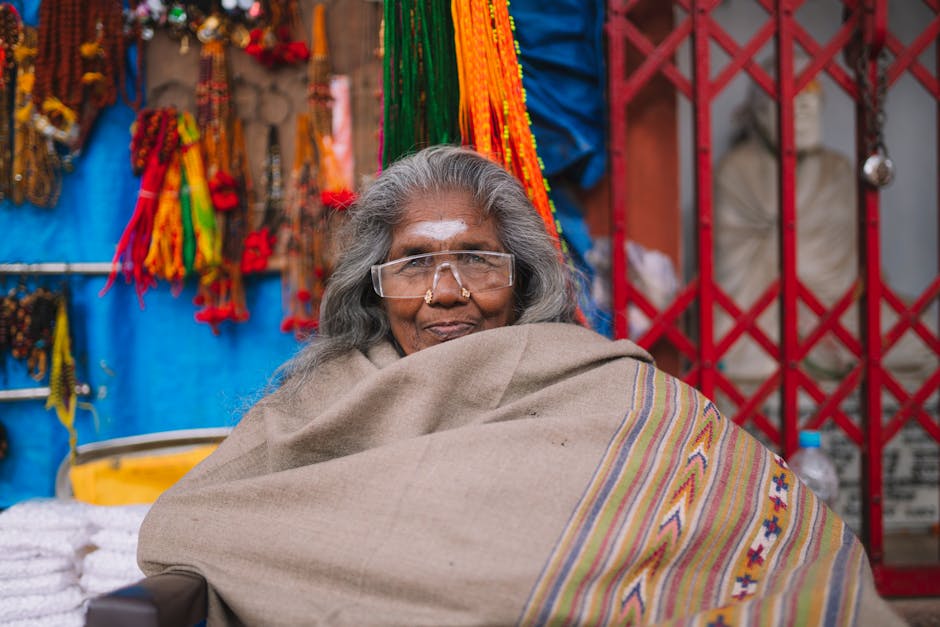
Discover the literary soul of Varanasi on this self-guided walk through Assi, the home of legendary poets, scholars, and historic tea-stall debates.
 Easy
EasyVaranasi, India
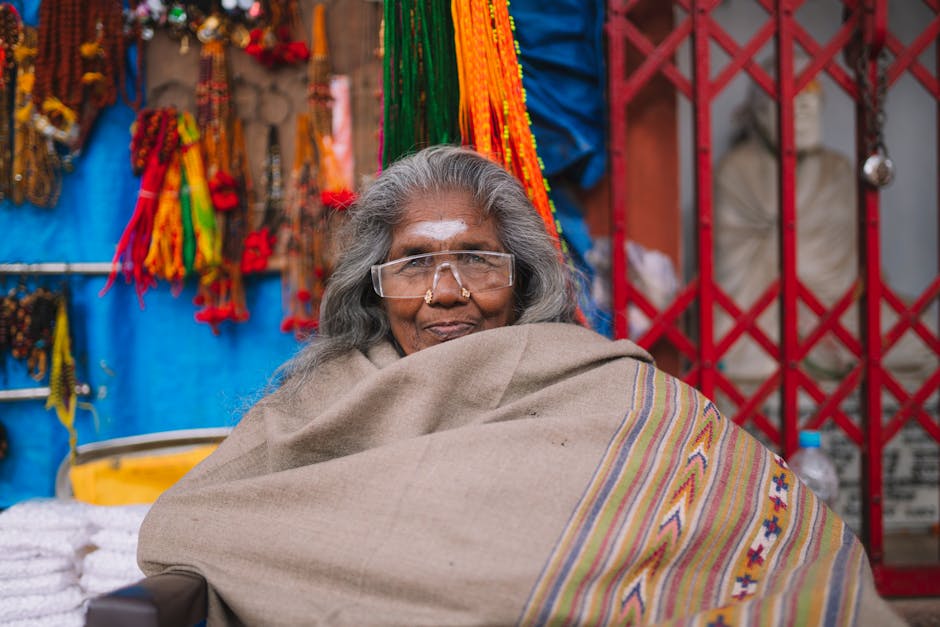
Explore the lush greenery and Indo-Saracenic architecture of Banaras Hindu University on this peaceful self-guided campus stroll.
 Easy
EasyVaranasi, India
Experience the spiritual magic of sunrise in Varanasi on this self-guided walk from Kedar Ghat to the vibrant morning rituals of Assi Ghat.
 Easy
EasyNairobi, Kenya
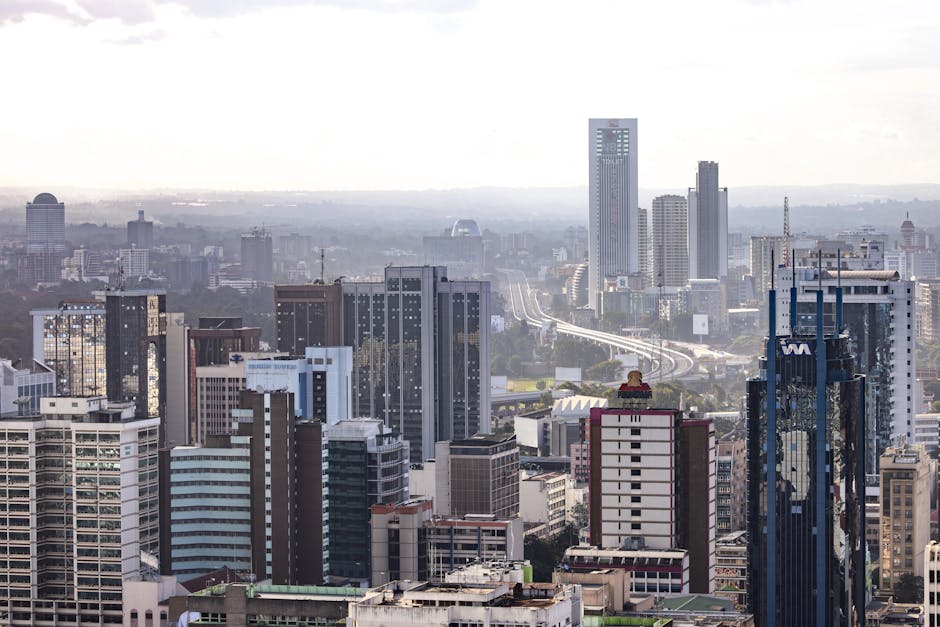
Discover Nairobi's iconic skyline on this self-guided architecture walk through the CBD’s most famous modernist and Brutalist landmarks.
 Easy
EasySalzburg, Austria
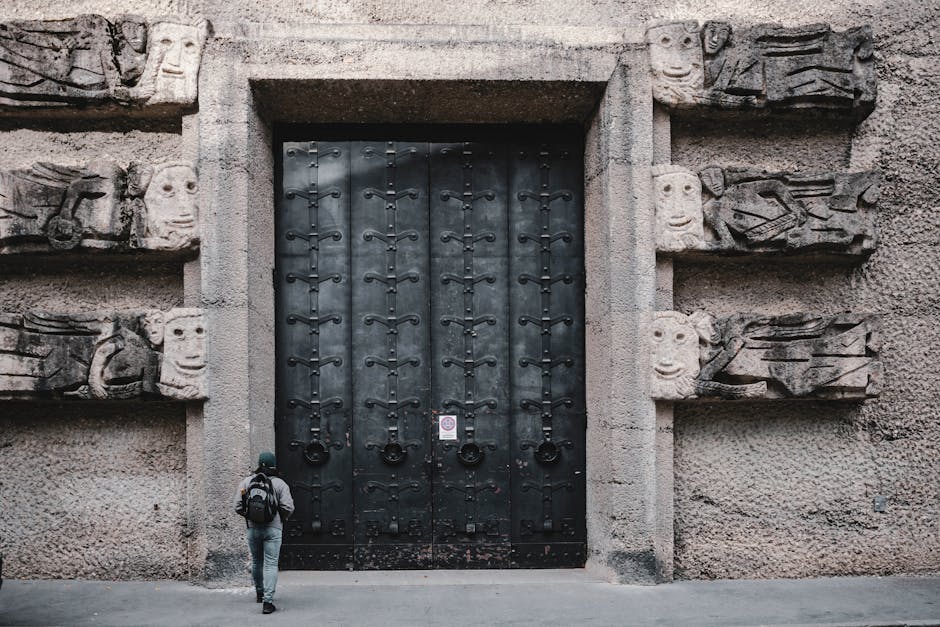
Discover the 'Rome of the North' on this self-guided walk through the Baroque squares and monumental legacy of Salzburg’s Prince-Archbishops.
 Moderate
Gothenburg, Sweden
Discover Gothenburg’s maritime soul on this self-guided walk from the historic Central Station to the scenic riverfront at Stenpiren.
 Easy
EasyNairobi, Kenya
Explore Nairobi's architectural evolution from colonial-era landmarks to iconic Brutalist skyscrapers on this historic self-guided walking route.
 Easy
EasyMumbai, India
Explore Mumbai's stunning UNESCO Art Deco heritage on this self-guided walking route along the iconic Marine Drive promenade.
 Challenging
Mumbai, India
Experience the sensory explosion of Mumbai's historic markets on this challenging self-guided walk through Kalbadevi and Crawford Market.
 Easy
EasyMumbai, India
Explore Mumbai's colonial legacy on this self-guided walk through Colaba's iconic landmarks, from the Gateway of India to grand Art Deco palaces.
 Moderate
Mumbai, India
Explore the ancient fishing village of Worli Koliwada, historic forts, and stunning sea views on this self-guided cultural walking route.