Self-guided audio tour in Prague
Start Free on iPhone
Start free on iPhone to unlock this self-guided walking tour in Prague. Hear all the stories that make it amazing, walk at your own pace, and begin whenever you want.
Your Private Tour Guide
Step into a world where the lines between science and sorcery blur. Prague has long been known as the magic capital of Europe, a city where emperors obsessed over the philosopher's stone and astronomers mapped the heavens with clockwork precision. This self-guided walk invites you to peel back the layers of the Old Town, revealing the hidden history of the alchemists who once whispered in the shadow of Gothic spires. Unlike a standard walking tour Prague visitors often find crowded, this route allows you to explore the city's mystical heritage at your own pace, moving from the merchant courtyards of the Middle Ages to secret laboratories hidden beneath the streets. Your journey begins in the fortified atmosphere of Ungelt, a place that once served as a sanctuary for foreign traders and their secrets. From there, you will encounter the imposing Church of Our Lady before Týn, home to the tomb of a legendary astronomer whose life was as dramatic as the stars he studied. As you navigate the winding alleys, you will come face-to-face with the world-famous Astronomical Clock, a masterpiece of engineering that has tracked the movements of the planets for over six centuries. Every corner of this neighborhood stroll holds a story, from the childhood home of Franz Kafka to the site of a genuine alchemical workshop rediscovered only after a major flood. This walking route is designed for those who appreciate the darker, more mysterious side of history. You will see how the patronage of Emperor Rudolf II turned Prague into a magnet for the greatest occult minds of the 16th century. Whether you are fascinated by the legend of the blinded clockmaker or the spiritual silence of a medieval convent, this experience offers a deep dive into the soul of the city. For those seeking a guided tour Prague experience without the rigid schedule of a group, this independent stroll provides the perfect balance of historical depth and personal freedom.
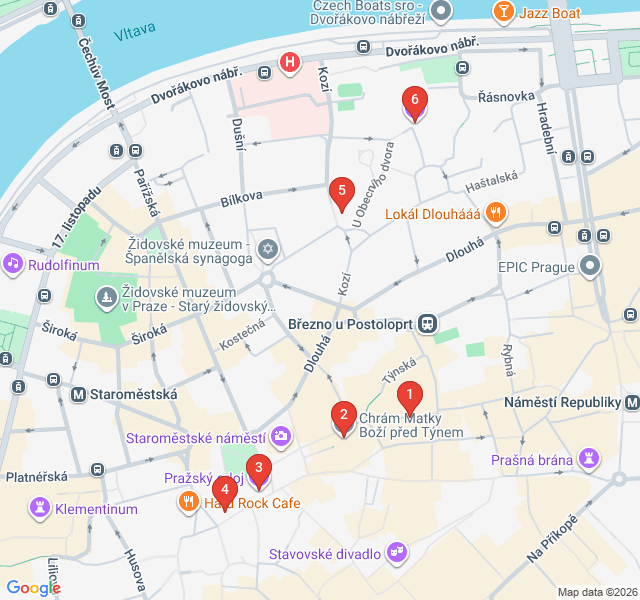
Numbers indicate the order of stops on the tour.
Welcome to Ungelt, one of the most significant historical sites in Prague. This fortified courtyard dates back to the 11th century and served as a customs house where foreign merchants were required to stay. The name 'Ungelt' comes from the Old German word for 'payment' or 'tax.' For centuries, this was a city within a city, protected by its own walls and gates. Merchants from across the globe brought exotic goods, spices, and perhaps even forbidden alchemical texts here. As you look around, imagine the mix of languages and the smell of spices that once filled this space. It is said that the courtyard is still haunted by the ghost of a young Turk who was murdered here, a reminder of the many secrets these stones have witnessed.
The twin towers of this church, known as Adam and Eve, dominate the Prague skyline. While the exterior is a Gothic masterpiece, the interior holds a secret tied to the history of science. Inside lies the tomb of Tycho Brahe, the famous 16th-century Danish astronomer who served at the court of Emperor Rudolf II. Brahe was a key figure in the alchemical era, blending observation of the stars with mystical beliefs. Legend says he died from a burst bladder during a royal banquet because etiquette forbade him from leaving the table, though modern analysis suggests mercury poisoning—perhaps a result of his own alchemical experiments. Notice how the towers are slightly asymmetrical, a common feature in Gothic architecture representing the masculine and feminine.
The Orloj is more than just a timepiece; it is a medieval computer. Built in 1410, it tracks the positions of the sun and moon, the signs of the zodiac, and even the Babylonian hours. The most famous legend surrounding the clock concerns its maker, Master Hanuš. It is said the city councilors blinded him so he could never replicate the masterpiece elsewhere. In revenge, he supposedly reached into the gears to stop the clock, dying in the process. Look for the four figures flanking the clock face: Vanity, Greed, Death, and Lust. Every hour, the figure of Death pulls a bell rope and turns his hourglass, reminding all who watch of the inevitable passage of time—a central theme in alchemical philosophy.
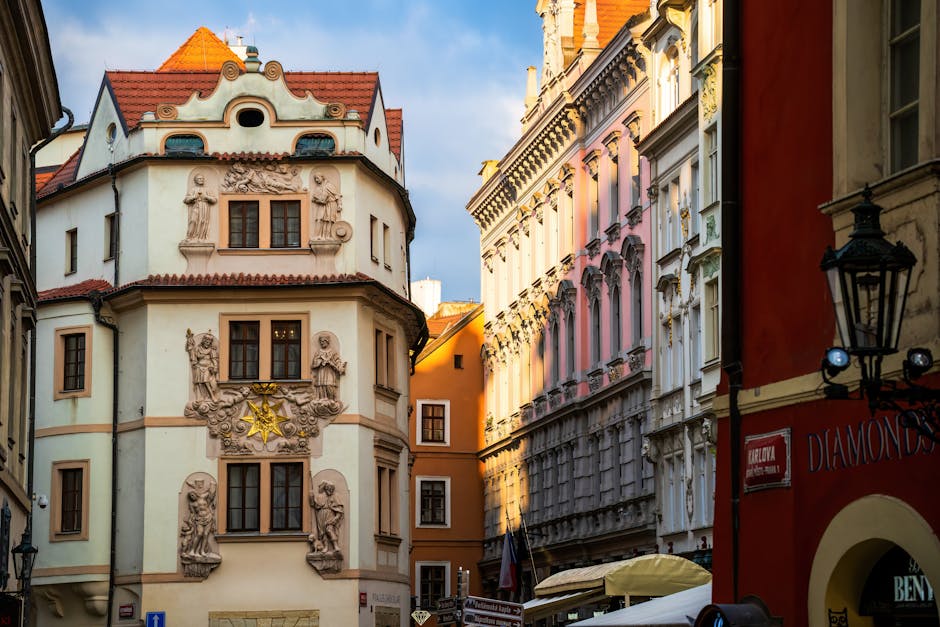
This striking building is a prime example of Bohemian Renaissance architecture. Its facade is covered in sgraffito—a technique where layers of plaster are scratched away to reveal a darker color underneath. The scenes depict biblical stories, mythological figures, and portraits of Habsburg rulers. This house was also the childhood home of the famous writer Franz Kafka, who lived here with his family in the late 19th century. The house gets its name from its function as a shop where 'minute' or small goods were sold. The intricate artwork served as a visual encyclopedia for the citizens of Prague, blending classical wisdom with the daily life of the city.
You are standing before one of Prague's most incredible recent discoveries. For centuries, rumors persisted of secret alchemical laboratories hidden in the Old Town. In 2002, after devastating floods, a hidden door was revealed in this very building, leading to an authentic 16th-century laboratory. This was the workspace of Edward Kelley and John Dee, alchemists invited to Prague by Emperor Rudolf II. They sought to create the Elixir of Life and transform lead into gold. The lab was connected by underground tunnels to the Old Town Hall and the Prague Castle, allowing alchemists to move unseen. Today, it remains a rare, tangible link to the city's occult past, preserved exactly as it was centuries ago.
Our journey concludes at the Convent of St. Agnes, the first Gothic building in Prague. Founded in the 1230s by Princess Agnes, who rejected a royal marriage to serve the poor, this complex is a haven of peace. However, even this holy site has its legends. It is said to be haunted by the 'Murdered Nun,' the ghost of a noblewoman who was killed by her father for falling in love with a poor knight. She is often seen wandering the cloisters, sometimes covered in blood and other times appearing as a helpful spirit to those in distress. The architecture here represents a transition from the heavy Romanesque style to the light, spiritual heights of the Gothic, marking the end of our exploration into Prague's soul.
Start Free on iPhone
Explore “Alchemy and Legends of Old Prague” with your very own Private Tour Guide with Zigway. Start free on iPhone, skip the large group and the fixed routes, and hear the city come alive as you go.
Your Private Tour Guide
Don't miss the good stuff
Explore Freely
 Easy
EasyPrague, Czech Republic
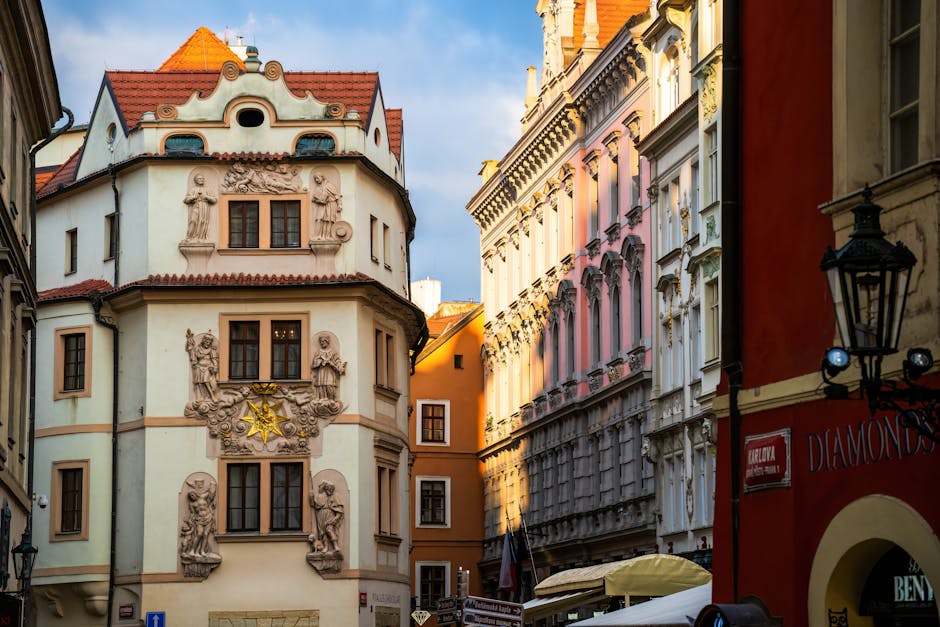
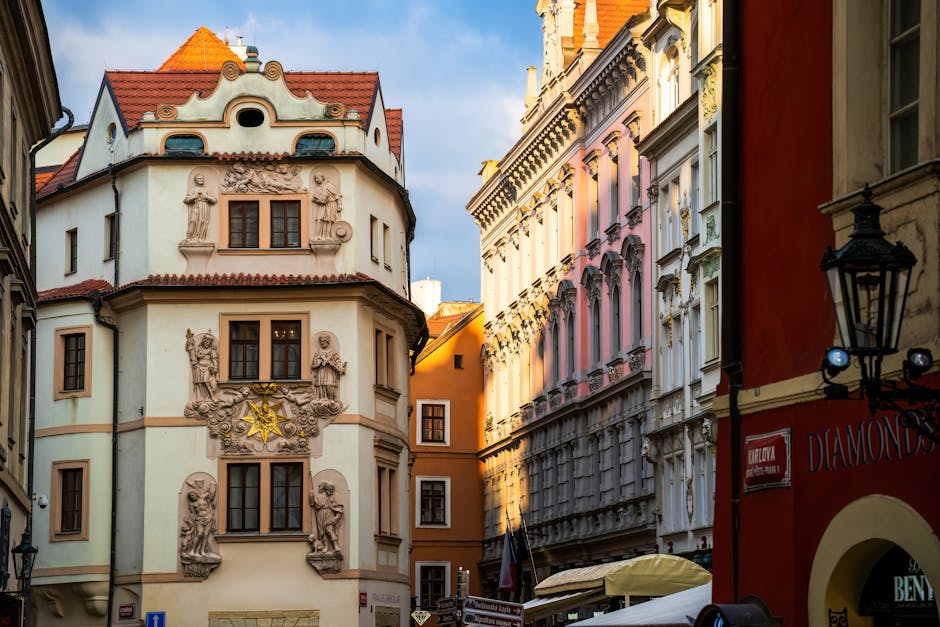
Explore the world's only Cubist architecture on this self-guided walking route through Prague's New Town and Old Town.
 Easy
EasyPrague, Czech Republic
Discover Prague's Golden Age on this self-guided walk through stunning Art Nouveau landmarks, from the Municipal House to Mucha's masterpieces.
 Challenging
Prague, Czech Republic
Discover Prague’s royal district and capture stunning panoramic vistas on this self-guided walking route through Hradčany and the Castle complex.
 Easy
EasyPrague, Czech Republic
Discover the history of Pilsner and Prague's legendary pub culture on this self-guided audio walk through historic breweries and hidden local haunts.
 Easy
EasyNairobi, Kenya
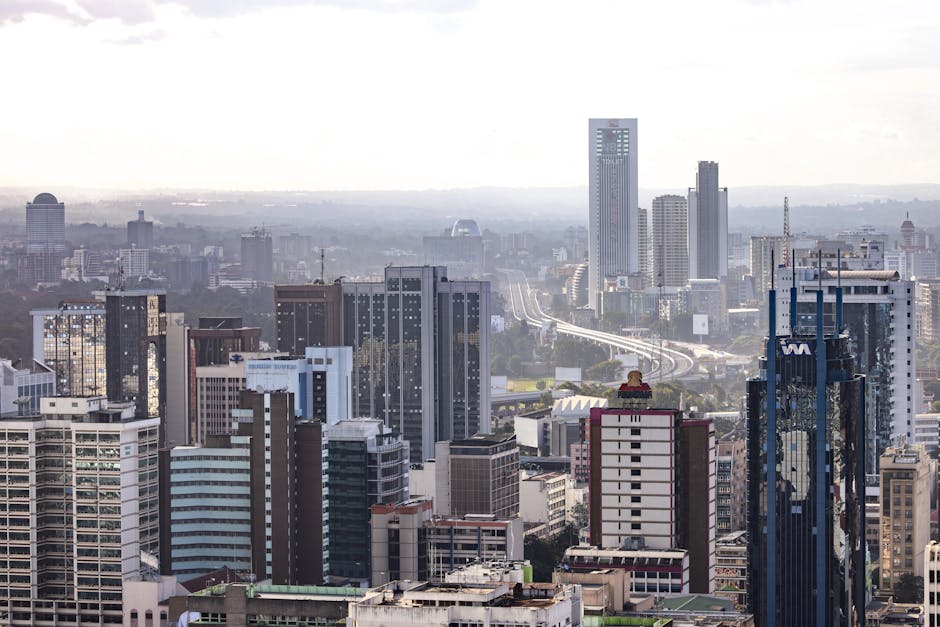
Explore Nairobi's architectural evolution from colonial-era landmarks to iconic Brutalist skyscrapers on this historic self-guided walking route.
 Easy
EasyNairobi, Kenya
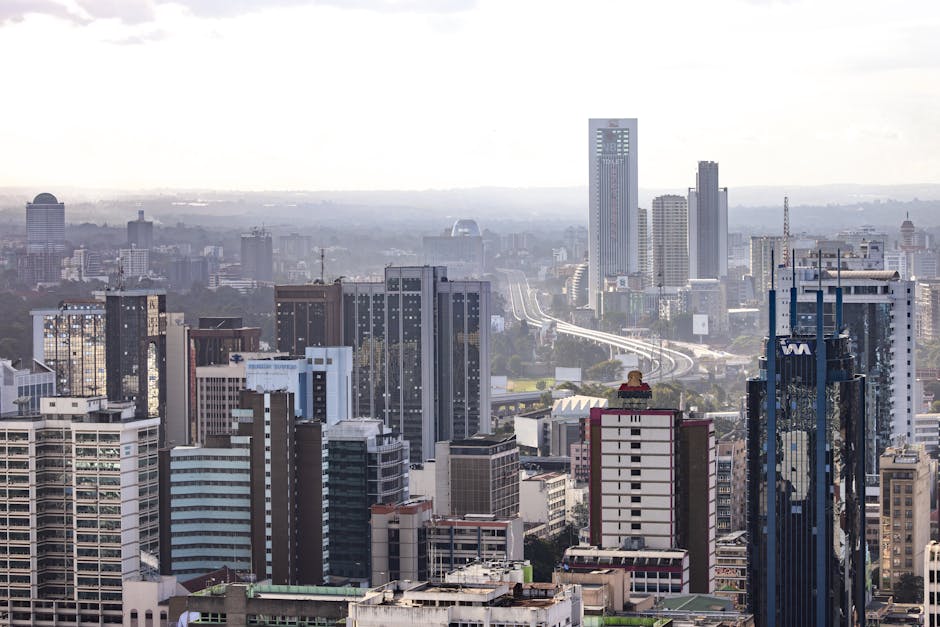
Discover Nairobi's iconic skyline on this self-guided architecture walk through the CBD’s most famous modernist and Brutalist landmarks.
 Easy
EasyKrakow, Poland
Explore the historic heart of Kazimierz on this self-guided walk through synagogues, ancient cemeteries, and vibrant squares.
 Easy
EasyWarsaw, Poland
Discover the hidden courtyards and grand pre-war architecture of Warsaw's most atmospheric neighborhood on this self-guided stroll.
 Easy
EasyCesky Krumlov, Czech Republic
Discover the flavors of South Bohemia on this self-guided walk through the historic taverns, breweries, and riverside cafes of Cesky Krumlov.
 Moderate
Cesky Krumlov, Czech Republic
Escape the crowds and discover the artistic soul, historic villas, and hidden stories of Cesky Krumlov's most authentic neighborhood, Plešivec.
 Easy
EasyCesky Krumlov, Czech Republic
Discover the haunting legends and eerie history of Cesky Krumlov on this atmospheric self-guided audio walk through the moonlit Inner City.
 Easy
EasyCesky Krumlov, Czech Republic
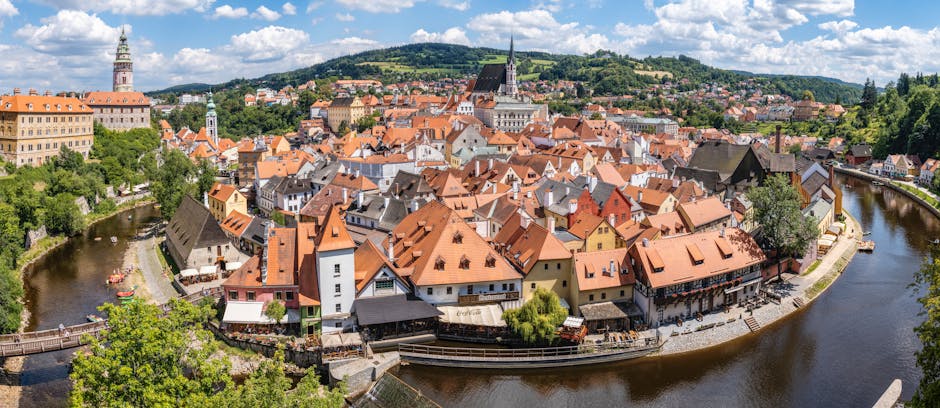
Explore the romantic Vltava riverbanks, hidden medieval alleys, and iconic bridges of Cesky Krumlov on this scenic self-guided photography walk.