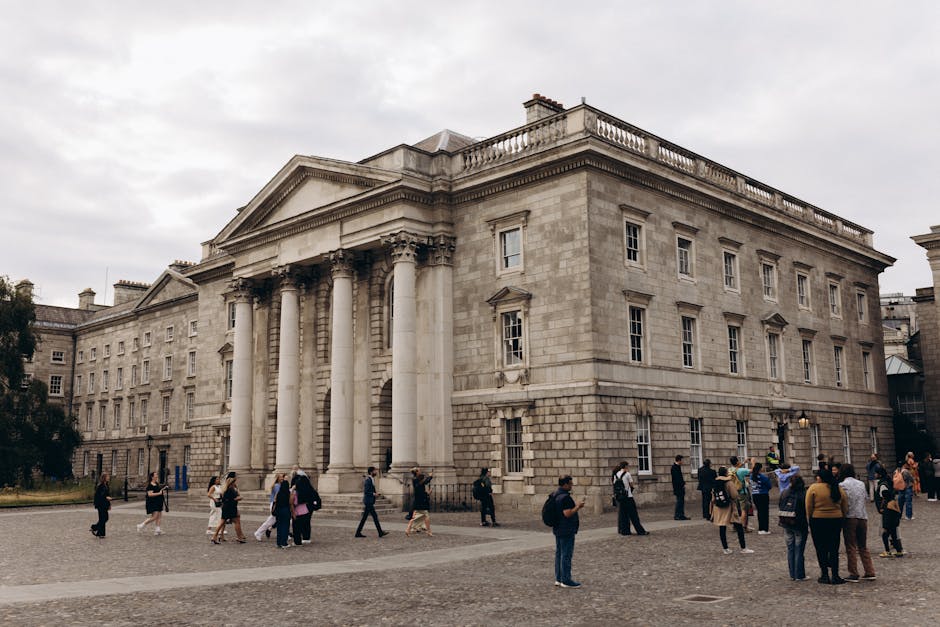
Self-guided audio tour in Dublin
Start Free on iPhone
Start free on iPhone to unlock this self-guided walking tour in Dublin. Hear all the stories that make it amazing, walk at your own pace, and begin whenever you want.
Your Private Tour Guide
Step back into the layers of Dublin's past with this self-guided walk through the Medieval Quarter. Long before the elegant Georgian squares and modern tech hubs, Dublin was a gritty Viking settlement and a fortified Anglo-Norman capital. This walking route invites you to uncover the physical remnants of those eras, from the very spot where Viking longships once docked to the massive stone walls that protected the medieval city. You will explore the heart of the ancient city, navigating the narrow streets that have seen over a millennium of history. This neighborhood stroll begins at Wood Quay, the site of one of the most significant archaeological excavations in Europe. Here, the foundations of Viking Dublin were unearthed, revealing a world of timber houses and intricate craftwork. From there, the route climbs the hill to Christ Church Cathedral, a landmark that has stood in various forms since the 11th century. You'll see the transition from Scandinavian influence to the grand stone architecture of the Normans. As you traverse the medieval walls near St Audoen’s, you’ll feel the scale of the old city's defenses. The journey continues to the seat of British power in Ireland for seven centuries: Dublin Castle. Unlike a traditional walking tour Dublin, this experience allows you to linger at the Record Tower or the site of the original 'Black Pool' for as long as you like. The walk then leads you toward the towering spires of St Patrick's Cathedral and the quiet, scholarly atmosphere of Marsh’s Library. This route is perfect for those who want to understand the architectural evolution of the city at their own pace. Whether you are interested in the strategic brilliance of the medieval walls or the ecclesiastical history of Ireland’s great cathedrals, this audio walk provides a deep dive into the foundations of the Irish capital. It is a travel experience designed for history enthusiasts who prefer to avoid the constraints of a guided tour Dublin and instead discover the city’s secrets independently.
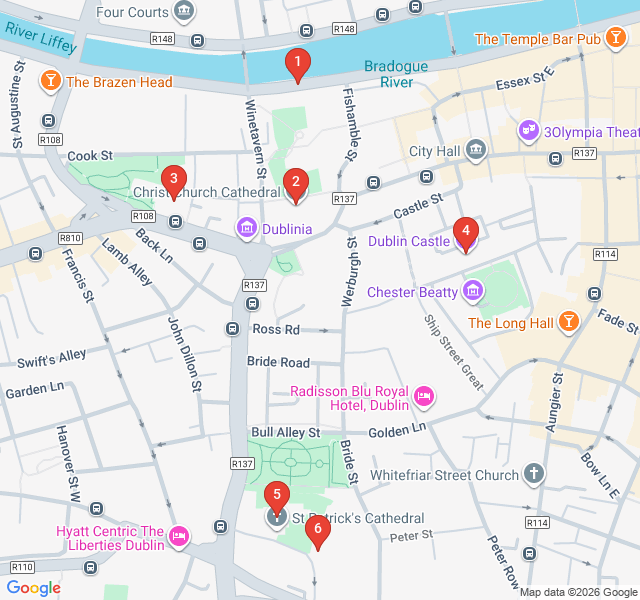
Numbers indicate the order of stops on the tour.
Welcome to the birthplace of Dublin. Beneath your feet lies the site of one of the most important Viking excavations ever recorded. In the late 1970s, during the construction of the Dublin City Council offices, archaeologists discovered a remarkably preserved Viking settlement dating back to the 10th century. They found timber houses, pathways, and thousands of artifacts that rewrote our understanding of Scandinavian life in Ireland. While the modern offices now stand here, look for the bronze outlines and plaques that mark the ancient shoreline. Imagine the Liffey flowing much wider than it does today, with Viking longships pulled up onto the muddy banks of the 'Dubh Linn' or Black Pool.
As you look up at the stone arches of Christ Church, you are seeing a building that bridges two worlds. Originally founded as a wooden church by the Viking King Sitric Silkenbeard around 1030, it was later rebuilt in stone by the Anglo-Norman conquerors, most notably Richard de Clare, better known as Strongbow. Inside, the massive 12th-century crypt is one of the largest in Ireland and the UK. The cathedral is also famous for its 'cat and the rat,' a mummified pair found in the organ pipes in the 1860s. The architecture here is a stunning mix of Romanesque and Gothic styles, heavily restored in the Victorian era to the majestic silhouette you see now.
This stop is a hidden gem where the medieval city truly comes alive. St Audoen’s is one of the oldest parish churches in Dublin, dedicated to the patron saint of Normandy. Just beside it, you will find the only remaining gate of the original medieval city walls, known as St Audoen's Arch, built in 1240. Climbing the steps here gives you a sense of the elevation the city's defenders used to spot invaders. The church itself houses the 'Lucky Stone,' an ancient relic that has been kept in the vicinity for centuries. It’s a quiet, atmospheric corner of the city that feels worlds away from the modern traffic just a few meters away.
For over 700 years, this was the nerve center of British rule in Ireland. The castle you see today is a patchwork of eras. The most iconic medieval feature is the Record Tower, the last intact tower from the 13th-century fortress. Most of the other structures were rebuilt in the 18th century after a devastating fire. If you look toward the lower castle yard, you are standing above the site of the original 'Black Pool' that gave the city its name. This site has evolved from a Viking fortification to a medieval castle, and finally into a palatial complex used today for state ceremonies and presidential inaugurations.
Legend says that Saint Patrick baptized converts at a well on this site in the 5th century. Today, this is the National Cathedral of the Church of Ireland and the largest church in the country. Built between 1220 and 1260, its massive spire dominates the skyline. One of its most famous residents was Jonathan Swift, the author of 'Gulliver’s Travels,' who served as Dean here in the 18th century. You can find his grave and epitaph inside. Take a moment to enjoy the surrounding park, which offers some of the best views of the flying buttresses and the intricate stonework that makes this a masterpiece of Irish Gothic architecture.
Tucked away just behind St Patrick’s is Ireland's first public library, opened in 1707. Entering this building is like stepping directly into the Enlightenment. The interior has remained virtually unchanged for over 300 years, with original oak bookcases and thousands of rare volumes. Look for the 'cages' at the end of the galleries; these were used to lock readers inside so they couldn't steal the valuable books. It is a quiet, scholarly sanctuary that holds the personal library of Archbishop Narcissus Marsh. The atmosphere here, with the smell of old parchment and the creak of original floorboards, provides a perfect, contemplative end to your journey through medieval Dublin.
Start Free on iPhone
Explore “Viking Foundations and Medieval Walls” with your very own Private Tour Guide with Zigway. Start free on iPhone, skip the large group and the fixed routes, and hear the city come alive as you go.
Your Private Tour Guide
Don't miss the good stuff
Explore Freely
 Easy
EasyDublin, Ireland
Explore Dublin's 'Silicon Docks' on this self-guided walk featuring futuristic bridges, famine history, and world-class modern architecture.
 Moderate
Dublin, Ireland
Uncover Dublin’s macabre history on this self-guided walk featuring mummies, medieval rebels, and the city’s most infamous legends.
 Moderate
Dublin, Ireland
Discover Dublin's poetic waterways and modern docks on this self-guided walk through leafy canals and glass-fronted tech hubs.
 Easy
EasyDublin, Ireland
Explore Dublin's storied streets at your own pace on this self-guided literary walk, from Joyce’s statues to Wilde’s colorful memorial.
 Easy
EasySalzburg, Austria
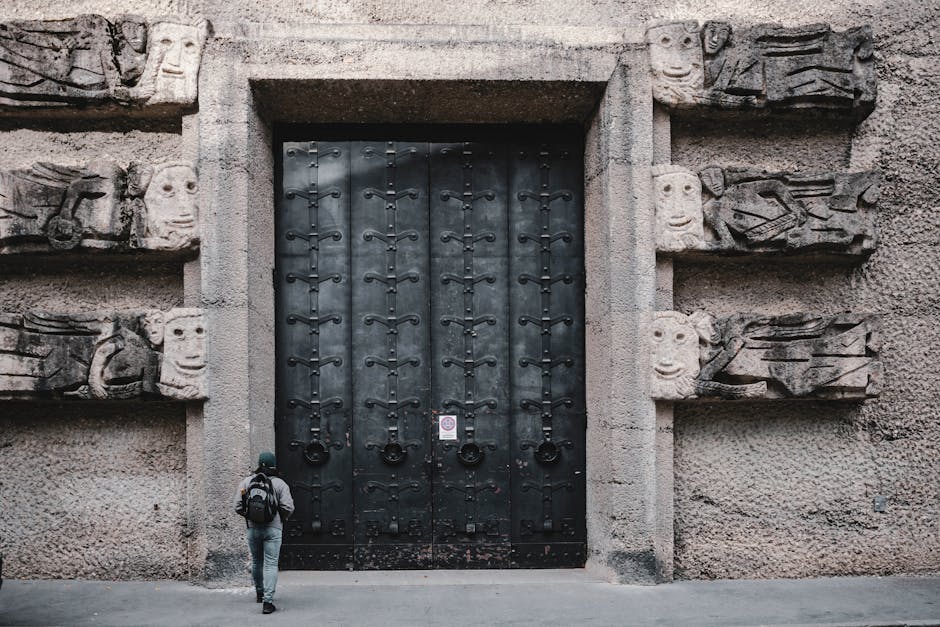
Discover the 'Rome of the North' on this self-guided walk through the Baroque squares and monumental legacy of Salzburg’s Prince-Archbishops.
 Easy
EasyKrakow, Poland
Explore the historic heart of Kazimierz on this self-guided walk through synagogues, ancient cemeteries, and vibrant squares.
 Moderate
Warsaw, Poland
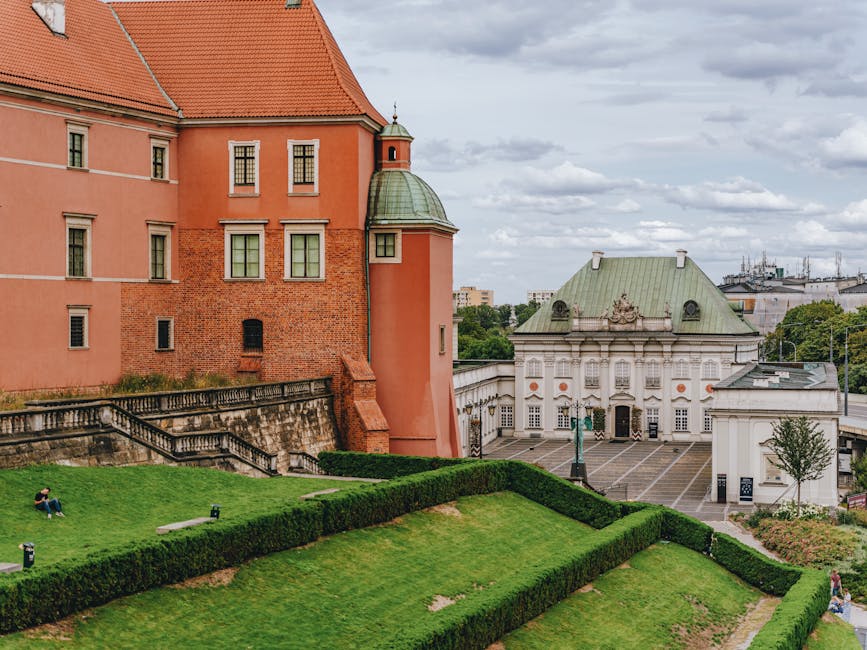
Explore the resilient spirit of Warsaw's Muranów district on this self-guided walk through the history and landmarks of the former Jewish Ghetto.
 Easy
EasyWarsaw, Poland
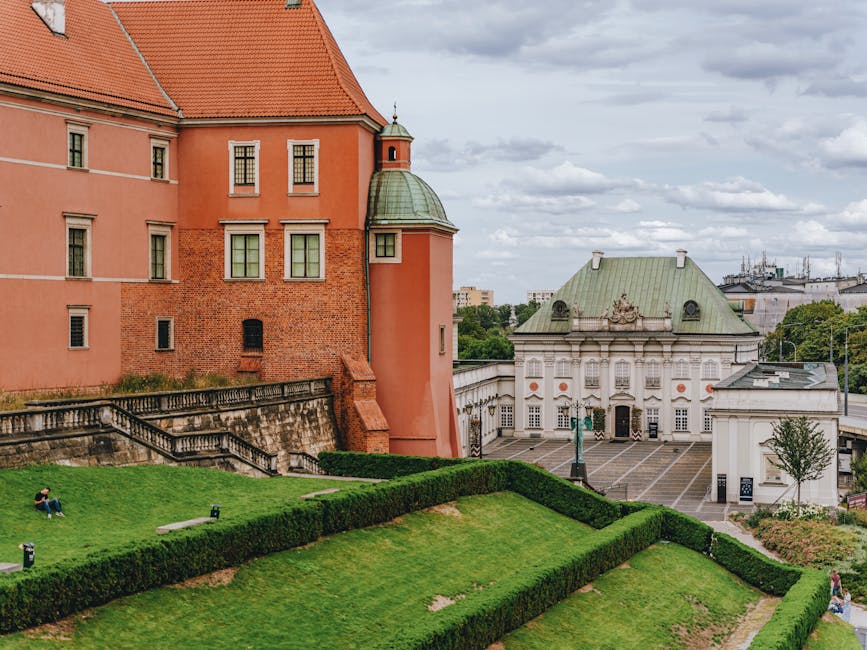
Explore the miracle of Warsaw's reconstructed Old Town on this self-guided walk through royal squares, medieval walls, and heroic monuments.
 Easy
EasyGalway, Ireland
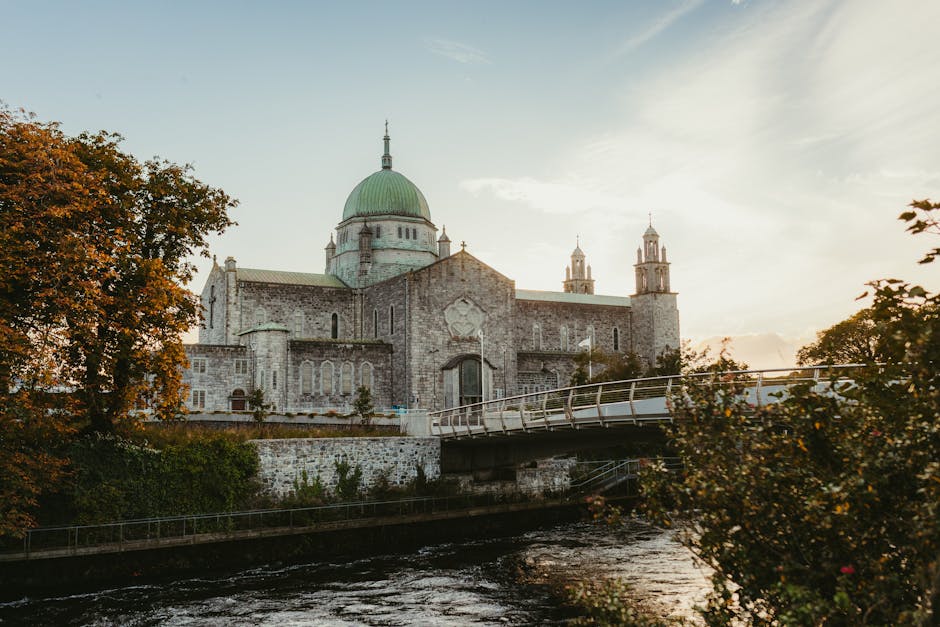
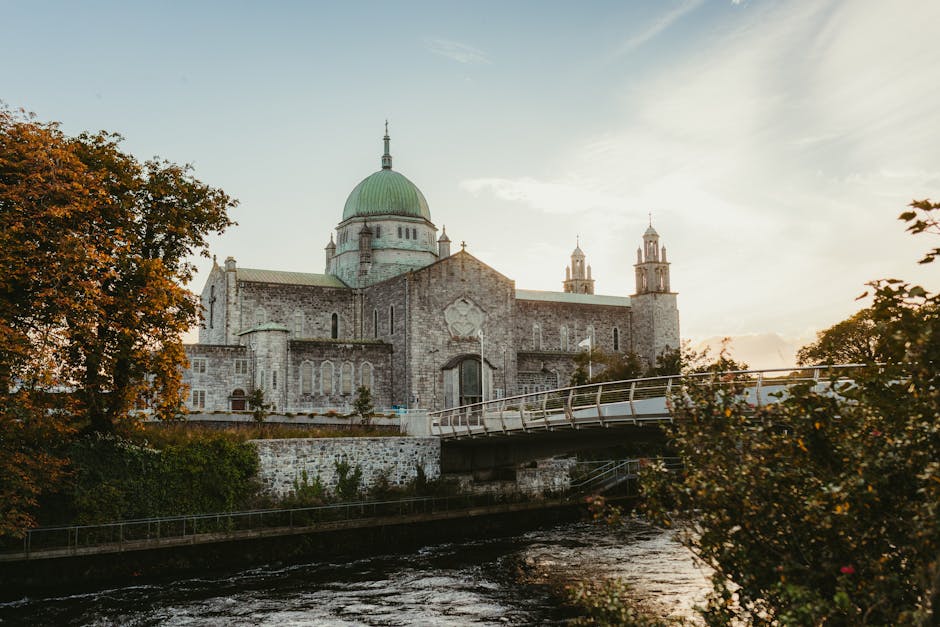
Explore Galway’s literary soul on this self-guided walk through historic bookshops, legendary theaters, and the haunts of Joyce and Wilde.
 Easy
EasyGalway, Ireland
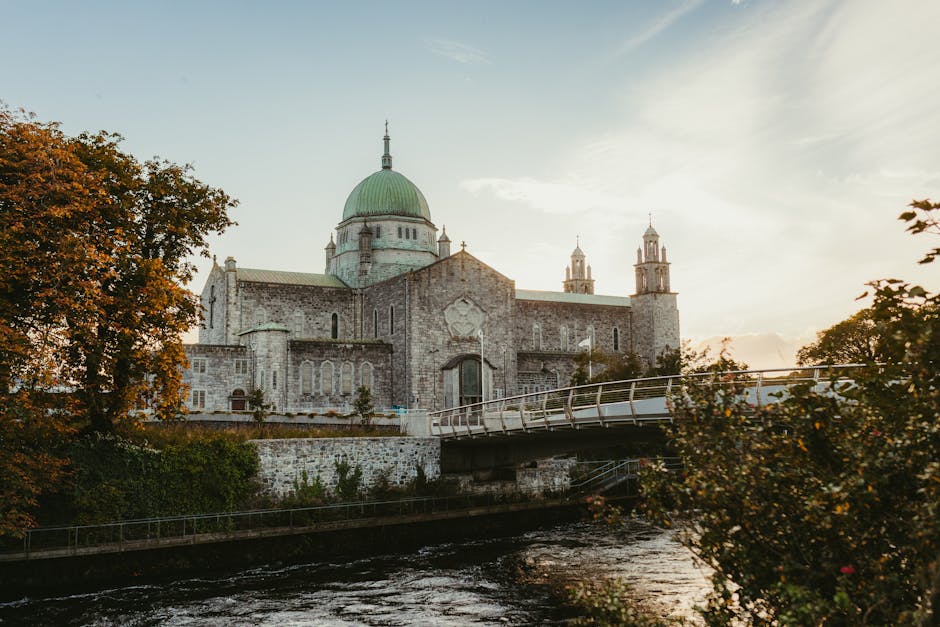
Explore Galway’s vibrant street art, contemporary galleries, and scenic photography spots on this independent neighborhood stroll.
 Easy
EasyGalway, Ireland
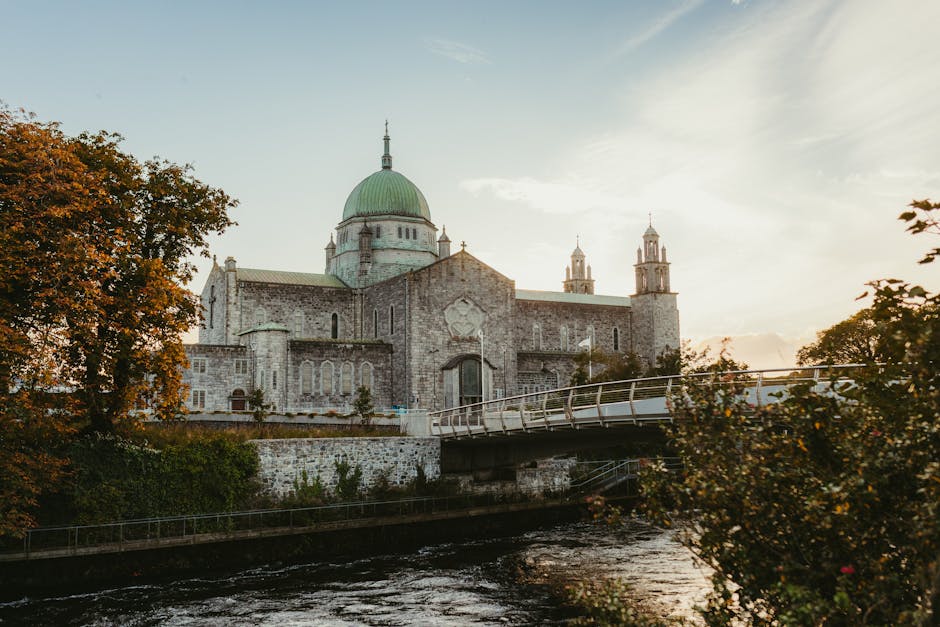
Capture Galway's most iconic views on this self-guided stroll through the Claddagh and along the vibrant Long Walk.
 Easy
EasyGalway, Ireland
Explore Salthill’s iconic promenade, discover local traditions, and enjoy stunning Atlantic views on this refreshing self-guided seaside walk.