Self-guided audio tour in Munich
Start Free on iPhone
Start free on iPhone to unlock this self-guided walking tour in Munich. Hear all the stories that make it amazing, walk at your own pace, and begin whenever you want.
Your Private Tour Guide
Step away from the bustling crowds of Marienplatz and discover a side of the Bavarian capital that many visitors overlook. This self-guided walk invites you to explore the architectural evolution of Munich, from its medieval origins to the soaring heights of the Baroque era and the sleek lines of modern design. The route focuses on the concept of 'hidden gems,' leading you through secluded courtyards and into some of the most breathtakingly ornate interiors in Europe. You will begin at the city’s oldest parish church before weaving through the sophisticated Fünf Höfe, a modern architectural masterpiece that reinterprets the traditional Mediterranean courtyard for the 21-century traveler. As you move through the Altstadt, the experience shifts from the minimalist to the maximalist. You will encounter the Theatine Church, with its striking yellow Mediterranean facade, and the Asamkirche, a tiny chapel that represents the absolute peak of late Baroque drama. This walking route is not just about the big monuments; it is about the quiet transitions between them. You will stroll through the medieval Sendlinger Tor, one of the few remaining gates of the old city wall, and conclude your neighborhood stroll in the atmospheric Alter Südfriedhof. This historic cemetery functions today as a peaceful park, offering a moment of reflection amidst the graves of the city's most famous former residents. Whether you are an architecture enthusiast or simply looking for a peaceful way to explore Munich independently, this route provides a deep dive into the city's aesthetic soul without the pressure of a fixed schedule.
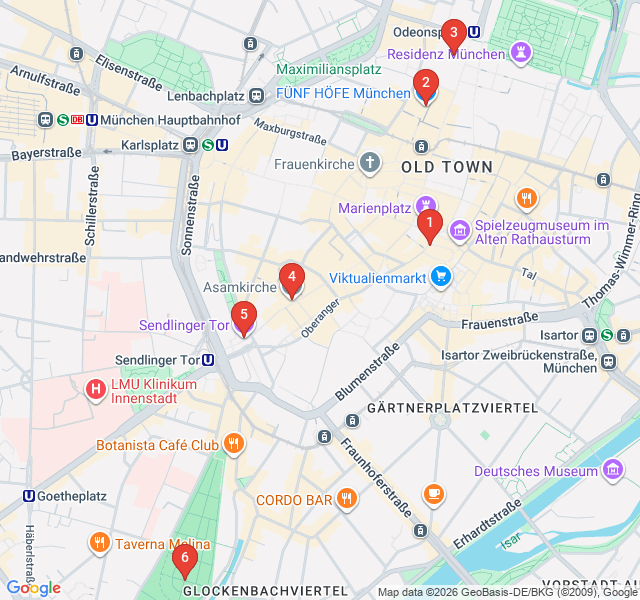
Numbers indicate the order of stops on the tour.
Welcome to the starting point of your self-guided adventure. St. Peter’s, affectionately known by locals as 'Alter Peter' or Old Peter, is the oldest parish church in Munich, with foundations dating back to the 12th century. While the exterior has been rebuilt many times, it remains the spiritual heart of the city. If you feel energetic, you can climb the 306 steps of the tower for a view that encompasses the nearby Frauenkirche and, on clear days, the distant Alps. Inside, look for the gold-covered remains of Saint Munditia, a Christian martyr adorned with jewels. This church sets the stage for the architectural journey ahead, representing the solid, Romanesque and Gothic roots from which Munich grew.
Moving from the ancient to the avant-garde, you now enter the Fünf Höfe, or Five Courtyards. This is a brilliant example of modern urban planning by the Swiss architects Herzog & de Meuron. Instead of a traditional shopping mall, they created a series of interconnected passages and courtyards. Pay special attention to the 'Viscardihof' with its hanging plants that create a vertical garden effect. The design uses steel, glass, and perforated metal to play with light and shadow. It’s a sophisticated interpretation of the hidden courtyards that have characterized Munich for centuries, blending high-end retail with artistic architectural expression. Take a moment to look up and appreciate the 'Sphere,' a massive steel lattice ball suspended above one of the courtyards.
As you emerge onto Odeonsplatz, the bright yellow facade of the Theatine Church (Theatinerkirche) is impossible to miss. Built in the 17th century, it was a gesture of thanks from Princess Henriette Adelaide of Savoy for the birth of her long-awaited heir. The church brought the Italian High Baroque style to Munich, and its facade is a masterpiece of Mediterranean influence in Bavaria. Step inside to experience a stark contrast; while the outside is vibrant yellow, the interior is almost entirely white. The massive dome and intricate stucco work create an airy, celestial atmosphere. This church also serves as the final resting place for many members of the Wittelsbach dynasty, the royal family that ruled Bavaria for centuries.
Tucked away on a busy shopping street is the Asamkirche, perhaps the most extraordinary small church in the world. Officially known as St. Johann Nepomuk, it was built by the Asam brothers—Cosmas Damian and Egid Quirin—as their private chapel. Because it wasn't commissioned by the church, they had total creative freedom, resulting in a space that feels more like a theatrical stage than a traditional chapel. Every square inch is covered in gold, marble, and swirling sculptures. The lighting is intentionally designed to be darkest at the bottom, representing the suffering of the world, and brightest at the top, symbolizing heaven. It is the pinnacle of the Late Baroque and Rococo styles in Munich.
Continue your walking route to the Sendlinger Tor, one of the three remaining gates of Munich's medieval fortifications. Originally built in the 14th century by Emperor Ludwig the Bavarian, the gate served as a vital entry point for traders coming from the south. Although it was heavily restored in the 19th and 20th centuries, the central arch and the two flanking towers still give you a sense of the scale of the old city walls. Standing here, you are at the threshold between the historic Altstadt and the vibrant Sendling district. It serves as a physical reminder of Munich’s defensive history and its growth beyond its medieval boundaries.
Your journey concludes at the Alter Südfriedhof, the Old South Cemetery. Established in the 16th century outside the city walls during a plague epidemic, it later became Munich's primary burial ground. Today, it is a protected monument and a serene park. As you wander the paths, you will pass the graves of Munich’s intellectual and artistic elite from the 18th and 19th centuries, including the architect Leo von Klenze and the painter Carl Spitzweg. The ivy-covered headstones and quiet atmosphere provide a perfect end to your walk, offering a space to contemplate the deep layers of history you have uncovered today. It is a true local favorite for those seeking a peaceful escape in the heart of the city.
Start Free on iPhone
Explore “Hidden Courtyards and Baroque Gems” with your very own Private Tour Guide with Zigway. Start free on iPhone, skip the large group and the fixed routes, and hear the city come alive as you go.
Your Private Tour Guide
Don't miss the good stuff
Explore Freely
 Easy
EasyMunich, Germany
Explore Munich's creative heartbeat in Werksviertel-Mitte. Discover vibrant street art, upcycled containers, and rooftop sheep on this urban stroll.
 Moderate
Munich, Germany
Discover river surfing, iconic Greek temples, and Bavarian beer culture on this scenic self-guided walk through Munich's English Garden.
 Easy
EasyMunich, Germany
Discover Munich's culinary heart on this self-guided walk through the vibrant Viktualienmarkt and its legendary food stalls.
 Easy
EasyMunich, Germany
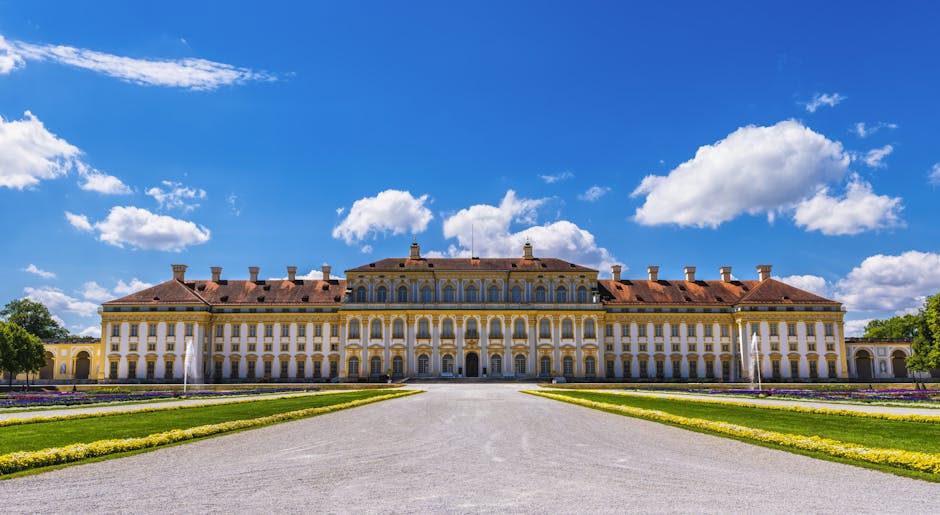
Explore the majestic gardens and hidden pavilions of the Wittelsbach summer residence on this peaceful, self-guided walking route in Munich.
 Easy
EasySalzburg, Austria
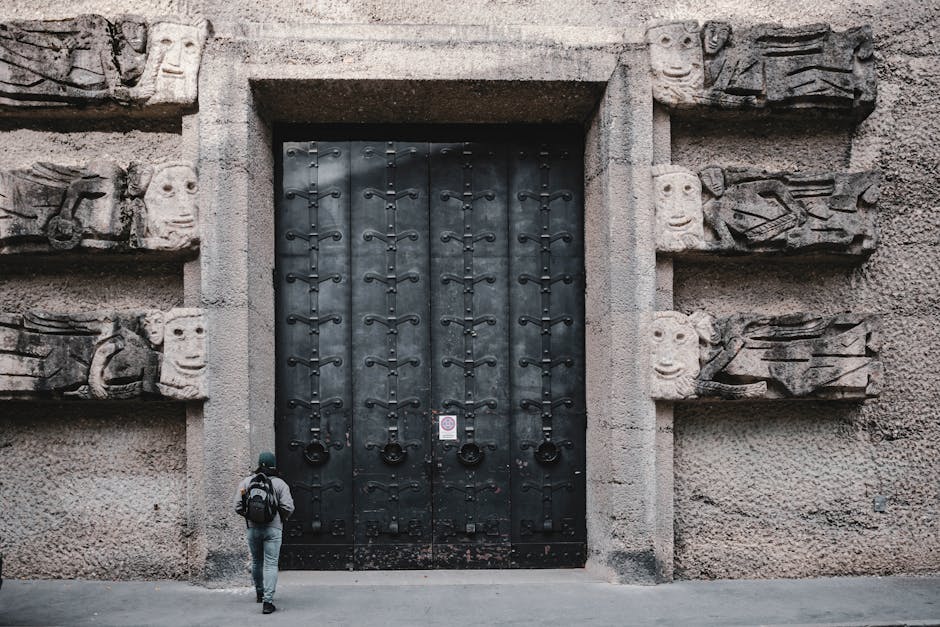
Discover Salzburg's oldest medieval alley, the birthplace of the 'Silent Night' author, and breathtaking views on this quiet self-guided walk.
 Easy
EasyNairobi, Kenya
Discover Nairobi's iconic skyline on this self-guided architecture walk through the CBD’s most famous modernist and Brutalist landmarks.
 Easy
EasyWarsaw, Poland
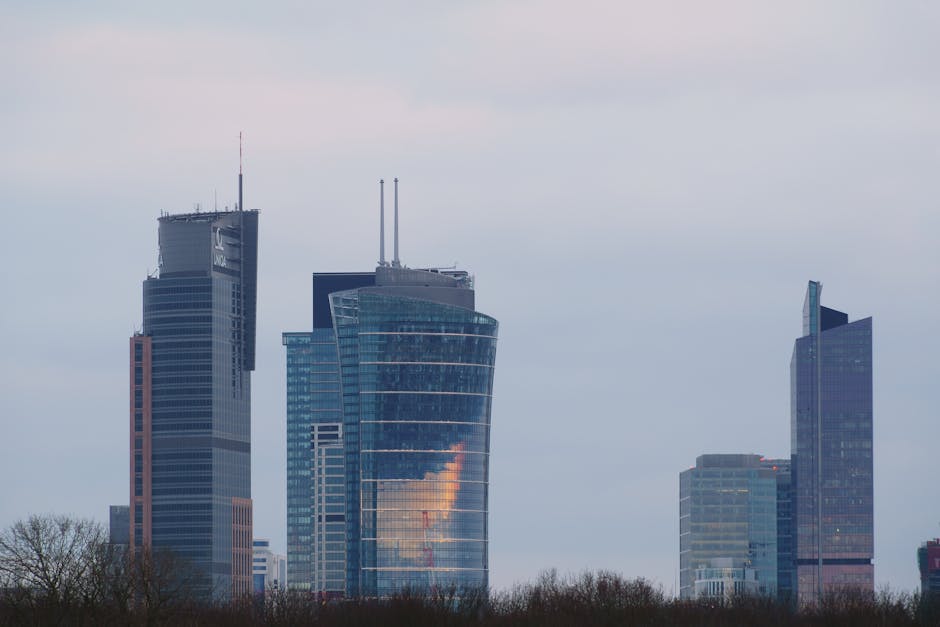
Discover the hidden courtyards and grand pre-war architecture of Warsaw's most atmospheric neighborhood on this self-guided stroll.
 Easy
EasyNairobi, Kenya
Explore Nairobi's architectural evolution from colonial-era landmarks to iconic Brutalist skyscrapers on this historic self-guided walking route.
 Easy
EasyBerlin, Germany
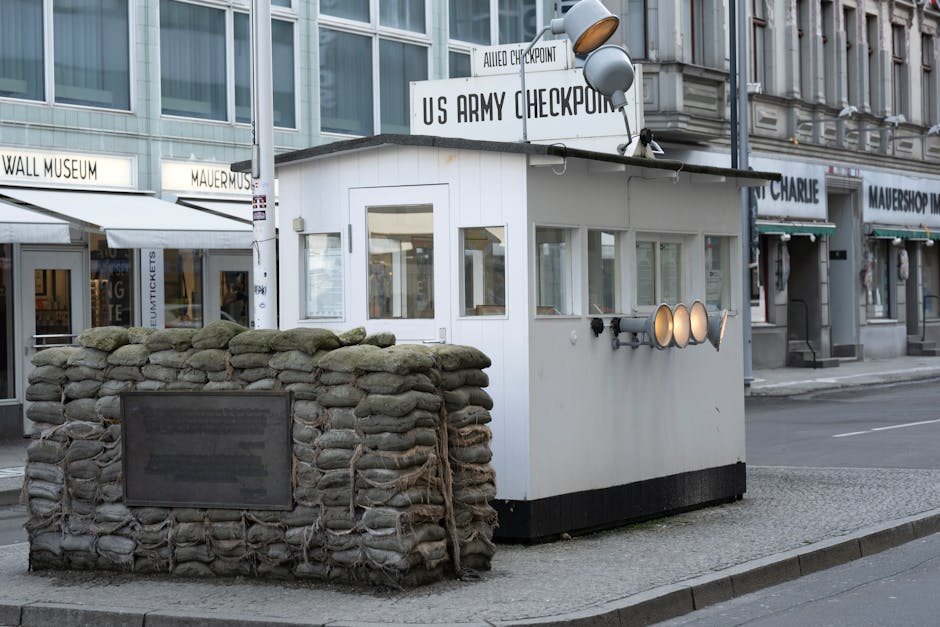
Explore the sites of Nazi power and the memorials that honor its victims on this self-guided walk through Berlin's historic Wilhelmstraße district.
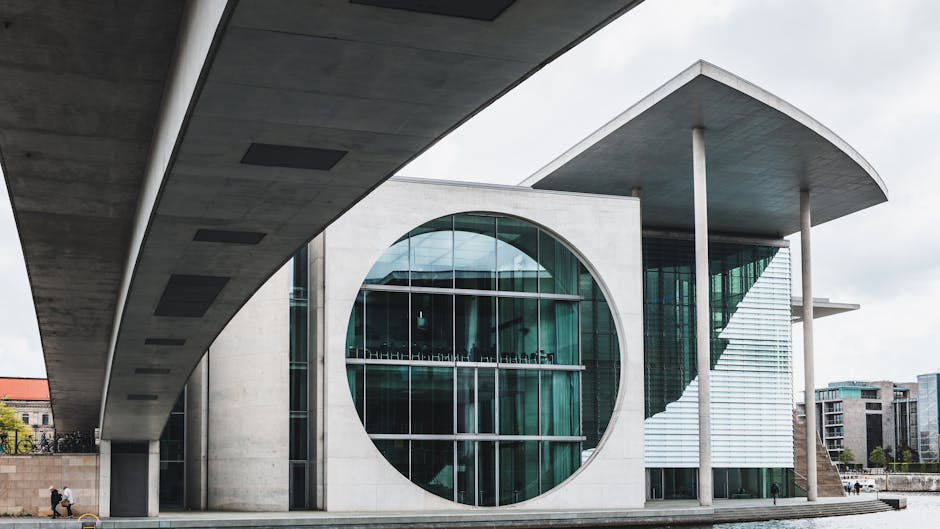 Moderate
Berlin, Germany
Explore Berlin’s 'Green Heart' on a self-guided walk through royal history, Cold War memorials, and serene lakeside gardens.
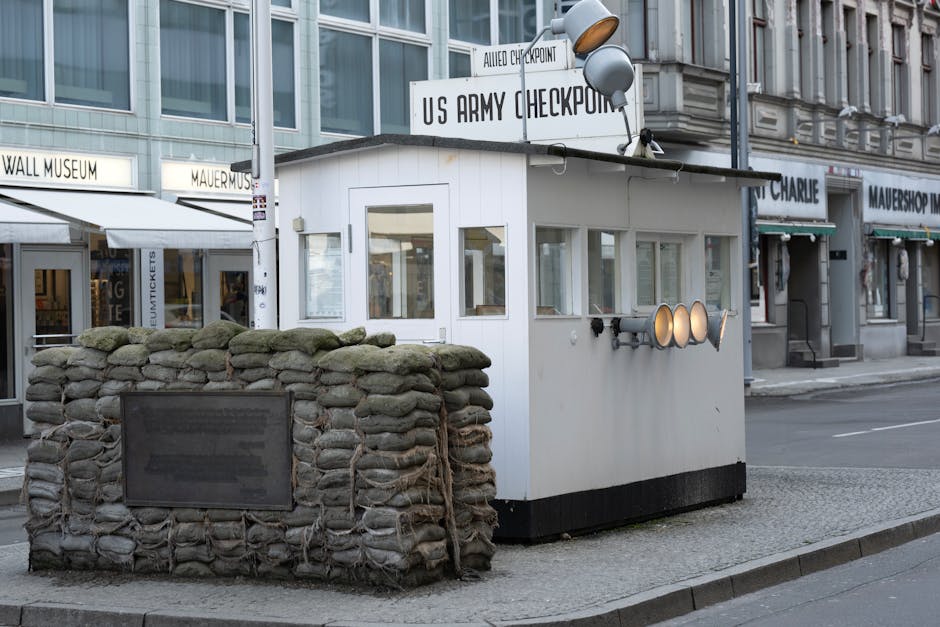 Moderate
Berlin, Germany
Discover the legacy of the Berlin Wall on this self-guided walk from historic ghost stations to the vibrant street art and cafes of Mauerpark.
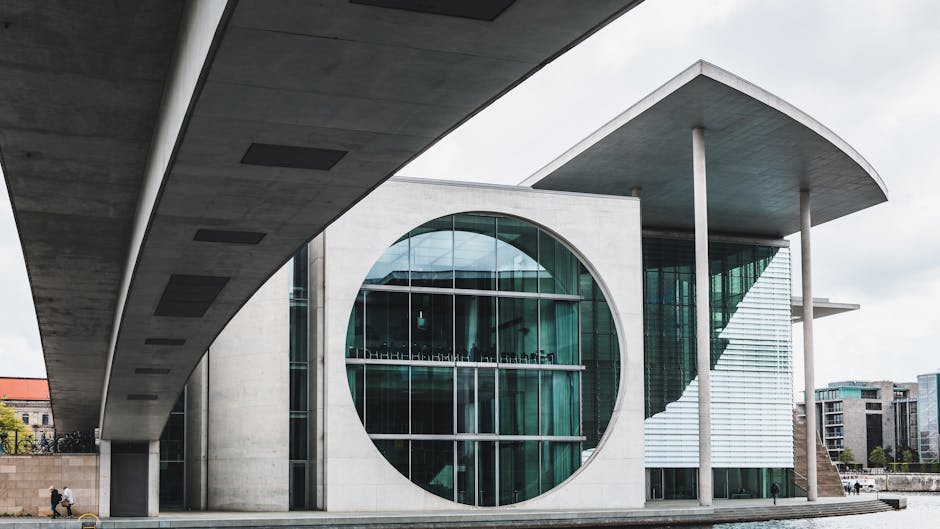 Easy
EasyBerlin, Germany
Discover the soul of 1920s Berlin on a self-guided walk through Charlottenburg’s iconic literary cafes, historic theaters, and artistic landmarks.