Self-guided audio tour in Munich
Start Free on iPhone
Start free on iPhone to unlock this self-guided walking tour in Munich. Hear all the stories that make it amazing, walk at your own pace, and begin whenever you want.
Your Private Tour Guide
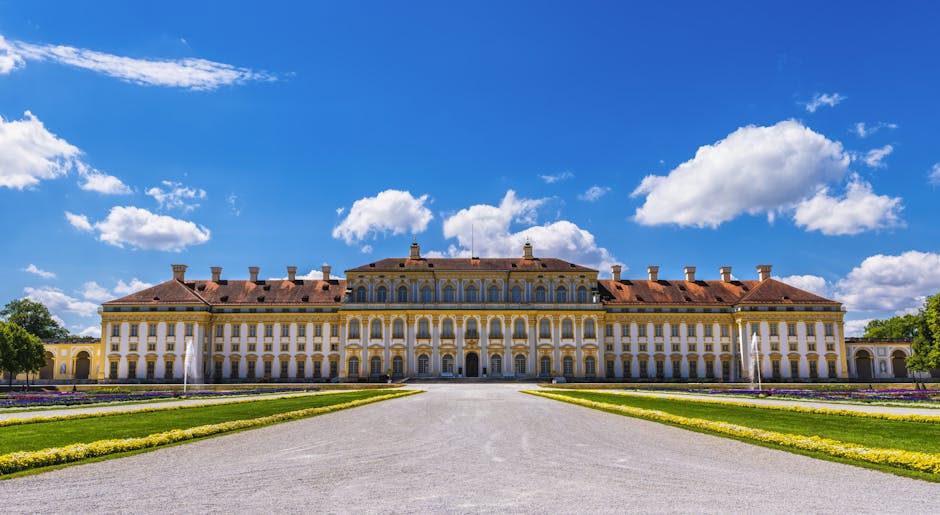
Escape the urban bustle of Munich and step into a world of royal elegance with this self-guided walk through the Nymphenburg Palace Gardens. This expansive green lung of the Neuhausen-Nymphenburg district was once the summer playground of the Wittelsbach dynasty, and today it remains one of the most significant landscape gardens in Germany. On this neighborhood stroll, you will discover how the grounds evolved from a rigid Baroque design into a sweeping English landscape park, reflecting the changing tastes of European royalty over centuries. This walking route is perfect for those who want to explore independently, offering a blend of grand architecture and serene nature. As you navigate the winding paths, you will encounter the 'Parkburgen'—small, hidden palaces that served as private retreats for the electors and kings. From the Rococo splendor of the Amalienburg to the exotic flair of the Pagodenburg, each stop reveals a different facet of courtly life. The centerpiece of your journey is the Grand Canal, which stretches toward the horizon, framed by marble statues and ancient trees. Whether you are interested in the engineering of 18th-century fountains or the quiet solitude of a forest hermitage, this self-guided adventure provides a comprehensive look at Munich's royal history. This is often considered a highlight for anyone seeking a walking tour Munich experience that prioritizes peace and historical depth over city crowds. By the time you reach the Great Cascade at the far end of the park, you will have experienced the same 'royal respite' that the Bavarian rulers once cherished.
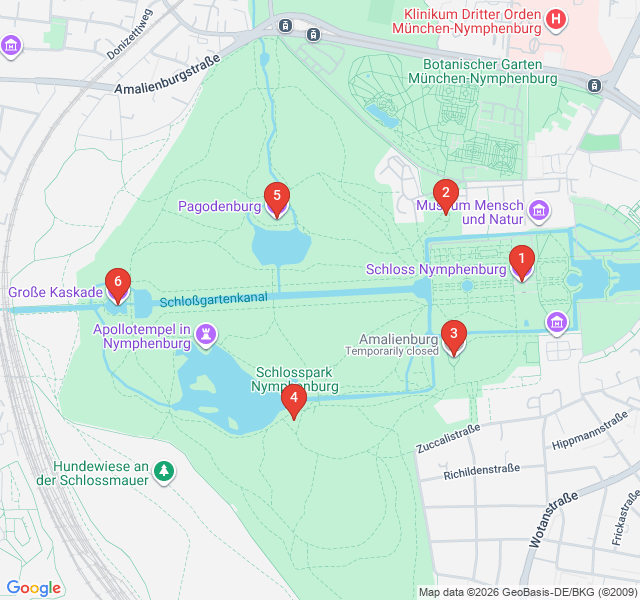
Numbers indicate the order of stops on the tour.
Welcome to the starting point of your self-guided walk. Nymphenburg Palace was originally commissioned in 1664 as a gift from Elector Ferdinand Maria to his wife, Henriette Adelaide of Savoy, to celebrate the birth of their heir, Max Emanuel. What began as a modest Italianate villa expanded over generations into this massive Baroque complex. Standing over 600 meters wide, it is one of the largest royal residences in Europe. Take a moment to admire the central pavilion and the sweeping wings that frame the entrance. This site wasn't just a home; it was a statement of power and prestige for the Wittelsbach family, who ruled Bavaria for over 700 years. The palace is also the birthplace of King Ludwig II, the 'Fairytale King,' who would later build Neuschwanstein.
Tucked away in a quiet corner of the park, the Magdalenenklause is a fascinating example of 18th-century romanticism. Built under Elector Max Emanuel between 1725 and 1728, this 'hermitage' was intentionally designed to look like a ruin. The crumbling brickwork and cracked plaster were meant to inspire contemplation on the fleeting nature of life and the vanity of the world. Inside, the building is divided into a chapel and a set of simple living quarters. It served as a spiritual retreat for the Elector, a place where he could escape the rigid protocols of the court. The contrast between this 'dilapidated' structure and the pristine palace you just left highlights the complex psyche of the Baroque era.
As you continue your neighborhood stroll, you will come across the Amalienburg, widely regarded as one of the finest examples of Rococo architecture in the world. Built by François de Cuvilliés for Maria Amalia of Austria, it served as a small hunting lodge. While the exterior is elegant and pink, the interior is a riot of silver carvings and mirrors. The Spiegelsaal, or Hall of Mirrors, is the crown jewel of this pavilion, designed to blur the lines between the indoor space and the surrounding nature. Look for the hunting motifs hidden in the silver leafing—a tribute to the building's purpose. It even includes a kennel for the Electress's hunting dogs, decorated with the same luxury as the rest of the lodge.
Located by the southern lake, the Badenburg was the first building in Europe designed specifically for the pleasure of indoor bathing in the modern era. Constructed in the early 1700s, it features a grand banqueting hall and a basement level occupied by a large, heated pool. The pool room is lined with hundreds of hand-painted Dutch tiles, depicting sea creatures and pastoral scenes. In an age when bathing was rare, this was the height of luxury. The Badenburg allowed the royals to enjoy the water even when the weather was less than perfect. The surrounding terrace offers one of the best views of the lake, making it a favorite spot for photography during your walking route.
On the northern side of the canal sits the Pagodenburg, a testament to the 18th-century European obsession with 'Chinoiserie.' This two-story pavilion was used as a resting place after a game of Mailspiel, a historical precursor to golf or croquet. The ground floor is decorated with blue and white tiles inspired by Chinese porcelain, while the upper floor features opulent rooms with Chinese lacquerwork and silk wallpapers. It represents the idealized version of the 'Orient' that was popular in European courts at the time. The Pagodenburg is a small but dense treasure chest of art, showcasing the global reach of trade and cultural exchange during the Enlightenment.
Your self-guided adventure concludes at the Große Kaskade, the dramatic waterfall at the end of the central canal. This Baroque water feature has been running since the early 18th century, powered by a system of pumps and gravity that was cutting-edge for its time. From here, you can look back down the long canal and see the main palace perfectly framed in the distance—a view designed specifically to impress visitors with the sheer scale of the royal estate. The statues flanking the cascade represent the Isar and Danube rivers, symbolizing the lifeblood of Bavaria. It is a peaceful place to rest and reflect on the transition of these grounds from a private royal sanctuary to a public treasure.
Start Free on iPhone
Explore “Royal Respite: The Nymphenburg Palace Gardens” with your very own Private Tour Guide with Zigway. Start free on iPhone, skip the large group and the fixed routes, and hear the city come alive as you go.
Your Private Tour Guide
Don't miss the good stuff
Explore Freely
 Easy
EasyMunich, Germany
Explore Munich's creative heartbeat in Werksviertel-Mitte. Discover vibrant street art, upcycled containers, and rooftop sheep on this urban stroll.
 Moderate
Munich, Germany
Discover river surfing, iconic Greek temples, and Bavarian beer culture on this scenic self-guided walk through Munich's English Garden.
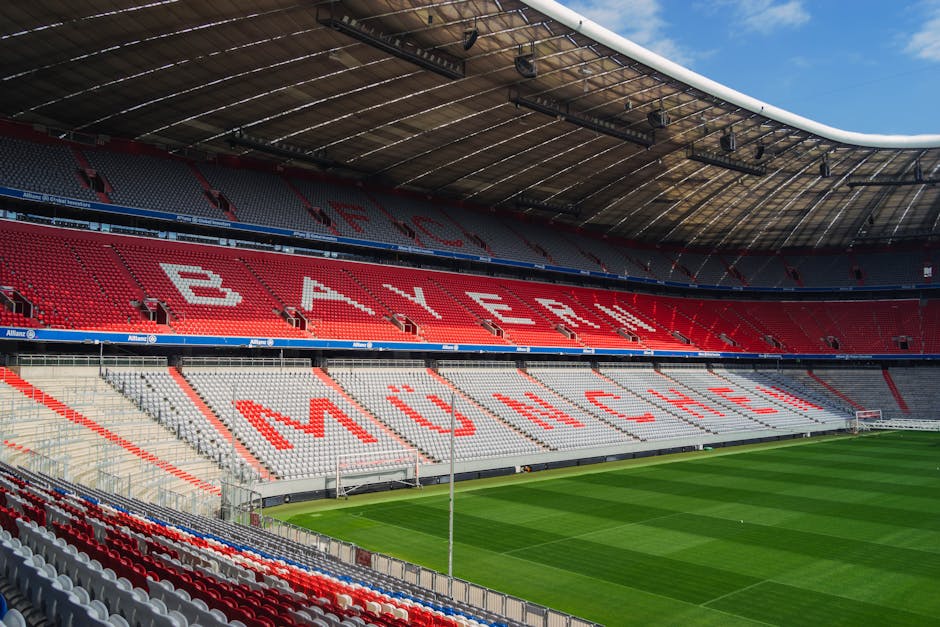 Easy
EasyMunich, Germany
Discover Munich's culinary heart on this self-guided walk through the vibrant Viktualienmarkt and its legendary food stalls.
 Easy
EasyMunich, Germany
Discover Munich’s 'French Quarter' on this self-guided walk through Haidhausen’s historic streets, hidden cottages, and charming market squares.
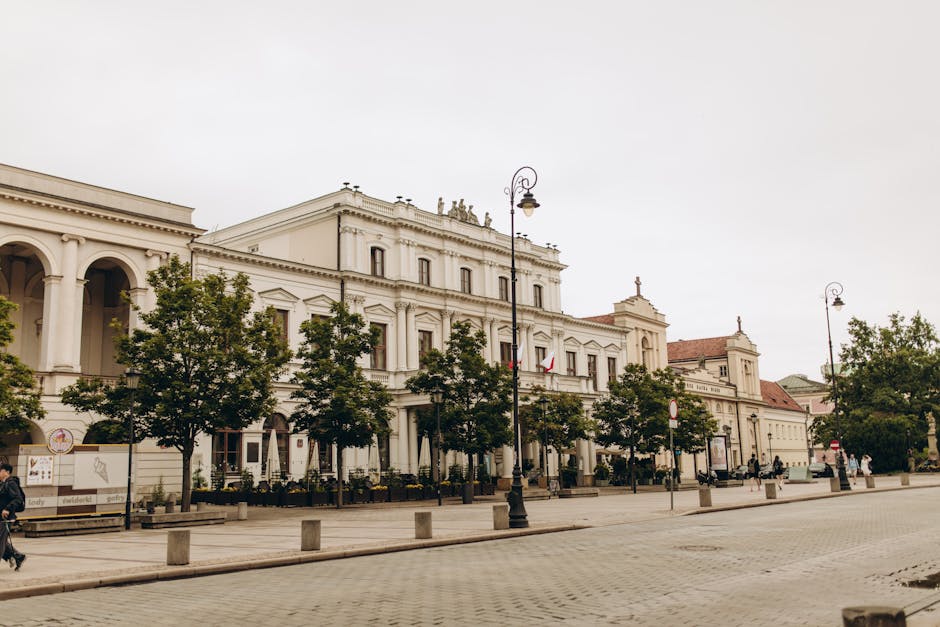 Easy
EasyWarsaw, Poland
Explore the 'Polish Versailles' at your own pace. Discover Baroque architecture, royal history, and stunning gardens on this self-guided walk.
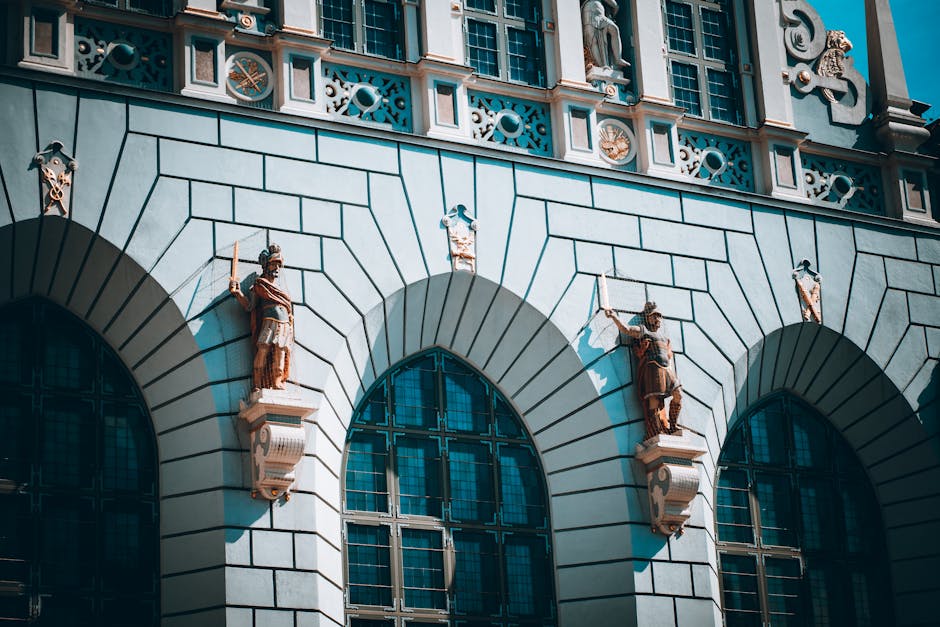 Easy
EasyGdansk, Poland
Discover the opulent Royal Way of Gdansk at your own pace. Explore Hanseatic history, gilded architecture, and the iconic Neptune's Fountain.
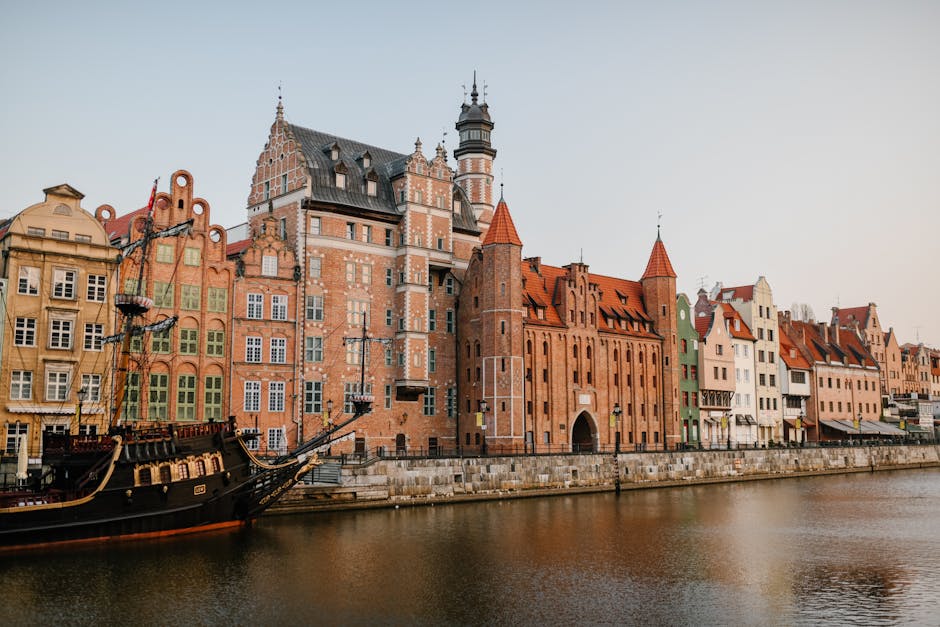 Easy
EasyGdansk, Poland
Discover the monastic heritage, world-famous organs, and lush botanical gardens of Oliwa on this peaceful self-guided neighborhood stroll.
 Easy
EasyWarsaw, Poland
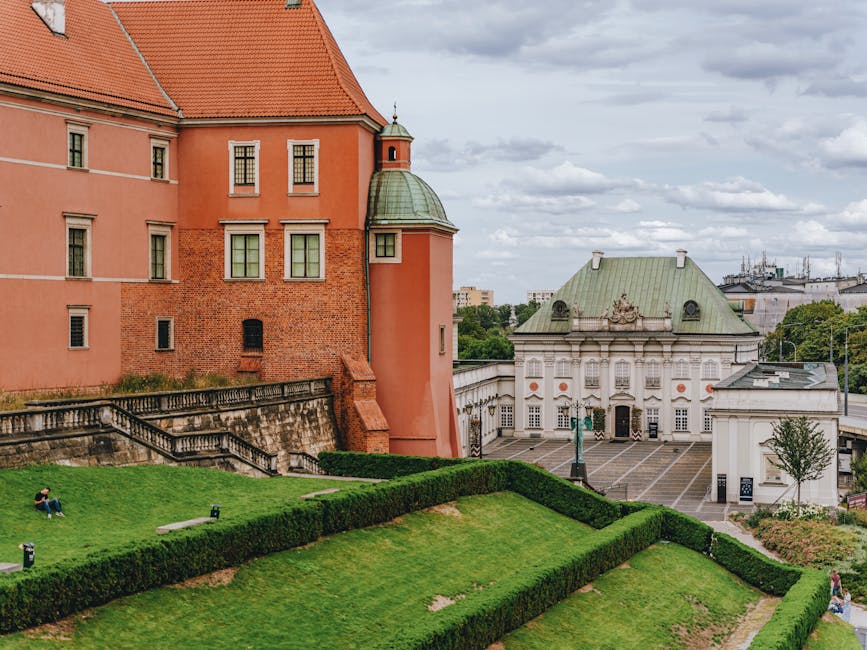
Explore the miracle of Warsaw's reconstructed Old Town on this self-guided walk through royal squares, medieval walls, and heroic monuments.
 Easy
EasyBerlin, Germany
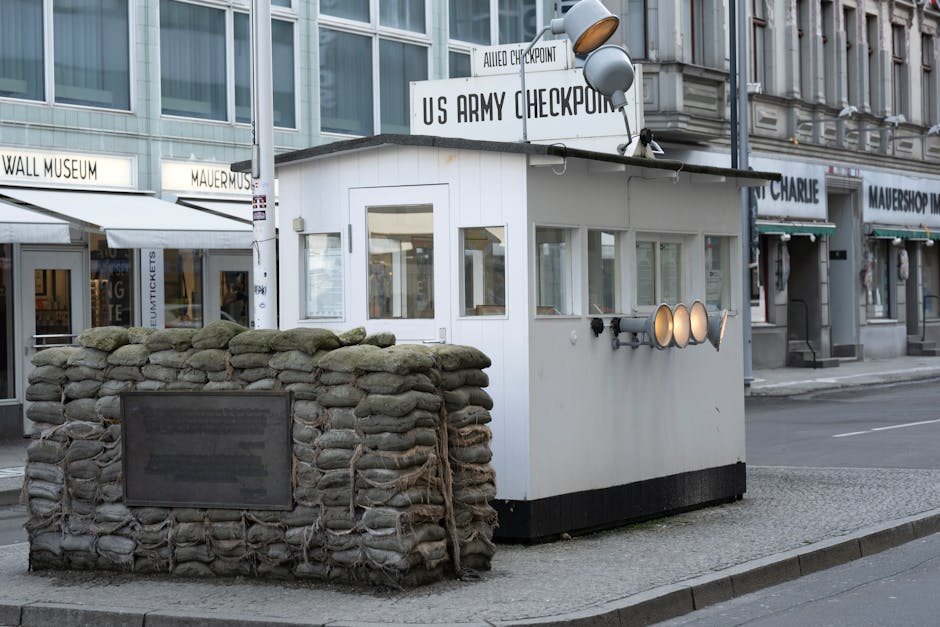
Explore the sites of Nazi power and the memorials that honor its victims on this self-guided walk through Berlin's historic Wilhelmstraße district.
 Moderate
Berlin, Germany
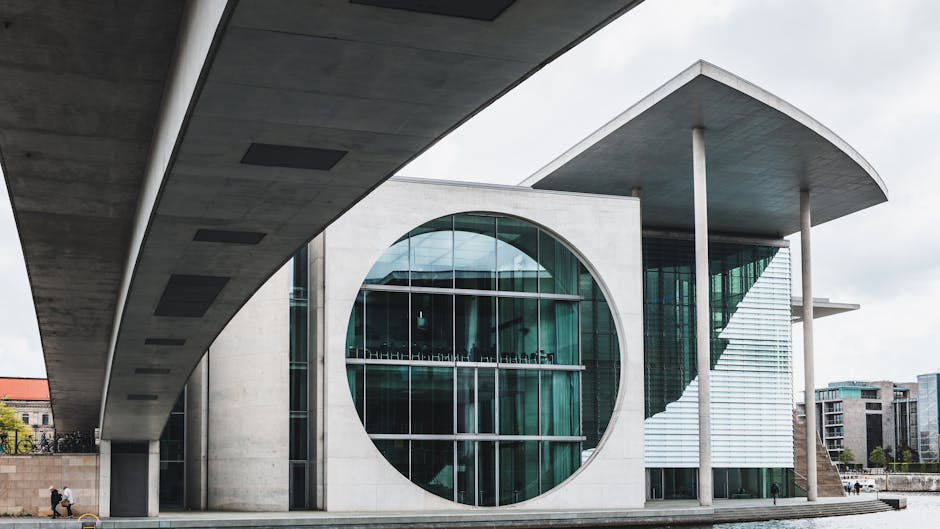
Explore Berlin’s 'Green Heart' on a self-guided walk through royal history, Cold War memorials, and serene lakeside gardens.
 Moderate
Berlin, Germany
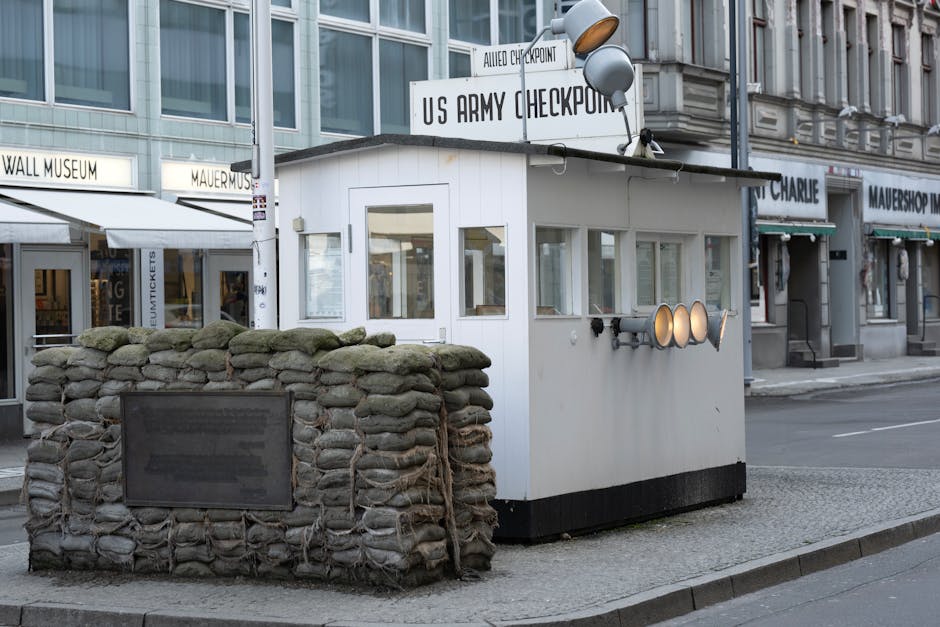
Discover the legacy of the Berlin Wall on this self-guided walk from historic ghost stations to the vibrant street art and cafes of Mauerpark.
 Easy
EasyBerlin, Germany
Discover the soul of 1920s Berlin on a self-guided walk through Charlottenburg’s iconic literary cafes, historic theaters, and artistic landmarks.