Self-guided audio tour in Dresden
Start Free on iPhone
Start free on iPhone to unlock this self-guided walking tour in Dresden. Hear all the stories that make it amazing, walk at your own pace, and begin whenever you want.
Your Private Tour Guide
Dresden's Altstadt, often hailed as the 'Florence on the Elbe,' offers a visual feast of Baroque architecture that seems to defy the passage of time. This neighborhood stroll invites you to explore the heart of Saxony’s capital, a city that was meticulously rebuilt stone by stone following the devastation of World War II. As you navigate this walking route, you will discover how the ambition of Augustus the Strong transformed a riverside settlement into one of Europe’s most dazzling cultural hubs. The journey begins at the Residenzschloss, the former power center of the Saxon Electors, where Renaissance and Baroque styles merge in a display of royal prestige. From there, the route leads you past the monumental Fürstenzug, a 102-meter-long porcelain mural that serves as a giant family tree for the Wettin dynasty. You’ll have the opportunity to stand before the iconic Frauenkirche, a symbol of peace and reconciliation whose reconstruction is considered a modern engineering miracle. This self-guided walk also takes you along Brühl's Terrace, famously known as the 'Balcony of Europe,' offering panoramic views of the Elbe River that have inspired artists for centuries. The architectural journey continues to the Semperoper, one of the world's most beautiful opera houses, before concluding at the Dresden Zwinger. This palatial complex, with its ornate pavilions and festive courtyards, represents the absolute pinnacle of German Baroque art. Whether you are an architecture enthusiast or a history buff, this walking tour Dresden provides the flexibility to dive deep into the stories of kings and composers at your own pace. By following this self-guided adventure, you can bypass the rigid schedules of a traditional walking tour Dresden and instead soak in the atmosphere of the Neumarkt and Theaterplatz exactly how you choose. This neighborhood exploration is more than just a sightseeing trip; it is an encounter with the resilient spirit of a city that refused to let its history be erased.
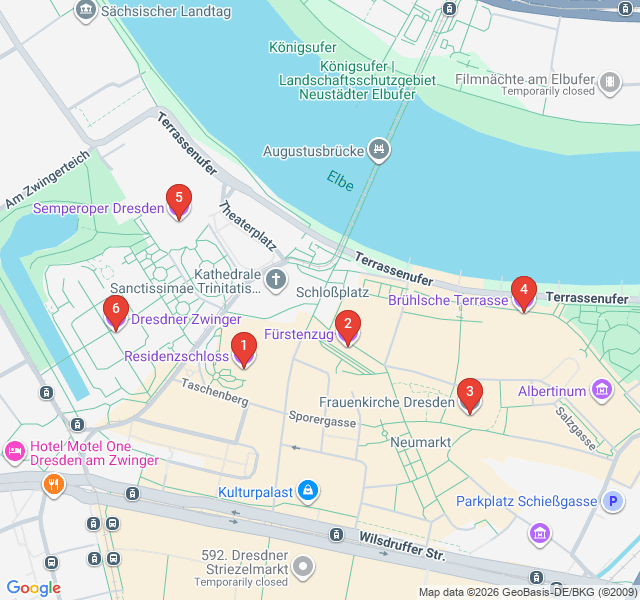
Numbers indicate the order of stops on the tour.
Welcome to the starting point of your neighborhood stroll. The Residenzschloss was the seat of the Saxon Electors and Kings for nearly 400 years. As you look at the exterior, notice the mix of styles ranging from Romanesque to Baroque. After being almost entirely destroyed in 1945, the palace has been painstakingly restored to house world-class museums like the Green Vault. The Hausmannsturm tower offers a vantage point over the city, while the courtyard displays stunning sgraffito paintings. This building represents the power and artistic patronage of the Wettin dynasty, who turned Dresden into a cultural powerhouse. Take a moment to appreciate the intricate details of the facade before moving toward the cathedral area.
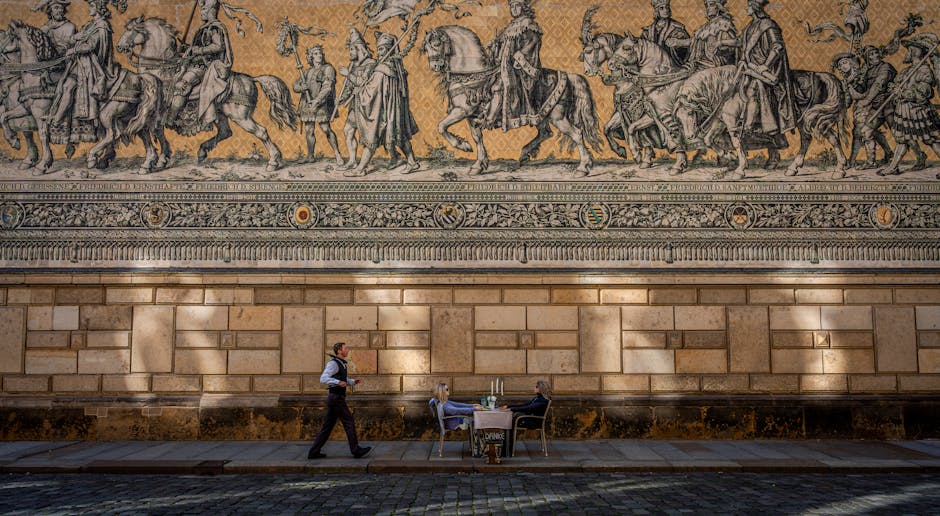
Stretching along the outer wall of the Stallhof, the Fürstenzug is a sight unlike any other in the world. This 102-meter mural depicts a parade of 35 margraves, electors, and kings of the House of Wettin. What makes it truly remarkable is the material: it is composed of approximately 23,000 tiles of Meissen porcelain. Remarkably, the mural survived the 1945 firestorm with minimal damage. As you walk alongside it, you can see the evolution of fashion and weaponry over 800 years of history. Look for Augustus the Strong; he is the only figure looking directly at the viewer. This mural is a masterpiece of both art and historical record, connecting the palace to the heart of the city.
The Frauenkirche is the ultimate symbol of Dresden's rebirth. Completed in 1743, its distinctive stone dome dominated the skyline for two centuries until it collapsed following the 1945 bombings. For decades, the ruins remained in the center of the city as a war memorial. Following reunification, the church was rebuilt using original stones—the darker blocks you see in the facade are the charred originals salvaged from the rubble. The interior is a bright, circular space designed for acoustics and community. It stands today not just as a religious site, but as a global monument to reconciliation and the incredible dedication of the citizens who funded its reconstruction.
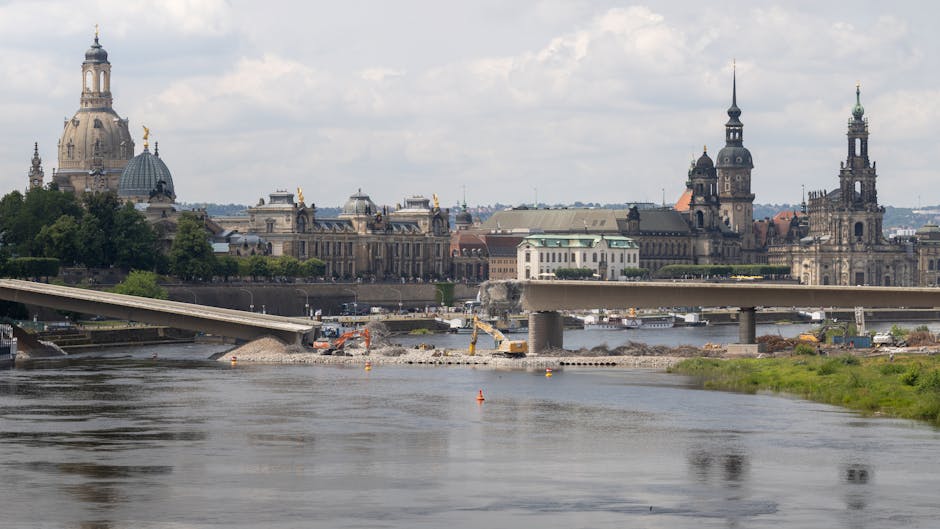
Step up onto the 'Balcony of Europe.' Brühl's Terrace was originally built as part of Dresden's city fortifications in the 16th century, but in the mid-1700s, Count von Brühl transformed it into a private garden. Today, it is a public promenade offering the most famous views in the city. To your right is the Elbe River, and to your left are grand buildings like the Albertinum and the Academy of Fine Arts with its 'lemon squeezer' dome. This is the perfect spot to feel the river breeze and understand why Canaletto chose this city as his frequent subject. The terrace provides a sense of the scale and grandeur that defines the Saxon capital.
You are now standing in Theaterplatz, facing the Semperoper, one of the most prestigious opera houses in the world. Designed by Gottfried Semper, the current building is actually the third version; the first burned down and the second was destroyed in the war. Its High Renaissance style features a magnificent quadriga—a chariot pulled by four panthers—above the entrance. This stage has seen the premieres of legendary works by Richard Wagner and Richard Strauss. Even if you aren't attending a performance, the exterior sculptures of Goethe, Schiller, and Shakespeare highlight the city's deep commitment to the arts. It remains the crown jewel of Dresden's musical heritage.
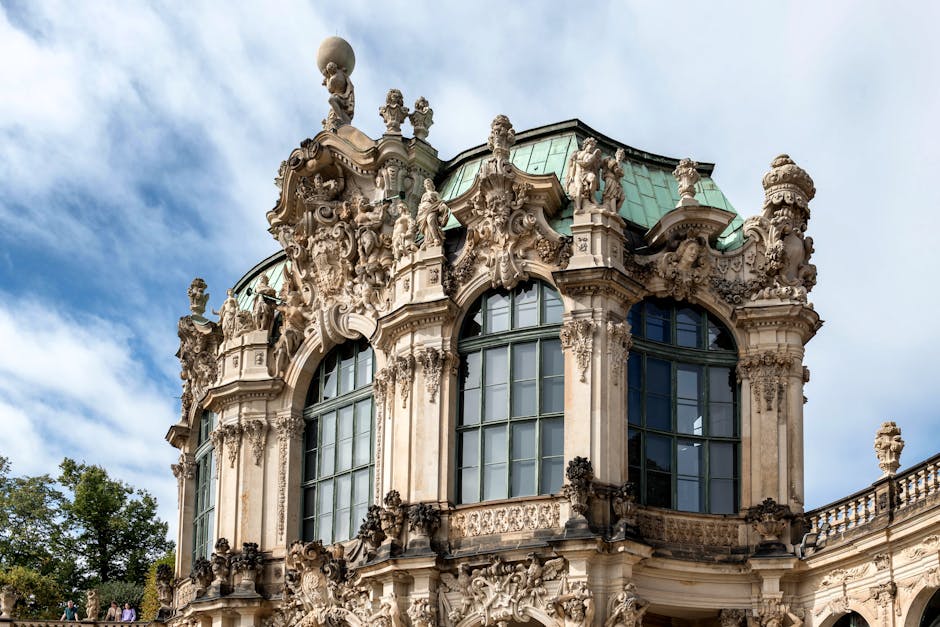
Your self-guided adventure concludes at the Zwinger, a masterpiece of Baroque architecture. Originally intended as an orangery and festival grounds for Augustus the Strong, it never served as a residence but rather as a stage for royal court festivities. Explore the inner courtyard to see the Crown Gate and the Nymphenbad, one of the finest Baroque fountains in Germany. The symmetry and ornate carvings of the pavilions represent the height of the 'Dresden Baroque' style. Today, it houses the Old Masters Picture Gallery and the Porcelain Collection. It is a place of peace and beauty, perfectly capturing the extravagant spirit of 18th-century Saxony. Take your time wandering the galleries or resting by the fountains.
Start Free on iPhone
Explore “Baroque Splendor of the Altstadt” with your very own Private Tour Guide with Zigway. Start free on iPhone, skip the large group and the fixed routes, and hear the city come alive as you go.
Your Private Tour Guide
Don't miss the good stuff
Explore Freely
 Moderate
Dresden, Germany
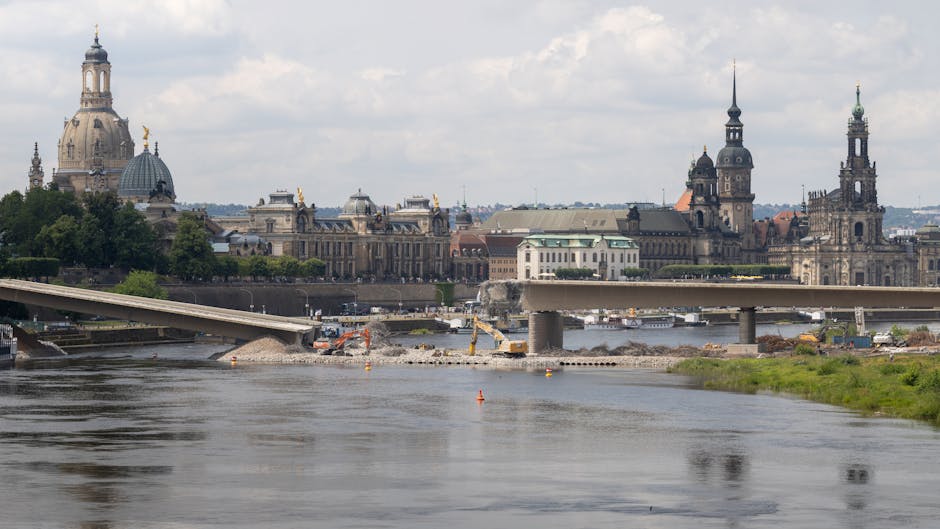
Experience Dresden's most iconic skyline views and Baroque landmarks on this scenic self-guided photography walk along the Elbe River.
 Easy
EasyDresden, Germany
Explore a stunning 19th-century power plant transformed into a vibrant cultural hub of theaters and art in this self-guided walking route.
 Easy
EasyDresden, Germany
Discover Dresden's vibrant soul on this self-guided walk through the street art, quirky courtyards, and bohemian spirit of the Äußere Neustadt.
 Easy
EasyDresden, Germany
Explore Dresden’s Baroque 'Green Lung' on this self-guided stroll through royal gardens, serene lakes, and historic palaces.
 Easy
EasyGdansk, Poland
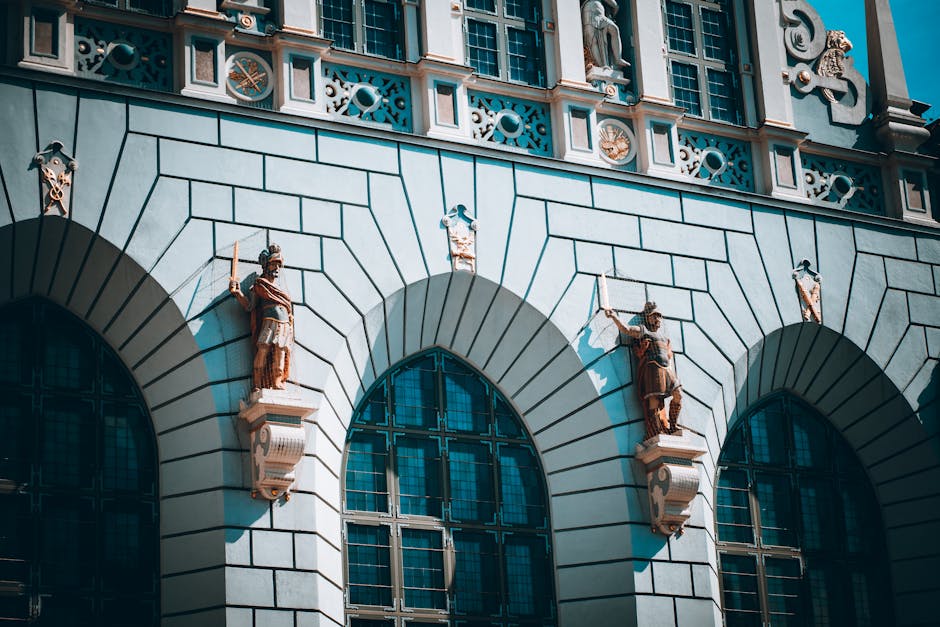
Discover the opulent Royal Way of Gdansk at your own pace. Explore Hanseatic history, gilded architecture, and the iconic Neptune's Fountain.
 Easy
EasyWarsaw, Poland
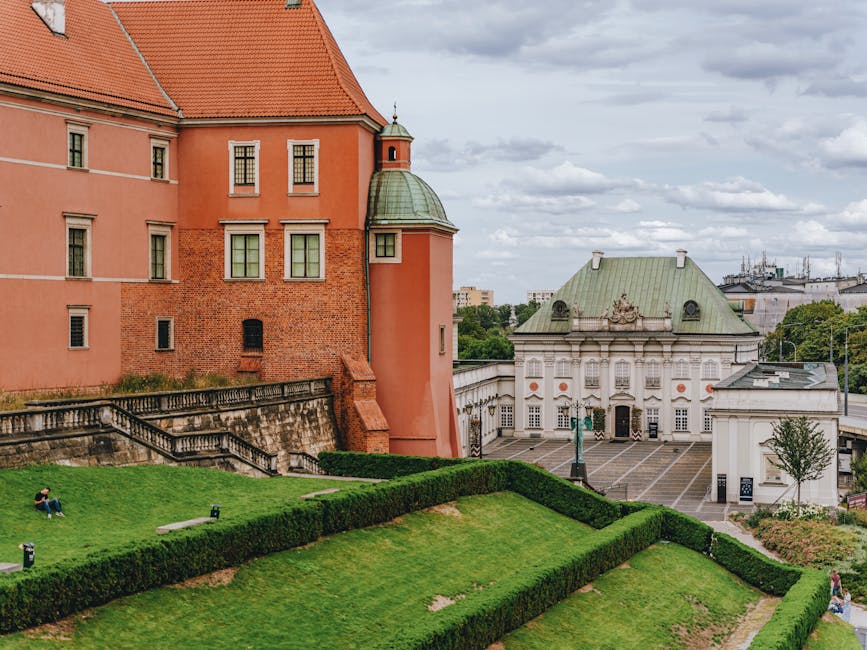
Explore the miracle of Warsaw's reconstructed Old Town on this self-guided walk through royal squares, medieval walls, and heroic monuments.
 Easy
EasyNairobi, Kenya
Discover Nairobi's iconic skyline on this self-guided architecture walk through the CBD’s most famous modernist and Brutalist landmarks.
 Easy
EasySalzburg, Austria
Discover the 'Rome of the North' on this self-guided walk through the Baroque squares and monumental legacy of Salzburg’s Prince-Archbishops.
 Easy
EasyBerlin, Germany
Explore the sites of Nazi power and the memorials that honor its victims on this self-guided walk through Berlin's historic Wilhelmstraße district.
 Moderate
Berlin, Germany
Explore Berlin’s 'Green Heart' on a self-guided walk through royal history, Cold War memorials, and serene lakeside gardens.
 Moderate
Berlin, Germany
Discover the legacy of the Berlin Wall on this self-guided walk from historic ghost stations to the vibrant street art and cafes of Mauerpark.
 Easy
EasyBerlin, Germany
Discover the soul of 1920s Berlin on a self-guided walk through Charlottenburg’s iconic literary cafes, historic theaters, and artistic landmarks.