Self-guided audio tour in Dresden
Start Free on iPhone
Start free on iPhone to unlock this self-guided walking tour in Dresden. Hear all the stories that make it amazing, walk at your own pace, and begin whenever you want.
Your Private Tour Guide
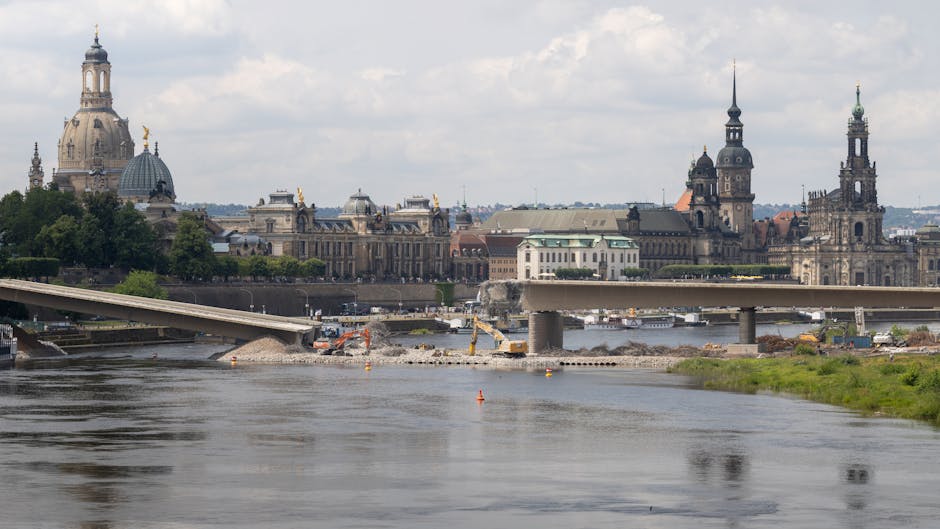
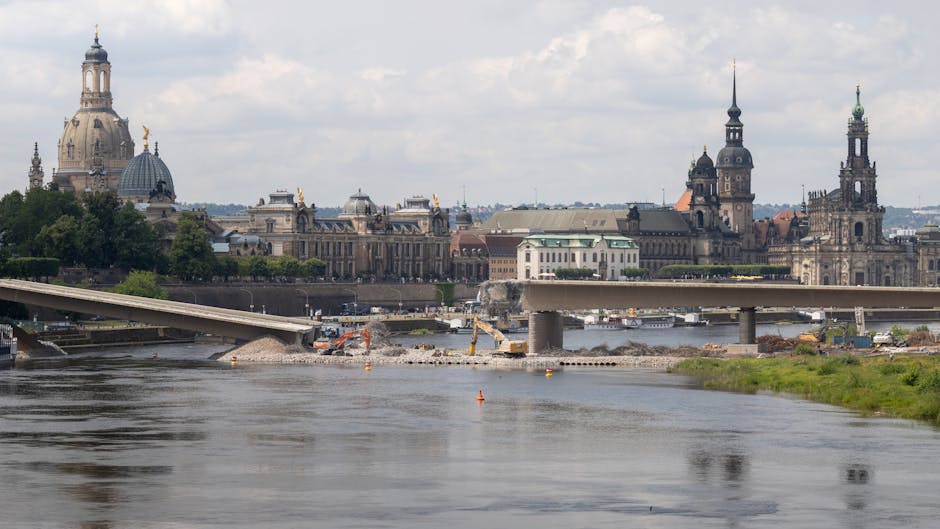
Discover why Dresden is often called the 'Florence of the Elbe' on this stunning photography-focused walking route through the Innere Neustadt. This self-guided walk invites you to explore the river’s northern bank, offering the most iconic perspectives of the city’s historic skyline. As you wander along the Elbe’s meadows and across its architectural marvels, you will experience the perfect blend of Baroque grandeur and natural serenity. This neighborhood stroll is designed for those who want to capture the essence of the city away from the densest crowds of the Old Town, providing space to breathe and admire the silhouette of the Frauenkirche and the Royal Palace from across the water. Your self-guided adventure begins at the historic Augustus Bridge, a vital link that has connected the two sides of the city for centuries. From here, the route leads you to the precise spot where the painter Bernardo Bellotto, known as Canaletto, immortalized the city in the 18th century. You will encounter the shimmering Golden Rider, a testament to the ambitions of Augustus the Strong, and the elegant Japanese Palais with its unique fusion of Eastern and Western architectural styles. The walk then transitions into the lush greenery of the Königsufer, a riverside park that serves as the city’s favorite outdoor living room. Whether you are a seasoned photographer looking for the perfect light or a traveler seeking a peaceful way to see the sights, this walking tour Dresden offers unparalleled vistas. You will learn about the reconstruction of these landmarks and the cultural significance of the Elbe river landscape, which remains the heart of Dresden's identity. By exploring independently, you can linger at the viewpoints that inspire you most, making this walking tour Dresden a truly personal experience of the city’s most beautiful panoramas.
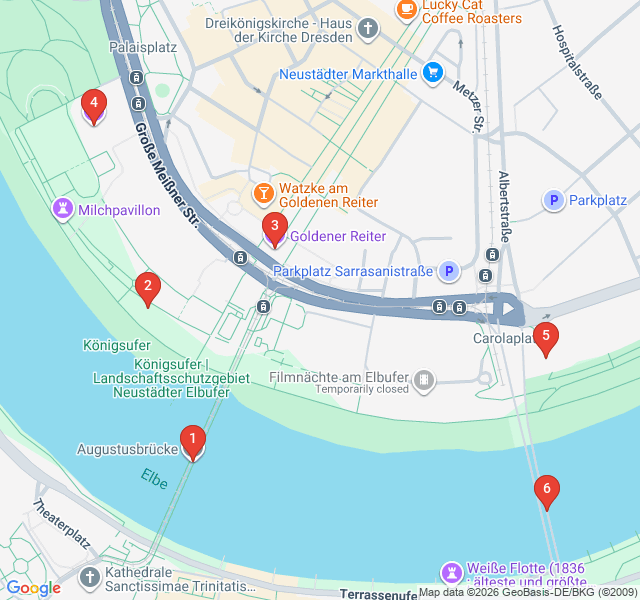
Numbers indicate the order of stops on the tour.
Start exploring with Zigway at the Augustus Bridge, the oldest bridge site in the city. While the current stone structure has been meticulously renovated and partially rebuilt, a bridge has stood here since at least the 13th century. It serves as the primary gateway between the Altstadt (Old Town) and the Neustadt (New Town). As you walk across, notice the sandstone pillars that have survived floods and wars. This bridge offers your first major panorama: to the south, the Cathedral and the Semper Opera House rise majestically. To the north, you are entering the Baroque heart of the Neustadt. It is the perfect place to feel the pulse of the Elbe river beneath your feet while seeing the city's two halves unite.
Step into a masterpiece at the Canaletto-Blick. This specific spot on the riverbank is where the Venetian artist Bernardo Bellotto painted his famous 1748 work, 'Dresden from the Right Bank of the Elbe Below the Augustus Bridge.' Look toward the Old Town and you will see that the silhouette today is remarkably similar to what Bellotto captured over 250 years ago. You can even find a metal frame set up here to help you compose the exact same shot. This view is the definitive image of Dresden, showcasing the Frauenkirche dome, the Academy of Fine Arts, and the various steeples that define the 'Elbe Venice' aesthetic. It is a must-stop for any photography enthusiast.
At the head of the Hauptstrasse stands the Goldener Reiter, or Golden Rider. This dazzling equestrian statue depicts Augustus the Strong, the Elector of Saxony and King of Poland, dressed as a Roman emperor. Clad in gold leaf, he faces northeast toward Poland, symbolizing his dual reign. The statue was unveiled in 1736 and remains the most famous landmark of the Neustadt. It represents the height of the Saxon Baroque era and the king's obsession with splendor and power. Take a moment to admire the intricate details of the armor and the powerful stance of the horse, which survived the 1945 bombings by being moved to a secure location outside the city.
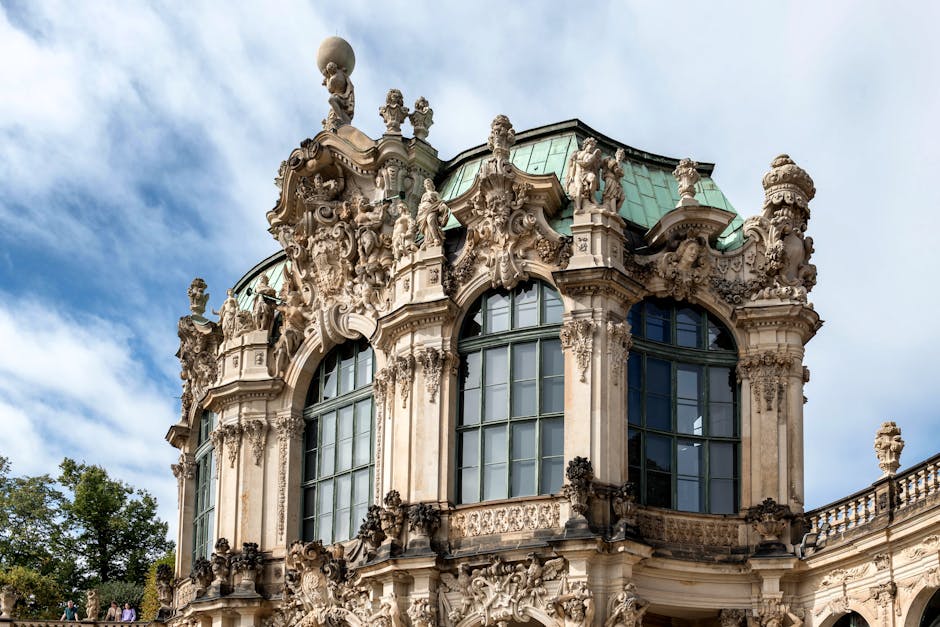
The Japanese Palais is a fascinating example of 18th-century architectural fantasy. Built between 1727 and 1733, it was originally intended by Augustus the Strong to house his massive collection of East Asian porcelain. The roof design, with its turned-up eaves, was meant to evoke an 'Oriental' feel, though the structure remains firmly rooted in European Baroque style. Today, it houses ethnographic and natural history museums. Be sure to walk around to the courtyard and the garden side. The palace gardens offer a serene, elevated view of the Elbe, framed by old trees and the palace’s elegant wings. It is one of the most peaceful corners of the city, perfect for a quiet moment during your neighborhood stroll.
Descend to the Königsufer, or the King's Bank. This expansive riverside park is a masterpiece of landscape architecture from the 1930s. Unlike many European cities that built high stone embankments, Dresden preserved its wide, grassy meadows, allowing the river to breathe and providing a scenic recreation area for locals. As you walk along the paved paths, you will pass the 'Filmnächte' site, where massive outdoor cinema and concert events take place every summer. The contrast between the manicured stone walls and the wild green grass makes this one of the most beautiful urban riverfronts in Europe. It is a favorite spot for locals to picnic, jog, or simply watch the paddle steamers go by.
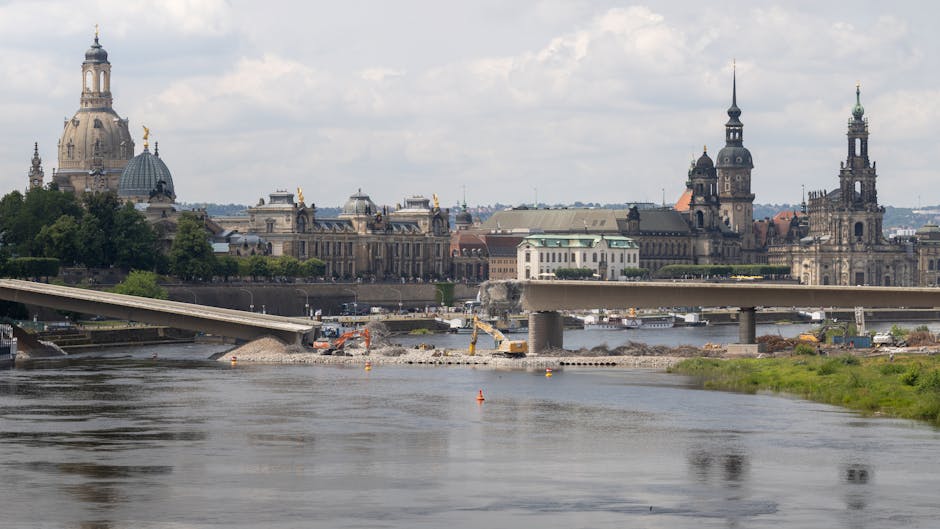
Your walking route concludes near the Carolabrücke. Named after Queen Carola of Saxony, this location offers a modern perspective on Dresden's bridge-building history. While the bridge itself has undergone significant structural changes over the years, the area remains a vital viewpoint. From this vantage point, you look back toward the Augustus Bridge and the Brühl's Terrace, often called 'The Balcony of Europe.' The wide-angle view from here captures the sheer scale of the Elbe valley and the way the city integrates with the natural landscape. It is a fitting end to your journey, providing one last sweeping look at the architectural triumphs that have been rebuilt from the ashes of history.
Start Free on iPhone
Explore “Bridges and Panoramas of the Elbe” with your very own Private Tour Guide with Zigway. Start free on iPhone, skip the large group and the fixed routes, and hear the city come alive as you go.
Your Private Tour Guide
Don't miss the good stuff
Explore Freely
 Easy
EasyDresden, Germany
Discover the 'Florence on the Elbe' on this self-guided walk through Dresden’s reconstructed Baroque heart, from royal palaces to iconic domes.
 Easy
EasyDresden, Germany
Explore a stunning 19th-century power plant transformed into a vibrant cultural hub of theaters and art in this self-guided walking route.
 Easy
EasyDresden, Germany
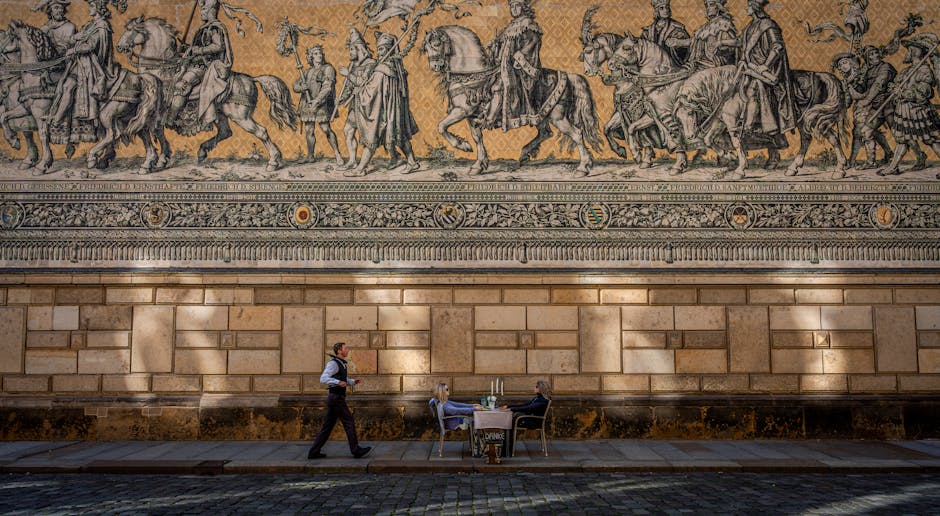
Discover Dresden's vibrant soul on this self-guided walk through the street art, quirky courtyards, and bohemian spirit of the Äußere Neustadt.
 Easy
EasyDresden, Germany
Explore Dresden’s Baroque 'Green Lung' on this self-guided stroll through royal gardens, serene lakes, and historic palaces.
 Moderate
Krakow, Poland
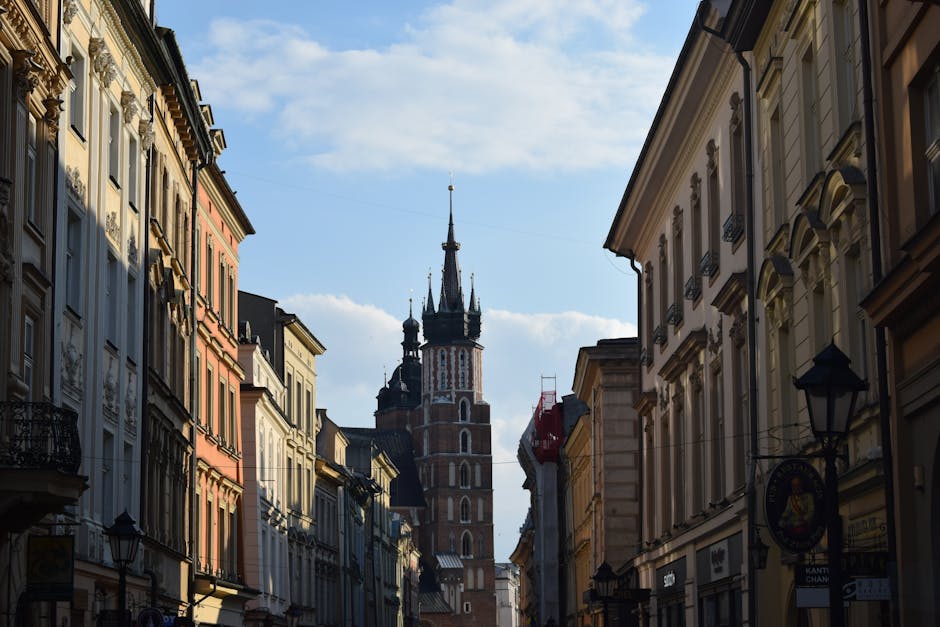
Discover Krakow’s stunning skyline and riverside charm on this self-guided audio walk through scenic viewpoints and historic mounds.
 Easy
EasyWarsaw, Poland
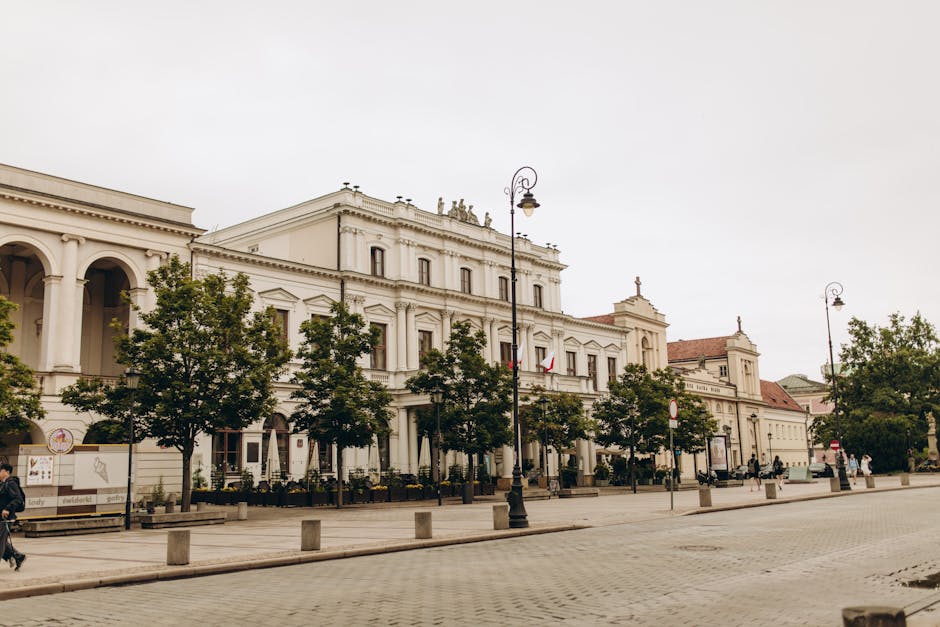
Explore Warsaw's scenic riverfront, rooftop gardens, and industrial-chic architecture on this self-guided stroll through the Powiśle district.
 Easy
EasyWarsaw, Poland
Discover Warsaw's intellectual heart through historic campuses, peaceful parks, and the stunning rooftop gardens of the University Library.
 Easy
EasyNairobi, Kenya
Discover Nairobi's iconic skyline on this self-guided architecture walk through the CBD’s most famous modernist and Brutalist landmarks.
 Easy
EasyBerlin, Germany
Explore the sites of Nazi power and the memorials that honor its victims on this self-guided walk through Berlin's historic Wilhelmstraße district.
 Moderate
Berlin, Germany
Explore Berlin’s 'Green Heart' on a self-guided walk through royal history, Cold War memorials, and serene lakeside gardens.
 Moderate
Berlin, Germany
Discover the legacy of the Berlin Wall on this self-guided walk from historic ghost stations to the vibrant street art and cafes of Mauerpark.
 Easy
EasyBerlin, Germany
Discover the soul of 1920s Berlin on a self-guided walk through Charlottenburg’s iconic literary cafes, historic theaters, and artistic landmarks.