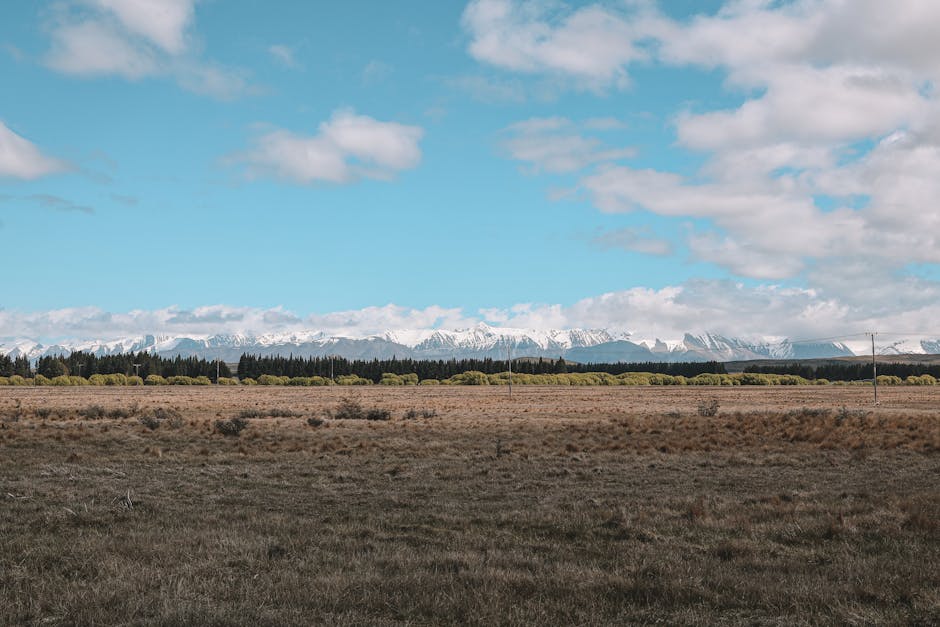
Self-guided audio tour in Queenstown
Start Free on iPhone
Hear the stories behind the streets and sights around you as you walk Queenstown. Try it free on iPhone.
Your Private Tour Guide
This self-guided walk through Queenstown's hidden lanes and lakefront covers the town's gold-rush history and its schist stone buildings, just a few meters from the main streets. Most people come to Queenstown for the adrenaline, and they walk straight past the quieter history and the architecture. Hidden Lanes and Waterfront Secrets slows things down. You'll leave the crowds for narrow lanes and lakeside spots that give the town its character, and follow how this alpine village grew from a rough gold-mining camp into a polished international destination. Along the way you'll keep running into schist, the local stone that became the trademark of Central Otago architecture. The route goes through back alleys like Searle Lane and Cow Lane, where 19th-century rustic charm now houses modern bars and restaurants. You'll hear about the settlers who founded the town, and stop at the moving War Memorial. Then the narrow lanes open out onto the Lake Wakatipu waterfront, and the walk finishes at the historic Steamer Wharf. Photographers will like the light on the old stone. History fans will like the local stories. It's a calm, easy way to see the middle of town at your own speed. You'll learn where the street names come from, and how boats kept this remote settlement in touch with the world long before modern highways arrived. As a first look at the building style of the Southern Alps, it's hard to beat.
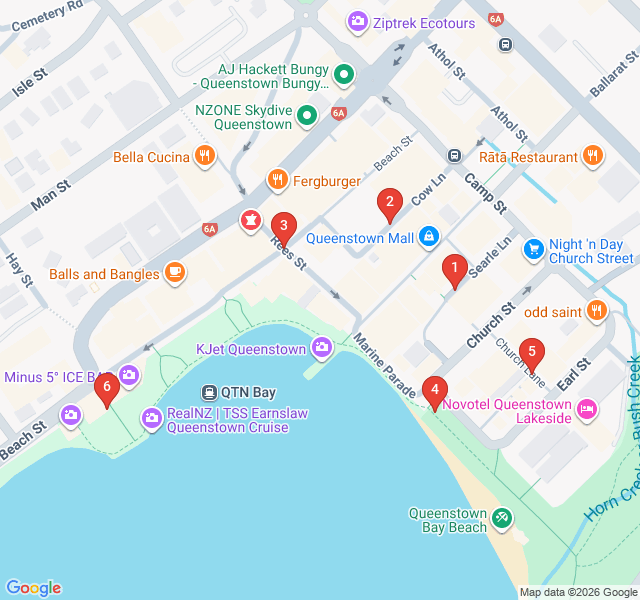
Numbers indicate the order of stops on the tour.
Searle Lane is a classic bit of Queenstown 'back-alley' charm, and a good place to begin. During the 1860s gold rush it was used for deliveries and stables. Now it's a busy little dining spot. Have a close look at the buildings. They're made of the famous Central Otago schist, a flat, gray local stone. Early settlers built with it because timber was very hard to come by in the treeless alpine basins. The stonework around you comes from a craft handed down through generations of masons, and they gave the town its look. This one lane shows the whole shift from rough mining camp to a settled, stylish town.
Just a short walk away is Cow Lane, which may have the oddest name in town. It's not a joke. It's history. In Queenstown's early days, farmers drove their cattle down this narrow passage from the high country to the lakefront, to be shipped or sold. The cows are long gone, and tucked-away bars and boutiques have moved in, but the lane keeps its original tight shape. The high stone walls make it feel like an old European village, very different from the wide modern roads elsewhere. It's a good place to see how the town has turned a working route into a cozy corner of the city. Kids tend to love the name.
Step out onto Rees Street and you're on the main commercial street of historic Queenstown. It's named after William Gilbert Rees, the explorer and surveyor credited with founding the town in 1860. Rees first set up a sheep station here, but everything changed for him when gold was found in the nearby Arrow River. Look above the shopfronts. The ground floors have been modernized, but the Victorian and Edwardian facades upstairs are still intact. They tell the story of a town that got rich fast, going from canvas tents to grand stone and brick buildings in just a few decades. Most people never look up. You should.
Down by the water is the Queenstown War Memorial. Lake Wakatipu and the Remarkables mountain range sit right behind it, and it means a great deal to people here. It honors the men from the Wakatipu district who served and died in the World Wars. Plenty of city memorials are squeezed into busy squares. This one uses the beauty of the lakefront to make a place for quiet thought. It sits close to the Queenstown Gardens entrance, so it works as a gateway between the built-up town and the natural landscape. Stop for a moment. Feel the breeze off the water and take in the views that have pulled people to this shore for centuries.
St. Peter's Church stands on Church Lane, tucked just behind the busiest streets. It's the oldest church in Queenstown. The parish was founded in 1863, and the current stone building dates from 1932. It's a fine example of Gothic Revival, built from local stone so it would sit comfortably in the rugged landscape. The church is a reminder of how early Queenstown held together, with community life built around faith and shared hardship in the isolated mountains. The gardens around it and the quiet of the lane make a peaceful break from the tourist buzz of the waterfront nearby. Worth a few minutes even if churches aren't your thing.
The walk wraps up at Steamer Wharf, once the industrial center of the region. Before roads were cut through the mountain passes, Lake Wakatipu was the only 'highway' linking Queenstown with the rest of the world. This wharf was the main docking point for the big steamships carrying wool, gold and passengers. The most famous of them, the TSS Earnslaw, often ties up right here. People call her the 'Lady of the Lake', and she's been puffing across these waters since 1912. The wharf is now full of places to eat and drink, but the town's life on the water carries on in the lapping waves and the historic hulls in the harbor.
Explore Mode
Open Zigway, start Explore Mode and just walk. Your guide notices where you are and tells you the story of what's around you, on this route or any street you turn into.
Start Free on iPhone
Open Zigway as you walk and your private tour guide tells the stories behind what you pass.
Your Private Tour Guide
Don't miss the good stuff
Explore Freely
 Easy
Queenstown, New Zealand
Discover Queenstown’s sophisticated side on this self-guided walk through premier art galleries and creative hubs in the heart of the alpine town.
 Challenging
Queenstown, New Zealand
Ascend Te Tapunui on this self-guided walk, blending downtown art galleries with the iconic Basket of Dreams sculpture and panoramic alpine views.
 Moderate
Queenstown, New Zealand
Explore Queenstown’s cinematic landscapes and iconic film locations at your own pace with this scenic self-guided audio walk.
 Challenging
Queenstown, New Zealand
Conquer Bob's Peak on this challenging self-guided walk through alpine forests for the best panoramic views of Queenstown and Lake Wakatipu.
 Easy
Helsinki, Finland
Discover Helsinki's oldest neighborhood on this self-guided audio walk through Kruununhaka’s historic streets, hidden courtyards, and scenic shores.
 Easy
Gothenburg, Sweden
Explore Gothenburg's elegant academic district, featuring grand 19th-century stone architecture and the iconic cultural hub of Götaplatsen.
 Easy
Gothenburg, Sweden
Explore Gothenburg's maritime soul on this self-guided walk from historic shipyards to sleek modern piers and iconic industrial landmarks.
 Easy
Gothenburg, Sweden
Discover Gothenburg’s 17th-century Dutch foundations, historic canals, and military fortifications on this self-guided architectural walk.
 Easy
Auckland, New Zealand
Discover Auckland's sustainable future on this self-guided walk through the award-winning architecture and industrial history of Wynyard Quarter.
 Moderate
Auckland, New Zealand
Discover Auckland's highest volcanic peak, sacred Māori history, and stunning 360-degree views on this self-guided walking route up Maungawhau.
 Easy
Auckland, New Zealand
Explore the gritty soul of Auckland on this self-guided walk through Karangahape Road’s street art, heritage, and legendary nightlife spots.
 Moderate
Auckland, New Zealand
Explore Auckland's iconic coastline, Art Deco architecture, and Maori heritage on this scenic self-guided walking route from Bastion Point to the Bay.