Self-guided audio tour in Seville
Start Free on iPhone
Start free on iPhone to unlock this self-guided walking tour in Seville. Hear all the stories that make it amazing, walk at your own pace, and begin whenever you want.
Your Private Tour Guide
The Guadalquivir River is the lifeblood of Seville, a shimmering ribbon of water that once connected the city to the riches of the New World. This self-guided walk through the Arenal neighborhood invites you to explore the maritime legacy and architectural grandeur that defined Spain's Golden Age. As you follow this walking route, you will step away from the crowded cathedral plaza and toward the open horizons of the riverfront, where massive stone towers and baroque facades tell stories of sailors, merchants, and repentant knights. The journey begins at the Hospital de la Caridad, a hidden gem of Sevillian Baroque art, before moving to the skeletal remains of the Royal Shipyards. These medieval structures reflect the city's long history as a naval powerhouse. From there, the path leads to the iconic Torre del Oro, perhaps the most photographed landmark along the water. This defensive watchtower has stood guard for nearly 800 years, witnessing the arrival of galleons laden with gold. Photography enthusiasts will find endless inspiration here, especially as the light hits the honey-colored stone and reflects off the water. Further along, the walk takes you past the ornate Palacio de San Telmo, a building so grand it once served as a school for navigators. You will also encounter the Plaza de Toros de la Real Maestranza, one of the oldest and most beautiful bullrings in Spain, with its striking white and yellow architecture. The route concludes at the Muelle de la Sal, a peaceful spot to watch the sunset over the Triana district across the river. This walking tour Seville experience allows you to discover the city's deep connection to the Atlantic at your own pace, focusing on the blend of maritime history and visual beauty that makes Seville unique. Whether you are interested in the evolution of naval engineering or simply want to capture the perfect riverfront shot, this neighborhood stroll offers a comprehensive look at Seville's riverside identity.
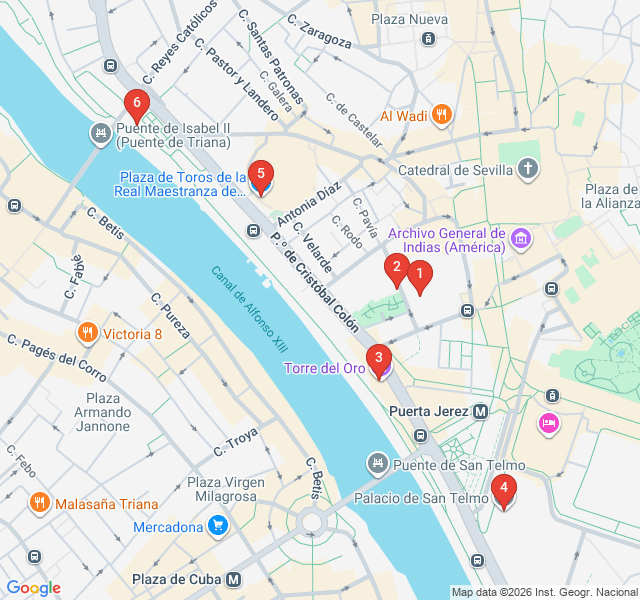
Numbers indicate the order of stops on the tour.
Start your self-guided adventure at the Hospital de la Caridad. This isn't just a hospital; it is a monument to redemption. Founded in the 17th century by Miguel Mañara, a wealthy nobleman who reportedly lived a life of excess before turning to charity, the building houses some of the most powerful Baroque art in Spain. Inside the church, you will find masterpieces by Valdés Leal and Murillo that contemplate the fleeting nature of life and the importance of mercy. The architecture itself reflects the transition from the Renaissance to the ornate Baroque style. Take a moment to appreciate the quiet courtyard, which feels worlds away from the bustling city streets. It sets a reflective tone for your walk along the river.
Just a short walk away lie the Atarazanas Reales, the Royal Shipyards of Seville. Built in the 13th century under King Alfonso X, these massive brick vaults were designed to construct the galleys that protected the Spanish coast. In its prime, there were 17 naves stretching toward the river. It is a staggering example of medieval industrial architecture. While the interior is often closed for restoration, the sheer scale of the exterior walls tells the story of Seville's naval dominance. Interestingly, fans of modern culture might recognize these gloomy, cavernous spaces as the 'Dragonpit' from the television series Game of Thrones. Imagine the sound of hammers and the smell of cedar that once filled this space as ships were readied for the Atlantic.
Standing tall on the riverbank is the Torre del Oro, or 'Tower of Gold.' This dodecagonal defensive tower was built by the Almohad Caliphate in the early 1200s to control access to the city's port. A heavy chain once stretched from its base across the river to prevent enemy ships from passing. Why is it called the 'Tower of Gold'? Some say it was once covered in golden tiles, while others believe it refers to the riches of the New World that were unloaded here. Today, it houses a small maritime museum. The tower is a prime spot for photography, especially when the sun highlights its ancient stone against the deep blue of the Guadalquivir.
Moving slightly inland, you encounter the breathtaking Palacio de San Telmo. This building is a masterpiece of the Spanish Baroque, specifically the 'Churrigueresque' style, known for its extreme ornamentation. Look closely at the main portal; it is a feast for the eyes, featuring statues of famous Sevillians and intricate carvings. Originally built as a school for orphaned children of sailors, it later became a royal residence and is now the seat of the Presidency of the Andalusian Government. Its red and ochre walls are quintessentially Sevillian. The palace serves as a bridge between the city's maritime past and its political present, standing as one of the most prestigious addresses in the city.
Heading back toward the river, you will find the Plaza de Toros de la Real Maestranza. Even if you aren't interested in the tradition of bullfighting, the building itself is an architectural icon. Construction began in 1761, making it one of the oldest bullrings in the country. Its slightly oval shape and the vibrant contrast of white walls with yellow trim make it a favorite for photographers. The main entrance, the Puerta del Príncipe, is particularly grand. This site represents the cultural heart of the Arenal neighborhood, where the aristocracy and the working-class dockworkers once mingled. The surrounding streets are filled with traditional taverns that have served residents for generations.
Your walk concludes at the Muelle de la Sal, or the 'Salt Wharf.' This riverside promenade was historically used for unloading salt, which was vital for preserving fish and meat for long sea voyages. Today, it is a peaceful public space offering some of the best views in the city. Across the water, you can see the colorful houses of the Triana district and the famous Isabel II Bridge, also known as the Triana Bridge. This is the perfect place to sit and reflect on your journey. As the sun sets, the lights of Triana begin to twinkle on the water, providing a serene end to your exploration of Seville's historic riverside horizons.
Start Free on iPhone
Explore “Riverside Horizons: The Guadalquivir Walk” with your very own Private Tour Guide with Zigway. Start free on iPhone, skip the large group and the fixed routes, and hear the city come alive as you go.
Your Private Tour Guide
Don't miss the good stuff
Explore Freely
 Challenging
Seville, Spain
Explore the futuristic legacy of Expo 92 and the ancient secrets of a Carthusian monastery on this self-guided walk through Isla de la Cartuja.
 Moderate
Seville, Spain
Explore Seville's artistic soul in Macarena, featuring ancient walls, vibrant markets, and bohemian workshops on this independent audio walk.
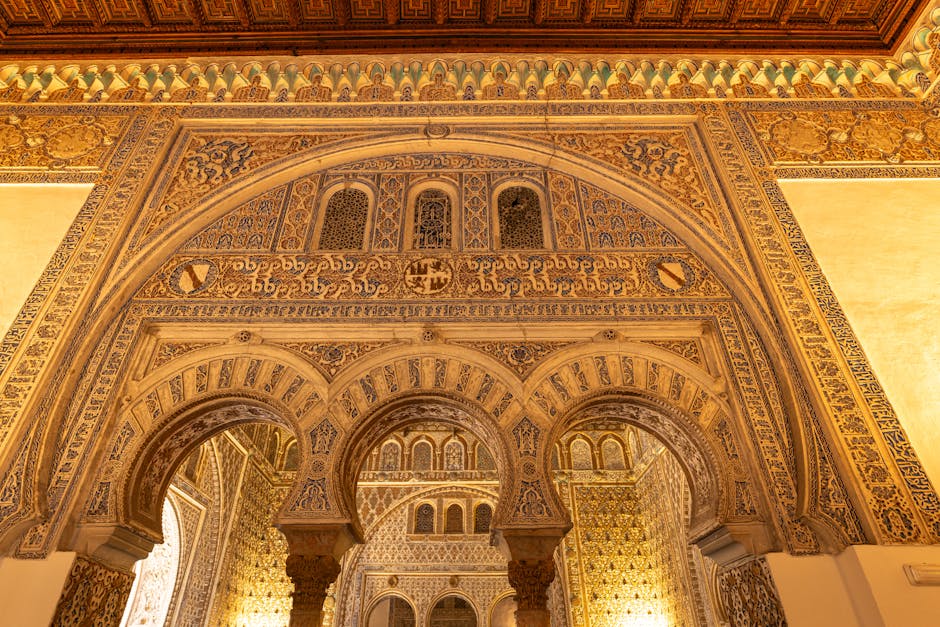 Easy
EasySeville, Spain
Discover the independent spirit of Triana on this self-guided walk through flamenco history, ceramic traditions, and riverside charm.
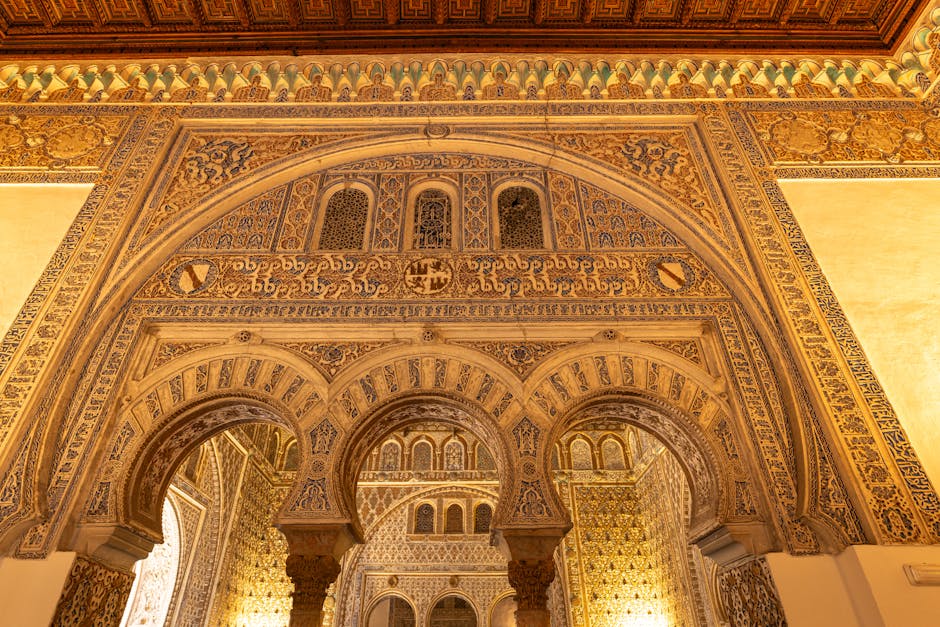 Easy
EasySeville, Spain
Discover Seville's modern side! Explore the iconic Setas, Roman ruins, and trendy boutiques on this self-guided walking route through the city center.
 Easy
EasyNairobi, Kenya
Discover Nairobi's iconic skyline on this self-guided architecture walk through the CBD’s most famous modernist and Brutalist landmarks.
 Easy
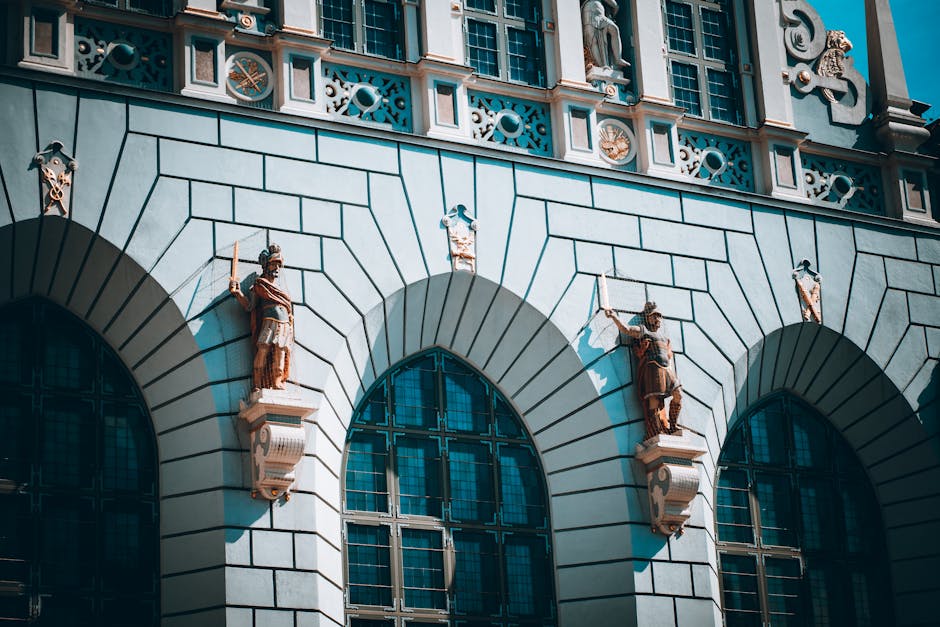
EasyGdansk, Poland
Discover the opulent Royal Way of Gdansk at your own pace. Explore Hanseatic history, gilded architecture, and the iconic Neptune's Fountain.
 Easy
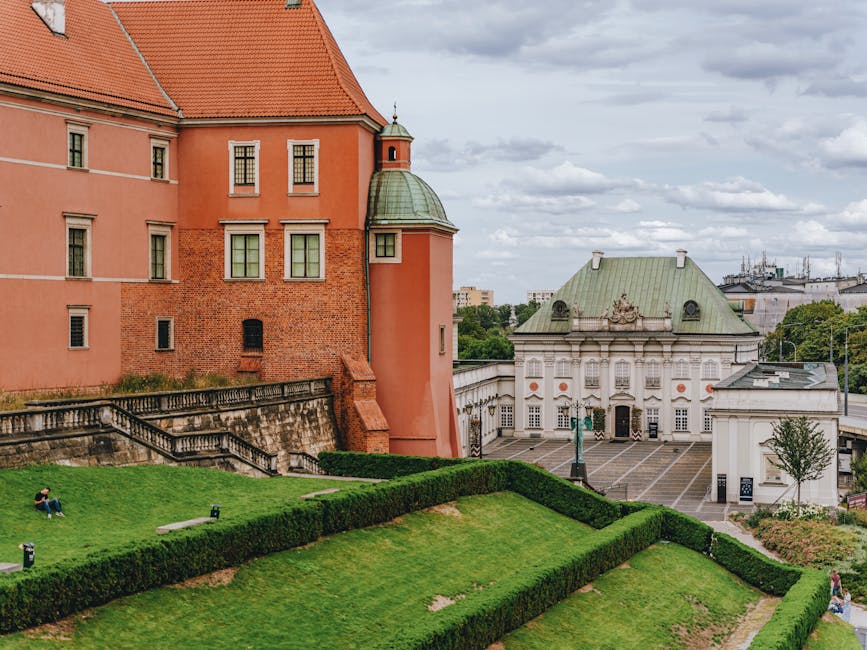
EasyWarsaw, Poland
Explore the miracle of Warsaw's reconstructed Old Town on this self-guided walk through royal squares, medieval walls, and heroic monuments.
 Easy
EasyGothenburg, Sweden
Discover Gothenburg’s 17th-century Dutch foundations, historic canals, and military fortifications on this self-guided architectural walk.
 Moderate
Barcelona, Spain
Explore the elegant 'village' of Sarrià, where Gothic monasteries and Gaudí's hidden gems meet charming local markets and narrow streets.
 Moderate
Barcelona, Spain
Discover the revolutionary history and haunting scars of the Spanish Civil War on this self-guided walk through Barcelona's historic streets.
 Easy
EasyBarcelona, Spain
Discover the architectural wonders of Barcelona's Golden Square on this self-guided stroll through Eixample's most luxurious Modernista streets.
 Challenging
Barcelona, Spain
Explore Montjuïc’s lush gardens, historic fortress, and iconic Olympic venues on this scenic self-guided walk with panoramic Mediterranean views.