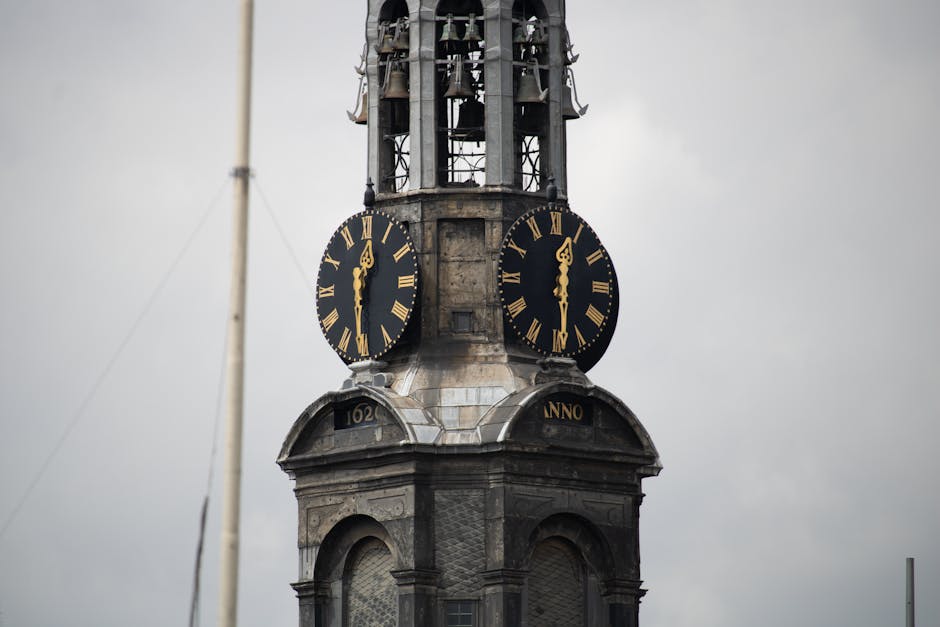
Self-guided audio tour in Amsterdam
Start Free on iPhone
Start free on iPhone to unlock this self-guided walking tour in Amsterdam. Hear all the stories that make it amazing, walk at your own pace, and begin whenever you want.
Your Private Tour Guide
Step into the oldest layers of Amsterdam with this self-guided walk through De Wallen. While many visitors are drawn to this neighborhood by the modern glow of neon lights, this historic district hides stories that date back to the 14th century. This neighborhood stroll invites you to look beyond the surface to find a secret 17th-century church hidden in an attic and the oldest building in the city standing amidst the bustle of the Red Light District. Exploring independently allows you to notice the architectural details of the Zeedijk, once a medieval sea wall, and now a vibrant corridor of culture. Along this walking route, you will discover how Amsterdam transformed from a small fishing village into a global maritime powerhouse. You will encounter the Oude Kerk, where the city's golden age history is etched into the floorboards, and the Waag, a former city gate that has served as a weighing house and an anatomical theater. This self-guided adventure provides a deeper perspective on how religious tolerance, trade, and social reform shaped the Dutch capital. Whether you are interested in the maritime heritage of the old harbor or the quirky modern history of the world’s first specialty condom shop, this walking tour Amsterdam experience offers a comprehensive look at the city's evolution. By following this route at your own pace, you can escape the typical crowds and find the quiet corners where the spirit of old Amsterdam still lingers. This travel experience is perfect for those who want to understand the complex identity of De Wallen beyond its contemporary reputation.
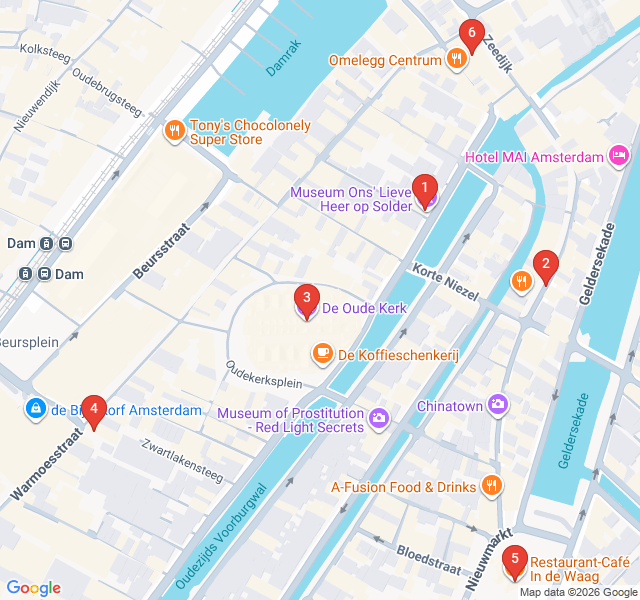
Numbers indicate the order of stops on the tour.
Begin your exploration at one of Amsterdam's most remarkable survivors. During the 17th century, after the Alteration of 1578, Catholic worship was banned in public. In response, wealthy merchant Jan Hartman converted the top floors of his canal house into a 'schuilkerk' or clandestine church. While the exterior looks like a standard residence, the interior reveals a stunning, fully-equipped Baroque church capable of holding 150 worshippers. This site serves as a powerful symbol of the Dutch 'gedogen'—the pragmatic policy of tolerance that allowed different faiths to coexist behind closed doors, a philosophy that remains central to Amsterdam's identity today.
Walk along the Zeedijk, one of the oldest streets in Amsterdam. Originally constructed in the 13th century as a sea wall to protect the city from the IJ water, it later became a hub for sailors arriving from around the world. Look for the 'In't Aepjen' at number 1; it is one of only two remaining wooden-fronted houses in the city. The street’s name literally means 'Sea Dyke,' and its curved path follows the original line of the medieval fortifications. Today, it serves as the heart of Amsterdam's Chinatown, blending Dutch maritime history with diverse international flavors.
Standing before you is the Oude Kerk, or Old Church, consecrated in 1306. As the city's oldest building, it has survived fires, iconoclasm, and centuries of urban change. The church is famous for its massive wooden vault, which provides incredible acoustics. Inside, the floor consists entirely of gravestones; over 10,000 people are buried here, including Rembrandt’s wife, Saskia van Uylenburgh. Note the unusual location: the church is literally surrounded by the windows of the Red Light District, a juxtaposition that illustrates Amsterdam's unique relationship between the sacred and the profane.
Located on the Warmoesstraat, the Condomerie opened its doors in 1987 as the world's first specialty condom shop. While it might seem like a modern novelty, it actually represents a significant chapter in Amsterdam's history of social activism and public health. Founded during the height of the AIDS crisis, the shop aimed to remove the stigma surrounding protection and promote safe sex through education and humor. The shop features hand-painted and creatively shaped items, reflecting the neighborhood's long-standing tradition of openness and its role in pioneering progressive social policies.
This imposing brick structure on Nieuwmarkt square was originally the Sint Anthoniespoort, a 15th-century gate in the city walls. When the city expanded and the walls were demolished, the gate was repurposed as a 'Waag' or weighing house. Different guilds, such as the blacksmiths and surgeons, occupied the various towers. It was here, in the upper rooms, that the Surgeons' Guild conducted anatomical lessons, one of which was immortalized by Rembrandt in 'The Anatomy Lesson of Dr. Nicolaes Tulp.' Notice the many masonry marks on the exterior, which identify the different builders who worked on the fortress centuries ago.
Conclude your walk at Saint Olof's Chapel, or Sint Olofskapel. Built in the mid-15th century, it is named after Saint Olaf, the patron saint of Norway, reflecting the city's early trade links with Scandinavia. The building has lived many lives: it served as a chapel for the merchant guilds, a stock exchange, and even a cheese warehouse. After a devastating fire in the 1960s, it sat in ruins for decades before a meticulous restoration brought it back to life. It remains a testament to the resilience of Amsterdam's architectural heritage, standing firm at the entrance to the historic city center.
Start Free on iPhone
Explore “Beyond the Neon: Hidden History of De Wallen” with your very own Private Tour Guide with Zigway. Start free on iPhone, skip the large group and the fixed routes, and hear the city come alive as you go.
Your Private Tour Guide
Don't miss the good stuff
Explore Freely
 Easy
EasyAmsterdam, Netherlands
Discover Amsterdam's cultural heart on this self-guided walk from the iconic Museumplein to the serene blooming gardens of Vondelpark.
 Easy
EasyAmsterdam, Netherlands
Discover Amsterdam's literary heart on this self-guided walk through historic bookshops, writers' haunts, and the homes of revolutionary thinkers.
 Easy
EasyAmsterdam, Netherlands
Capture the magic of Amsterdam with this self-guided photography walk across the iconic bridges and scenic banks of the Amstel River.
 Easy
EasyAmsterdam, Netherlands
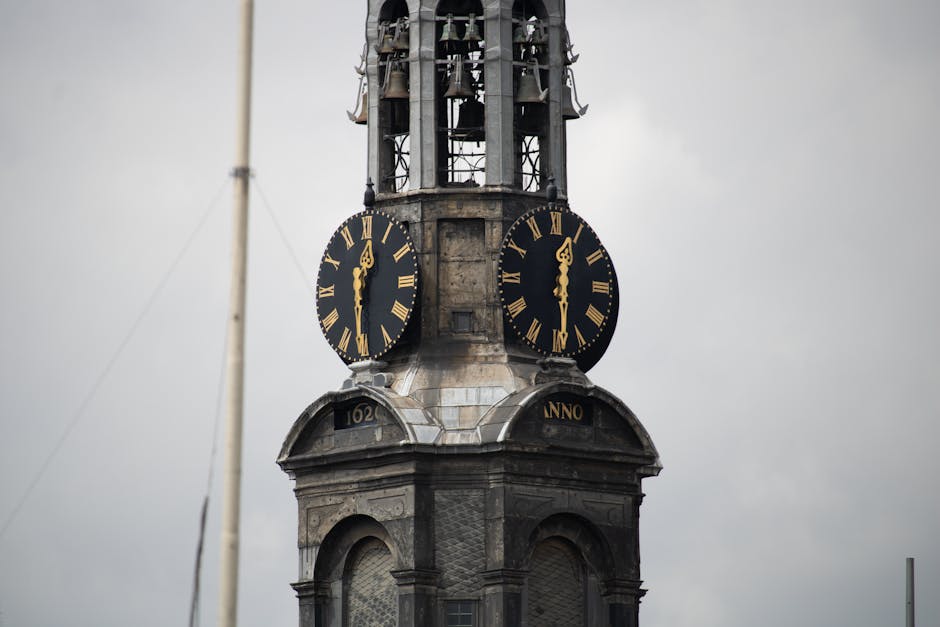
Discover the opulent 17th-century mansions and rich history of Amsterdam's famous Canal Belt on this self-guided architectural walking route.
 Easy
EasyKrakow, Poland
Explore the prestigious Jagiellonian University district, featuring Neo-Gothic architecture, Baroque churches, and Krakow's hidden scholarly gems.
 Easy
EasyKrakow, Poland
Explore the historic heart of Kazimierz on this self-guided walk through synagogues, ancient cemeteries, and vibrant squares.
 Easy
EasyWarsaw, Poland
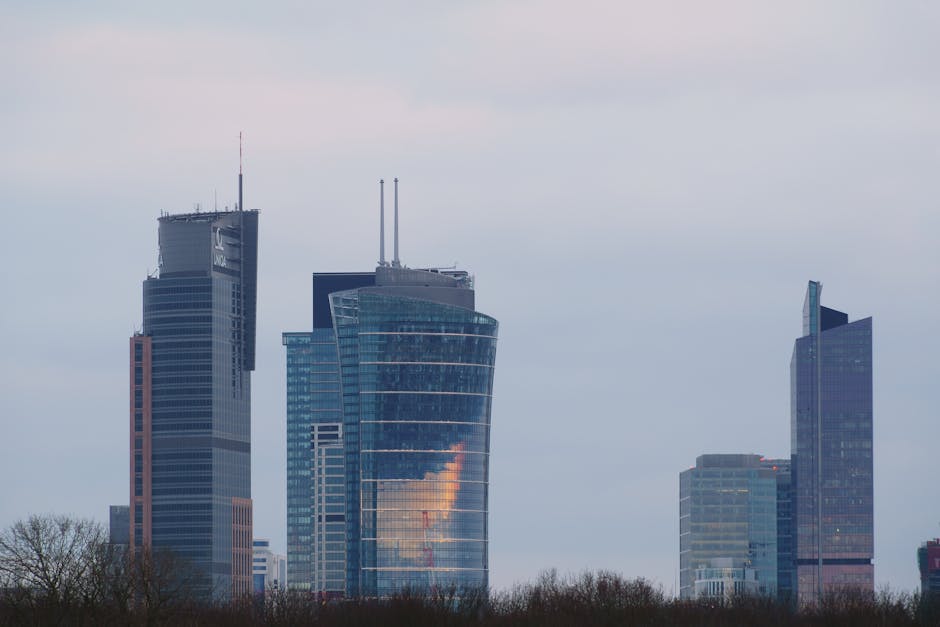
Discover the hidden courtyards and grand pre-war architecture of Warsaw's most atmospheric neighborhood on this self-guided stroll.
 Easy
EasyGothenburg, Sweden
Discover Gothenburg’s 17th-century Dutch foundations, historic canals, and military fortifications on this self-guided architectural walk.
 Easy
EasyRotterdam, Netherlands
Explore Rotterdam’s cultural heart on this self-guided walk through world-class museums, modernist villas, and futuristic architectural landmarks.
 Easy
EasyRotterdam, Netherlands
Capture Rotterdam's iconic skyline and historic bridges on this scenic self-guided photography walk along the Maas River and Noordereiland.
 Moderate
Rotterdam, Netherlands
Explore Rotterdam’s lush side through secret gardens, historic harbors, and the elegant 19th-century Shipping Quarter on this self-guided walk.
 Easy
EasyRotterdam, Netherlands
Explore Rotterdam's neon-lit streets and vibrant nightlife at your own pace with this independent audio walk through the city's coolest districts.