Self-guided audio tour in Brussels
Start Free on iPhone
Start free on iPhone to unlock this self-guided walking tour in Brussels. Hear all the stories that make it amazing, walk at your own pace, and begin whenever you want.
Your Private Tour Guide
Step into the medieval soul and neoclassical elegance of the Belgian capital with this self-guided walking route. Brussels is a city of layers, where 15th-century Gothic spires stand alongside 19th-century stock exchanges, and this neighborhood stroll through the Pentagon district reveals the very best of that architectural evolution. Your journey begins at the Place de la Bourse, the former heart of Belgian commerce, before diving into the winding alleys that lead to the world-renowned Grand Place. This UNESCO World Heritage site is often cited as one of the most beautiful squares in the world, and exploring it independently allows you to truly appreciate the intricate gold leaf and ornate guildhall facades at your own pace. As you navigate this historic center, you will encounter the legends that define the city, from the defiant spirit of the Town Hall to the quirky charm of the Manneken Pis. This audio walk is designed to highlight the transition from the city's origins as a trading hub to its emergence as a sophisticated European capital. You will pass by one of the city's oldest religious sites, Saint Nicholas Church, which has witnessed centuries of fires and reconstructions, reflecting the resilience of the local community. The route concludes under the magnificent glass ceilings of the Royal Gallery of Saint Hubert, a pioneer of 19th-century luxury shopping. Whether you are interested in the details of Brabantine Gothic architecture or the stories of the merchant guilds, this walking tour Brussels provides a comprehensive look at the city's golden heart. By following this self-guided path, you can avoid the constraints of a rigid schedule and immerse yourself in the vibrant atmosphere of the city center, from the smell of fresh waffles to the chime of the carillon. This is the ultimate way to experience the history and culture of Brussels without needing a traditional guided tour Brussels.
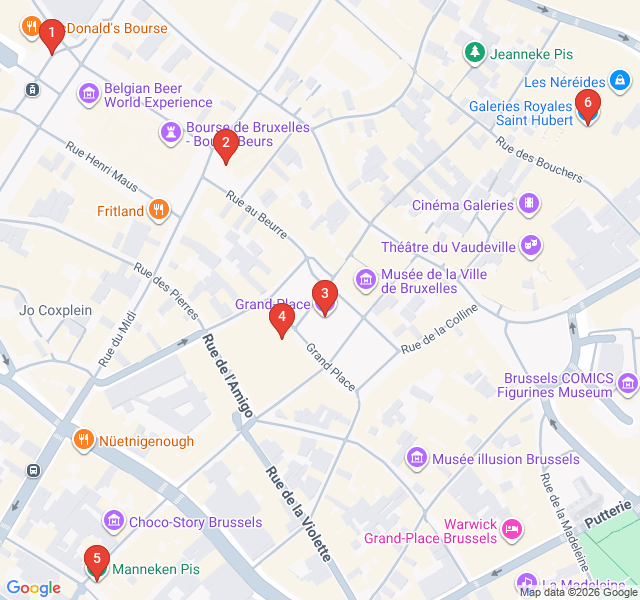
Numbers indicate the order of stops on the tour.
Begin your self-guided adventure at the Bourse, the former Stock Exchange building. Completed in 1873, this neoclassical landmark sits atop the ruins of a 13th-century Franciscan convent. Notice the ornate sculptures decorating the facade; they represent Belgian prosperity and trade. This spot has long been a central gathering place for locals, serving as both a commercial hub and a site for public celebrations. In recent years, it has been transformed into 'Belgian Beer World,' though its architectural significance remains rooted in the 19th-century 'Haussmannization' of Brussels, which saw the Senne river covered to create these wide, grand boulevards.
Tucked just behind the Bourse is one of the oldest churches in the city. Dedicated to the patron saint of merchants, Saint Nicholas Church dates back to the 12th century. Its history is a testament to survival, having been damaged during the French bombardment of 1695 and nearly destroyed several times since. Inside, the architecture is a mix of styles, but the real story lies in its relationship with the nearby market traders. Look for the small cannonball embedded in one of the pillars—a literal scar from the 1695 bombardment that leveled much of the surrounding neighborhood.
Welcome to the Grand Place, the crown jewel of Brussels. This square is a masterpiece of architectural harmony, despite featuring several different styles. After the French destroyed the square in 1695, the city's guilds rebuilt it in just five years, creating the stunning guildhalls you see today. Each house belonged to a specific trade, such as the bakers, brewers, or haberdashers. Look for the symbols on the facades to identify them. The square remains the heart of the city’s identity, hosting the biennial Flower Carpet and the annual Ommegang procession, celebrating the city's medieval heritage.
Dominating the Grand Place is the Town Hall, a masterpiece of Brabantine Gothic architecture. The oldest part dates to 1402. If you look closely at the spire, you’ll see it isn't perfectly centered with the main entrance—a quirk that has led to many local legends. At the very top stands a 5-meter-tall gilded statue of Saint Michael, the patron saint of Brussels, slaying a dragon. While the interior is used for civic duties today, the exterior serves as a stone history book, covered in statues of dukes, duchesses, and saints who shaped the region's history.
A short walk from the square leads to Brussels' most famous citizen: Manneken Pis. While the current bronze statue dates to 1619, a stone version existed here as early as the 15th century. There are dozens of legends about why this small boy is commemorated, ranging from a child putting out a fuse to a lost son being found. Despite his size, he is a symbol of the 'zwanze'—the irreverent, self-deprecating Brussels sense of humor. He famously has a wardrobe of over 1,000 costumes, which are changed several times a week according to a published schedule.
Conclude your stroll at the Royal Gallery of Saint Hubert. Opened in 1847, this was one of the first covered shopping arcades in Europe, predating similar galleries in Milan and London. It is divided into three sections: the King’s Gallery, the Queen’s Gallery, and the Prince’s Gallery. The glass-and-iron roof allowed the 19th-century elite to shop and socialize away from the muddy streets. Today, it remains a destination for luxury, housing some of Belgium’s finest chocolatiers and historic bookstores. It is the perfect place to experience the elegance of the Belgian 'Belle Époque'.
Start Free on iPhone
Explore “The Golden Heart of Brussels” with your very own Private Tour Guide with Zigway. Start free on iPhone, skip the large group and the fixed routes, and hear the city come alive as you go.
Your Private Tour Guide
Don't miss the good stuff
Explore Freely
 Easy
EasyBrussels, Belgium
Discover the colorful world of Belgian comics on this independent walking route through the creative streets and murals of central Brussels.
 Moderate
Brussels, Belgium
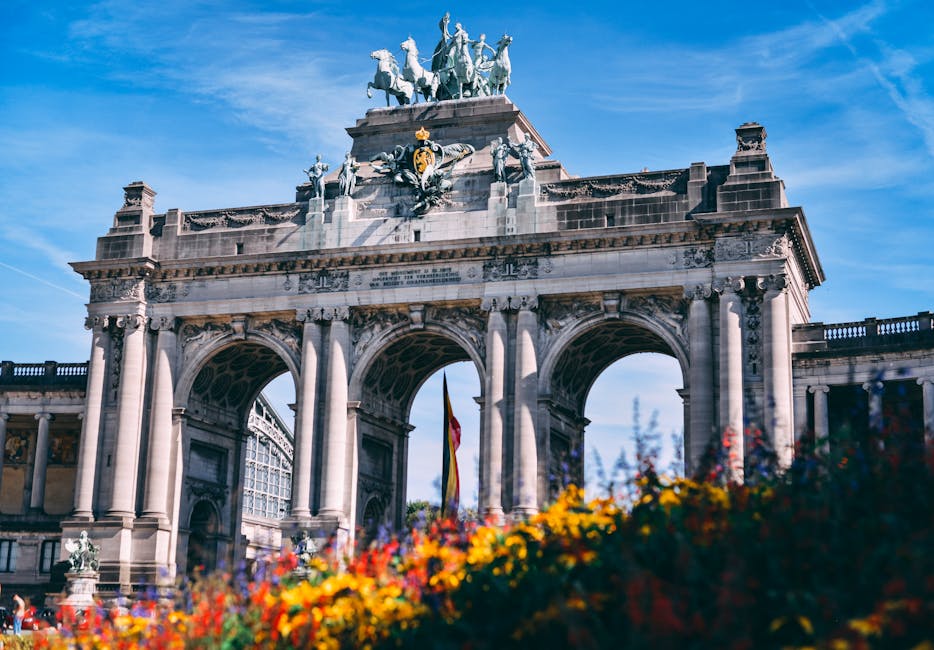
Explore the majestic Royal Quarter, from Art Nouveau gems to the King's Palace and the iconic views of Mont des Arts on this self-guided walk.
 Moderate
Brussels, Belgium
Explore Brussels' industrial heart and artistic rebirth on this self-guided walk through Molenbeek and the Canal district's iconic landmarks.
 Moderate
Brussels, Belgium
Discover Brussels' Art Nouveau masterpieces at your own pace, from Victor Horta's UNESCO sites to the flamboyant Maison Saint-Cyr.
 Easy
EasyGdansk, Poland
Discover the opulent Royal Way of Gdansk at your own pace. Explore Hanseatic history, gilded architecture, and the iconic Neptune's Fountain.
 Easy
EasySalzburg, Austria
Discover the 'Rome of the North' on this self-guided walk through the Baroque squares and monumental legacy of Salzburg’s Prince-Archbishops.
 Easy
EasyNairobi, Kenya
Explore Nairobi's architectural evolution from colonial-era landmarks to iconic Brutalist skyscrapers on this historic self-guided walking route.
 Easy
EasyNairobi, Kenya
Discover Nairobi's iconic skyline on this self-guided architecture walk through the CBD’s most famous modernist and Brutalist landmarks.
 Easy
EasyBruges, Belgium
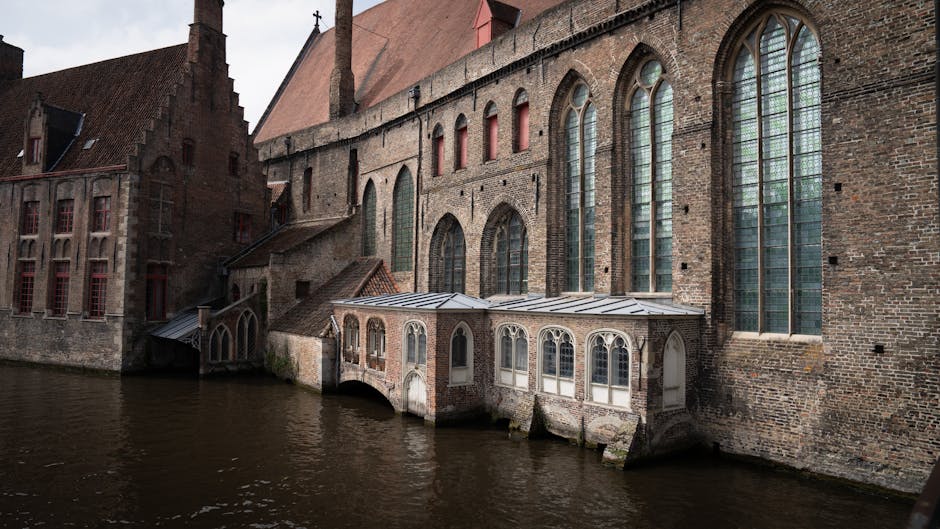
Discover the most iconic canal views in Bruges on this scenic self-guided audio walk through the historic "Venice of the North".
 Easy
EasyBruges, Belgium
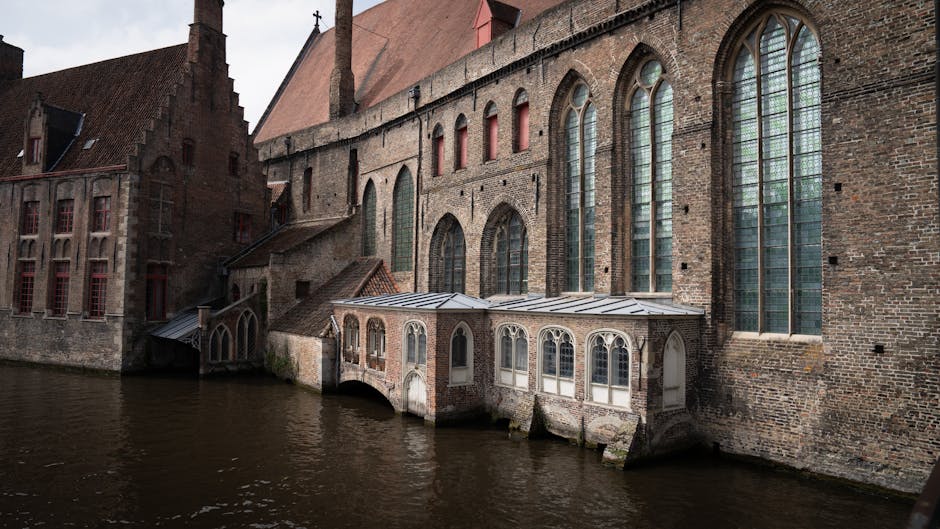
Discover the tranquil almshouses and hidden courtyards of Bruges on this peaceful self-guided audio walk through the historic St. Anna district.
 Moderate
Bruges, Belgium
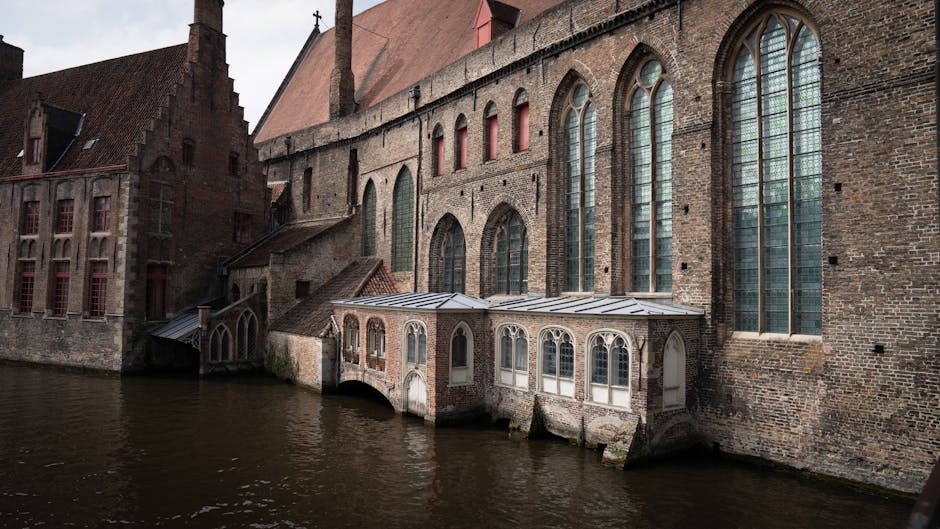
Discover the artistic soul of Bruges, from world-class Flemish Primitive paintings to the delicate traditions of handmade lace in the St. Anna district.
 Easy
EasyBruges, Belgium
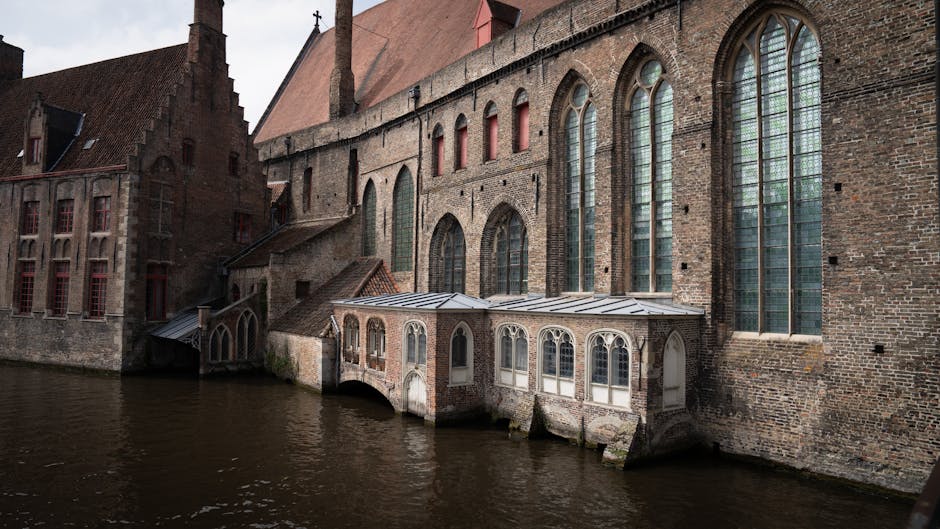
Discover the artisanal secrets of Bruges' world-class chocolatiers on this delicious self-guided walking route through the medieval center.