Self-guided audio tour in Lyon
Start Free on iPhone
Start free on iPhone to unlock this self-guided walking tour in Lyon. Hear all the stories that make it amazing, walk at your own pace, and begin whenever you want.
Your Private Tour Guide
Step back in time to the 15th and 16th centuries with this self-guided walk through Vieux Lyon, one of Europe's most extensive and best-preserved Renaissance districts. This neighborhood stroll invites you to discover the architectural gems hidden behind unassuming wooden doors. As you wander the narrow, cobblestone streets, you will uncover the famous traboules—secret passageways that allowed residents and silk workers to move between buildings and streets while staying sheltered from the elements. These corridors later played a vital role during the French Resistance in World War II, providing clandestine routes for those evading capture. On this walking route, you will encounter the iconic Tour Rose, a striking pink tower tucked away in a quiet courtyard that exemplifies the Italian influence on Lyon's urban design. The journey also highlights the Maison du Chamarier, a residence that once housed the financier of the cathedral, showcasing the transition from Gothic to Renaissance styles. You will explore La Longue Traboule, the longest secret passage in the city, which cuts through four buildings to connect two major streets. This independent travel experience allows you to appreciate the intricate details of stone carvings, spiral staircases, and hidden wells that many visitors overlook. Beyond the secret doors, the route brings you to the heart of the district's religious life at the Cathédrale Saint-Jean-Baptiste. Here, you can admire the 14th-century astronomical clock and the stunning stained glass. Whether you are a history buff or an architecture enthusiast, this walking tour Lyon offers a deep dive into the city's golden age. You can pause whenever you like to sample local pralines or browse the unique shops of the Saint-Jean quarter. This self-guided adventure ensures you see the most significant landmarks of Vieux Lyon while moving at a pace that suits you, uncovering the stories of the merchants and silk weavers who once made this city the economic heart of France.
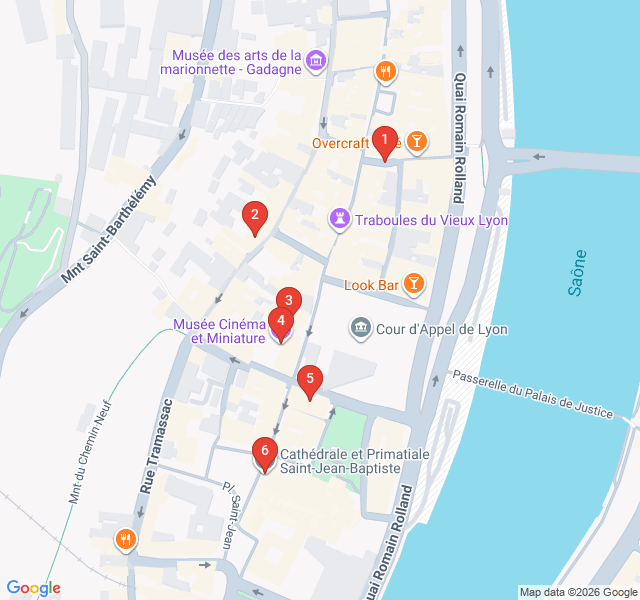
Numbers indicate the order of stops on the tour.
Begin your exploration at Place de la Baleine, a charming small square that serves as a gateway to the Renaissance heart of Lyon. The name, which translates to 'Whale Square,' is believed to stem from a 16th-century shop sign or even a real whale bone once displayed here. This spot perfectly captures the atmosphere of the old city with its narrow buildings and uneven stones. As you look around, notice the height of the structures; during the Renaissance, Lyon grew vertically because space within the city walls was limited. This square was a bustling hub for merchants and traders who arrived from across Europe to attend Lyon's famous fairs.
Enter through the doors at 16 Rue du Bœuf to find one of Lyon's most photographed spots: the Tour Rose. This circular pink tower, located within the courtyard of the Maison du Crible, is a masterpiece of Renaissance architecture. Built in the 16th century, the tower houses a spiral staircase that served the various levels of the surrounding apartments. The warm terracotta hue reflects the Italian architectural influence brought to Lyon by Florentine bankers and merchants. This courtyard is a 'traboule,' a private passage that residents allow the public to walk through. Please remember to keep your voice down as people still live in these historic apartments today.
Prepare to walk through the most famous passage in the city. La Longue Traboule connects 54 Rue Saint-Jean with 27 Rue du Bœuf. As you navigate this narrow corridor, you are crossing through four different buildings and several internal courtyards. These passages were originally designed to give silk workers a direct, sheltered route to transport their delicate fabrics from the looms to the merchants near the river. During World War II, these secret routes were essential for the French Resistance, allowing members to evade the Gestapo by disappearing into a door on one street and emerging blocks away on another. It is a true architectural labyrinth.
Located in the magnificent 'Maison des Avocats' (Lawyers' House), this stop highlights a stunning 16th-century building with an arcaded gallery. While the building itself is a historic treasure, it now houses a unique museum dedicated to two distinct arts: the meticulous world of miniature scenes and the secrets of cinema special effects. Even if you don't go inside, take a moment to admire the courtyard's symmetry and the golden-toned stone, known as 'Pierre de Couzon.' This site was once at risk of demolition in the 1960s but was saved and restored, helping to trigger the revitalization of the entire Vieux Lyon district.
The Maison du Chamarier is one of the most prestigious residences in Vieux Lyon. The 'Chamarier' was an important official—the financier and security chief for the Cathedral's cloister. This building is fascinating because it bridges two eras: the flamboyant Gothic style is visible in the intricate stone carvings, while the Renaissance influence appears in the courtyard's layout. Look for the dry well in the courtyard and the beautiful stone sink, which were luxuries at the time. The famous Marquise de Sévigné, a French aristocrat known for her letters, stayed here in the 17th century. It remains one of the finest examples of domestic architecture from Lyon's golden age.
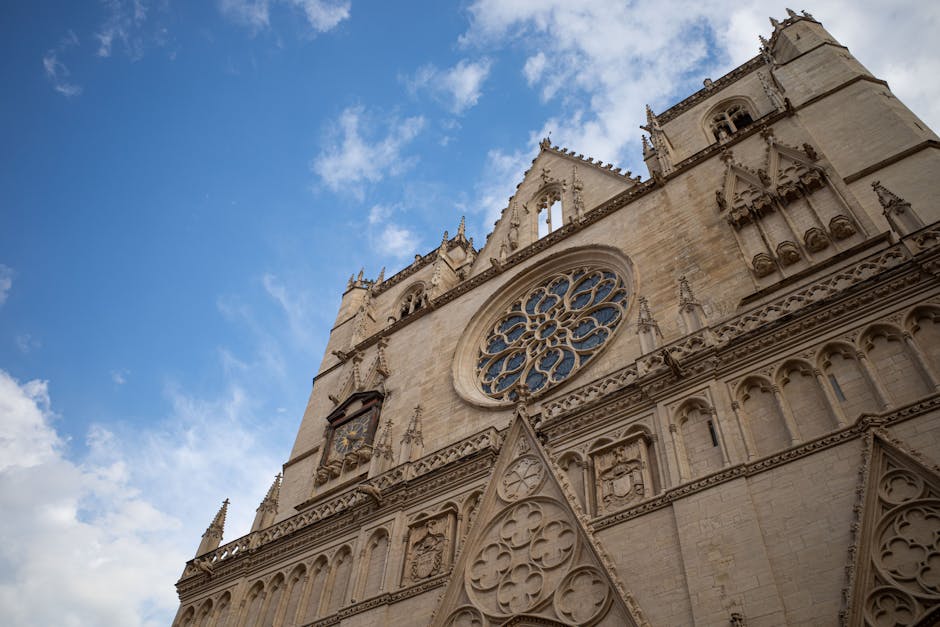
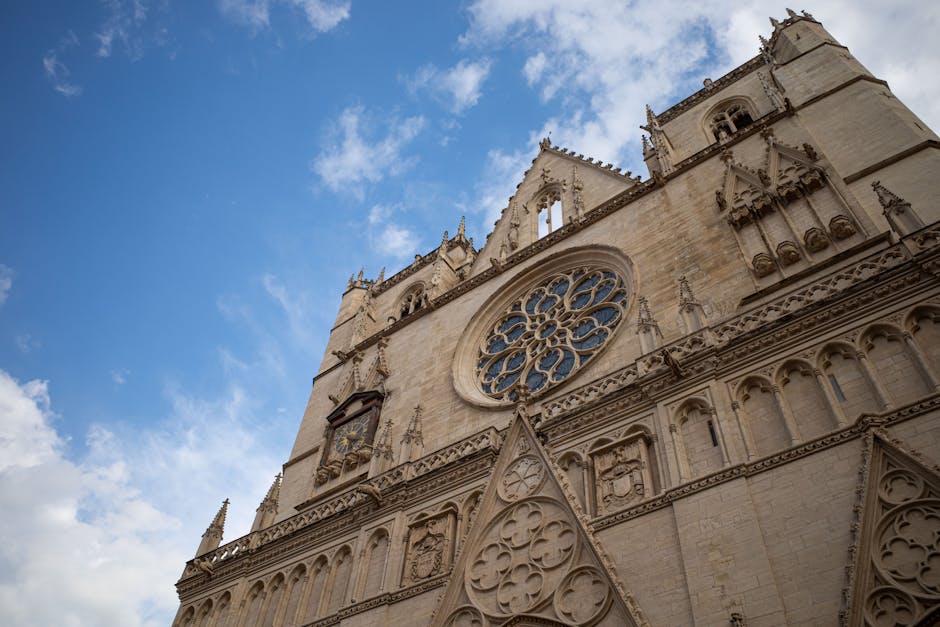
Your walk concludes at the Cathédrale Saint-Jean-Baptiste, the seat of the Archbishop of Lyon. Construction began in the 12th century on the ruins of older churches and took 300 years to complete, resulting in a blend of Romanesque and Gothic styles. Inside, you will find a remarkable 14th-century astronomical clock. At certain hours, the clock's automated figures—including angels and a rooster—perform a mechanical play. The cathedral also features 13th-century stained glass windows in the apse that have survived centuries of conflict. The square outside, Place Saint-Jean, offers a perfect view of the Basilica of Notre-Dame de Fourvière perched on the hill above, symbolizing the two hearts of Lyon's religious history.
Start Free on iPhone
Explore “Secret Passages of Renaissance Vieux Lyon” with your very own Private Tour Guide with Zigway. Start free on iPhone, skip the large group and the fixed routes, and hear the city come alive as you go.
Your Private Tour Guide
Don't miss the good stuff
Explore Freely
 Easy
EasyLyon, France
Discover Lyon's culinary soul on this self-guided walk from historic Presqu'île to the legendary Halles Paul Bocuse food market.
 Easy
EasyLyon, France
Explore Lyon’s futuristic waterfront! A self-guided walk through Confluence’s bold architecture and reclaimed industrial docks.
 Easy
EasyLyon, France
Discover the multicultural soul and industrial heritage of Lyon's 7th arrondissement on this vibrant self-guided walking route.
 Moderate
Lyon, France
Ascend the 'Hill that Prays' to explore Roman ruins, a shimmering basilica, and secret panoramic gardens on this historic self-guided walk in Lyon.
 Easy
EasyWarsaw, Poland
Discover the hidden courtyards and grand pre-war architecture of Warsaw's most atmospheric neighborhood on this self-guided stroll.
 Easy
EasyNairobi, Kenya
Discover Nairobi's iconic skyline on this self-guided architecture walk through the CBD’s most famous modernist and Brutalist landmarks.
 Easy
EasyKrakow, Poland
Explore the historic heart of Kazimierz on this self-guided walk through synagogues, ancient cemeteries, and vibrant squares.
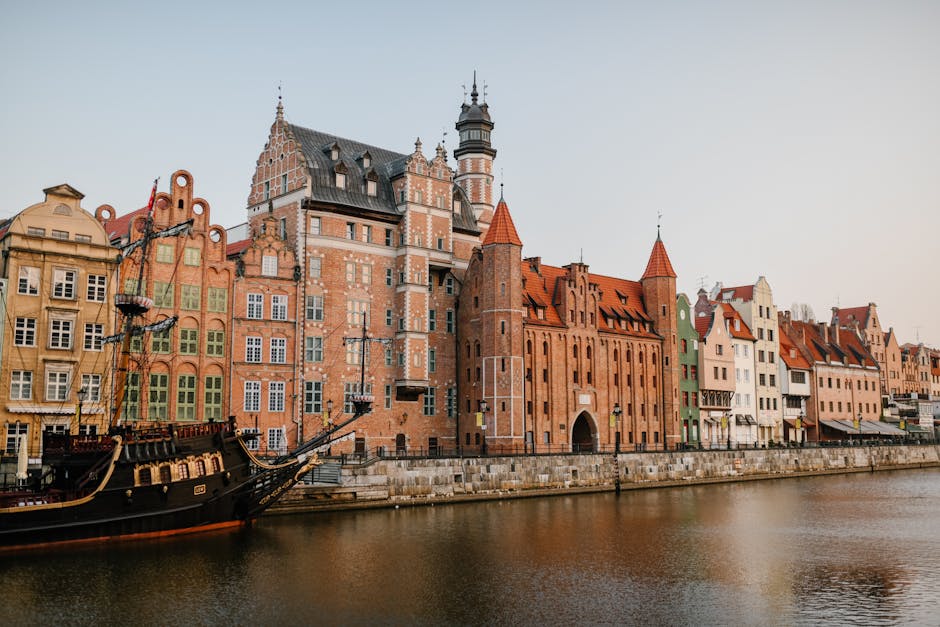 Easy
EasyGdansk, Poland
Discover the 'Baltic Gold' on this self-guided walk through Gdansk's historic mills, massive cathedrals, and the magical Mariacka Street.
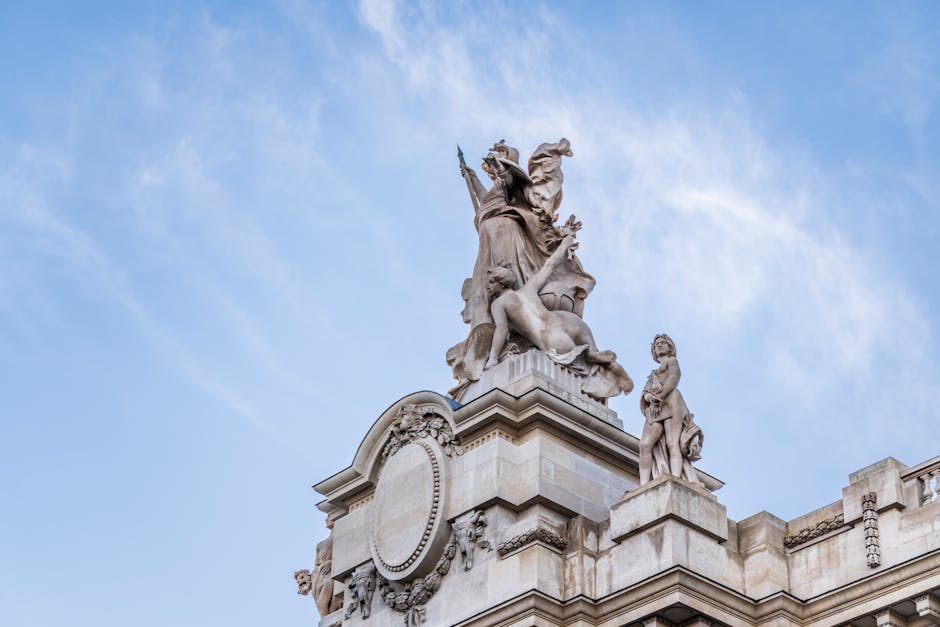 Challenging
Paris, France
Explore the secret vineyards, legendary artist studios, and hidden squares of Paris's iconic hilltop on this self-guided bohemian walking route.
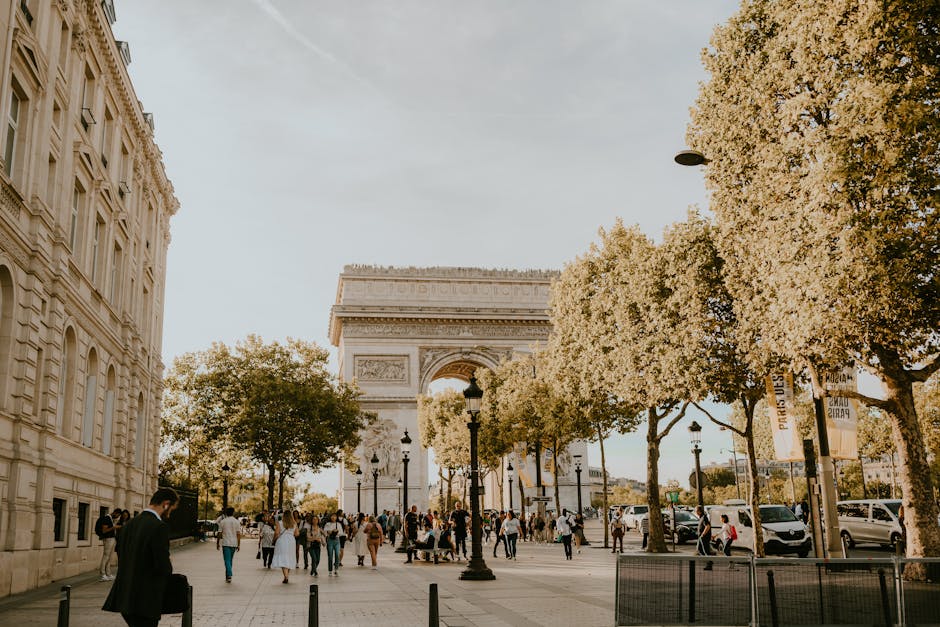 Easy
EasyParis, France
Explore the evolution of Parisian design from Art Nouveau whimsy to Le Corbusier's Modernist masterpieces on this self-guided architectural walk.
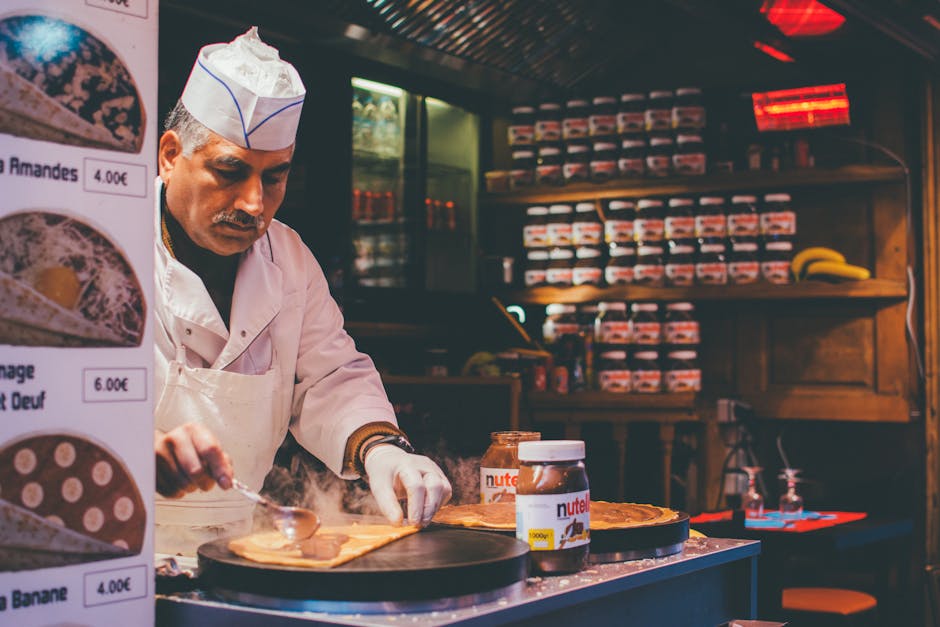 Easy
EasyParis, France
Explore the flavors and history of Bastille on this self-guided walk through the legendary Aligre Market and the scenic Coulée Verte.
 Easy
EasyParis, France
Discover aristocratic mansions, secret medieval courtyards, and royal history on this self-guided walk through the enchanting Marais district.