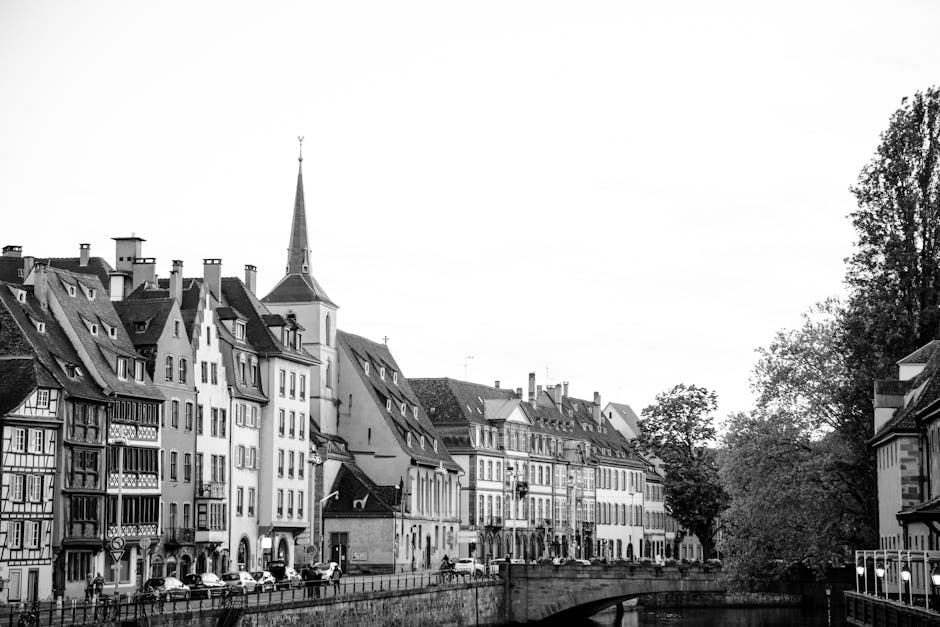
Self-guided audio tour in Strasbourg
Start Free on iPhone
Start free on iPhone to unlock this self-guided walking tour in Strasbourg. Hear all the stories that make it amazing, walk at your own pace, and begin whenever you want.
Your Private Tour Guide
Embark on a sensory journey through the heart of Alsace with this self-guided walk through Strasbourg’s culinary landscape. Strasbourg is a city where French refinement meets Germanic heartiness, and nowhere is this more evident than in its Winstubs—traditional wine taverns that have served as the city’s social soul for centuries. This walking route invites you to explore the Grande Île and beyond, uncovering the secrets of Alsatian gastronomy at your own pace. From the iconic timber-framed houses of the Place du Marché aux Cochons de Lait to the artisanal cheese cellars of Maison Lorho, you will discover how history and flavor are inextricably linked in this UNESCO World Heritage city. As you navigate this neighborhood stroll, you will encounter more than just restaurants; you will witness the evolution of Alsatian life. The route takes you from modern hubs of local commerce to the most historic corners of the city, such as the Maison Kammerzell, widely considered one of the most beautiful braced-framed buildings in existence. You will learn about the significance of the 'Cochon de Lait' (suckling pig) in local traditions and the meticulous craft behind the region’s famous Kougelhopf and Spätzle. Whether you are a dedicated foodie or a curious traveler, this audio walk provides the context needed to appreciate the nuances of Riesling, the pungency of Munster cheese, and the crispness of a local Meteor beer. This walking route is designed for independence. There is no need to follow a rigid schedule; instead, you can pause for a pastry at L'Atelier 116 or linger over the views in Petite France at La Corde à Linge. The path bridges the gap between the monumental landmarks of the Cathedral district and the charming, water-filled alleys of the former tanners' quarter. By the time you reach the brewing heritage sites toward the end of the journey, you will have a comprehensive understanding of why Strasbourg remains a premier destination for culinary exploration. Discover the stories behind the storefronts and the traditions that continue to simmer in every Alsatian kitchen on this immersive self-guided adventure. **Note:** This area is known for its ever-changing character. Street art, pop-up venues, and temporary exhibitions may differ from what's described. That's part of the adventure - you might discover something entirely new!
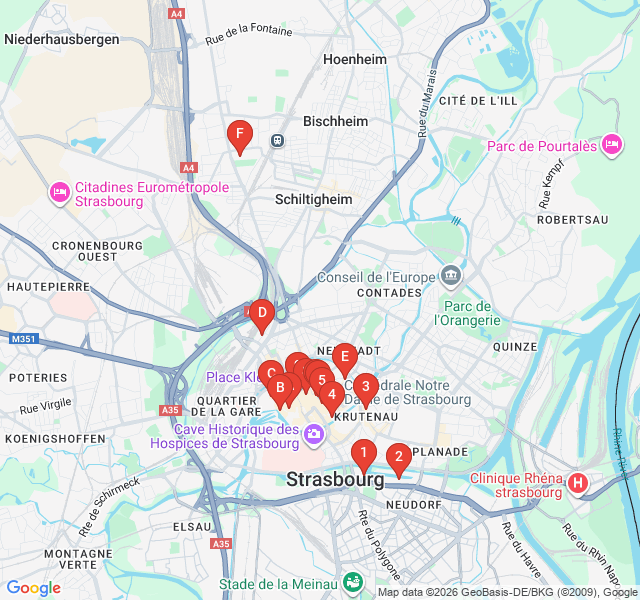
Numbers indicate the order of stops on the tour.
Start your journey at this modern pulse point of Alsatian daily life. While it may seem like a standard supermarket, this is where locals source the staples of the Alsatian larder. Look for the dedicated sections for local 'terroir' products—from jars of choucroute (sauerkraut) to vacuum-packed Munster cheese and bottles of Sylvaner wine. Understanding how these ingredients are sold today provides a baseline for the historic culinary traditions you are about to encounter. It is a reminder that Alsatian cuisine isn't just for tourists; it is a living, breathing part of every household's weekly shopping list.
This modern cinematic complex marks the transition between the revitalized docklands and the historic core. While not a culinary site itself, its presence speaks to the 'New Strasbourg.' The area surrounding the cinema has become a hub for casual dining and modern social gatherings, contrasting with the ancient Winstubs you will see later. It represents the city's ability to balance its medieval past with a forward-looking, urban lifestyle. Take a moment to appreciate the scale of this development before we cross toward the more intimate streets of the Grande Île.
Located in a beautifully repurposed former tobacco factory, The People is a testament to Strasbourg's industrial-to-social transformation. This space now serves as a vibrant hostel and bar, popular with both travelers and locals. Historically, tobacco was a major crop in Alsace, and this building's massive proportions reflect the scale of that industry. Today, the focus has shifted to hops and grapes. The courtyard here is a perfect example of how the city breathes new life into its architectural heritage, creating social spaces where the next generation of food and drink culture is being written.
Step into one of the most atmospheric squares in Strasbourg. The 'Suckling Pig Market' square was historically the center for livestock trade, particularly the pigs that would become the stars of the region's famous charcuterie platters. Surrounded by stunning half-timbered houses, this square feels like a film set. Look up at the intricate balconies and the steeply pitched roofs, designed to shed the winter snow. Today, the pigs are gone, replaced by terraces where you can enjoy a coffee and soak in the medieval ambiance that has defined the city's market culture for centuries.
Standing proudly next to the Cathedral, the Maison Kammerzell is perhaps the most famous house in Strasbourg. Built in 1427 and significantly transformed in 1589, its ornate woodcarvings depict everything from biblical scenes to the signs of the zodiac. While it is a masterpiece of late Gothic and Renaissance architecture, it is also a legendary restaurant. Its signature dish is the 'Choucroute aux trois poissons' (sauerkraut with three types of fish), a sophisticated twist on the traditionally meat-heavy regional staple. It represents the height of Alsatian culinary prestige, where history is served on every plate.
To understand Strasbourg, you must understand the Winstub. Le Clou is a quintessential example of these traditional wine bars. Originally, Winstubs were places where wine growers could sell their surplus production directly to the public, accompanied by simple, hearty snacks. Inside, you'll find low ceilings, wood paneling, and a warmth that the locals call 'Gemütlichkeit.' It is the kind of place where tables are shared and the Riesling flows freely. It remains a bastion of local culture, serving classics like 'Wädele' (pork knuckle) in an environment that hasn't changed much in decades.
Prepare your senses for a visit to a temple of cheese. Maison Lorho is led by Cyrille Lorho, who holds the prestigious title of 'Meilleur Ouvrier de France' (Best Craftsman of France). This is not just a shop; it is a curated collection of the finest dairy products in the country. The star here is the Munster, an Alsatian cheese known for its powerful aroma and creamy texture, often served with caraway seeds. The expertise required to age these cheeses in their underground cellars is a craft passed down through generations. It is a must-visit for anyone looking to understand the 'terroir' of the region.
You might be surprised to see this global giant on a culinary walk, but look at the building it occupies. In Strasbourg, even fast food must bow to architectural heritage. This McDonald's is housed in a magnificent timber-framed building, showcasing the city's strict preservation laws. It serves as a fascinating intersection of global commercialism and local tradition. Observe how the golden arches are integrated (or hidden) to respect the historic facade. It’s a reminder of the constant tension and eventual compromise between maintaining a medieval identity and functioning as a modern European capital.
You are now in the heart of the Grande-Île, the first city center to be entirely classified as a UNESCO World Heritage site. This 'Big Island' is encircled by the River Ill and contains the city's most significant landmarks. As you walk, notice how the streets are named after ancient guilds—bakers, butchers, and tanners. This geography was designed by food and trade. The proximity to the water was essential for transporting goods and for the industries that fed the city. Every cobblestone here has a story related to the commerce and consumption that built Strasbourg.
Follow the scent of freshly baked bread to L'Atelier 116. This artisanal bakery is a local favorite for its commitment to traditional methods and organic ingredients. Here, you can see the 'Kougelhopf,' the crown-shaped brioche that is a symbol of Alsatian hospitality. Legend says it was first baked by the Three Wise Men for a local who hosted them. Whether you try a sweet version with almonds and raisins or a savory one with bacon and walnuts, you are tasting a piece of Alsatian folklore. Their open-view workshop allows you to witness the 'boulangers' at work, maintaining the city's high standards for daily bread.
Welcome to Petite France, the most picturesque quarter of the city. La Corde à Linge (The Clothesline) is a restaurant that pays homage to the tanners who once lived and worked here, hanging their skins to dry on the balconies. Today, it is famous for its 'Spätzle'—a type of egg noodle that is a cornerstone of Alsatian and southern German cuisine. Served in various styles, from creamy cheese to mushroom sauces, it is the ultimate comfort food. Dining here, overlooking the locks and the rotating bridge, provides a perfect marriage of scenic beauty and culinary tradition.
While Alsace is famous for its wine, it is also the premier beer-producing region of France. Le METEOR is a large, vibrant brasserie dedicated to the Meteor brewery, which has been independent and family-owned since 1640. This space celebrates the art of brewing with a modern, industrial-chic vibe. You can learn about the different varieties of Alsatian hops, known for their aromatic qualities. It’s a great place to see how the city's drinking culture is evolving, moving from the quiet corners of the Winstub to large, communal beer halls that pulse with energy.
As we move toward the northern edge of the center, we find modern hospitality concepts like the Voco 'The Garden.' This area was historically more industrial and residential, but it is now seeing a surge in 'green' urban design. The hotel's emphasis on its garden space reflects a growing trend in Strasbourg to reintegrate nature into the urban fabric. While less about ancient recipes, it represents the modern traveler's palate—one that values sustainability and tranquility alongside local authenticity.
This stop highlights the practical reality of living in a historic city center. In the narrow streets of the Grande Île, large supermarkets are impossible, so 'Express' stores like this one become the neighborhood's pantry. For a traveler, these are excellent places to pick up quick local snacks like 'Bretzels' (pretzels) or local gingerbread (Pain d'Épices). It shows how the city manages to keep its historic heart functional for the thousands of people who still call these timber-framed houses home.
Our final stop takes us just north of the city center to Schiltigheim, known as the 'City of Brewers.' Historically, this was where the major breweries were located because of the pure water supply. While this E.Leclerc is a modern shopping destination, its location in Schiltigheim is significant. Every year, this town hosts a massive beer festival that rivals those in Germany. Ending here reminds us that Strasbourg's culinary reach extends beyond the tourist center and into the surrounding towns, each contributing its own flavor to the Alsatian identity.
Start Free on iPhone
Explore “Winstubs and Wine: A Culinary Walkthrough” with your very own Private Tour Guide with Zigway. Start free on iPhone, skip the large group and the fixed routes, and hear the city come alive as you go.
Your Private Tour Guide
Don't miss the good stuff
Explore Freely
 Easy
EasyStrasbourg, France
Discover the vibrant soul of Strasbourg’s student district. Explore historic factories, lively squares, and canal-side hangouts at your own pace.
 Easy
EasyStrasbourg, France
Explore Strasbourg’s Gothic heart and astronomical marvels on this self-guided walk through the historic Grande Île.
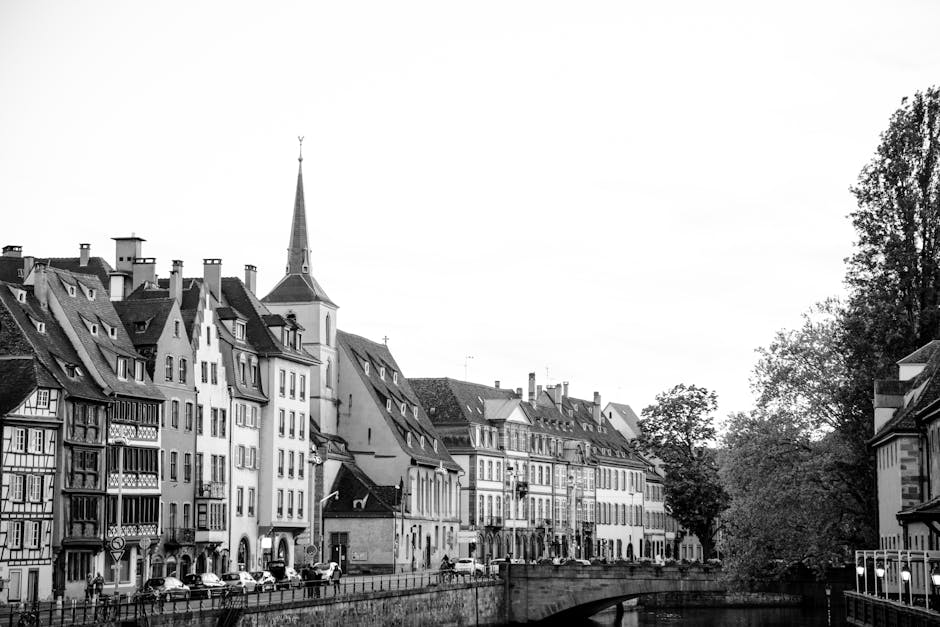 Easy
EasyStrasbourg, France
Discover Strasbourg’s soul on this self-guided stroll along historic quays, scenic bridges, and the fairytale canals of Petite France.
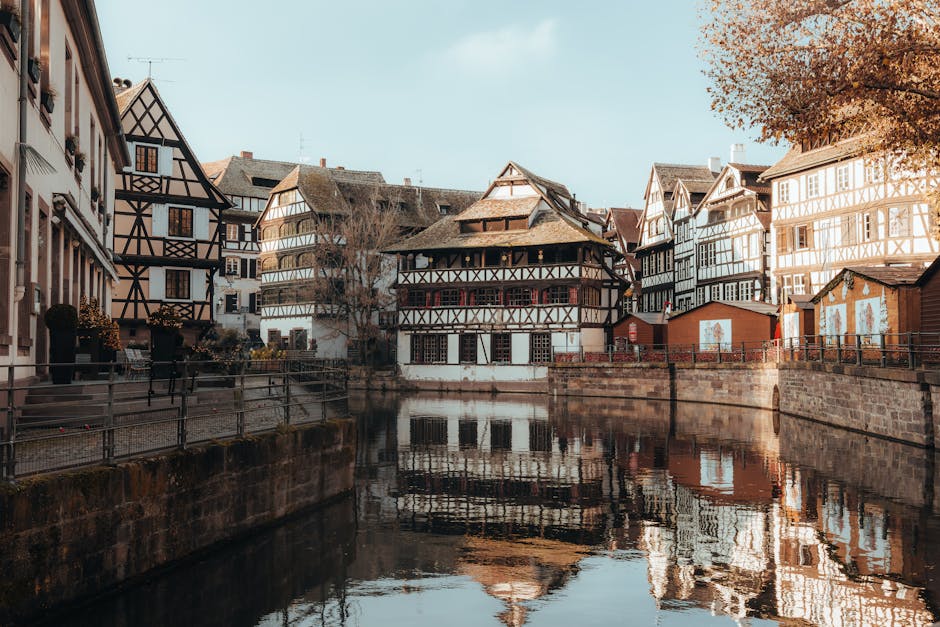 Moderate
Strasbourg, France
Explore the military genius of Vauban on this self-guided walk through Strasbourg’s historic bridges, dams, and riverside defenses.
 Easy
EasyGdansk, Poland
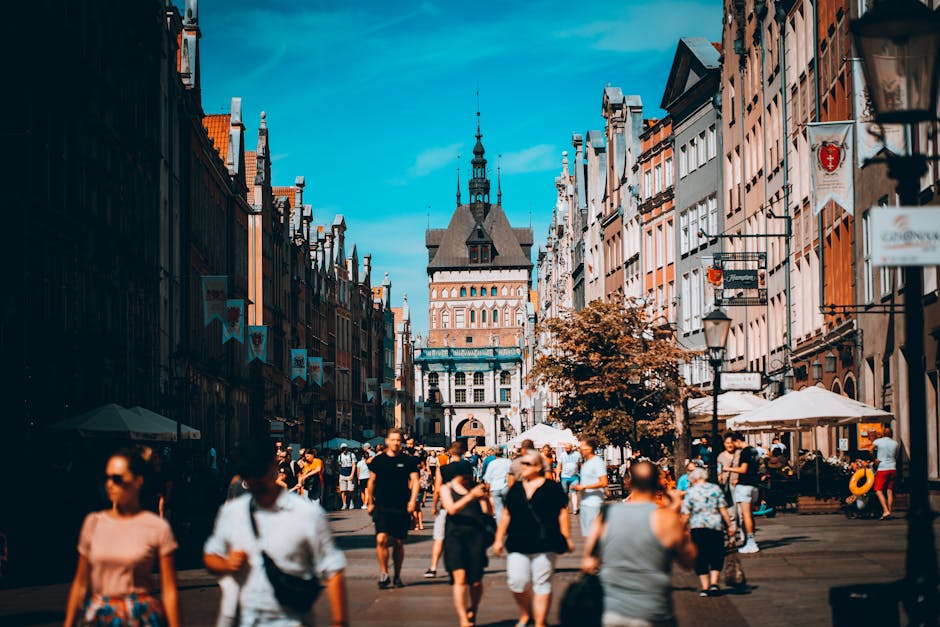
Taste the history of the Baltic. Explore Gdansk's culinary heritage from medieval markets to gold-flecked liqueurs on this self-guided walk.
 Easy
EasyKrakow, Poland
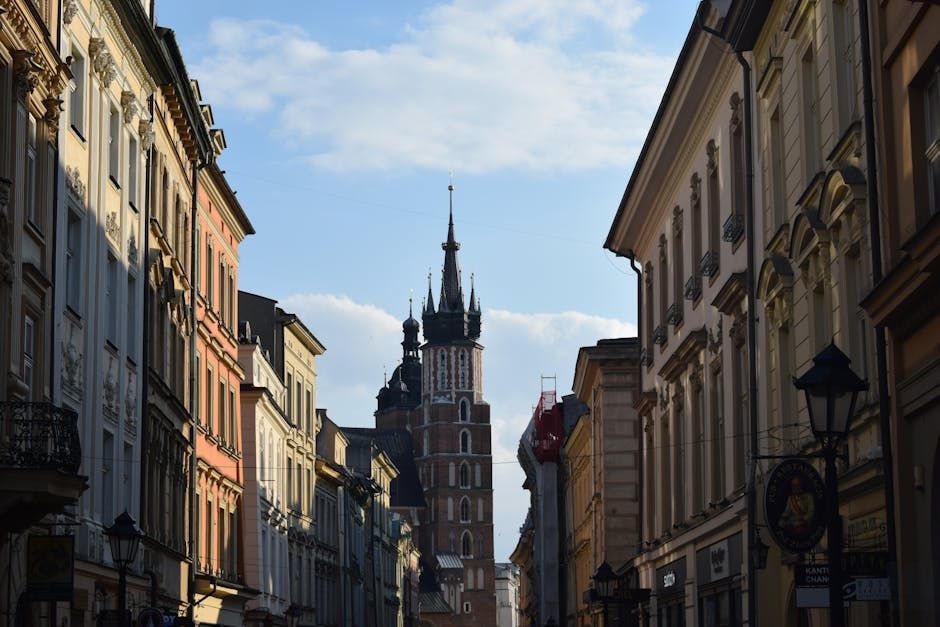
Savor the soul of Krakow on this self-guided walk through historic markets, bohemian cafes, and the city's best pierogi spots.
 Easy
EasyGothenburg, Sweden
Explore Gothenburg’s historic wooden houses, legendary giant cinnamon buns, and panoramic fortress views on this self-guided neighborhood stroll.
 Easy
EasyGothenburg, Sweden
Discover Gothenburg’s 17th-century Dutch foundations, historic canals, and military fortifications on this self-guided architectural walk.
 Challenging
Paris, France
Explore the secret vineyards, legendary artist studios, and hidden squares of Paris's iconic hilltop on this self-guided bohemian walking route.
 Easy
EasyParis, France
Explore the evolution of Parisian design from Art Nouveau whimsy to Le Corbusier's Modernist masterpieces on this self-guided architectural walk.
 Easy
EasyParis, France
Explore the flavors and history of Bastille on this self-guided walk through the legendary Aligre Market and the scenic Coulée Verte.
 Easy
EasyParis, France
Discover aristocratic mansions, secret medieval courtyards, and royal history on this self-guided walk through the enchanting Marais district.