Self-guided audio tour in Johannesburg
Start Free on iPhone
Start free on iPhone to unlock this self-guided walking tour in Johannesburg. Hear all the stories that make it amazing, walk at your own pace, and begin whenever you want.
Your Private Tour Guide
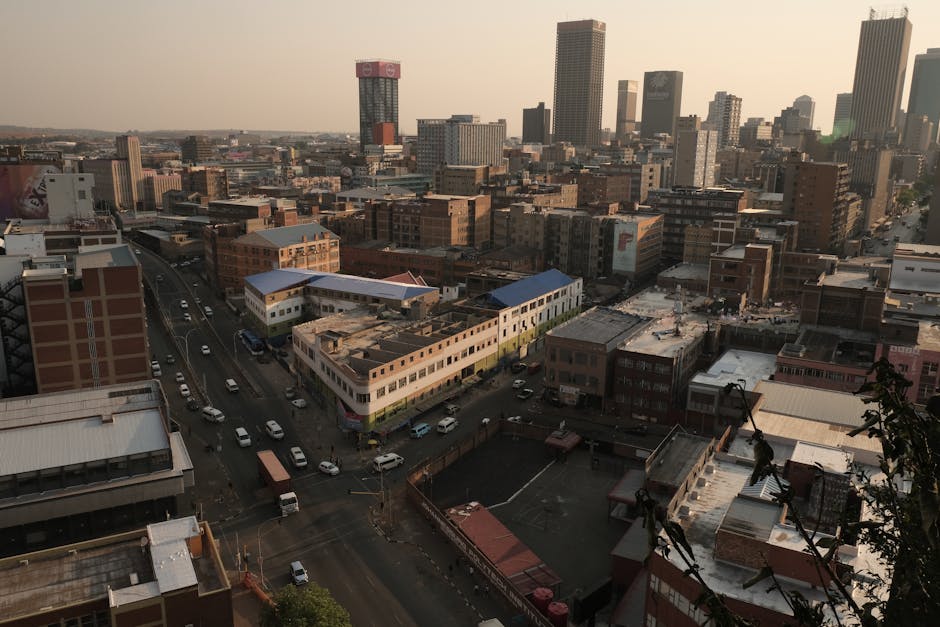
Newtown is the rhythmic heartbeat of Johannesburg's cultural identity, a neighborhood where the industrial grit of the early mining era has been transformed into a vibrant sanctuary for the arts. This self-guided walk invites you to explore the 'Cultural Precinct,' a zone that served as the frontline for creative resistance during South Africa's most turbulent years. As you follow this walking route, you will encounter the shadows of the migrant labor system at the Workers' Museum and the defiant stage of the Market Theatre, which once challenged the very foundations of apartheid. What makes this neighborhood stroll unique is the seamless blend of somber history and exuberant creativity. You will stand in Mary Fitzgerald Square, named after the labor activist known as 'Pickhandle Mary,' and see how a former power station has become a world-class science hub. The architecture itself tells a story, with red-brick warehouses and converted market halls housing some of the continent's most important collections of music, history, and social commentary. Whether you are drawn to the jazz legacy of Kippie Moeketsi or the massive street art murals that decorate the underpasses, Newtown offers a raw and authentic look at the soul of Johannesburg. This walking tour Johannesburg experience allows you to set your own pace, giving you the freedom to linger in the galleries of Museum Africa or reflect on the harsh realities of the past in the preserved compounds of the Workers' Museum. Exploring independently is the best way to soak in the atmosphere of a district that has reinvented itself time and again, evolving from a crowded market to a world-renowned center for theater and jazz. This self-guided adventure provides a deep dive into the resilience of the human spirit through the lens of South African art and history.
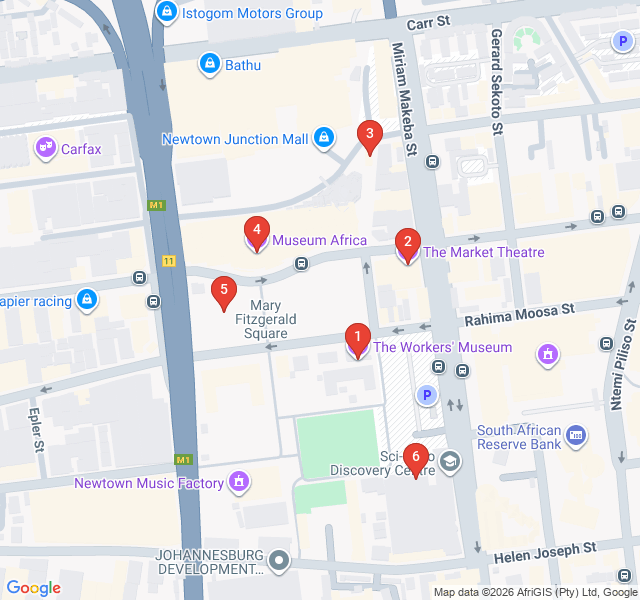
Numbers indicate the order of stops on the tour.
Begin your self-guided adventure at the Workers' Museum, one of the few remaining examples of a migrant labor compound in South Africa. Established in 1913, this site once housed hundreds of men who traveled from rural areas to work for the city’s electricity and tram departments. The experience here is sobering; you can see the original concrete bunks and the cramped living conditions that defined the lives of those who built Johannesburg's infrastructure under the oppressive system of migrant labor. The museum serves as a powerful reminder of the human cost of the city's industrial boom. Take a moment to observe the contrast between this heavy history and the creative energy that now surrounds the building in modern Newtown.
Just a short stroll away stands the Market Theatre, an institution that gained worldwide fame as the 'Theatre of the Struggle.' Founded in 1976 inside the city’s converted citrus market, it was a rare space where multi-racial casts and audiences could gather in defiance of apartheid laws. The building still retains much of its original market character, including the beautiful Edwardian facade and interior signage. This wasn't just a place for entertainment; it was a site of political protest and artistic bravery where plays by the likes of Athol Fugard were premiered. Today, it remains a premier venue for cutting-edge South African drama, continuing its legacy of social commentary and creative excellence.
Adjacent to the Market Theatre is the distinctive dome of Kippie's, once the most famous jazz club in Johannesburg. It was named after Kippie Moeketsi, the legendary 'Saxophone Man' who was a pioneer of South African jazz. During the 1980s and 90s, this venue was the heartbeat of the city's music scene, hosting icons like Abdullah Ibrahim and Miriam Makeba. Although it has functioned primarily as an event space and monument in recent years, the building itself—modeled after the old market’s public toilets—remains a symbol of the township jazz culture that thrived despite the restrictions of the era. It represents the soulful, improvisational spirit that defines the Newtown Creative Quarter.
Continuing through the precinct, you will reach Museum Africa, housed in the massive 1913 fruit and vegetable market building. This is Johannesburg's premier social and cultural history museum. The scale of the interior is breathtaking, reflecting the city's early status as a commercial hub. Inside, the collections cover everything from the origins of humankind and the history of gold mining to the evolution of South African music and photography. Look out for the 'Johannesburg Transitions' exhibit, which explores how the city has changed over the decades. The museum is not just a repository of objects but a narrative of the diverse people who have called this complex city home.
Step out into the expansive Mary Fitzgerald Square, the central public hub of Newtown. This square is named after Mary 'Pickhandle' Fitzgerald, a pioneering trade unionist and the first woman to hold public office in the city. The space is a popular venue for concerts, festivals, and political rallies, reflecting its history as a site of labor strikes in the early 20th century. As you walk across the square, notice the numerous carved wooden heads—over 500 in total—created by artists from across the continent. These sculptures represent the diverse faces of the people who pass through Johannesburg, turning the pavement into a massive open-air art gallery.
Your walking route concludes at the Sci-Bono Discovery Centre, located in the historic Electric Workshop. This building was once the power station that provided electricity for the city's trams, and its transformation into Southern Africa's largest science center is a perfect example of Newtown’s urban renewal. While the interior is filled with high-tech interactive exhibits aimed at inspiring the next generation of scientists, the exterior remains a monument to Johannesburg's industrial heritage. The massive steel trusses and brickwork speak to a time when Newtown was the engine room of the city, now repurposed as a place of learning and discovery.
Start Free on iPhone
Explore “Newtown Creative Quarter Walk” with your very own Private Tour Guide with Zigway. Start free on iPhone, skip the large group and the fixed routes, and hear the city come alive as you go.
Your Private Tour Guide
Don't miss the good stuff
Explore Freely
 Easy
EasyJohannesburg, South Africa
Discover the 'City of Gold' on this self-guided walk through Johannesburg’s historic mining district, from Gandhi Square to Mandela’s law office.
 Moderate
Johannesburg, South Africa
Explore the creative soul of Johannesburg on this self-guided walk through Melville’s iconic bookstores, cafes, and ancient ridges.
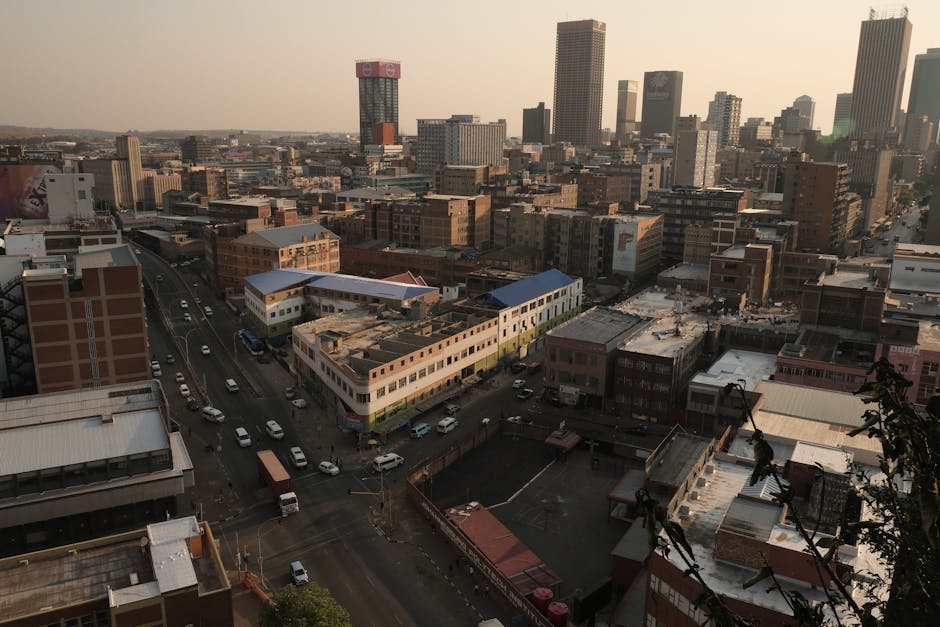 Easy
EasyJohannesburg, South Africa
A sensory self-guided walk through Johannesburg's Indian district, featuring aromatic spices, legendary street food, and rich anti-apartheid history.
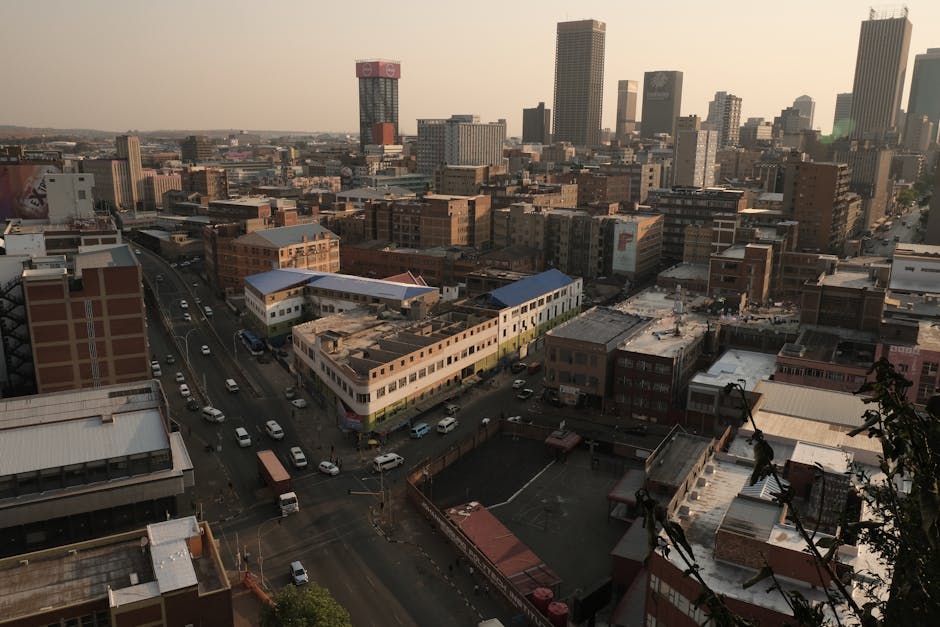 Challenging
Johannesburg, South Africa
Explore the opulent Victorian and Edwardian mansions of the Randlords on this historic self-guided walk through Johannesburg's Parktown.
 Easy
EasyNairobi, Kenya
Discover Nairobi’s literary soul on this self-guided walk through historic libraries, iconic bookshops, and cultural centers in the heart of the CBD.
 Easy
EasyKrakow, Poland
Explore the prestigious Jagiellonian University district, featuring Neo-Gothic architecture, Baroque churches, and Krakow's hidden scholarly gems.
 Easy
EasyKrakow, Poland
Explore the historic heart of Kazimierz on this self-guided walk through synagogues, ancient cemeteries, and vibrant squares.
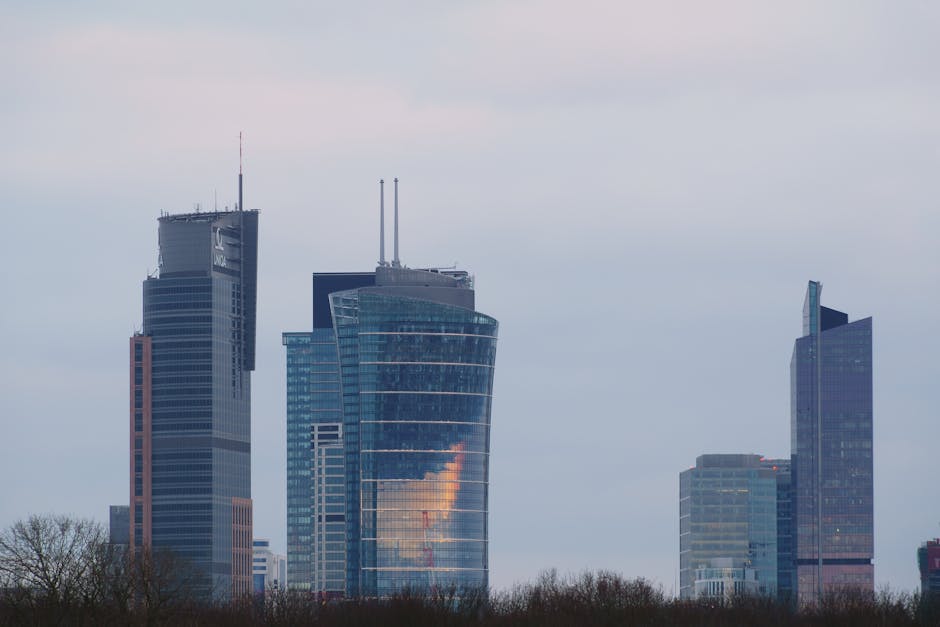 Easy
EasyWarsaw, Poland
Discover the hidden courtyards and grand pre-war architecture of Warsaw's most atmospheric neighborhood on this self-guided stroll.
 Moderate
Cape Town, South Africa
Explore the vibrant murals and creative hubs of Woodstock on this self-guided neighborhood stroll through Cape Town's artistic heart.
 Easy
EasyCape Town, South Africa
Explore the evolution of Cape Town’s harbor from its 18th-century roots to a modern cultural hub on this self-guided maritime history walk.
 Easy
EasyCape Town, South Africa
Discover the heritage of Cape Town on this self-guided audio walk through the historic Company’s Garden and its surrounding landmarks.
 Easy
EasyCape Town, South Africa
Explore Cape Town's bohemian heart and scientific heritage on this self-guided walk through the eclectic and historic Observatory neighborhood.