Self-guided audio tour in Split
Start Free on iPhone
Hear the stories behind the streets and sights around you as you walk Split. Try it free on iPhone.
Your Private Tour Guide
Split's Meje coastline and the work of Ivan Meštrović, Croatia's most celebrated artist, are the focus of this self-guided walk. It's a quiet walking tour along the sea below Marjan Hill, well away from the crowded stone lanes of Diocletian's Palace. The Meje peninsula runs beneath the southern slopes of the hill, and people often call it the city's most prestigious residential area. You'll notice the air change out here. It smells of Aleppo pines and salty Adriatic mist. Art in the Open: The Meštrović Coastal Walk mixes Mediterranean nature with monumental sculpture and historic architecture, and you do it on your own schedule. It starts at the Museum of Croatian Archaeological Monuments, where the early medieval history of the Croatian kings survives in stone. Then the path runs past secluded pebble beaches like Ježinac, with views of the crystal-clear sea that has inspired so many local creatives. The main event is the Meštrović Gallery. It's a neoclassical villa the artist designed himself as his summer home and studio, and it's full of bronze and marble masterpieces that hold their own against the great names of the Renaissance. Give it time. A short walk on is Kaštelet-Crikvine, a restored 16th-century estate where Meštrović installed a hauntingly beautiful cycle of wooden reliefs on the life of Christ. Heading back toward the center, you pass through Sustipan Park, a former cemetery turned cliffside garden. Many locals say it has the best panoramic view of Split harbor and the islands of Brač and Šolta. The walk ends at Matejuška, the traditional fishermen's port, where Split's old maritime heritage is still alive. It's sightseeing, sure, but it's also a slow look at how the rugged Dalmatian landscape feeds the art it inspires. Art lovers will be in their element. If you just want a peaceful break from the crowds, it does that well too, and you come away with a real feel for Split's cultural side.
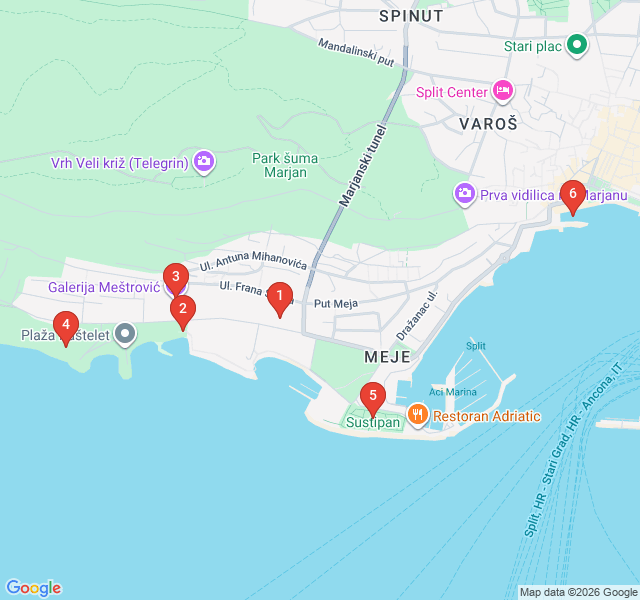
Numbers indicate the order of stops on the tour.
Start at this striking building, home to the most important collection of early medieval Croatian heritage. The museum was founded in 1893, and it covers the 7th to the 15th centuries, when the first Croatian principalities and kingdoms took shape. Inside you'll find intricately carved stone lintels, inscriptions that mention early Croatian kings, and jewelry from ancient burial sites. The building itself deserves a look. It was designed to protect these heavy stone pieces while letting natural light pick out the geometric 'interlace' patterns typical of pre-Romanesque Croatian art. Get a feel for that history here. It sets the scene for the art further along the coast.
Ježinac Beach is a good place to stop and take in the view. It's a local favorite, tucked away from the main tourist spots, and you'll know it by its stone piers and the walls of the Meštrović castle close by. The water is exceptionally clear and a deep Adriatic blue. Locals come down for a quick dip, or a coffee while looking out toward the island of Šolta. Bring a towel if the weather's warm. Rugged limestone rocks and the shade of the pines give it a wild, natural feel, which is quite a contrast with the structured art waiting at the gallery just up the hill.
Ivan Meštrović, often called the 'Croatian Rodin,' dreamed up this grand villa himself. It was built between 1931 and 1939, planned as his residence, his studio and an exhibition space. In 1952 he donated the property and more than 130 of his works to the state. Walk through the gardens and then the big halls, and watch how the sculptures play off the light and the sea views. Look for the massive bronze 'Grgur Ninski' study and the poignant 'Job.' The high ceilings and marble columns were designed specifically for pieces this size, so the building and the art really talk to each other. This is the stop to linger at.
A little further along the coast is Kaštelet, a 16th-century fortified estate that Meštrović bought and turned into a sacred space. Head for the Chapel of the Holy Cross. Inside is the 'Life of Christ' cycle, 28 large wooden reliefs carved over several decades. Many consider them his most intimate and emotionally raw work, and they show how completely he mastered wood. The courtyard is quiet, closed in by stone walls and looking out over the sea. Sit for a few minutes. The spiritual themes that filled the artist's later years are hard to miss in here, and the silence helps them land.
On the way back toward the city center you reach the Sustipan peninsula. It was once the site of a Benedictine monastery, then the city's main cemetery, and in the mid-20th century it was turned into a park. Only a small Neoclassical pavilion is left from its graveyard days. These days it belongs to couples and dreamers. The park sits on a high cliff with an unobstructed 270-degree view of the harbor and the Adriatic islands. It's arguably the most romantic spot in Split, especially as the sun begins to set and the city's white limestone starts to glow in the golden light. Time it right if you can.
The walk finishes at Matejuška, the historic heart of Split's fishing community. The rest of the Riva has gone modern and polished. Matejuška hasn't, and it still feels gritty and authentic. Look for the traditional wooden boats, called leuti, bobbing in the water, and the bronze monument of a fishing hook. For centuries fishermen mended their nets here and sold the day's catch. Now it's a popular social spot where locals gather in the evenings, sitting on the stone walls with a drink and enjoying the sea breeze. Join them. It's an easy way to slide from a day of art back into the everyday life of the city.
Explore Mode
Open Zigway, start Explore Mode and just walk. Your guide notices where you are and tells you the story of what's around you, on this route or any street you turn into.
Start Free on iPhone
Open Zigway as you walk and your private tour guide tells the stories behind what you pass.
Your Private Tour Guide
Don't miss the good stuff
Explore Freely
 Moderate
Split, Croatia
Wander through the narrow stone alleys and hidden medieval chapels of Split's historic fisherman's quarter on this scenic self-guided adventure.
 Easy
Split, Croatia
Taste the heart of Dalmatia on this self-guided walk through Split's historic markets, legendary taverns, and vibrant street food spots.
 Easy
Split, Croatia
Explore a 1,700-year-old Roman palace turned vibrant city. Discover ancient temples and medieval streets at your own pace with this audio walk.
 Easy
Split, Croatia
Explore Split's literary heritage on this self-guided walk through the Old Town, featuring iconic poets, playwrights, and historic theaters.
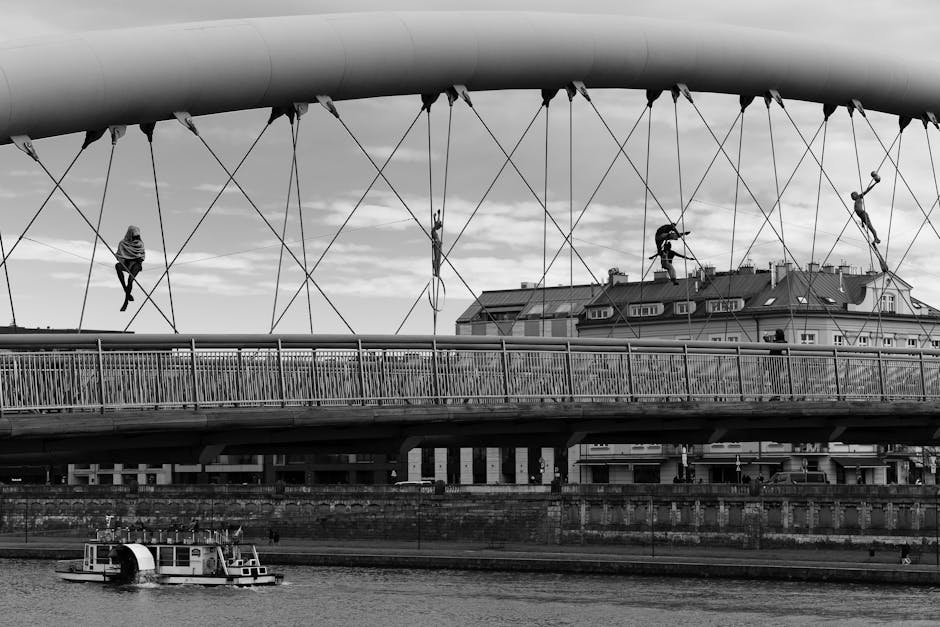 Easy
Krakow, Poland
Discover Krakow’s creative soul in Zabłocie, exploring industrial heritage, contemporary art museums, and avant-garde architecture at your own pace.
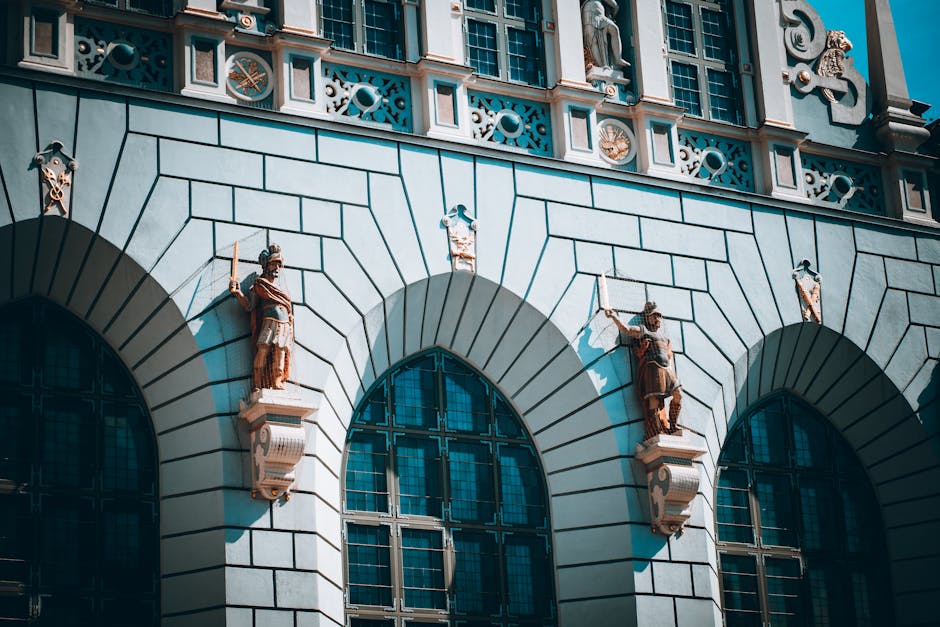 Easy
Gdansk, Poland
Discover the opulent Royal Way of Gdansk at your own pace. Explore Hanseatic history, gilded architecture, and the iconic Neptune's Fountain.
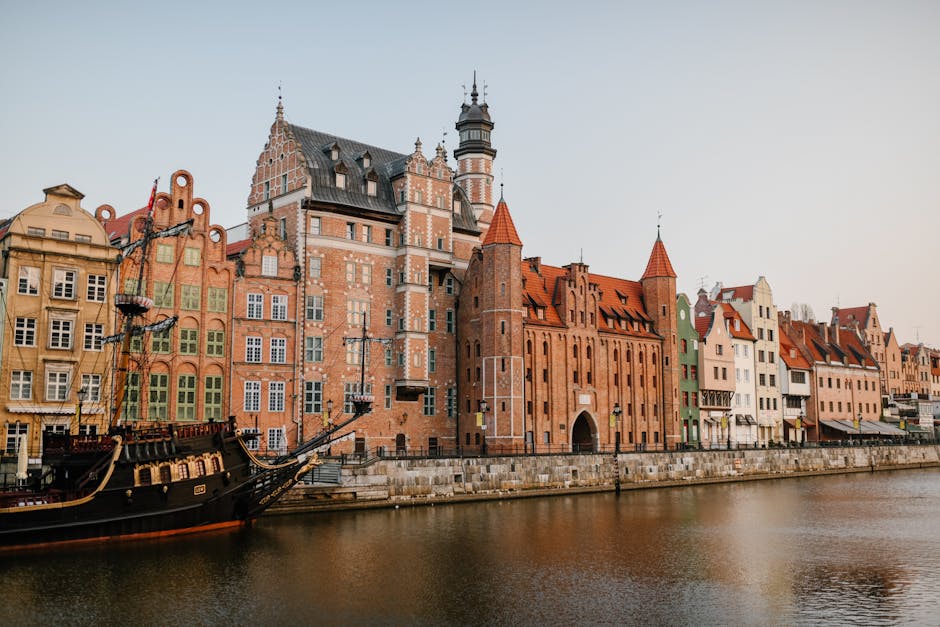 Easy
Gdansk, Poland
Discover the monastic heritage, world-famous organs, and lush botanical gardens of Oliwa on this peaceful self-guided neighborhood stroll.
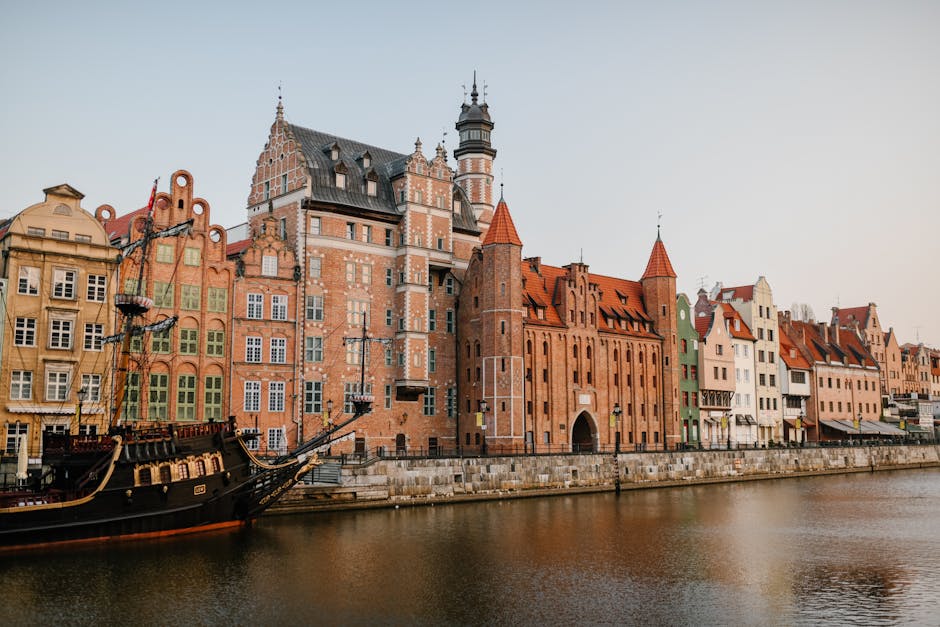 Easy
Gdansk, Poland
Discover the 'Baltic Gold' on this self-guided walk through Gdansk's historic mills, massive cathedrals, and the magical Mariacka Street.
 Easy
Dubrovnik, Croatia
Explore Dubrovnik’s legendary maritime history on this self-guided walk through the Old Port, ancient shipyards, and the historic quarantine station.
 Easy
Dubrovnik, Croatia
Discover Dubrovnik's nocturnal charm on this self-guided walk through lantern-lit alleys, jazz spots, and hidden cliffside bars.
 Moderate
Dubrovnik, Croatia
Escape the crowds and discover Dubrovnik's wild side on this scenic self-guided coastal walk through Lapad's pine forests and hidden bays.
 Easy
Dubrovnik, Croatia
Discover Dubrovnik's intellectual soul on this self-guided walk through ancient libraries, historic pharmacies, and serene monastic cloisters.