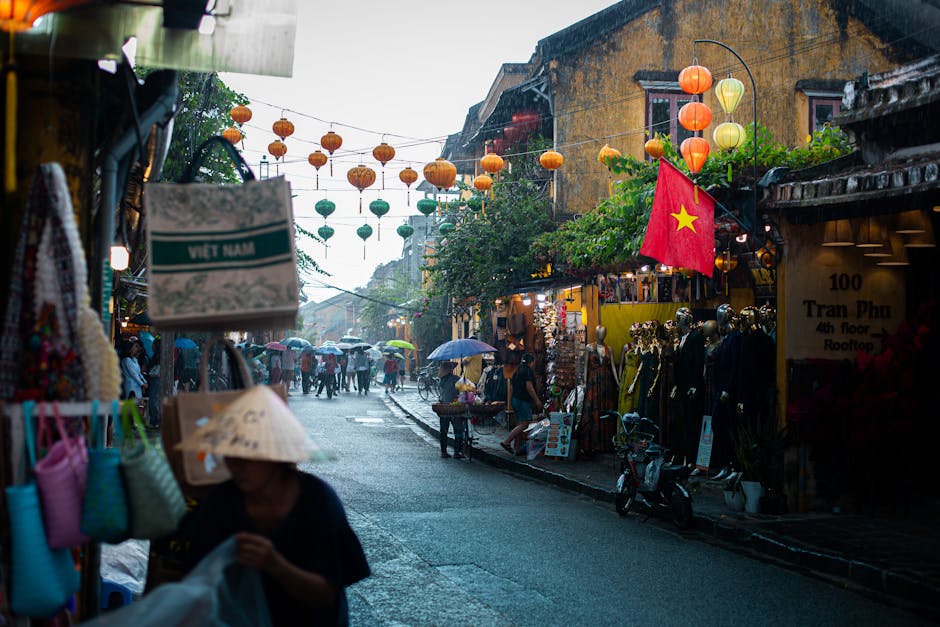
Self-guided audio tour in Hoi An
Start Free on iPhone
Start free on iPhone to unlock this self-guided walking tour in Hoi An. Hear all the stories that make it amazing, walk at your own pace, and begin whenever you want.
Your Private Tour Guide
Step away from the bustling tailor shops and crowded alleyways of the Ancient Town to discover the quiet, rhythmic soul of Hoi An. This self-guided walk invites you to cross the Thu Bon River into Cam Nam Island and beyond, where the city's UNESCO-protected heritage gives way to emerald rice paddies, fragrant herb gardens, and traditional river life. This neighborhood stroll captures the transition from the iconic yellow-walled architecture of the center to the rustic charm of the surrounding villages. You will start at the gateway to Cam Nam Island, a place famous for its unique culinary delights and panoramic river views. As you progress, the route leads you through local parks and historical markers, including a tribute to the man who helped save the Old Town from destruction. The journey then expands into the rural outskirts, taking you through the swaying Nipa palms of the Coconut Village and the meticulously tended rows of Tra Que Vegetable Village. This walking tour Hoi An is designed for those who want to see the 'real' Vietnam, where the scent of basil and the sound of basket boats on the water replace the hum of motorbikes. Exploring independently allows you to stop for a bowl of local clams or linger in the shade of a banyan tree as long as you like. By the time you reach the final stops in the peaceful countryside, you will have experienced the full spectrum of Hoi An's identity—from its international trading port history to its enduring agricultural heart. It is a moderate walk that rewards the curious traveler with hidden gems and a profound sense of peace. This self-guided adventure is the perfect way to see how the local community lives in harmony with the land and water that have sustained them for centuries.
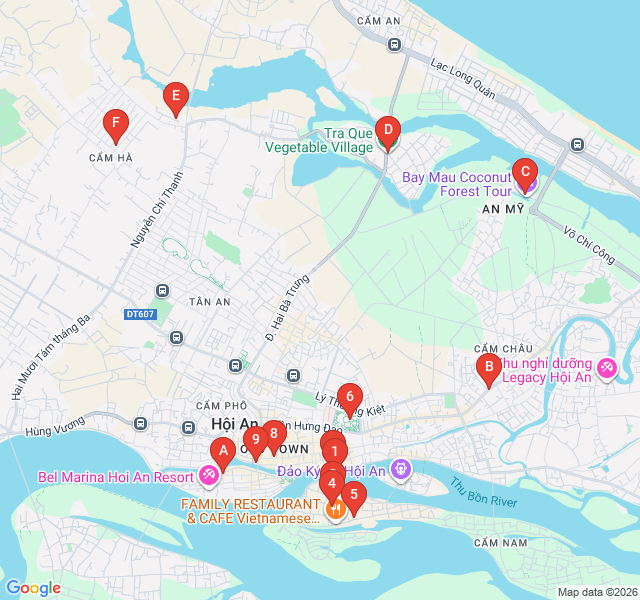
Numbers indicate the order of stops on the tour.
Your self-guided walk begins at the Cẩm Nam Bridge, a vital artery connecting the busy Ancient Town with the tranquil island of Cam Nam. Standing here, you can see the stark contrast between the two worlds. To one side, the yellow-hued heritage buildings of the UNESCO site line the waterfront; to the other, the island's low-slung houses and dense greenery beckon. The Thu Bon River beneath you has been the lifeblood of this region for centuries, once carrying merchant ships from across the globe and now supporting local fishermen. Take a moment to observe the 'ro'—large, stationary fishing nets—that dot the water, a signature sight of Hoi An's river landscape. This bridge serves as your gateway into a more traditional, slower-paced way of life.
Just across the bridge, you will find the Hoi An Lantern Park. While the town is famous for its nighttime glow, this park offers a peaceful green space during the day. Lanterns are more than just decoration in Hoi An; they are symbols of luck, happiness, and prosperity, a tradition introduced by Japanese and Chinese settlers centuries ago. In this park, you can see various lantern styles and shapes that represent the city's artistic heritage. It is a favorite spot for locals to exercise in the early morning or for families to gather in the evening. The surrounding trees provide a welcome canopy as you begin your deeper exploration of the island's interior.
As you walk along Hoàng Diệu, you are traveling through one of the island's main thoroughfares. This street is lined with small, family-run businesses that cater to the local community rather than the typical tourist crowds. You will notice small hardware stores, local coffee shops where men sit on low plastic stools, and tiny storefronts selling household essentials. The architecture here is a mix of older, traditional styles and more modern Vietnamese concrete homes, often decorated with vibrant bougainvillea. This street offers a genuine glimpse into the daily rhythms of the islanders, far removed from the polished facades of the tourist center. Keep an ear out for the sounds of local life—the clinking of coffee glasses and the distant call of street vendors.
You are now in the heart of Cam Nam Island, a long, narrow strip of land formed by the silt of the Thu Bon River. The island's geography has dictated its culture; the soil here is incredibly fertile, making it a prime spot for agriculture. For generations, the residents have relied on both the river and the land for survival. Unlike the merchant-heavy history of the mainland, Cam Nam has always been a place of farmers and fishermen. As you wander deeper, the sounds of motorbikes fade, replaced by the rustle of cornstalks and the occasional crow of a rooster. The island is particularly famous for its corn and its river clams, both of which are staples of the local diet.
If you are feeling peckish, this is the perfect area to try Cam Nam's most famous dish: 'Hen Tron' or minced clams. These tiny, flavorful clams are harvested directly from the riverbed surrounding the island. They are usually sautéed with herbs, spices, and onions, then served with 'Banh Dap'—a combination of a crispy rice cracker and a soft steamed rice cake. The tradition of eating clams on Cam Nam is deeply rooted in the island's identity. Many of the restaurants here have been run by the same families for decades, using recipes passed down through generations. It is a simple, rustic, and incredibly fresh meal that perfectly encapsulates the flavors of the Thu Bon River.
Heading back toward the mainland, you reach the Hoi An Central Park. This area serves as a communal backyard for the city. Unlike the more manicured gardens of the Ancient Town, this park is where real life happens. You might see elderly residents practicing Tai Chi, students sketching under the trees, or vendors taking a quick nap in the shade. The park represents the city's commitment to preserving public green spaces amidst its growing popularity as a travel destination. It is a great spot to sit for a few minutes and people-watch, observing the effortless blend of tradition and modernity that defines contemporary Hoi An.
This location offers one of the best perspectives of the Hoi An riverside. From here, you can watch the colorful wooden boats ferry people and goods across the water. These boats, often decorated with eyes painted on the bow to ward off river monsters and bring good luck, are a quintessential part of the local scenery. The water here is often busy with activity, from small sampans to larger tourist vessels. Notice how the light reflects off the yellow buildings of the Old Town, creating a scene that has inspired countless photographers and painters. It is a reminder of Hoi An's history as a major international trading port between the 15th and 19th centuries.
This statue honors Kazimierz Kwiatkowski, fondly known as 'Kazik' by locals. This Polish architect and restorer played a monumental role in the 1990s by advocating for the preservation of Hoi An's historic buildings when many wanted to modernize them. Without his passion and dedication, the UNESCO World Heritage site we see today might have been lost to redevelopment. He also worked on the My Son Sanctuary and the Imperial City of Hue. The statue is a tribute to the deep bond between the city and the man who saw its potential as a global cultural treasure. It stands as a silent sentinel, reminding us that heritage requires active protection.
The Central Market is a sensory explosion. While parts of it cater to visitors, the core of the market remains the primary source of fresh produce for local families. Inside, the air is thick with the scent of star anise, fish sauce, and fresh herbs. You can find everything from silk and spices to live seafood and exotic fruits like mangosteen and dragon fruit. The food hall inside is a legendary spot for quick, authentic bites like Cao Lau or Mi Quang. The market building itself, with its high ceilings and yellow walls, is an architectural landmark. It is best experienced in the early morning when the chaos is at its most authentic and the 'market ladies' are in high gear.
This stop introduces you to a more personal side of Hoi An's history. Huỳnh Phúc Khánh was a significant local figure, and this wax figure serves as a memorial to his contributions to the community. In Vietnamese culture, honoring local ancestors and leaders is a vital practice that keeps history alive. The detail in the figure and the setting provides a window into the traditional dress and customs of the region's past. It is a quiet, contemplative stop that offers a break from the busier streets and allows you to reflect on the individuals who have shaped the city's narrative over the decades.
As you continue your walk toward the rural outskirts, you pass by the Garden Palace area. This section of the route marks the transition from the dense urban fabric of the town to the more sprawling, garden-filled landscape of the suburbs. You will notice a change in the architecture here, with more space between buildings and an abundance of tropical plants. The air becomes slightly cooler and fresher as the river breezes carry the scent of nearby gardens. This is where the 'Garden' in the name comes from—a tradition of maintaining lush, private courtyards that serve as peaceful retreats from the tropical sun.
Welcome to the Cam Thanh Coconut Village, a unique ecological area dominated by the Bay Mau Nipa palm forest. These water palms have played a crucial role in local history, providing shelter for soldiers during the wars and a source of materials for thatched roofs and handicrafts today. The village is most famous for its 'Thung Chai' or round basket boats. These ingenious vessels were originally designed to avoid taxes imposed by the French on conventional boats. Watching the locals navigate these spinning crafts through the narrow waterways is a testament to their skill and the region's maritime ingenuity. The ecosystem here is a vital nursery for many species of fish and shrimp.
Tra Que is perhaps the most famous agricultural village in central Vietnam. For over 300 years, the farmers here have used a special type of seaweed found in the nearby lagoon as fertilizer, resulting in incredibly flavorful and aromatic herbs. As you walk through the neat, emerald-green rows of basil, coriander, mint, and spring onions, you will see farmers using traditional methods—watering the plants with two watering cans balanced on a shoulder pole. The village is a model of organic, sustainable farming. Many of the herbs you have eaten in Hoi An's restaurants likely originated in these very fields. The sight of the sun setting over the green beds is truly magical.
On your way toward the river, you pass Happy Paws, a local animal rescue initiative. This stop highlights a different aspect of the modern community: the growing movement toward animal welfare and rescue in Vietnam. Local volunteers work tirelessly here to provide care and find homes for stray animals. It is a heart-warming example of the compassion and community spirit that exists in Hoi An. While it is a small operation, it reflects the changing social values of the younger generation. If you are an animal lover, it is a touching spot to pause and appreciate the local efforts to make the city a better place for all its inhabitants.
Your self-guided journey concludes at Bến Trễ 10, a quiet riverside area that feels a world away from where you started. Here, the Thu Bon River is wide and calm, bordered by rice paddies and water buffalo grazing in the distance. This is the true rural rhythm of Hoi An—a place where life is dictated by the seasons and the tides. The sunset views from this area are spectacular, casting a golden light over the fields and the water. Reflect on the diversity of what you have seen today, from the historical bridge to the palm forests and herb gardens. It is a fitting end to a walk that celebrates the enduring natural beauty of the region.
Start Free on iPhone
Explore “Rural Rhythms of Cam Nam Island” with your very own Private Tour Guide with Zigway. Start free on iPhone, skip the large group and the fixed routes, and hear the city come alive as you go.
Your Private Tour Guide
Don't miss the good stuff
Explore Freely
 Easy
EasyHoi An, Vietnam
Discover the ornate assembly halls and hidden pagodas of Hoi An on this self-guided walk through the city's spiritual and architectural history.
 Easy
EasyHoi An, Vietnam
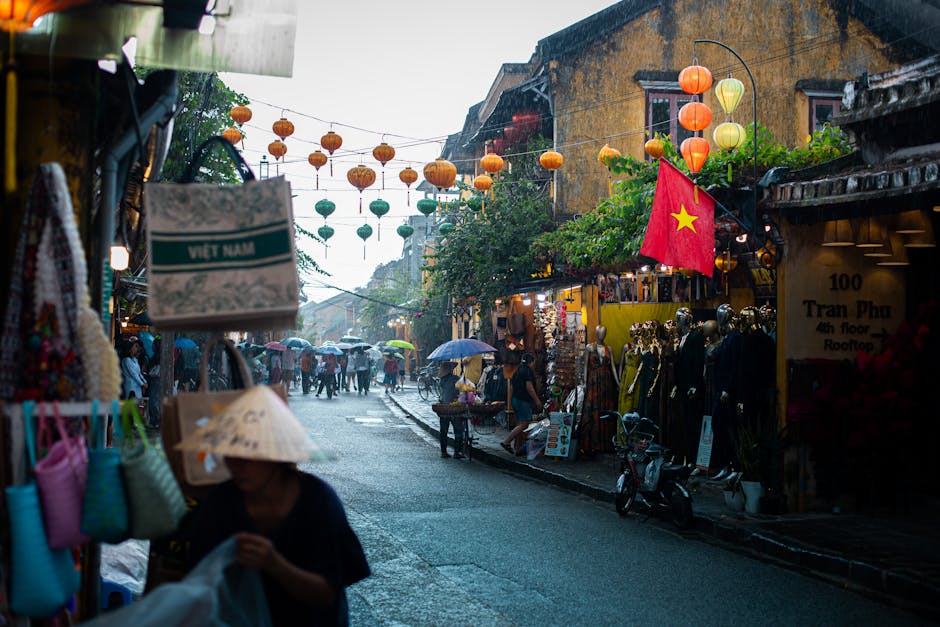
Capture the magic of Hoi An's golden hour on this self-guided photography walk through historic streets, temple gates, and riverside views.
 Easy
EasyHoi An, Vietnam
Discover the hidden roasteries and historic side streets of Hoi An on this aromatic self-guided coffee and culture walk.
 Easy
EasyHoi An, Vietnam
Explore the luminous magic of Hoi An at night. Discover lanterns, riverside bars, and local markets on this enchanting self-guided audio walk.
 Moderate
Nairobi, Kenya
Discover Nairobi's lush side on this self-guided walk through botanical gardens, historic memorials, and vibrant local markets.
 Moderate
Nairobi, Kenya
Discover the pulse of Nairobi's contemporary art scene on this self-guided walk through the galleries and creative spaces of Kilimani.
 Easy
EasyGdansk, Poland
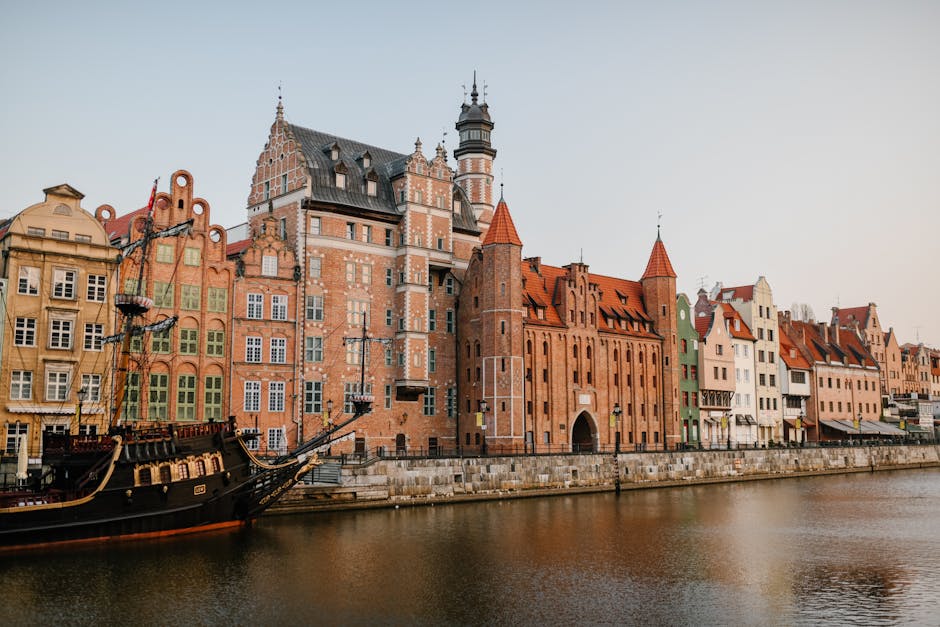
Discover the monastic heritage, world-famous organs, and lush botanical gardens of Oliwa on this peaceful self-guided neighborhood stroll.
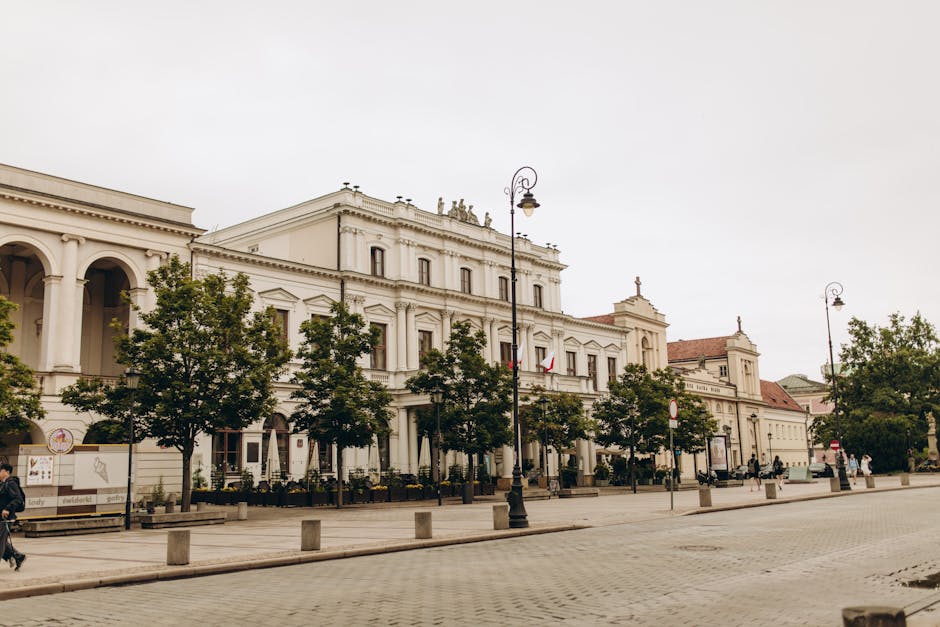 Easy
EasyWarsaw, Poland
Explore Warsaw's scenic riverfront, rooftop gardens, and industrial-chic architecture on this self-guided stroll through the Powiśle district.
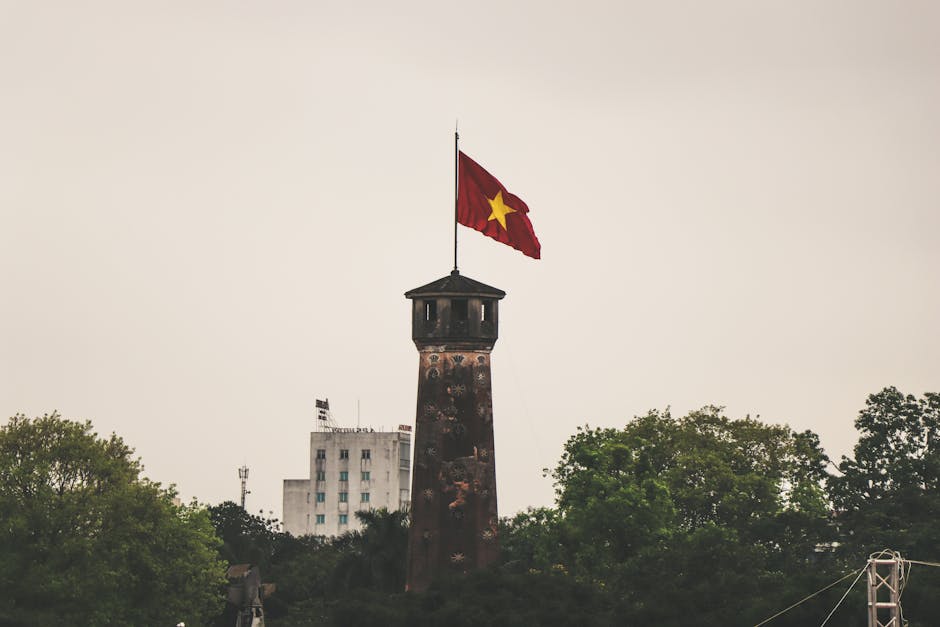 Moderate
Hanoi, Vietnam
Discover Hanoi's resilient spirit on this self-guided audio walk through wartime bunkers, historic prisons, and military landmarks.
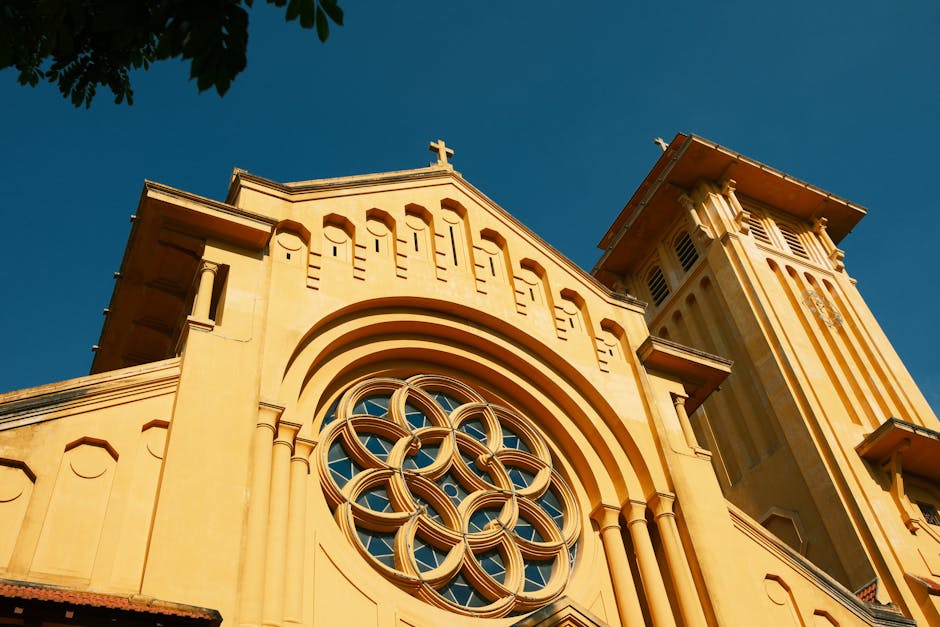 Easy
EasyHanoi, Vietnam
Discover Hanoi's spiritual heart and scenic vistas on an independent stroll featuring ancient pagodas, colonial architecture, and sunset lake views.
 Easy
EasyHanoi, Vietnam
Explore Hanoi's diverse spiritual heritage on this self-guided walk through historic pagodas, a Neo-Gothic cathedral, and lakeside temples.
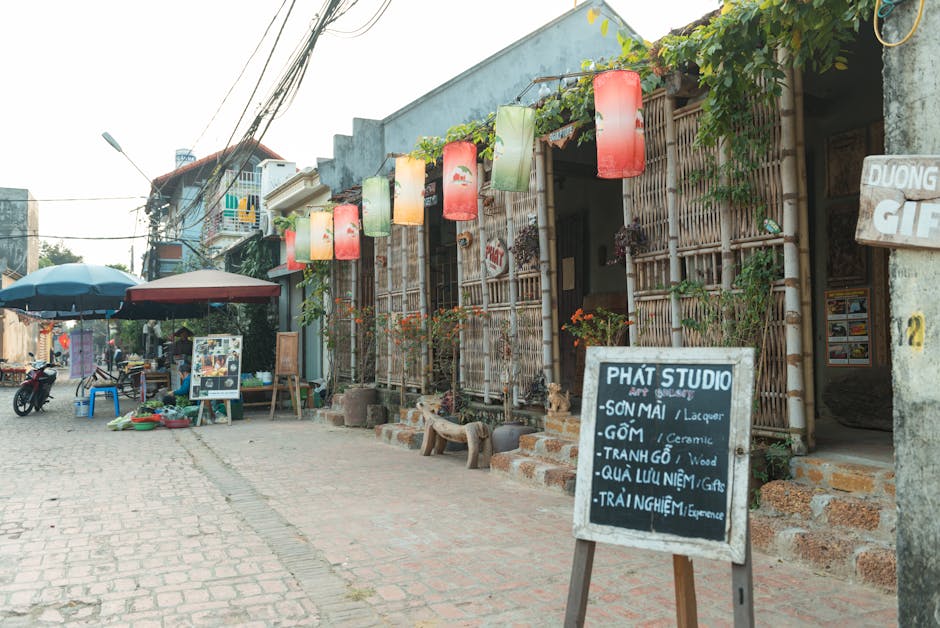 Easy
EasyHanoi, Vietnam
Discover Hanoi's vibrant soul through railway-side murals, historic tracks, and the record-breaking Ceramic Road on this self-guided walk.