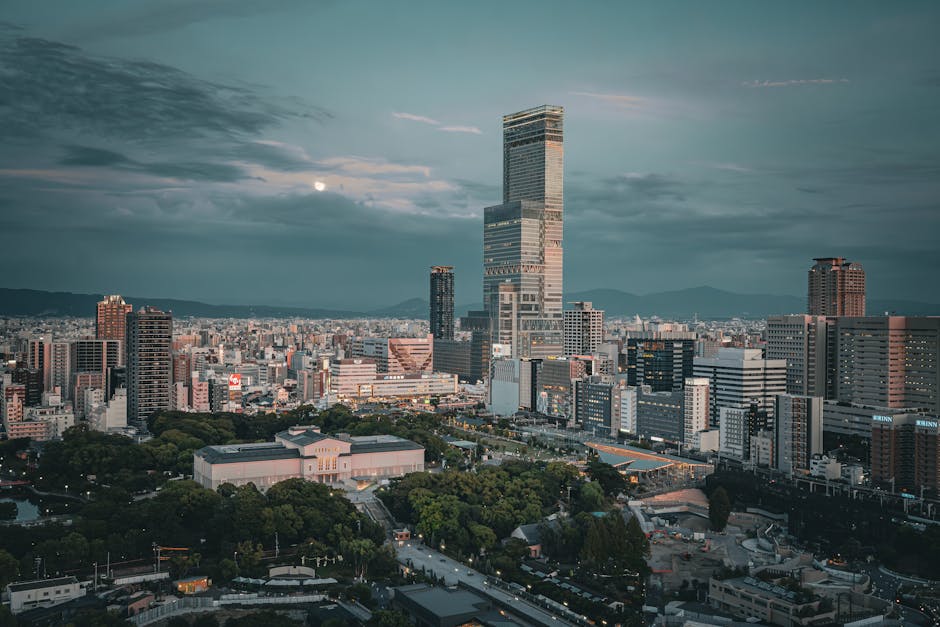
Self-guided audio tour in Osaka
Start Free on iPhone
Start free on iPhone to unlock this self-guided walking tour in Osaka. Hear all the stories that make it amazing, walk at your own pace, and begin whenever you want.
Your Private Tour Guide
Step away from the neon-drenched glitz of Dotonbori and explore the quiet, atmospheric streets of Osaka's most creative enclave. This self-guided walk invites you to discover the contrast between the city's cutting-edge modern architecture and its rare, pre-war wooden row houses. You will begin at the sleek Nakanoshima Museum of Art, a black cuboid that anchors Osaka's contemporary art scene, before moving through the futuristic development of Grand Green Osaka. As you head toward Nakazakicho, the atmosphere shifts dramatically. This neighborhood is a living time capsule; having survived the air raids of World War II, it retains the charm of the Showa era with a bohemian twist. Unlike a standard guided tour Osaka often presents, this walking route allows you to linger in narrow alleys where ivy-clad buildings have been transformed into independent galleries and quirky cafes. You will experience the local pulse at community hubs like Salon de AManTo and the literary-themed Arabiq. The route then leads you toward the grand history of Osaka Castle and the retro-futurism of Shinsekai. This neighborhood stroll is perfect for those who want to see the city's soul beyond the tourist brochures. Whether you are interested in the evolution of urban housing at the Osaka Municipal Housing Museum or the vibrant street life of the south, this walking tour Osaka route provides a comprehensive look at the city's past, present, and future. **Note:** This area is known for its ever-changing character. Street art, pop-up venues, and temporary exhibitions may differ from what's described. That's part of the adventure - you might discover something entirely new!
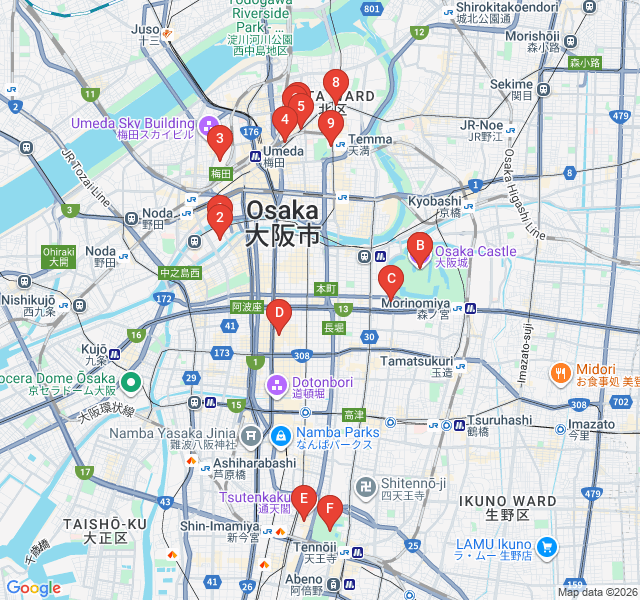
Numbers indicate the order of stops on the tour.
Begin your exploration at NAKKA, a striking black box that stands as a monument to modern design. Opened in 2022, this museum houses an extensive collection of modern and contemporary art, with a particular focus on the Gutai group, an influential Japanese avant-garde movement. The architecture itself is a marvel, featuring a minimalist exterior that hides a vast, airy interior with 'passages' designed to connect the city to the art. Note that exhibition schedules change frequently, so the art inside is as dynamic as the city itself. This museum represents the sleek, international face of Osaka's cultural rebirth.
Just a short walk away is the Osaka Science Museum, a pioneer in Japan's scientific education. It was founded to commemorate the city's industrial heritage and is famous for its planetarium—one of the largest in the world. The museum's design reflects the theme of 'Universe and Energy.' While the exhibits are largely geared toward families, the building's presence in the Nakanoshima district highlights the area's transition from an industrial heartland to a center for culture and learning. It is a testament to Osaka's long-standing reputation as a city of innovation.
Head toward the Umeda district to find Grand Green Osaka, part of the massive Umekita redevelopment project. This area represents the future of Osaka's urban landscape, blending high-tech office spaces with lush green parks. It is a rare example of a 'green oasis' in the middle of a dense Japanese metropolis. This space is designed to be a hub for innovation and relaxation, offering a sharp contrast to the crowded, neon-lit streets nearby. It shows how the city is attempting to balance its rapid modernization with a need for sustainable, public-friendly environments.
For a taste of local life, look for the Umeda Batting Dome. Baseball is a national obsession in Japan, and urban batting centers are where many locals come to blow off steam after work or on weekends. The sound of the ball hitting the bat is a quintessential city soundtrack. While many modern entertainment complexes exist, these batting centers maintain a slightly retro, gritty charm that connects the high-tech Umeda district to the more traditional neighborhoods you are about to enter. It is a great spot to observe the casual side of Osaka's residents.
As you arrive at Nakazakicho Station, you are entering the heart of the walk. This area is famous for having survived the firebombing of WWII, leaving its original 'nagaya' or row houses intact. While much of Osaka was rebuilt with concrete and steel, Nakazakicho remains a labyrinth of wood and ivy. This station serves as the gateway to the bohemian district. From here, the wide boulevards of Umeda disappear, replaced by narrow alleys that are only accessible on foot or by bicycle. Prepare to slow down and explore the quieter side of the city.
Tucked away in a quiet alley, Salon de AManTo is the spiritual center of Nakazakicho. Founded by artist Jun Amanto, this cafe was created by renovating a 120-year-old house using only volunteer labor. It sparked the 'renovation boom' that defined the neighborhood's revival. The space serves as a cafe, cinema, and community center, filled with mismatched furniture and art. It embodies the 'mottainai' spirit—the Japanese concept of not letting things go to waste. Please respect the peaceful atmosphere here, as it remains a cherished local landmark for the creative community.
Continue your stroll to Arabiq, a space that perfectly captures the 'Zakka' (eclectic goods) culture of Japan. Part cafe, part gallery, and part bookstore, Arabiq is known for its collection of art books and intricately crafted dolls. The interior is dim and cozy, feeling more like a private library than a commercial shop. It is a prime example of the niche, independent businesses that thrive in Nakazakicho. Like many spots in this area, its opening hours can be irregular, so it always feels like a lucky discovery when you find the door open.
Walk toward the Tenjinbashi-suji shopping arcade to find this unique museum. Located on the upper floors of a modern building, it contains a full-scale recreation of an Osaka neighborhood during the Edo period. You can walk through the recreated streets, enter the houses, and see how the city looked hundreds of years ago. The lighting even changes to simulate day and night. It provides the historical context for the 'nagaya' houses you saw in Nakazakicho, showing how the city’s architectural DNA has evolved over centuries.
Nearby is Kids Plaza Osaka, identifiable by its whimsical, brightly colored exterior. Inside, the 'Kids Town' was designed by the famous Austrian artist Friedensreich Hundertwasser. His signature style—characterized by curved lines and vibrant mosaics—perfectly complements the creative energy of the surrounding neighborhoods. Even if you are not traveling with children, the architecture is a highlight for any design enthusiast. It stands as a playful landmark in the Ogimachi area, bridging the gap between education and avant-garde art.
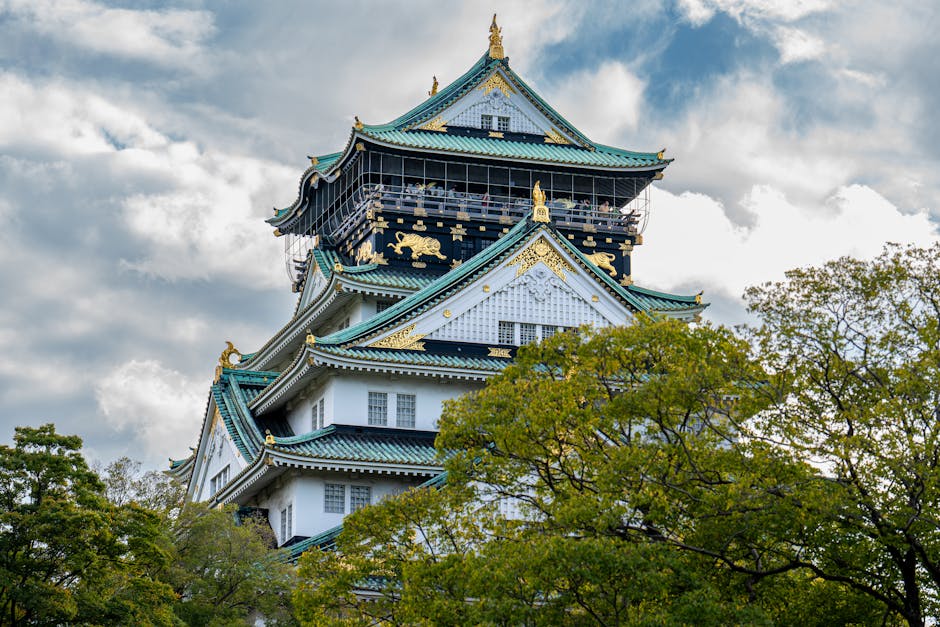
Moving toward the grander side of the city, you reach Osaka Castle. The main tower is a 20th-century reconstruction, but it stands on the site where Toyotomi Hideyoshi once unified Japan. The tower is surrounded by impressive stone walls and moats, some of the largest in the country. The architecture reflects the power and ambition of the samurai era. Inside, a modern museum tells the story of the castle’s many destructions and rebirths. It is the most iconic landmark in the city and offers a panoramic view of the skyline you have been traversing.
The grounds surrounding the castle, known as Osaka Castle Park, are a sprawling green space that serves as the city's backyard. During cherry blossom season, it is one of the most popular spots in Japan for 'hanami' (flower viewing). The park is a mix of historical ruins, secondary citadels, and modern amenities like the Jo-Terrace shopping area. As you walk through, you will see joggers, street performers, and families, making it a perfect spot to witness how modern Osakans interact with their historical heritage.
Located just across from the castle, this museum offers the best vantage point for photographing the castle grounds. The building is designed so that as you descend from the top floor, you travel through different eras of Osaka's history, from the ancient Naniwa Palace to the bustling markets of the Showa era. The basement even contains preserved archaeological ruins. It provides a scholarly but engaging overview of how Osaka transformed from a religious and political center into Japan's commercial powerhouse.
As you move south, you encounter smaller, contemporary spaces like i GALLERY. This is a contrast to the massive NAKKA museum where you started. These smaller galleries are essential to the city's art ecosystem, providing a platform for local and emerging artists. The exhibitions here are often experimental and change frequently. It is a reminder that while Osaka cherishes its history, it is also a city that constantly looks forward, supporting new voices in the arts within its dense urban fabric.
Enter Shinsekai, a neighborhood designed in 1912 to evoke the charms of Paris and New York. Today, it is a glorious riot of retro signage, giant pufferfish lanterns, and the Tsutenkaku Tower. Shinsekai was once a symbol of Osaka's modernity but now serves as a nostalgic trip back to the mid-20th century. It is famous for 'kushikatsu' (deep-fried skewers) and its vibrant, slightly gritty atmosphere. This is the 'Deep Osaka' that many locals love—unpretentious, colorful, and full of character.
Your walk concludes at the Osaka City Museum of Fine Arts, located in Tennoji Park. Built on the former site of a residence belonging to the Sumitomo family, the museum houses thousands of works of Japanese and Chinese art. The classical architecture of the building stands in stark contrast to the neon chaos of Shinsekai just steps away. The surrounding Keitakuen Garden offers a peaceful conclusion to your journey, allowing you to reflect on the incredible diversity of Osaka's urban landscape.
Start Free on iPhone
Explore “Nakazakicho: The Bohemian Heart of Old Osaka” with your very own Private Tour Guide with Zigway. Start free on iPhone, skip the large group and the fixed routes, and hear the city come alive as you go.
Your Private Tour Guide
Don't miss the good stuff
Explore Freely
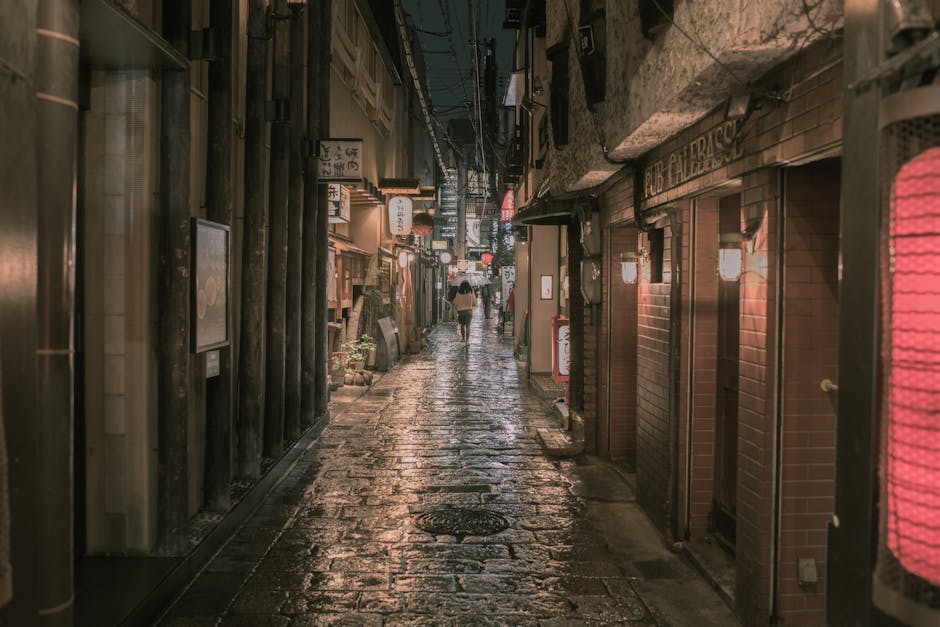 Moderate
Osaka, Japan
Discover the soul of Osaka on this self-guided walk through the hidden markets of Tsuruhashi, the neon of Namba, and the scale of Umeda.
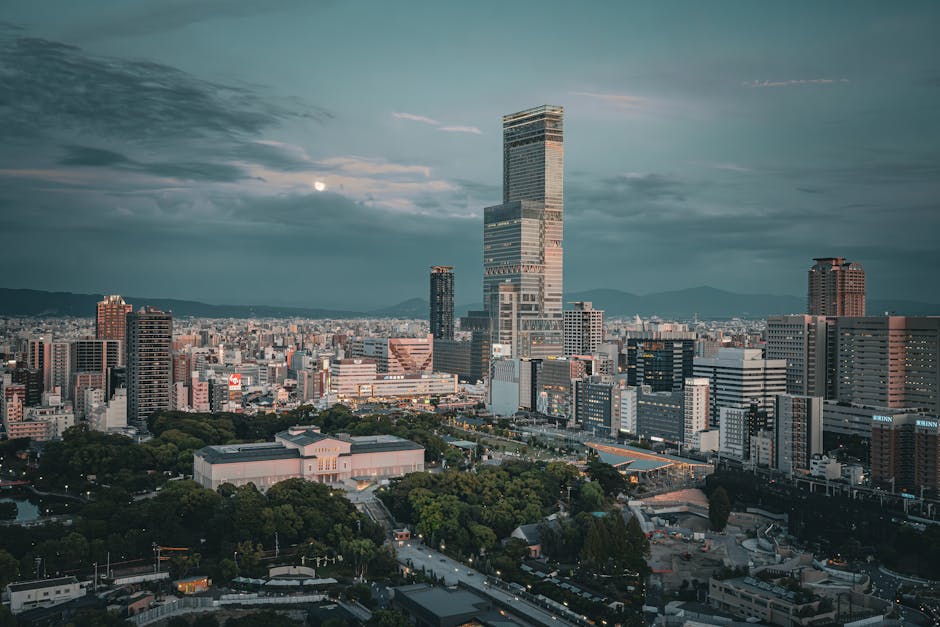 Easy
EasyOsaka, Japan
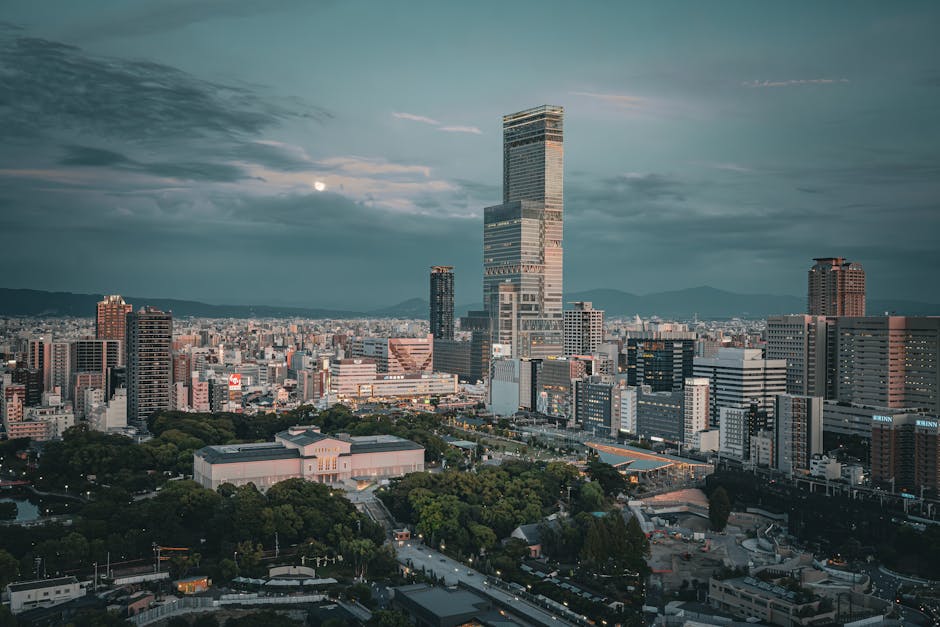
Explore Osaka's futuristic skyline, from the iconic Umeda Sky Building to hidden shrines, on this self-guided architectural walking route.
 Easy
EasyOsaka, Japan
Explore Osaka's 'American Village' on this self-guided walk through street art, vintage fashion, and the heart of Japanese youth culture.
 Easy
EasyOsaka, Japan
Explore the retro charm and neon-lit alleys of Shinsekai on this self-guided walk through Osaka's most nostalgic district.
 Moderate
Gdansk, Poland
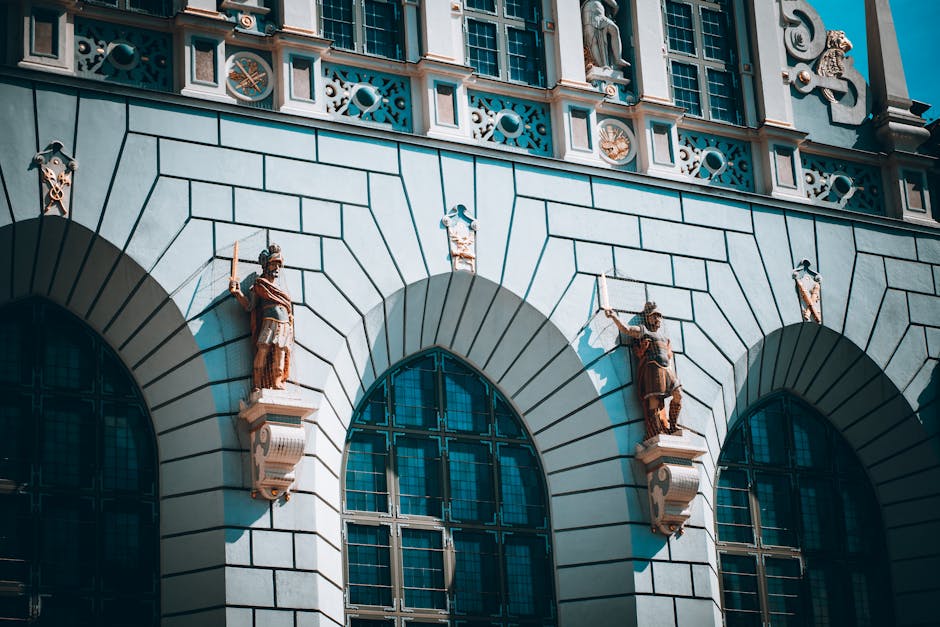
Discover Zaspa, a massive open-air gallery where grey housing blocks are transformed by over 60 monumental murals. Explore at your own pace.
 Easy
EasyWarsaw, Poland
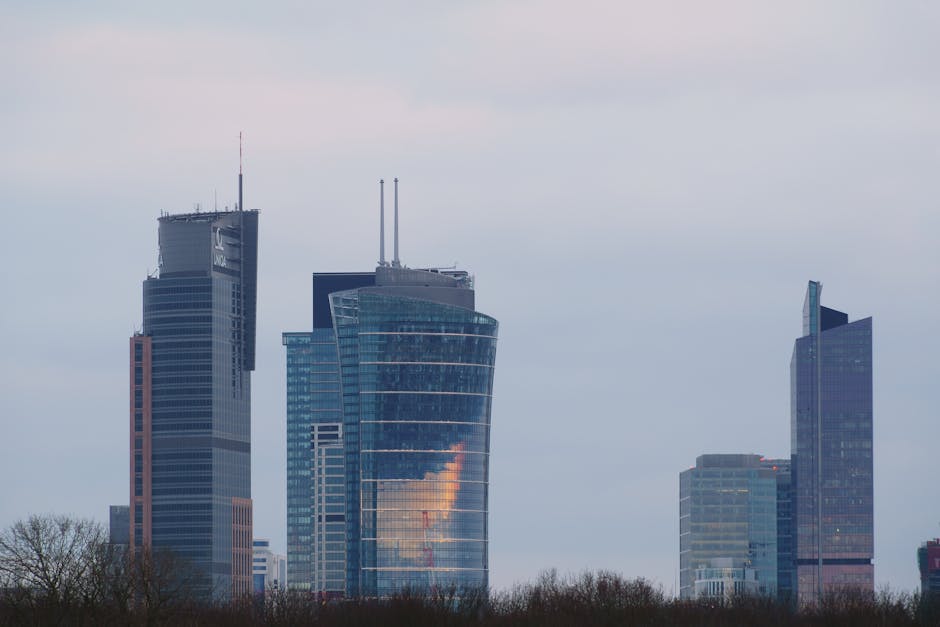
Discover the hidden courtyards and grand pre-war architecture of Warsaw's most atmospheric neighborhood on this self-guided stroll.
 Easy
EasyGothenburg, Sweden
Explore Gothenburg’s historic wooden houses, legendary giant cinnamon buns, and panoramic fortress views on this self-guided neighborhood stroll.
 Moderate
Nairobi, Kenya
Discover the pulse of Nairobi's contemporary art scene on this self-guided walk through the galleries and creative spaces of Kilimani.
 Moderate
Tokyo, Japan
Discover Tokyo's premier creative district on this self-guided walk through Roppongi’s world-class museums and striking modern architecture.
 Easy
EasyTokyo, Japan
Discover the 'Old Tokyo' charm of Yanaka on this self-guided walk through historic temples, artisan alleys, and a stunning torii gate shrine.
 Easy
EasyTokyo, Japan
Experience Shibuya's electric energy on this self-guided walk from the iconic Scramble Crossing to the panoramic views of Shibuya Sky.
 Easy
EasyTokyo, Japan
Explore Tokyo's indie heart. From vintage fashion in Shimokitazawa to world-class art in Shinjuku, discover the city's creative soul independently.