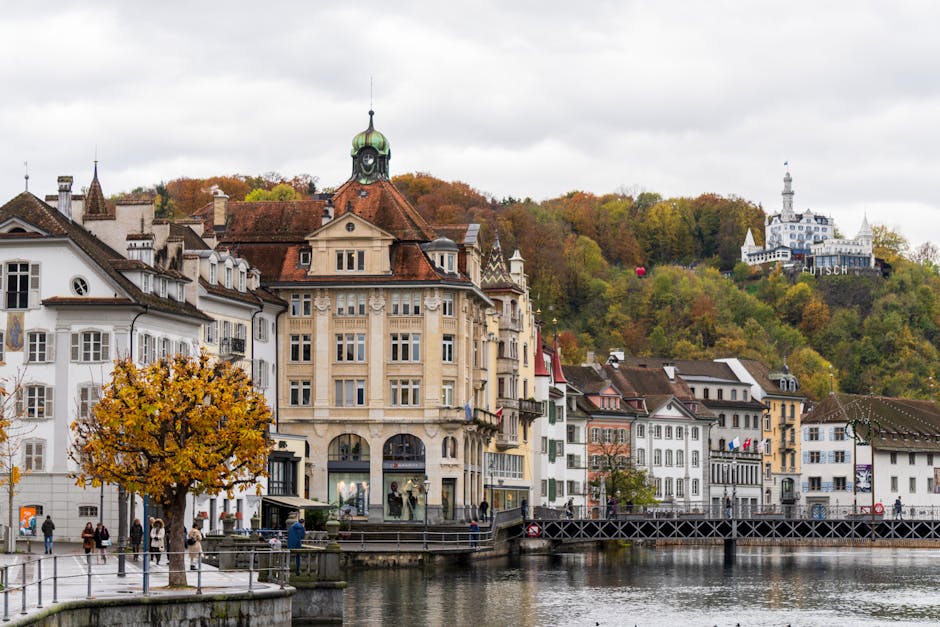
Self-guided audio tour in Lucerne
Start Free on iPhone
Start free on iPhone to unlock this self-guided walking tour in Lucerne. Hear all the stories that make it amazing, walk at your own pace, and begin whenever you want.
Your Private Tour Guide
Lucerne is often celebrated for its sparkling lake and postcard-perfect bridges, but tucked away from the waterfront lies a neighborhood where time seems to stand still. This self-guided walk invites you to explore the Löwenplatz district, a corner of the city where history is etched into stone and painted onto massive canvases. On this walking route, you will encounter the profound silence of the Lion Monument, the prehistoric secrets of the Glacier Garden, and the architectural heritage of one of Switzerland's oldest timber-framed houses. This is not just a neighborhood stroll; it is an exploration of human resilience and natural wonder. The journey begins at the Rothenburgerhaus, a rare survivor of medieval urban planning, before moving toward the twin needles of the Hofkirche St. Leodegar. As you transition from the religious heart of the city toward the more modern yet equally historic Löwenplatz, the theme of 'Frozen Time' becomes central. You will encounter the Bourbaki Panorama, a colossal circular painting that captures a pivotal moment of humanitarian history in a 360-degree immersive experience. Nearby, the Lion Monument offers a poignant reflection on sacrifice, described by Mark Twain as the most moving piece of stone in the world. Finally, the route concludes at the Glacier Garden, where the 'frozen' theme is literal. Here, you can stand beside glacial potholes formed 20,000 years ago, offering a perspective on time that makes human history seem like a mere blink of an eye. This walking tour Lucerne provides is ideal for those who appreciate a slower pace, blending art, history, and geology into a single, cohesive narrative. Whether you are a first-time visitor or a returning traveler, this independent exploration reveals the soul of Lucerne beyond the typical tourist paths. Discover how the city remembers its heroes and its ancient past on this captivating neighborhood stroll.
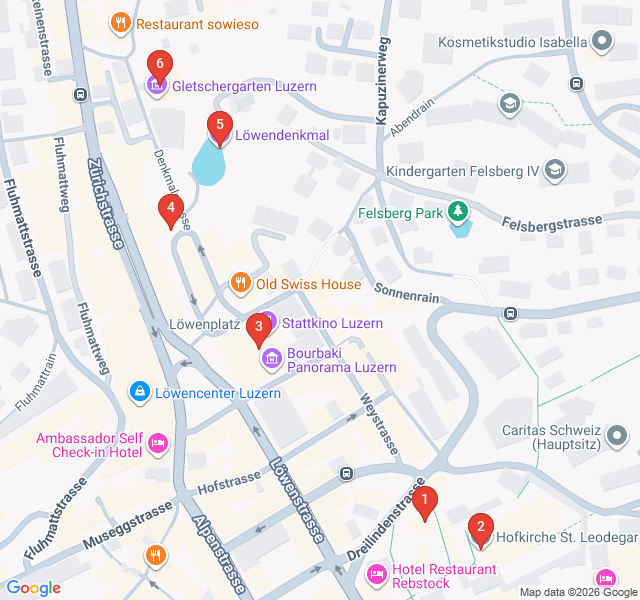
Numbers indicate the order of stops on the tour.
Welcome to the start of your self-guided adventure. Standing before you is the Rothenburgerhaus, a structure that feels like a portal to the 15th century. Built around 1485, this is widely considered the oldest surviving timber-framed townhouse in Switzerland. While Lucerne has modernized, this house remains a 'frozen' example of medieval craftsmanship. Notice the intricate woodwork and the sturdy beams that have supported this home for over half a millennium. In an era where fire often leveled entire neighborhoods, the survival of the Rothenburgerhaus is a minor miracle. It serves as a reminder of Lucerne’s humble beginnings as a burgeoning trade hub before the grand hotels and boulevards transformed the city skyline.
Follow the path toward the lake to find the Hofkirche St. Leodegar, the most important church in Lucerne. Its two iconic towers are a landmark of the city’s silhouette. The church sits on the site of an 8th-century monastery dedicated to Saint Leodegar. Though the original Romanesque structure was largely destroyed by fire in 1633, it was rebuilt in the late Renaissance style, making it one of the few churches of its kind north of the Alps. Step inside to see the ornate golden altars and the famous pipe organ, which features a 'rain machine' stop to simulate a storm. The surrounding cloister is a peaceful place for reflection, housing the graves of many prominent local families.
Walking toward Löwenplatz, you encounter a large circular building housing the Bourbaki Panorama. This is one of the few remaining giant panoramic paintings in the world. Created by Edouard Castres in 1881, the 112-meter-long painting depicts the retreat of the French Bourbaki army into Switzerland during the Franco-Prussian War. It is more than just art; it is a document of the birth of Switzerland's humanitarian tradition and the early work of the Red Cross. The immersive perspective makes you feel as though you are standing in the middle of the snowy Jura Mountains in 1871. It is a powerful example of how art can freeze a moment of human suffering and solidarity forever.
Before heading to the Lion Monument, take a moment to appreciate the Alpineum. This building was originally constructed to house a large 3D alpine landscape relief, showcasing the 19th-century fascination with the mountains. Today, it serves as a stylish café and bar. The architecture reflects the transition of Lucerne into a premier tourist destination during the Belle Époque. It is a perfect spot to pause and observe the local rhythm of the Löwenplatz neighborhood. The blend of historic stone and modern social life here encapsulates the spirit of the city—honoring the past while remaining vibrant and contemporary.
You are now standing before the Lion Monument, or Löwendenkmal. Carved directly into a sandstone cliff, this dying lion commemorates the Swiss Guards who were massacred in 1792 during the French Revolution while defending the Tuileries Palace in Paris. The Danish sculptor Bertel Thorvaldsen designed the monument, and it was hewn into the rock by Lukas Ahorn between 1820 and 1821. Look closely at the lion’s expression; the exhaustion and pain are palpable. Above the niche is the Latin inscription 'Helvetiorum Fidei ac Virtuti,' which translates to 'To the loyalty and bravery of the Swiss.' It remains one of the most visited and emotionally resonant sites in all of Switzerland.
Just steps from the lion lies the Glacier Garden, where time is measured in millennia rather than centuries. Discovered in 1872 during cellar excavations, these glacial potholes were formed during the last Ice Age, some 20,000 years ago. The site proves that Lucerne was once covered by a massive glacier. As you explore the park, you will also see fossilized mussels and palm leaves from a time when this region was a subtropical sea. Don't miss the Alhambra Mirror Maze, a quirky 19th-century addition inspired by the palace in Granada. The garden is a fascinating blend of natural history and Victorian-era curiosity, marking the perfect end to our journey through time.
Start Free on iPhone
Explore “The Lion’s Lament and Frozen Time” with your very own Private Tour Guide with Zigway. Start free on iPhone, skip the large group and the fixed routes, and hear the city come alive as you go.
Your Private Tour Guide
Don't miss the good stuff
Explore Freely
 Easy
EasyLucerne, Switzerland
Discover Lucerne's creative soul. Explore the trendy Neustadt district featuring repurposed cultural hubs, indie boutiques, and local nightlife.
 Easy
EasyLucerne, Switzerland
Explore Lucerne's sacred history on this self-guided audio walk through stunning cathedrals and historic chapels.
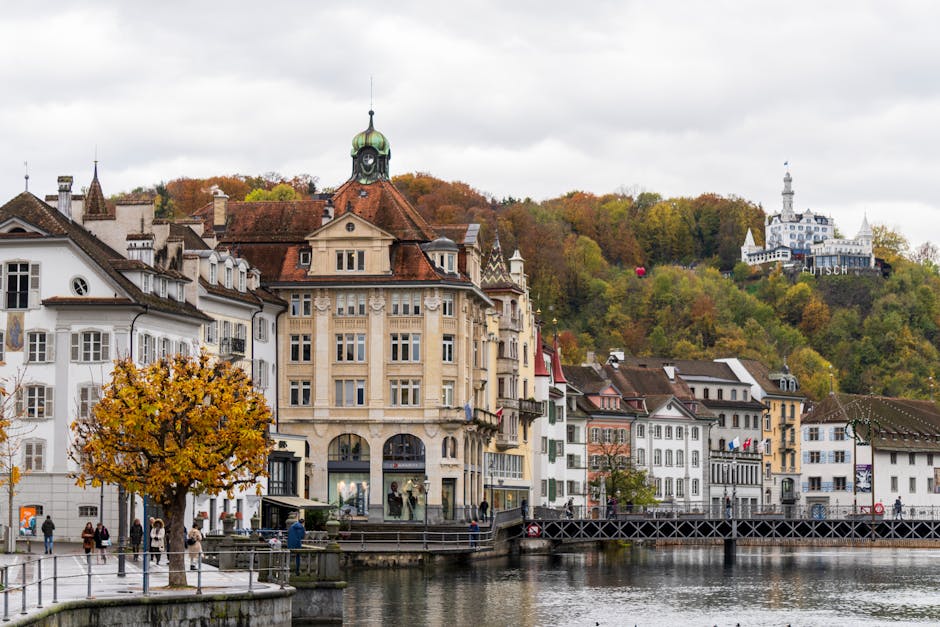 Easy
EasyLucerne, Switzerland
Discover Lucerne's nocturnal side on this self-guided walk from historic riverside breweries to panoramic rooftop bars and hidden underground clubs.
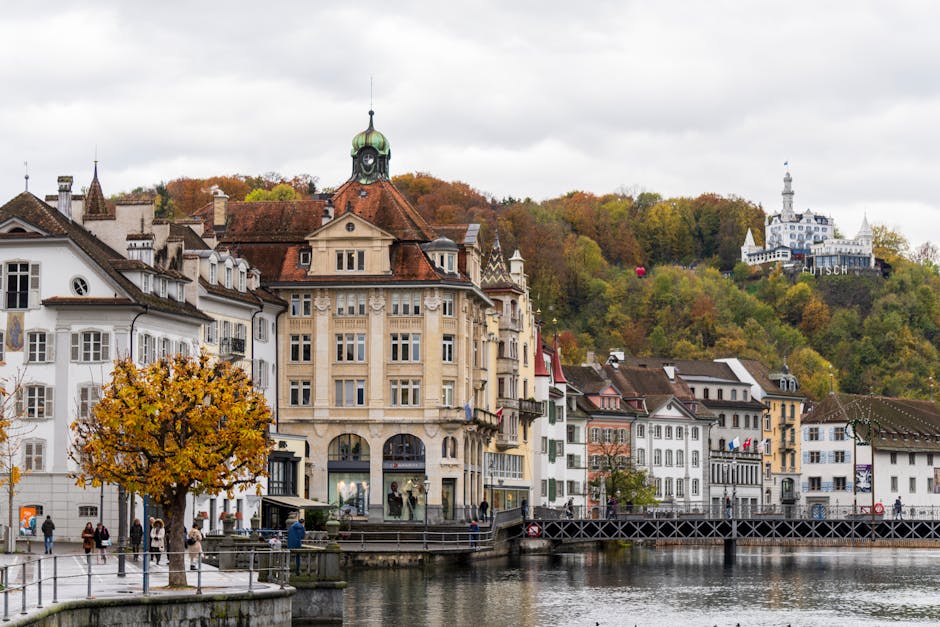 Easy
EasyLucerne, Switzerland
Discover Lucerne’s iconic timber bridges, Baroque masterpieces, and a 19th-century needle dam on this self-guided riverfront stroll.
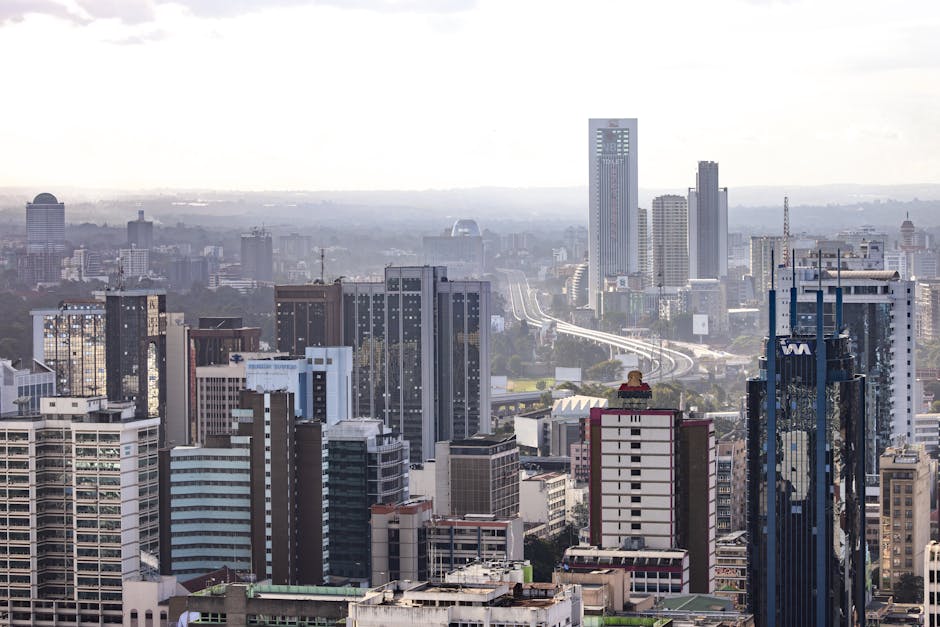 Easy
EasyNairobi, Kenya
Discover Nairobi's iconic skyline on this self-guided architecture walk through the CBD’s most famous modernist and Brutalist landmarks.
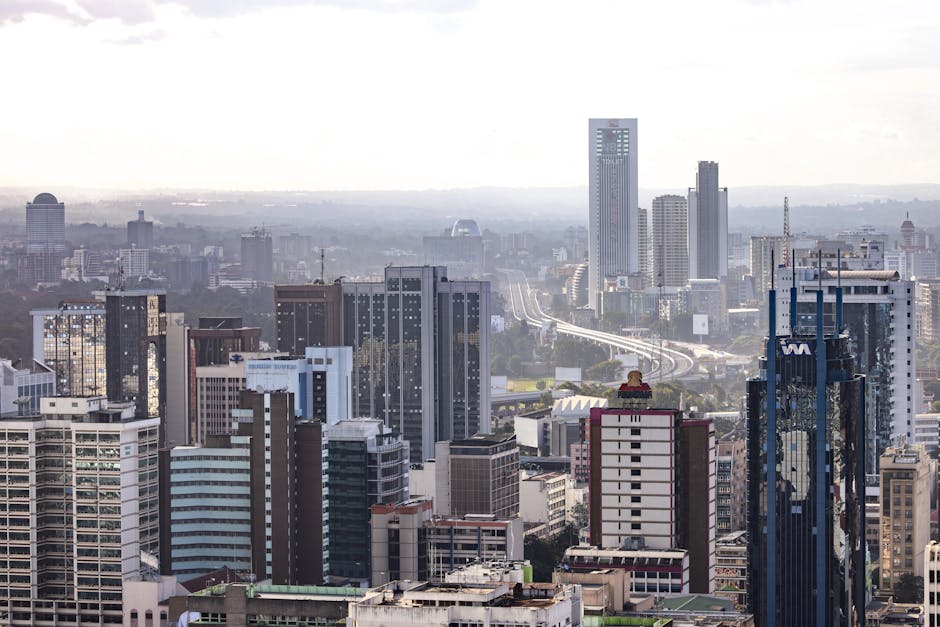 Easy
EasyNairobi, Kenya
Explore Nairobi's architectural evolution from colonial-era landmarks to iconic Brutalist skyscrapers on this historic self-guided walking route.
 Easy
EasyKrakow, Poland
Explore the historic heart of Kazimierz on this self-guided walk through synagogues, ancient cemeteries, and vibrant squares.
 Easy
EasyGdansk, Poland
Discover the opulent Royal Way of Gdansk at your own pace. Explore Hanseatic history, gilded architecture, and the iconic Neptune's Fountain.
 Easy
EasyGeneva, Switzerland
Explore Geneva's bohemian heart on this self-guided walk through flea markets, contemporary art galleries, and literary landmarks.
 Easy
EasyGeneva, Switzerland
Discover the lives of Rousseau and Voltaire on this self-guided literary walking route through the historic heart of Enlightenment-era Geneva.
 Moderate
Geneva, Switzerland
Uncover Geneva’s secrets on this self-guided walk through the Old Town’s historic streets, from the Reformation Wall to medieval cathedrals.
 Easy
EasyGeneva, Switzerland
Discover the Mediterranean soul of Geneva. Explore Carouge’s Sardinian architecture, artisan workshops, and hidden gardens on this self-guided walk.