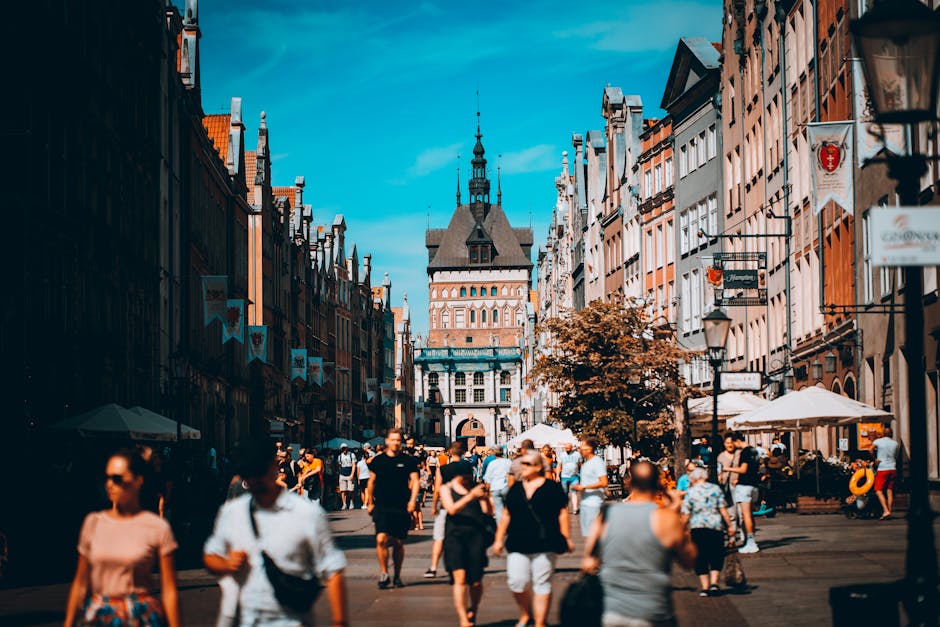
Self-guided audio tour in Gdansk
Start Free on iPhone
Start free on iPhone to unlock this self-guided walking tour in Gdansk. Hear all the stories that make it amazing, walk at your own pace, and begin whenever you want.
Your Private Tour Guide
Gdansk is a city where stone and brick tell stories of resilience, wealth, and artistic ambition. While most visitors flock to the Long Market, this self-guided walk invites you to explore the quieter, equally stunning northern district of the Old Town. Here, the 'Gothic Gables and Hidden Alleys' route showcases a different side of the city's identity—one defined by the engineering of the Teutonic Knights and the intricate Mannerist styles of the Dutch masters who helped rebuild the city in its Golden Age. This architectural stroll is designed for those who appreciate the finer details: the curve of a stone portal, the reflection of a brick facade in a medieval canal, and the silhouette of ancient steeples against the Baltic sky. As you follow this walking route, you will discover why Gdansk is a photographer's dream. The journey begins at the Pelplin Abbots' House, a rare survivor of the city’s turbulent history, before leading you through the charming Bielańska street toward the Old City Hall. Unlike the more famous Main City Hall, this structure offers a more intimate look at the local governance of centuries past. You will also encounter the Radunia Canal, a 14th-century engineering marvel that powered the city's industry for generations. The route continues to St. Catherine's Church, the oldest parish church in the city and the final resting place of the astronomer Johannes Hevelius. Finally, the walk takes you toward the Small Armoury, a masterpiece of defensive architecture that proves even military buildings in Gdansk were meant to be beautiful. This neighborhood stroll offers a peaceful alternative to the typical walking tour Gdansk routes, allowing you to absorb the atmosphere at your own pace. Whether you are capturing the perfect shot of a weathered brick wall or simply enjoying the historical narrative, this self-guided walk provides a comprehensive look at the soul of Gdansk beyond the main tourist trail. It is the perfect way to experience a walking tour Gdansk style without the constraints of a group.
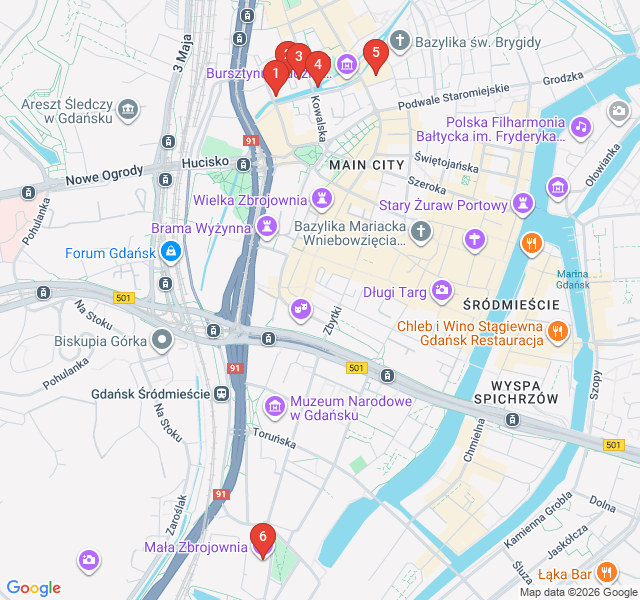
Numbers indicate the order of stops on the tour.
Welcome to your self-guided adventure in Gdansk. We begin at the Pelplin Abbots' House, one of the few historic buildings in the Old Town that survived the devastation of 1945 relatively intact. Built in the early 17th century, this house served as a city residence for the Cistercian abbots from Pelplin. Look closely at the facade; it is a prime example of Dutch Mannerism, characterized by the use of red brick contrasted with light sandstone decorations. The 'gables' that give our walk its name are on full display here—notice the volutes and the decorative stone carvings that crown the building. It’s a perfect spot to start your photography journey, as the morning light hits the stone ornaments beautifully.
As you walk down Bielańska, you are entering one of the most atmospheric corridors of the Old Town. This street provides a wonderful perspective of the surrounding architecture, blending the reconstructed post-war houses with surviving historic elements. For photographers, this is a 'hidden alley' moment—look for the way the street frames the tower of the Old City Hall in the distance. The name Bielańska refers to the white robes of the monks who once lived in this area. Take a moment to notice the variety of rooflines and the small architectural details, like the ironwork and the traditional door knockers, that make Gdansk's residential streets so unique.
Before you stands the Old City Hall, or Ratusz Starego Miasta. While many visitors only see the Main City Hall on the Long Market, this building was the administrative heart of the 'Old Town' district. Built between 1587 and 1595 by the famous architect Antoni van Obberghen, it is a masterpiece of the Northern Renaissance. The building features a slim, elegant tower and a facade decorated with allegorical figures. Historically, this was where the local council met to manage the affairs of the craftsmen and merchants who lived in this part of the city. Today, it remains a symbol of the civic pride that has defined Gdansk for nearly a millennium.
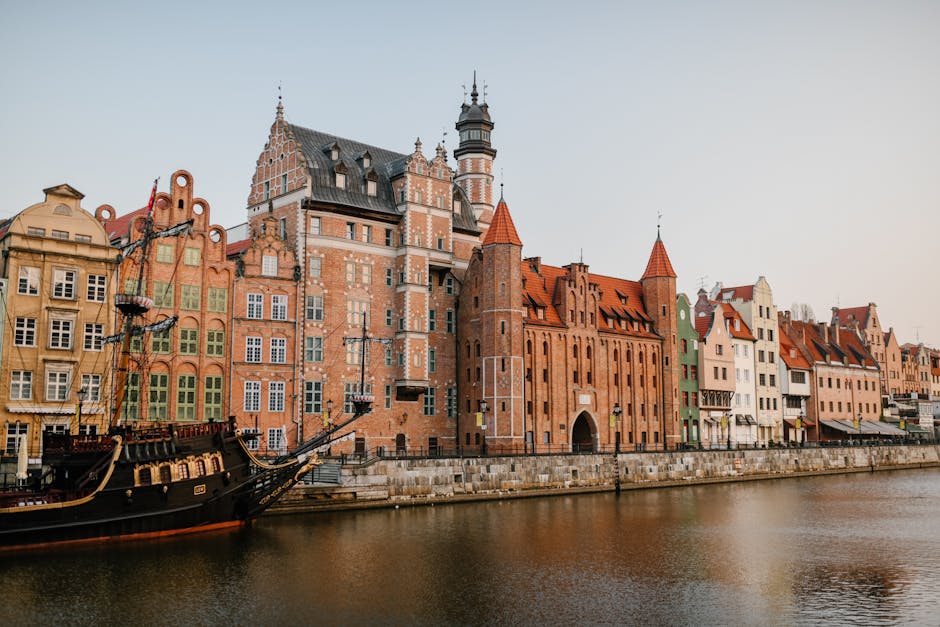
Step toward the water of the Radunia Canal. This is not just a scenic waterway; it is a feat of medieval engineering created by the Teutonic Knights in the 14th century. They diverted water from the Radunia River to power the Great Mill, which you can see nearby. The canal was the industrial lifeblood of Gdansk, driving mills, sawmills, and even a mint. As you walk along its banks, notice the weeping willows and the way the ancient brickwork of the surrounding buildings reflects in the water. It’s a peaceful spot that highlights how the city integrated utility with aesthetics during the Middle Ages.
You are now standing before St. Catherine's, the oldest parish church in the Old Town, dating back to the 1220s. Its massive brick tower is a landmark of the city skyline. Inside lies the tomb of Johannes Hevelius, the famous 17th-century astronomer and brewer who lived just a few blocks away. The church is also home to a magnificent carillon—a set of 50 bells that rings out over the city every hour. If you time it right, you can hear the melodic chime that has soundtracked life in Gdansk for centuries. The blend of Gothic brickwork and the history of science makes this one of the most significant stops on our route.
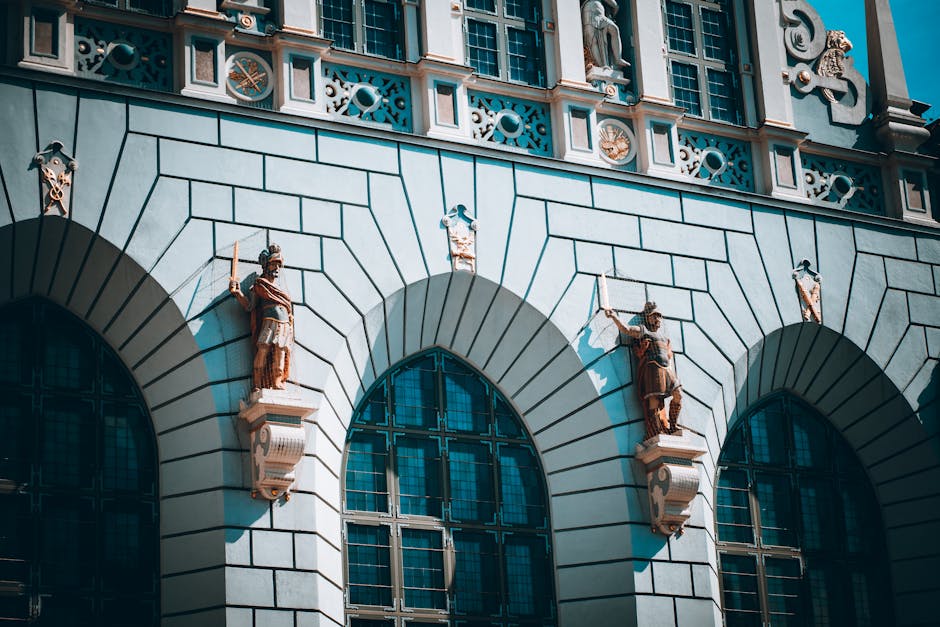
Our final stop is the Small Armoury, or Mała Zbrojownia. This building is a hidden gem often overlooked by those who stick to the city center. Like its 'Great' counterpart, it was designed in the early 17th century in the Dutch Mannerist style. It served as a warehouse for artillery and military equipment, but the city’s wealth meant that even a warehouse had to be a work of art. Look at the decorative gables and the stone carvings of weaponry on the facade. It stands as a reminder that Gdansk was both a center of culture and a fortress that had to defend its riches. From here, you can easily walk back toward the main city or explore the nearby old fortifications.
Start Free on iPhone
Explore “Gothic Gables and Hidden Alleys” with your very own Private Tour Guide with Zigway. Start free on iPhone, skip the large group and the fixed routes, and hear the city come alive as you go.
Your Private Tour Guide
Don't miss the good stuff
Explore Freely
 Moderate
Gdansk, Poland
Discover the bohemian soul of Gdańsk. Explore the literary landmarks of Günter Grass, Prussian villas, and the trendy cafes of historic Wrzeszcz.
 Easy
EasyGdansk, Poland
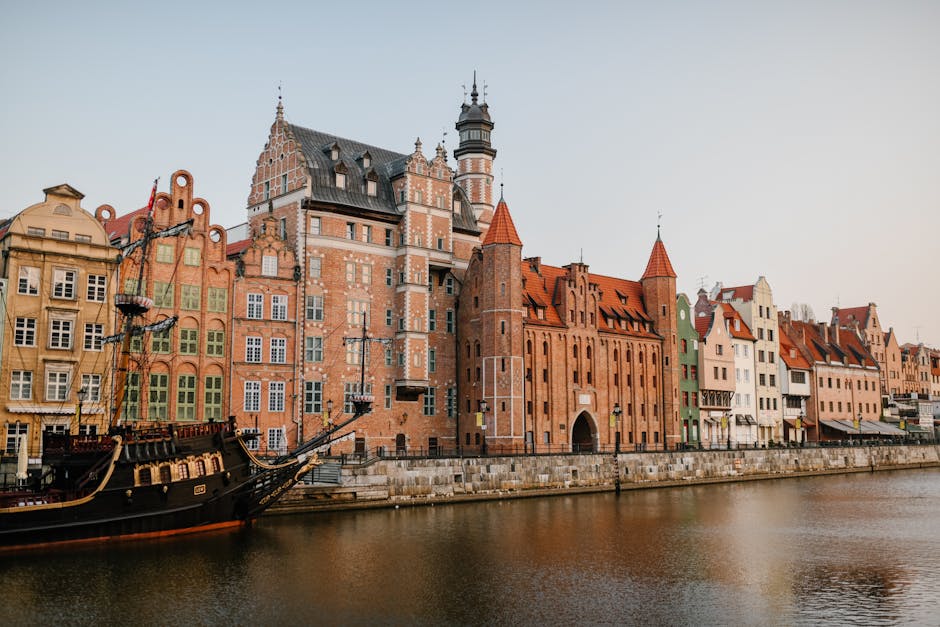
Discover the opulent Royal Way of Gdansk at your own pace. Explore Hanseatic history, gilded architecture, and the iconic Neptune's Fountain.
 Easy
EasyGdansk, Poland
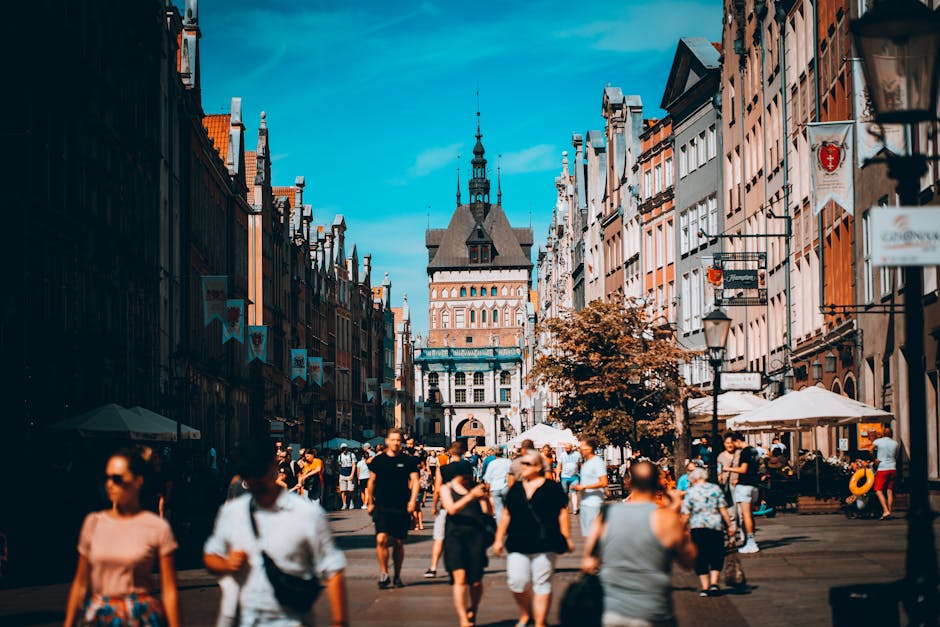
Discover the monastic heritage, world-famous organs, and lush botanical gardens of Oliwa on this peaceful self-guided neighborhood stroll.
 Easy
EasyGdansk, Poland
Taste the history of the Baltic. Explore Gdansk's culinary heritage from medieval markets to gold-flecked liqueurs on this self-guided walk.
 Easy
EasyNairobi, Kenya
Discover Nairobi's iconic skyline on this self-guided architecture walk through the CBD’s most famous modernist and Brutalist landmarks.
 Easy
EasyKrakow, Poland
Explore the prestigious Jagiellonian University district, featuring Neo-Gothic architecture, Baroque churches, and Krakow's hidden scholarly gems.
 Easy
EasyGothenburg, Sweden
Explore Gothenburg’s historic wooden houses, legendary giant cinnamon buns, and panoramic fortress views on this self-guided neighborhood stroll.
 Easy
EasyGothenburg, Sweden
Discover Gothenburg’s 17th-century Dutch foundations, historic canals, and military fortifications on this self-guided architectural walk.
EasyKrakow, Poland
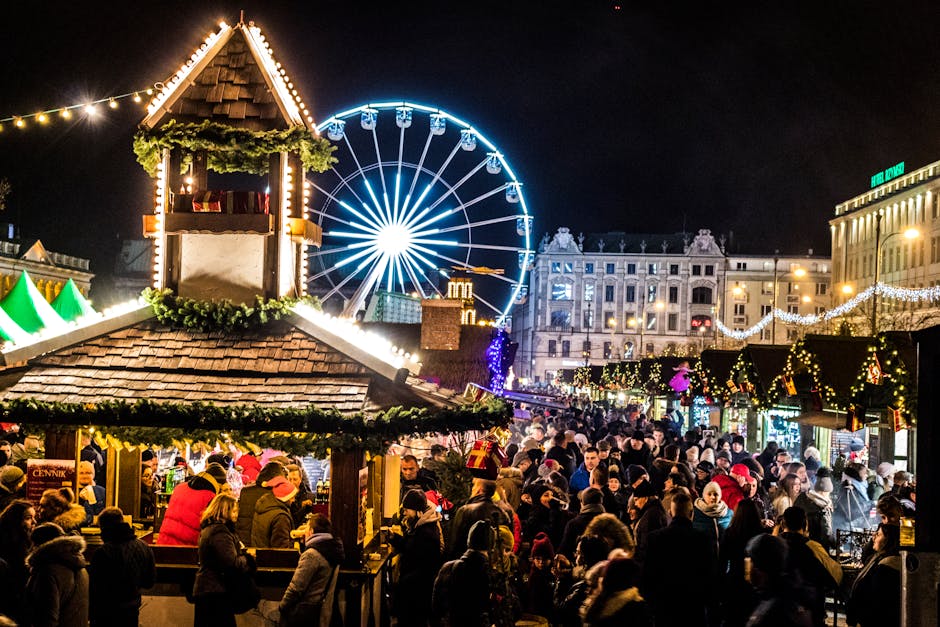
Explore the prestigious Jagiellonian University district, featuring Neo-Gothic architecture, Baroque churches, and Krakow's hidden scholarly gems.
 Easy
EasyKrakow, Poland
Explore Krakow's hidden nightlife with this self-guided walk through medieval cellars, jazz clubs, and bohemian bars in the Old Town and Kazimierz.
 Easy
EasyKrakow, Poland
Discover Krakow’s creative soul in Zabłocie, exploring industrial heritage, contemporary art museums, and avant-garde architecture at your own pace.
 Easy
EasyKrakow, Poland
Explore the historic heart of Kazimierz on this self-guided walk through synagogues, ancient cemeteries, and vibrant squares.