India Events Calendar 2027: Festivals Month by Month

India in 2027 month by month, from the Republic Day parade and Holi to the Nashik Kumbh Mela bathing days, Durga Puja in Kolkata, Diwali on 29 October and the Hornbill Festival in Nagaland.

Start Free on iPhone

Here for the events? Walk the cities with audio stories

Between festivals and concerts, start a self-guided audio walk in any city you visit with Zigway. Go at your own pace, whenever you're free.

Start free on iPhone

Your Private Tour Guide

5000+
cities
200+
countries
20+
languages
30000+
walks completed

Most of India's big festivals follow the Hindu lunar calendar or the Islamic calendar, so their dates move from year to year. In 2027 Holi falls on 22 or 23 March (calendars differ by a day), Ganesh Chaturthi on 4 September, Dussehra on 9 October and Diwali on 29 October, earlier than in many years. The year opens in the dry, cool season with kites for Makar Sankranti on 15 January, the New Delhi World Book Fair (16–24 January), the Jaipur Literature Festival and the Republic Day parade on 26 January. February and March bring arts festivals in Mumbai, the Desert Festival in Jaisalmer, Maha Shivaratri and Holi. Spring has Baisakhi on 14 April, Gangaur in Rajasthan and Buddha Purnima on 20 May. The monsoon months are dominated by religious events: the Rath Yatra in Puri on 5 July and, in 2027, the main bathing days of the Nashik-Trimbakeshwar Simhastha Kumbh Mela on 2 August, 31 August and 11–12 September. Autumn is the peak festival season, from Ganesh Chaturthi in Mumbai and Onam in Kerala to Durga Puja in Kolkata, Dussehra and Diwali, followed in November by Chhath, the Pushkar Camel Fair and Dev Deepawali on the ghats of Varanasi. The year ends with the Hornbill Festival in Nagaland on 1–10 December and Christmas in Goa. Dates for lunar festivals come from published Hindu calendars and can differ by a day between regions; Islamic festivals depend on the moon sighting.

Planning for India events in 2027

October to March is the most comfortable time to travel in most of India. From April to June the plains of the north are extremely hot, often above 40°C, while the monsoon from June to September brings heavy rain, especially on the west coast and in the north-east. Trains and flights fill up weeks in advance around Holi, Durga Puja, Diwali and Chhath, when millions travel home, so plan rail journeys early. During Holi, wear clothes you do not mind ruining and protect your phone and camera from coloured powder and water. At large religious gatherings such as the Kumbh Mela, the Rath Yatra and Dev Deepawali, expect very dense crowds, road closures and restricted vehicle access, and agree a meeting point with your group in advance. Many temples require modest dress and removing shoes, and some do not allow non-Hindus into the inner sanctum.

Explore City Event Guides in India

Move from the national calendar to city-by-city event pages for more local detail.

January

January is cool and dry in most of India, with harvest and kite festivals, two major literary events and the Republic Day parade.

5 events
Festival15 January 2027Jaipur

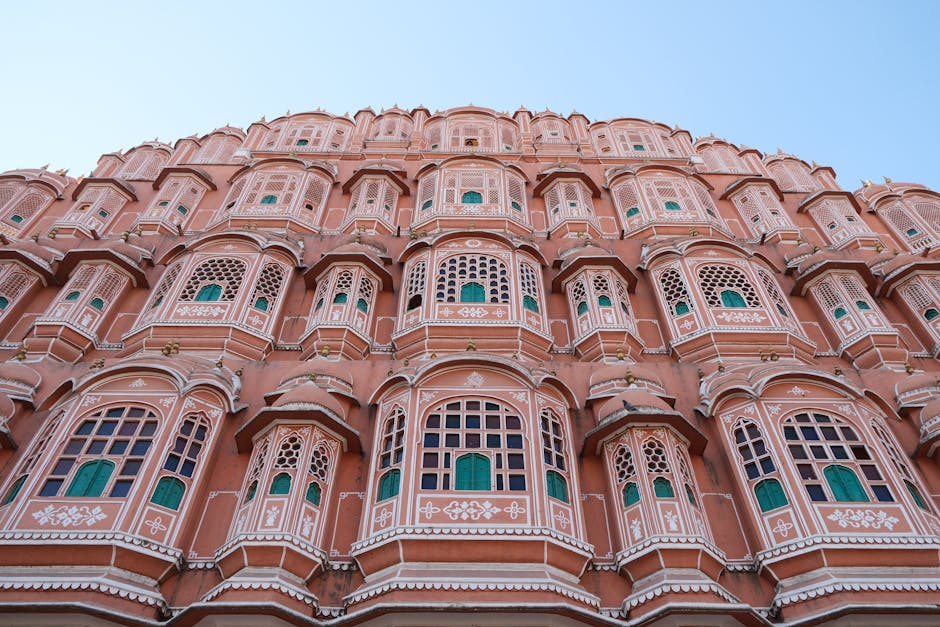
Makar Sankranti and Kite Festival

Area: Rooftops of the old city of Jaipur, plus Gujarat and Tamil Nadu

The winter harvest festival marks the sun's move into Capricorn. In Jaipur and across Gujarat, families fly kites from the rooftops all day, with kite-fighting contests and sky lanterns at night. The same day is celebrated as Pongal in Tamil Nadu.

Why it matters: Unusually for a Hindu festival, its date follows the solar calendar, and the sky over Jaipur's old city full of kites is unforgettable.
Literature16–24 January 2027Delhi

New Delhi World Book Fair

Area: Bharat Mandapam, Pragati Maidan, New Delhi

The 54th edition of one of Asia's largest book fairs, organised by the National Book Trust, fills five halls of Bharat Mandapam with publishers from India and abroad, author talks and book launches in many Indian languages.

Why it matters: It shows the size of India's multilingual publishing world, and entry is inexpensive.

LiteratureTypically late January 2027Jaipur

Jaipur Literature Festival

Area: Hotel Clarks Amer and other venues, Jaipur

Five days of talks, readings and debates with Indian and international writers, held in the gardens and halls of a hotel in Jaipur, with music performances in the evenings.

Why it matters: Few literary festivals anywhere are as large, and its mix of Indian-language and international writers is unusual.

Culture26 January 2027 (fixed date)Delhi

Republic Day Parade

Area: Kartavya Path and Vijay Chowk, New Delhi

India's national day parade marches down Kartavya Path in New Delhi, with military contingents, camel-mounted troops, cultural tableaux from the states and a flypast. The Beating Retreat ceremony at Vijay Chowk on 29 January closes the celebrations.

Why it matters: It is India's biggest state ceremony, marking the day the constitution came into force in 1950.

MusicTypically early in the year (January to March 2027)Mumbai

Lollapalooza India

Area: Mahalaxmi Racecourse, Mumbai

The Indian edition of the international music festival brings global headliners and Indian artists to several stages over a weekend at the Mahalaxmi Racecourse.

Why it matters: International headliners rarely tour India, and this weekend brings several of them to Mumbai at once.

February

February is still pleasant, with arts and craft festivals in Mumbai and near Delhi and the Desert Festival in Jaisalmer.

3 events
Arts30 January–7 February 2027Mumbai

Kala Ghoda Arts Festival

Area: Kala Ghoda, Fort, Mumbai

Nine days of free art installations, music, dance, theatre, literature sessions and street stalls in the Kala Ghoda art district of south Mumbai, around the Jehangir Art Gallery.

Why it matters: It is the largest multi-arts street festival in India and shows off Mumbai's colonial-era art district.

ArtsTypically the first half of February 2027

Surajkund International Crafts Mela

Area: Surajkund, Faridabad (south of Delhi)

A large crafts fair in a village-style setting, where artisans from every Indian state and partner countries sell handloom textiles, pottery, metalwork and paintings, with folk dance and regional food.

Why it matters: It is the easiest place to see crafts from all over India in one day.

FestivalTypically February 2027 (around the full moon of Magh)

Jaisalmer Desert Festival

Area: Jaisalmer and the Sam sand dunes, Rajasthan

Three days of Rajasthani folk music and dance, camel races and decoration contests, turban-tying and moustache competitions, ending with an evening programme on the Sam sand dunes.

Why it matters: It shows the culture of the Thar Desert against the backdrop of Jaisalmer's golden sandstone fort.

March

March brings Maha Shivaratri, Eid al-Fitr and Holi, India's festival of colours, before the heat builds.

5 events
WellnessTypically the first week of March 2027

International Yoga Festival

Area: Parmarth Niketan, Rishikesh, Uttarakhand

A week of yoga classes, meditation and talks by teachers from India and abroad, held at an ashram on the banks of the Ganges, with the evening Ganga aarti as part of the programme.

Why it matters: Rishikesh calls itself the yoga capital of the world, and this is its biggest gathering of the year.

Religious6 March 2027Varanasi

Maha Shivaratri

Area: Kashi Vishwanath Temple and the ghats, Varanasi

The great night of Shiva is marked by fasting and all-night worship. In Varanasi, devotees queue to pour water and milk on the lingam at Kashi Vishwanath Temple, and processions of sadhus wind through the old city.

Why it matters: Varanasi is Shiva's city, and this is its most important night of the year.

ReligiousExpected around 10 March 2027, depending on the moon sightingDelhi

Eid al-Fitr

Area: Jama Masjid and Old Delhi, and mosques nationwide

The end of Ramadan is marked with morning prayers that fill large mosques and the streets around them, followed by family visits and feasting. The lanes around Jama Masjid in Old Delhi are packed with food stalls in the last nights of Ramadan.

Why it matters: India has one of the world's largest Muslim populations, and Old Delhi during Ramadan and Eid is one of its great food experiences.

FestivalTypically about a week before Holi (mid-March 2027)

Lathmar Holi in Barsana and Nandgaon

Area: Barsana and Nandgaon, near Mathura, Uttar Pradesh

In the villages linked to the legend of Krishna and Radha, women playfully beat men from the neighbouring village with sticks (lathis) while the men shield themselves, amid songs and clouds of colour.

Why it matters: It is the most famous of the Braj region's Holi celebrations, which go on for more than a week.

FestivalAround 22–23 March 2027 (Holika Dahan the evening before; calendars differ by a day)

Holi

Area: Nationwide, especially Mathura, Vrindavan, Varanasi and Jaipur

On the night before Holi, bonfires are lit to mark the victory of good over evil; the next morning, people throw coloured powder and water at each other in the streets until early afternoon. Mathura, Vrindavan, Varanasi and Jaipur have some of the liveliest celebrations.

Why it matters: It is India's most joyful festival, when social barriers are relaxed and strangers are welcome to join in.

April

April is getting hot in the north. It brings Baisakhi in Punjab and Gangaur in Rajasthan.

3 events
FestivalTypically early April 2027 (after Holi, in the month of Chaitra)Jaipur

Gangaur in Jaipur

Area: Tripolia Gate and the old city, Jaipur

Women in Rajasthan pray to the goddess Gauri for marital happiness. In Jaipur the festival ends with a procession of the goddess's image from the City Palace through the old city, with decorated elephants, camels and bands.

Why it matters: Rajasthan's women hold few festivals dearer, and the Jaipur procession has royal origins.

FestivalTypically early April 2027 (at Gangaur)Udaipur

Mewar Festival

Area: Gangaur Ghat and Lake Pichola, Udaipur

Udaipur celebrates Gangaur with a procession of women carrying images of Gauri to Gangaur Ghat on Lake Pichola, followed by folk music, dances and fireworks over the lake.

Why it matters: It shows Udaipur's lakes and palaces at their most festive.

Religious14 April 2027

Baisakhi at the Golden Temple

Area: Golden Temple (Harmandir Sahib), Amritsar, Punjab

Baisakhi is the Punjabi harvest festival and the day Sikhs mark the founding of the Khalsa in 1699. Pilgrims crowd the Golden Temple in Amritsar for prayers, processions and bathing in the holy tank, and the community kitchen serves free meals to huge numbers.

Why it matters: Sikhs count it among the most important days of their year, and the Golden Temple's hospitality is open to everyone.

May

May is the hottest month in the north, with Buddha Purnima and Kerala's spectacular temple festival before the monsoon.

2 events
ReligiousTypically late April or May 2027 (in the Malayalam month of Medam)

Thrissur Pooram

Area: Vadakkunnathan Temple and Thekkinkadu Maidan, Thrissur, Kerala

Rival temple groups parade around 30 caparisoned elephants in front of the Vadakkunnathan Temple, competing with rapid changes of decorated parasols (kudamattam) and huge percussion ensembles, followed by fireworks before dawn.

Why it matters: It is Kerala's most famous temple festival and one of the loudest, most colourful spectacles in India.

Religious20 May 2027Varanasi

Buddha Purnima

Area: Sarnath (near Varanasi) and Bodh Gaya, Bihar

The full moon marking the Buddha's birth, enlightenment and death is celebrated with prayers, chanting and processions at Sarnath, where he gave his first sermon, and at Bodh Gaya, where he attained enlightenment.

Why it matters: These are the most sacred Buddhist sites in the world, and pilgrims come from across Asia.

June

The monsoon reaches the south in early June and most of the country by early July, while Ladakh enters its short summer season.

3 events
Wellness21 June 2027 (fixed date)

International Day of Yoga

Area: Parks and public spaces nationwide

Mass yoga sessions are held in parks and public spaces in cities across India on the summer solstice, with a national event led by the Prime Minister.

Why it matters: Yoga originated in India, and the day, recognised by the United Nations since 2015, is a public celebration of it.

ReligiousTypically 22–26 June 2027

Ambubachi Mela

Area: Kamakhya Temple, Nilachal Hill, Guwahati, Assam

The Kamakhya Temple closes for three days to mark the goddess's annual menstruation, and hundreds of thousands of pilgrims and sadhus camp around the hilltop temple until it reopens.

Why it matters: It is the largest religious gathering in north-east India and one of the most important Tantric festivals.

ReligiousTypically June or July 2027 (10th day of the fifth Tibetan month)

Hemis Festival

Area: Hemis Monastery, near Leh, Ladakh

Monks in elaborate masks and brocade robes perform cham dances in the courtyard of Hemis Monastery, Ladakh's largest, to mark the birth of Guru Padmasambhava.

Why it matters: It is the best-known monastic festival in Ladakh and falls in the season when the region is open to visitors.

July

July is the heart of the monsoon. The main event is the chariot festival in Puri.

1 event
Religious5 July 2027

Jagannath Rath Yatra

Area: Grand Road (Bada Danda), Puri, Odisha

The deities Jagannath, Balabhadra and Subhadra are pulled from the Jagannath Temple to the Gundicha Temple in three enormous wooden chariots, rebuilt every year, by huge crowds along Puri's Grand Road. Ahmedabad and other cities hold their own Rath Yatras on the same day.

Why it matters: Chariot processions do not come older or larger, and the English word 'juggernaut' comes from it.

August

August combines the monsoon with Independence Day, Teej, Janmashtami and, in 2027, the first main bathing day of the Nashik Kumbh Mela.

5 events
ReligiousAmrit Snan bathing days 2 August, 31 August and 11 September 2027 (Nashik) and 12 September 2027 (Trimbakeshwar)

Nashik-Trimbakeshwar Simhastha Kumbh Mela

Area: Ramkund on the Godavari, Nashik, and Trimbakeshwar Temple, Trimbak, Maharashtra

The Kumbh Mela held every 12 years at Nashik and Trimbak runs from October 2026 to July 2028, but its peak is the Amrit Snan days, when processions of sadhus from the akharas lead millions of pilgrims to bathe in the Godavari at Ramkund and in the sacred tank at Trimbakeshwar.

Why it matters: As one of the four Kumbh Melas it ranks among the largest religious gatherings on earth, and Nashik hosts it only once every 12 years.

FestivalTypically early August 2027 (in the month of Shravan)Jaipur

Teej in Jaipur

Area: City Palace and old city, Jaipur

Women dressed in green and wearing henna celebrate the monsoon and the goddess Parvati with swings hung from trees, songs and fasting. In Jaipur a royal procession of the goddess's image leaves the City Palace through the old city.

Why it matters: It is the main monsoon festival of Rajasthan and a colourful time to see Jaipur's old city.

Culture15 August 2027 (fixed date)Delhi

Independence Day

Area: Red Fort, Delhi, and nationwide

The Prime Minister raises the flag at the Red Fort in Delhi and gives a speech to the nation. Across the country, buildings are lit in the national colours, and kite flying fills the sky over Old Delhi.

Why it matters: It marks India's independence from British rule in 1947, and the Red Fort ceremony is the centrepiece.

SportsTypically the second Saturday of August 2027

Nehru Trophy Boat Race

Area: Punnamada Lake, Alappuzha, Kerala

Long snake boats (chundan vallams), each rowed by around 100 oarsmen to the rhythm of boat songs, race on Punnamada Lake, watched by crowds packed along the banks.

Why it matters: Kerala's backwaters host many boat races, but none bigger or more spectacular than this.

Religious25 August 2027 (Dahi Handi on 26 August)

Janmashtami and Dahi Handi

Area: Mathura and Vrindavan (Uttar Pradesh), and streets across Mumbai

Krishna's birthday is celebrated at midnight in temples, above all in Mathura and Vrindavan, his childhood home. The next day in Mumbai, teams form human pyramids several storeys high to break pots of curd hung over the streets.

Why it matters: It shows two very different sides of the same festival: devotion in Braj and street sport in Mumbai.

September

September is the end of the monsoon and the start of the big festival season, with Ganesh Chaturthi in Mumbai and Onam in Kerala.

2 events
Religious4 September 2027, with immersions over the following ten daysMumbai

Ganesh Chaturthi

Area: Pandals across Mumbai, including Lalbaug, and Girgaon Chowpatty

Mumbai installs thousands of Ganesh idols in homes and huge public pandals, the most famous being the Lalbaugcha Raja. The festival ends on Anant Chaturdashi with processions carrying the idols to the sea at Girgaon Chowpatty and Juhu for immersion.

Why it matters: It is Mumbai's biggest festival, and the final immersion day brings the whole city onto the streets.

FestivalThiruvonam on 12 September 2027, after ten days of celebration

Onam

Area: Across Kerala, including Thiruvananthapuram and Thrissur

Kerala's harvest festival welcomes the mythical King Mahabali with flower carpets (pookalam) in front of homes, a huge vegetarian feast served on banana leaves (sadhya), snake boat races and the tiger dance (pulikali) in Thrissur.

Why it matters: It is Kerala's state festival, celebrated by all communities.

October

October is festival-packed, with Durga Puja, Dussehra and, in 2027, Diwali at the end of the month.

5 events
Culture2 October 2027 (fixed date)Delhi

Gandhi Jayanti

Area: Raj Ghat, Delhi

Mahatma Gandhi's birthday is a national holiday, marked with prayer meetings and the singing of his favourite hymns at Raj Ghat, the memorial where he was cremated.

Why it matters: It honours the leader of India's independence movement, and Raj Ghat is a calm place to understand his legacy.

ReligiousAround 5–9 October 2027 (Durga Ashtami on 7 October)

Durga Puja in Kolkata

Area: Pandals across Kolkata and the banks of the Hooghly

Kolkata builds thousands of temporary pandals, many elaborate works of art, to house clay images of the goddess Durga. People walk from pandal to pandal late into the night, and on the last day the images are carried to the Hooghly for immersion.

Why it matters: Durga Puja in Kolkata is on UNESCO's list of intangible cultural heritage and transforms the entire city.

FestivalTen days ending on Vijayadashami, 9 October 2027

Mysuru Dasara

Area: Mysore Palace and the city centre, Mysuru, Karnataka

Mysore Palace is lit with nearly 100,000 bulbs every evening, and on the final day a procession of caparisoned elephants carries the goddess Chamundeshwari's image through the city.

Why it matters: It continues the royal celebrations of the Wodeyar kings and is Karnataka's state festival.

FestivalAbout a week from Vijayadashami, 9 October 2027

Kullu Dussehra

Area: Dhalpur Maidan, Kullu, Himachal Pradesh

Hundreds of village deities are carried in palanquins from across the Kullu valley to the Dhalpur maidan, where they gather around the god Raghunath for a week of fairs, folk dance and music.

Why it matters: Unlike most of India, Kullu begins its Dussehra on the day the rest of the country ends it.

Festival29 October 2027 (Lakshmi Puja), within five days of celebrations

Diwali

Area: Nationwide, especially the bazaars of Jaipur and Old Delhi

The festival of lights fills homes and streets with oil lamps, candles and fireworks, with prayers to the goddess Lakshmi. Markets are busy for days before, and Jaipur's old city bazaars are lit up competitively.

Why it matters: It is the most important Hindu festival of the year, the equivalent of Christmas for many Indian families.

November

November is pleasant and dry, with Chhath on the river ghats, the Pushkar fair and Dev Deepawali on the full moon of Kartik.

4 events
Religious4 November 2027 (main day)

Chhath Puja

Area: Ganges ghats in Patna, Varanasi and Delhi's Yamuna banks

Devotees fast and stand waist-deep in rivers and ponds to offer prayers to the setting and rising sun, over four days. The ghats of Patna and the Yamuna in Delhi fill with families and lamps.

Why it matters: It is the biggest festival of Bihar and eastern Uttar Pradesh, and its riverbank rituals are very moving.

FestivalTypically the week before Kartik Purnima (14 November 2027)

Pushkar Camel Fair

Area: Mela ground and Pushkar Lake, Pushkar, Rajasthan

Thousands of camels, horses and cattle are traded on the dunes outside the small holy town of Pushkar, alongside camel races, folk music and a fair, while pilgrims bathe in the sacred lake on the full moon.

Why it matters: Livestock fairs this size are rare anywhere, and it gives a vivid picture of rural Rajasthan.

ReligiousKartik Purnima, expected 14 November 2027Varanasi

Dev Deepawali

Area: Ghats of Varanasi, especially Dashashwamedh Ghat

On the full moon of Kartik, the ghats of Varanasi are lined with more than a million clay lamps, and an elaborate Ganga aarti is performed at Dashashwamedh Ghat. Boats on the river give the best view.

Why it matters: It is said to be the day the gods descend to bathe in the Ganges, and Varanasi is at its most beautiful.

FilmTypically 20–28 November 2027

International Film Festival of India (IFFI)

Area: Panaji, Goa

India's main international film festival screens world cinema and new Indian films in Panaji, with masterclasses and red-carpet events along the Mandovi river.

Why it matters: It is the oldest and largest government-run film festival in India and has been held in Goa since 2004.

December

December is cool and dry, with Nagaland's Hornbill Festival and Christmas on the coast.

2 events
Culture1–10 December 2027 (fixed dates)

Hornbill Festival

Area: Kisama Heritage Village, near Kohima, Nagaland

Nagaland's tribes gather at a heritage village outside Kohima for ten days of traditional dance, songs, games, crafts and food, with rock concerts in the evenings.

Why it matters: It brings together all of Nagaland's tribes in one place and is the main reason many visitors travel to the north-east.

Religious24–25 December 2027 (fixed dates)

Christmas in Goa

Area: Churches across Goa, including Old Goa and Panaji

Goa's Catholic communities celebrate with midnight masses in whitewashed churches, illuminated stars in front of houses, carol singing and Christmas parties along the beaches.

Why it matters: Goa's 450 years of Portuguese rule left a Christian culture unlike anywhere else in India.

Explore India with Zigway

Pair the event calendar with self-guided walks and neighborhood routes.

Frequently Asked Questions About India Events in 2027

Holi falls on 22 or 23 March 2027 (calendars differ by a day), with the Holika Dahan bonfires the evening before. Diwali (Lakshmi Puja) is on Friday 29 October 2027. Both follow the Hindu lunar calendar, so regional calendars can differ by a day.

Don't miss the good stuff

Explore Freely

Start free on iPhone