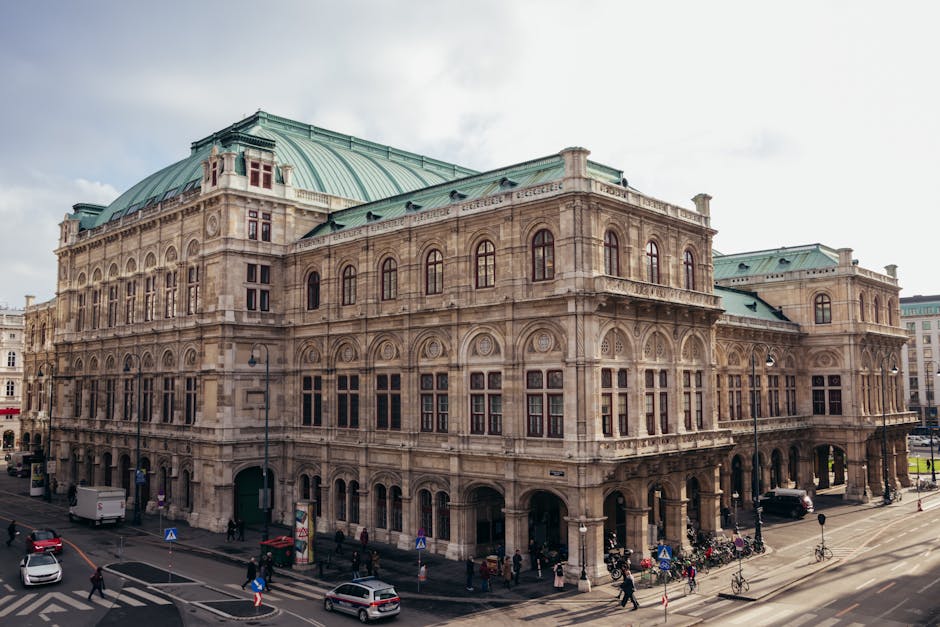
Self-guided audio tour in Vienna
Start Free on iPhone
Start free on iPhone to unlock this self-guided walking tour in Vienna. Hear all the stories that make it amazing, walk at your own pace, and begin whenever you want.
Your Private Tour Guide
Step into the epicenter of one of history’s most powerful dynasties with this self-guided walk through Vienna’s Innere Stadt. For over six centuries, the Habsburgs ruled from this very ground, transforming a medieval fortification into a sprawling imperial complex that rivals any royal residence in Europe. This walking route invites you to explore the architectural evolution of the Hofburg, the private sanctuaries of emperors, and the public squares where history-defining moments unfolded. From the solemn beauty of the Augustinerkirche, where royal hearts are kept in silver urns, to the breathtaking Baroque splendor of the Austrian National Library, you will encounter the physical manifestation of imperial ambition. This walking tour Vienna highlights the contrast between the rigid protocol of court life and the personal tragedies of figures like Empress Elisabeth, known as Sisi. As you navigate the route, you will see how the city’s layout was dictated by the needs of the monarchy, culminating at the grand Heldenplatz and the archaeological layers of Michaelerplatz. Whether you are an architecture enthusiast or a history buff, this neighborhood stroll offers the flexibility to admire the grand facades or pause for a coffee in a former royal garden. By following this route, you gain a deeper understanding of how Vienna became the cultural and political capital of Central Europe. Unlike a standard guided tour Vienna experience, this self-guided adventure allows you to linger under the dome of the Michaelertrakt or spend extra time photographing the Mozart monument without the pressure of a group schedule. Discover the stories of power, art, and legacy that continue to define the Austrian capital today.
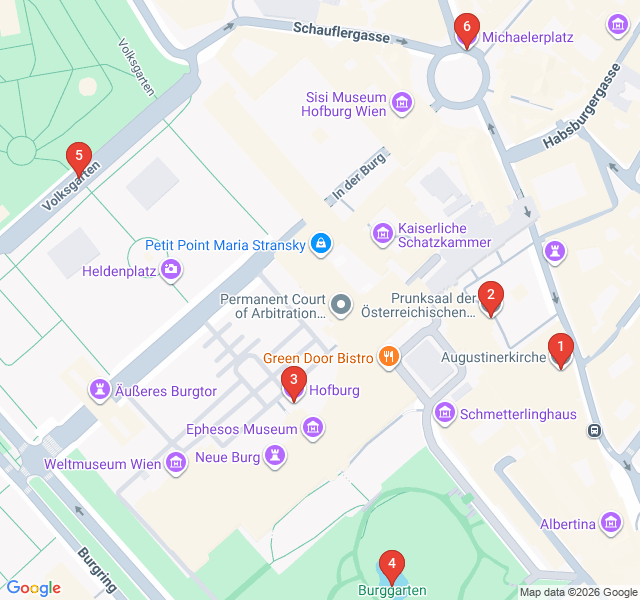
Numbers indicate the order of stops on the tour.
Welcome to the Augustinian Church, the former parish church of the imperial court. While its Gothic exterior may seem modest compared to the surrounding palaces, its historical weight is immense. This was the site of high-profile Habsburg weddings, including the marriage of Marie Antoinette to Louis XVI by proxy, and the union of Emperor Franz Joseph and Sisi. Inside, the church holds a fascinating, if macabre, secret: the 'Herzgrüfterl' or Heart Crypt. Behind a small door in the Loretto Chapel, 54 silver urns contain the actual hearts of the Habsburg rulers. This tradition of 'separate burial'—where the body, heart, and entrails were interred in different locations—was a hallmark of imperial funeral rites for centuries.
Standing before the Josefsplatz, you are looking at one of the world's most beautiful library buildings. Commissioned by Emperor Charles VI in the 18th century, the Austrian National Library is a pinnacle of Baroque architecture. The State Hall, or Prunksaal, is the centerpiece, stretching nearly 80 meters long and rising to a height of 20 meters. It houses over 200,000 historic volumes, including the library of Prince Eugene of Savoy. Look up at the frescoes by Daniel Gran, which depict the apotheosis of Charles VI. The library serves as a reminder that the Habsburgs were not just political rulers, but immense patrons of the arts and sciences, dedicated to the preservation of human knowledge.
The Hofburg is not just a single palace, but a massive 'city within a city' that grew organically from the 13th century until the fall of the monarchy in 1918. Every emperor seemed to add a new wing, resulting in a fascinating mix of architectural styles from Gothic to Renaissance and Baroque. This was the winter residence of the imperial family. Today, it serves as the workplace of the Austrian President. As you walk through the courtyards, imagine the thousands of servants, soldiers, and aristocrats who once bustled through these gates daily. The complex also houses the Sisi Museum and the Imperial Treasury, which holds the crown of the Holy Roman Empire.
Originally the private garden of the Emperor, the Burggarten was opened to the public in 1919. It offers a peaceful contrast to the stone courtyards of the Hofburg. The most famous resident here is the Wolfgang Amadeus Mozart monument, which was moved here in 1953. Notice the flowerbed in front of the statue, often planted in the shape of a treble clef. Nearby, the elegant Art Nouveau Palm House (Palmenhaus) stands as a testament to early 20th-century glass and steel design. It once served as a royal greenhouse; today, it is a popular café. This garden was designed in the English landscape style, providing a relaxed, naturalistic escape for the imperial family.
Heldenplatz, or 'Heroes' Square,' is defined by its vast scale and the two massive equestrian statues of Prince Eugene of Savoy and Archduke Charles. This square was intended to be part of a grand 'Imperial Forum' that was never fully completed. While it represents Austrian military pride, it also carries a somber historical weight; it was from the balcony of the Neue Burg, overlooking this square, that Adolf Hitler announced the 'Anschluss' of Austria into Nazi Germany in 1938. Today, it is a site of national commemoration and a popular place for locals to enjoy the open space against the backdrop of the Ringstrasse museums.
Our route concludes at Michaelerplatz, a square that serves as a crossroads of Viennese history. In the center, you can see open excavations of Roman ruins, reminding us that Vienna began as the military camp of Vindobona. Dominating one side is the Michaelertrakt, the grand Neo-Baroque entrance to the Hofburg. Directly opposite stands the Looshaus, a pioneer of modern architecture. When it was built in 1910, its lack of window ornaments so horrified Emperor Franz Joseph that he reportedly refused to ever use the nearby palace gate again. This square perfectly encapsulates the tension between Vienna's imperial tradition and its embrace of the modern age.
Start Free on iPhone
Explore “The Habsburg Legacy: Imperial Splendor of Vienna” with your very own Private Tour Guide with Zigway. Start free on iPhone, skip the large group and the fixed routes, and hear the city come alive as you go.
Your Private Tour Guide
Don't miss the good stuff
Explore Freely
 Easy
EasyVienna, Austria
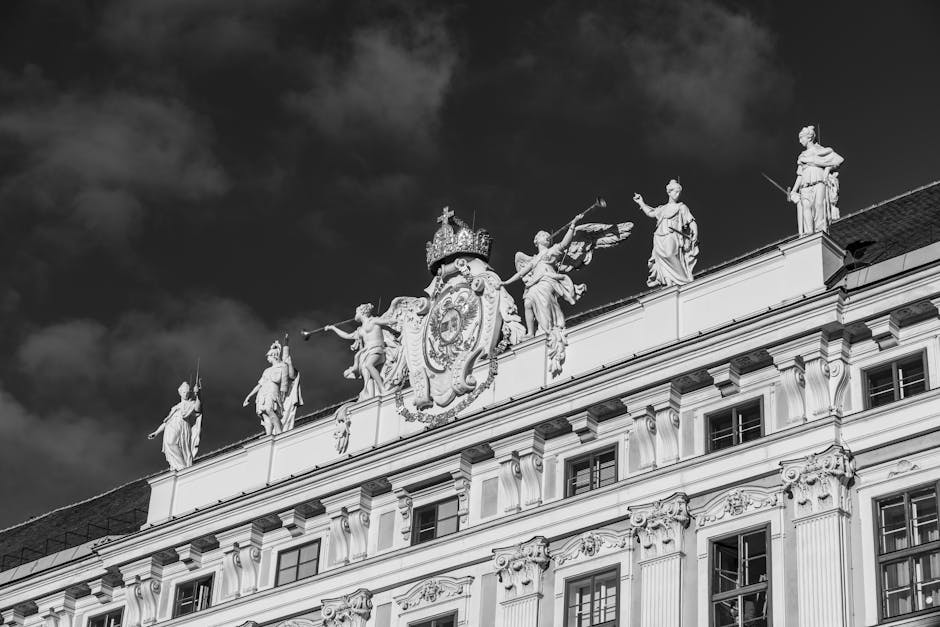
Explore Vienna’s vibrant open-air gallery along the Danube Canal on this self-guided street art and nightlife stroll through Leopoldstadt.
 Moderate
Vienna, Austria
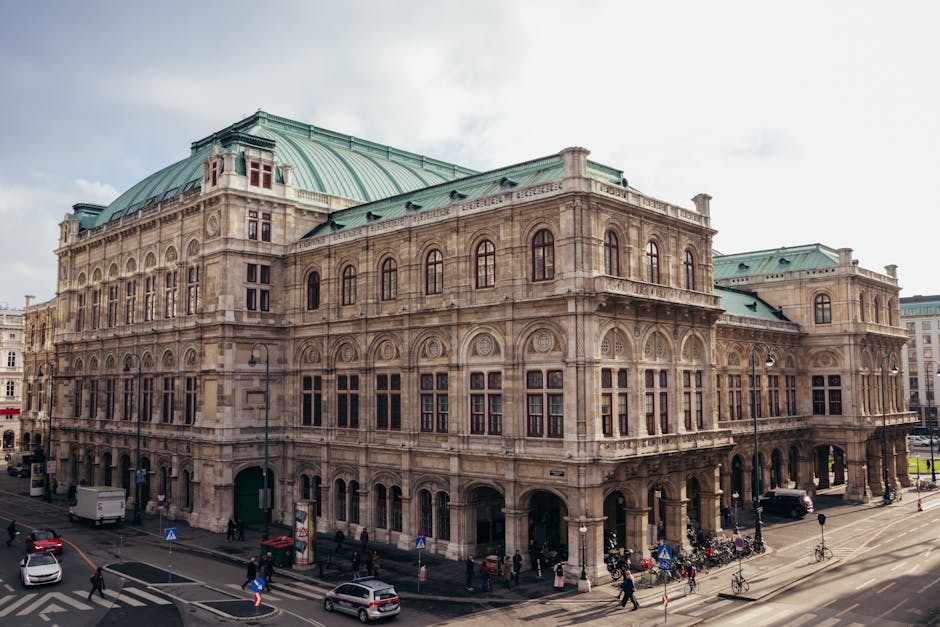
Follow the footsteps of Mozart and Strauss through Vienna’s historic center on this self-guided walk through the city's rich musical history.
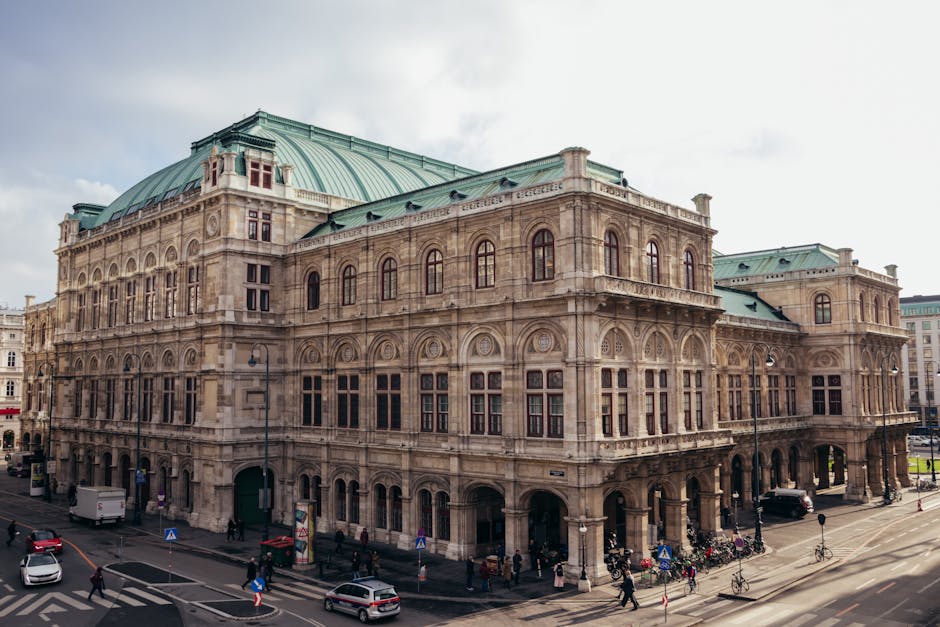 Moderate
Vienna, Austria
Discover the noir world of The Third Man and Cold War Vienna on this atmospheric self-guided audio walk through the historic Innere Stadt.
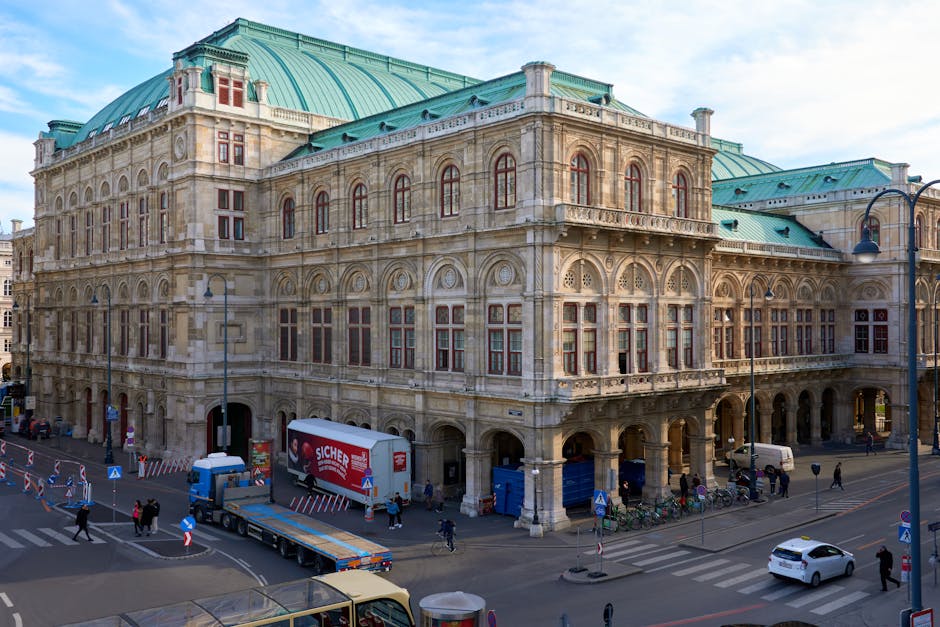 Easy
EasyVienna, Austria
Discover the literary haunts and architectural gems of Vienna's legendary coffee culture on this self-guided stroll through the historic city center.
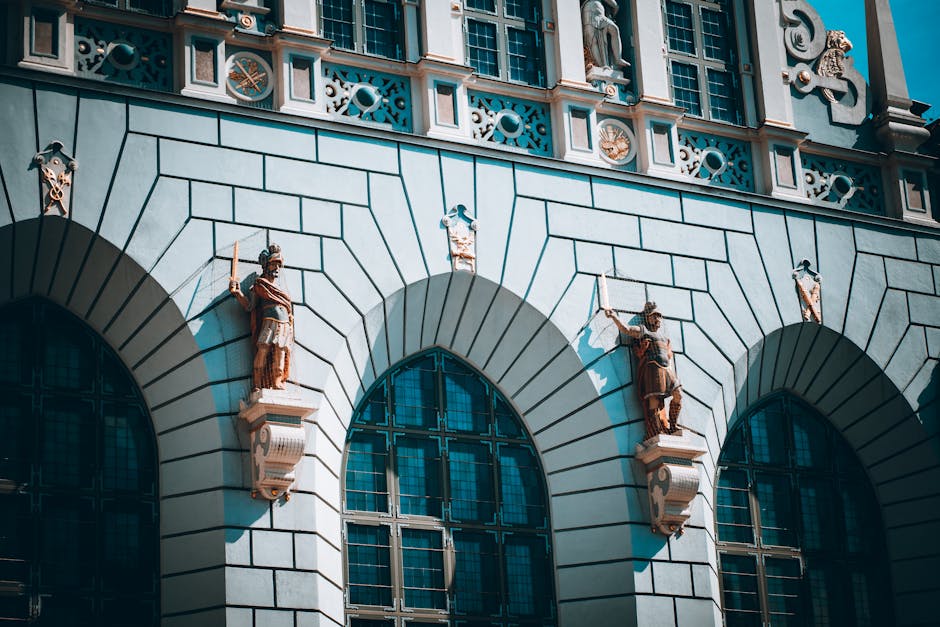 Easy
EasyGdansk, Poland
Discover the opulent Royal Way of Gdansk at your own pace. Explore Hanseatic history, gilded architecture, and the iconic Neptune's Fountain.
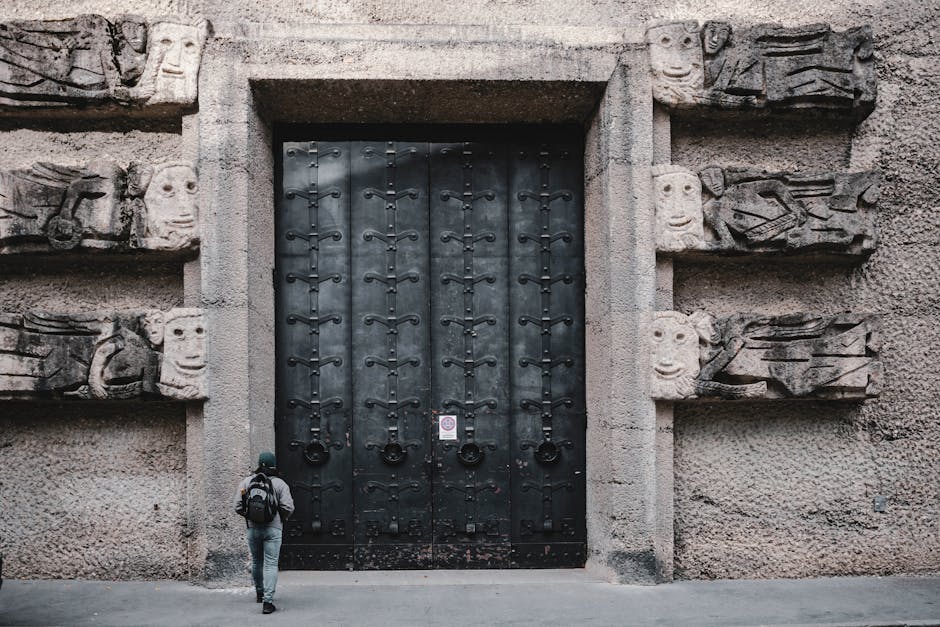 Easy
EasySalzburg, Austria
Discover the 'Rome of the North' on this self-guided walk through the Baroque squares and monumental legacy of Salzburg’s Prince-Archbishops.
 Easy
EasyWarsaw, Poland
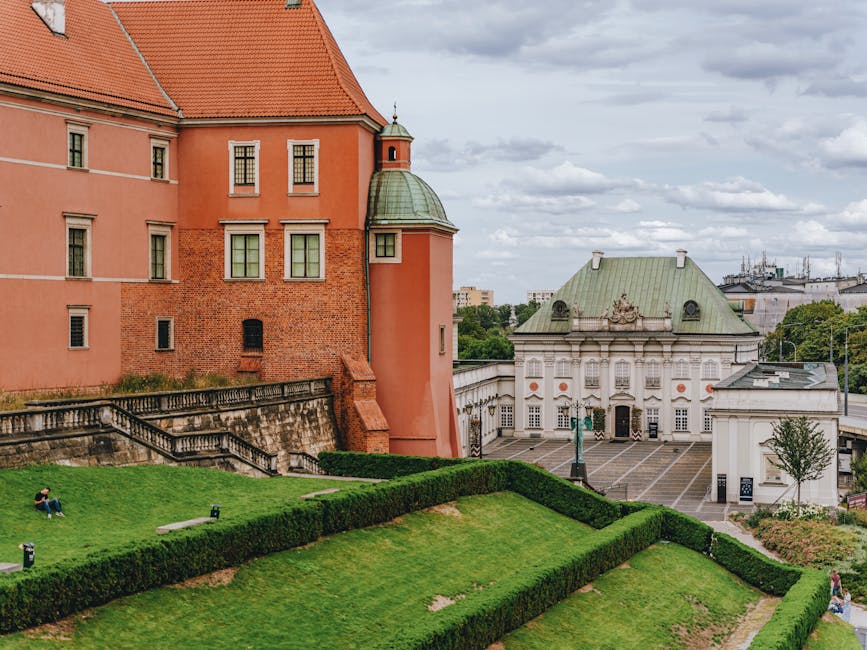
Explore the miracle of Warsaw's reconstructed Old Town on this self-guided walk through royal squares, medieval walls, and heroic monuments.
 Moderate
Gothenburg, Sweden
Discover Gothenburg’s maritime soul on this self-guided walk from the historic Central Station to the scenic riverfront at Stenpiren.
EasySalzburg, Austria
Discover the 'Rome of the North' on this self-guided walk through the Baroque squares and monumental legacy of Salzburg’s Prince-Archbishops.
 Easy
EasySalzburg, Austria
Discover Salzburg's oldest medieval alley, the birthplace of the 'Silent Night' author, and breathtaking views on this quiet self-guided walk.
 Easy
EasySalzburg, Austria
Walk through the iconic filming locations of The Sound of Music and discover the real history of the von Trapp family in Salzburg.
 Challenging
Salzburg, Austria
Scale the heights of Salzburg on this self-guided walk to the Hohensalzburg Fortress, exploring medieval walls and ancient monastic grounds.