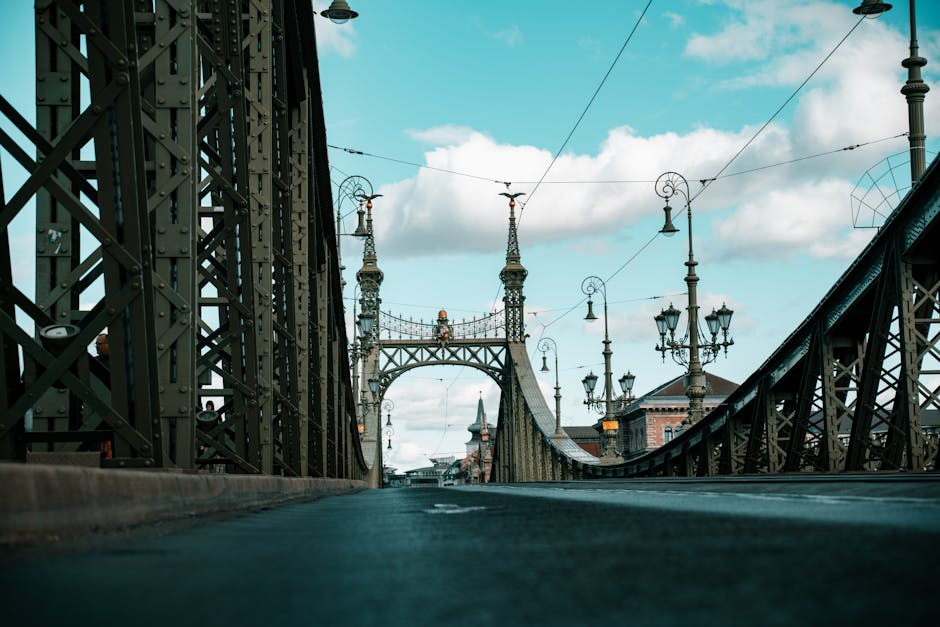
Self-guided audio tour in Budapest
Start Free on iPhone
Start free on iPhone to unlock this self-guided walking tour in Budapest. Hear all the stories that make it amazing, walk at your own pace, and begin whenever you want.
Your Private Tour Guide
Perched high above the Danube, the Castle District is the historic soul of Budapest. This self-guided walk takes you through cobblestone streets that have seen centuries of royal drama, Ottoman occupation, and wartime resilience. It is more than just a collection of viewpoints; it is a journey through layers of history—from medieval foundations to Baroque reconstructions. You will begin at the seat of Hungarian power, exploring the exteriors of the Sándor Palace and the sprawling Buda Castle complex. As you move north, the architecture shifts toward the fairytale spires of Fisherman's Bastion and the vibrant, mosaic-tiled roof of Matthias Church. This walking route is designed for those who want to experience the majesty of the Buda side without the rush of a group. Unlike a rigid guided tour Budapest visitors often find themselves on, this neighborhood stroll allows you to linger at the viewpoints that catch your eye or dive deep into the secret history of the underground Hospital in the Rock. The architecture here is a masterclass in survival, showcasing how the city meticulously rebuilt its heritage after the devastation of World War II. From the northern Vienna Gate to the southern palace ramparts, this independent exploration offers the quintessential Budapest experience, blending royal grandeur with the quiet charm of the city's oldest residential streets. It is an essential walking tour Budapest provides for anyone looking to understand the dual nature of this 'Queen of the Danube.'
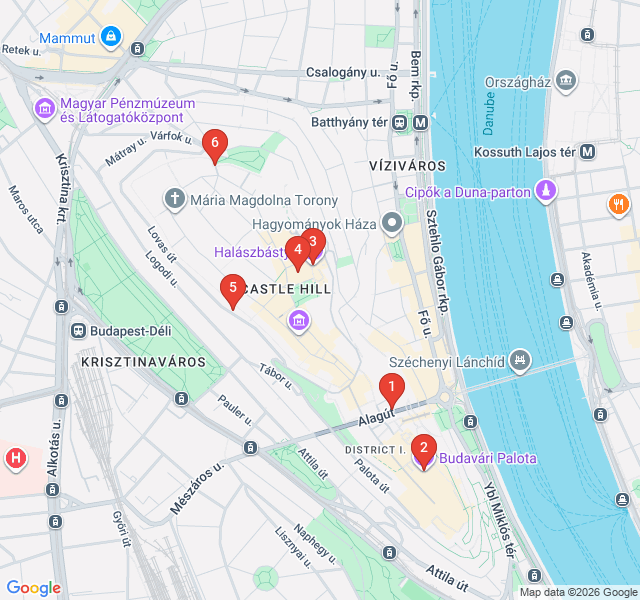
Numbers indicate the order of stops on the tour.
Welcome to the Sándor Palace, the official residence of the President of Hungary. Built in 1806, this neoclassical gem has witnessed the rise and fall of empires. It was almost entirely destroyed during World War II but was meticulously restored using original blueprints. If you time your visit right, you can watch the ceremonial changing of the guard, a display of precision and tradition that takes place every hour. Notice the intricate friezes on the facade depicting Greek mythological scenes, which stood as a symbol of cultural sophistication during the 19th century. This palace serves as the perfect starting point for understanding the political weight of Castle Hill.
The Buda Castle, or the Royal Palace, is a massive complex that dominates the city skyline. While a castle has stood here since the 13th century, the current Baroque-style structure largely dates from the 18th to 20th centuries. As you walk through the courtyards, look for the Matthias Fountain, often called the 'Trevi Fountain of Budapest,' which depicts King Matthias on a hunting trip. Today, the palace doesn't house royalty but instead hosts the Hungarian National Gallery and the Budapest History Museum. The terraces here offer your first wide-angle look at the Chain Bridge and the sprawling Pest side of the city across the river.
Step into a fairytale at Fisherman's Bastion. Despite its medieval appearance, this neo-Romanesque structure was actually built between 1895 and 1902 to celebrate the thousandth birthday of the Hungarian state. The seven turreted towers represent the seven Magyar tribes that founded the country in 895. The name comes from the guild of fishermen who were responsible for defending this stretch of the city walls during the Middle Ages. It is widely considered the best viewpoint in the city, providing a perfectly framed view of the Hungarian Parliament Building directly across the Danube. Take your time walking along the ramparts to find the best angle for a photo.
Commonly known as Matthias Church, this landmark has been the site of royal coronations, including that of Franz Joseph I and Elisabeth (Sisi). During the Ottoman occupation, it was converted into a mosque, and legend says the walls were whitewashed to hide the Christian frescoes. The most striking feature today is the roof, covered in multi-colored Zsolnay ceramic tiles that create a vibrant diamond pattern. Inside, the church is a kaleidoscope of Neo-Gothic art. It is named after King Matthias the Just, who was married here twice and whose coat of arms—a raven with a gold ring—can be seen on the church tower.
Beneath your feet lies a secret world. The Hospital in the Rock is a 10-kilometer-long network of natural caves and tunnels that were converted into an emergency hospital and nuclear bunker. During the Siege of Budapest in 1944, it saved thousands of lives, operating in total secrecy. Later, during the Cold War, it was upgraded to withstand a chemical or nuclear attack. While the museum requires an entrance fee to see the wax figures and original medical equipment, the exterior entrance alone tells a story of the city's hidden resilience. It remains one of the most unique sites in Europe, bridging the gap between natural geology and modern military history.
Your walk concludes at the Vienna Gate, the only surviving old gate of the Castle District. Historically, this was the entrance used by travelers arriving from Vienna. The current gate was rebuilt in 1936 to commemorate the 250th anniversary of the liberation of Buda from Ottoman rule. If you look toward the hills, you are seeing the greener, residential side of Buda. The gate marks the transition from the tourist heart of the castle to the quieter, aristocratic residential streets of the northern district. It is a peaceful spot to reflect on the architectural journey you have just taken from the royal palace to the city's defensive perimeter.
Start Free on iPhone
Explore “Royal Buda Castle Heights” with your very own Private Tour Guide with Zigway. Start free on iPhone, skip the large group and the fixed routes, and hear the city come alive as you go.
Your Private Tour Guide
Don't miss the good stuff
Explore Freely
 Easy
EasyBudapest, Hungary
Experience the magic of Budapest at sunset on this self-guided walk along the Danube, featuring iconic bridges, historic halls, and hidden gems.
 Easy
EasyBudapest, Hungary
Discover the hidden 'Magnates' Quarter' of Budapest. A self-guided walk through aristocratic history and stunning 19th-century architecture.
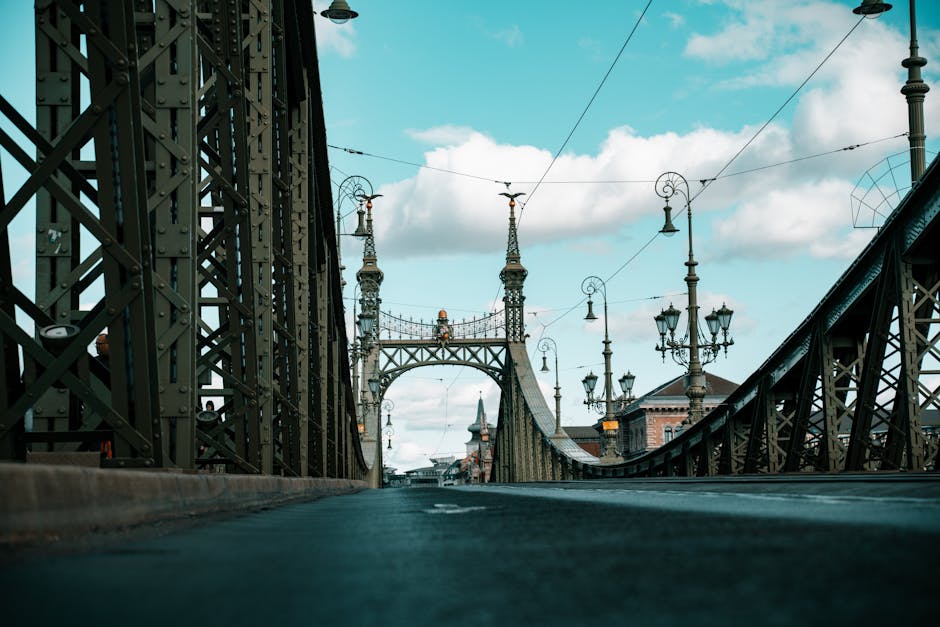 Easy
EasyBudapest, Hungary
Discover the vibrant street art and legendary ruin bars of District VII on this self-guided walk through Budapest’s most eclectic neighborhood.
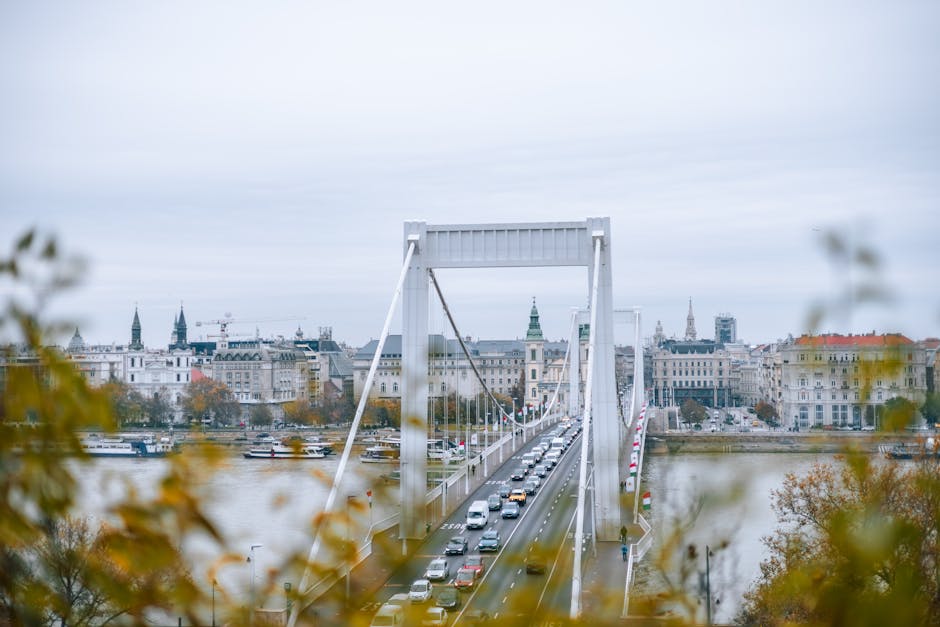 Easy
EasyBudapest, Hungary
Discover the whimsical world of Hungarian Art Nouveau on this self-guided walk through Budapest’s most stunning Secessionist landmarks.
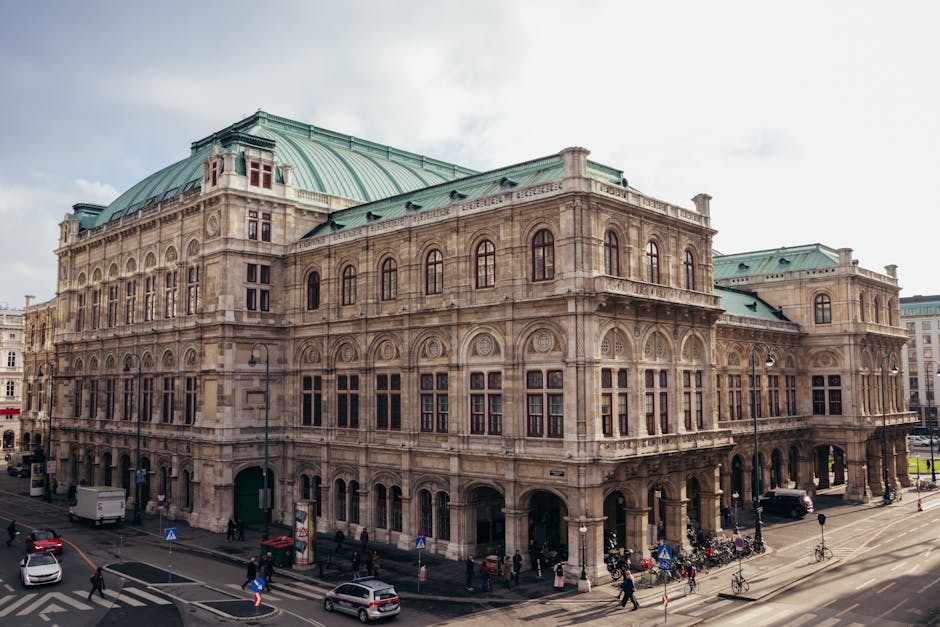 Moderate
Vienna, Austria
Follow the footsteps of Mozart and Strauss through Vienna’s historic center on this self-guided walk through the city's rich musical history.
 Moderate
Gothenburg, Sweden
Discover Gothenburg’s maritime soul on this self-guided walk from the historic Central Station to the scenic riverfront at Stenpiren.
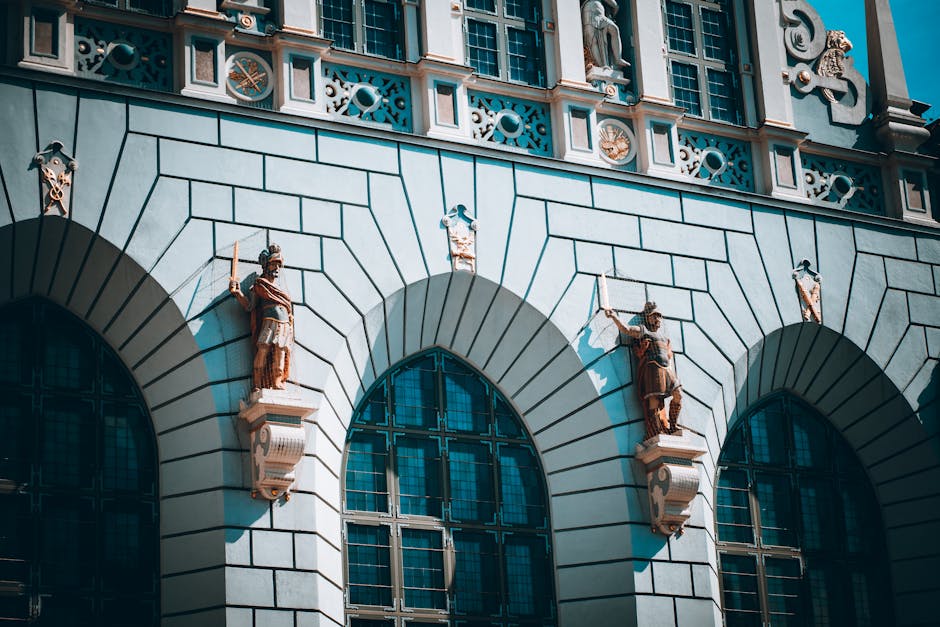 Easy
EasyGdansk, Poland
Discover the opulent Royal Way of Gdansk at your own pace. Explore Hanseatic history, gilded architecture, and the iconic Neptune's Fountain.
 Easy
EasySalzburg, Austria
Discover the 'Rome of the North' on this self-guided walk through the Baroque squares and monumental legacy of Salzburg’s Prince-Archbishops.